Kodak EasyShare DX · announced February 2003
The Kodak EasyShare DX6340: a 3.1-megapixel EasyShare with a 4x zoom and aperture priority
Kodak's own pages add "Zoom" to the name (EasyShare DX6340 zoom digital camera); we found no other regional name.13
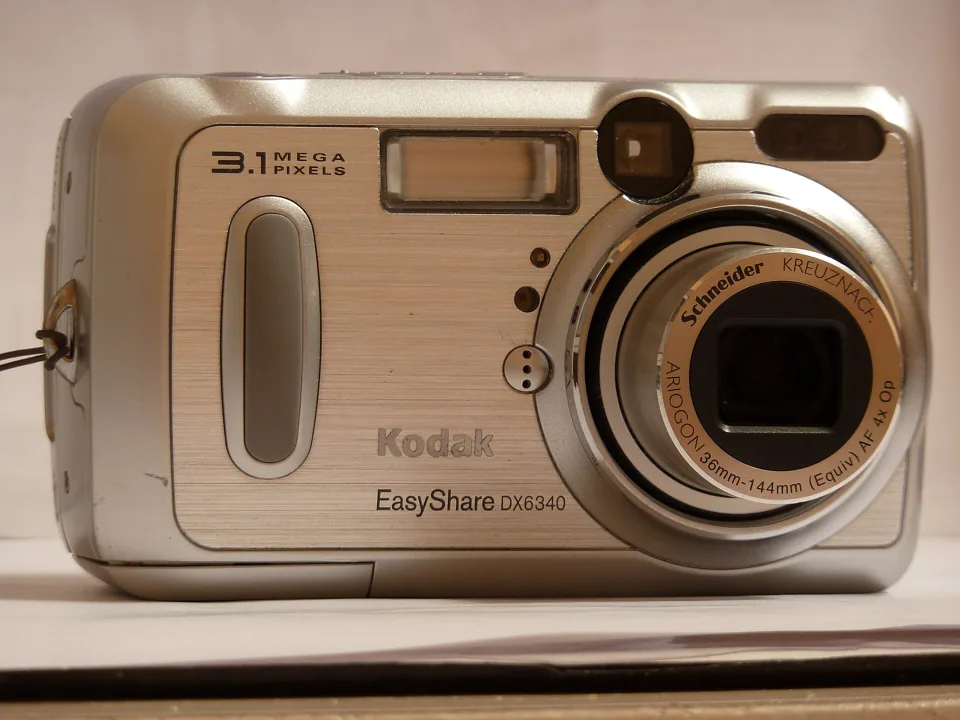

In February 2003 Kodak put a 4x Schneider zoom, aperture and shutter priority and an f/2.2 lens into its easy-to-use EasyShare range, at a suggested $329. Reviewers liked the ease of use and the colour, and split on its sharpness, its bulk and its battery life.
- Launched
- February 2003
- Sensor
- 3.1 MP CCD
- Lens
- 36–144 mm, 4×
- Card
- SD, MultiMediaCard
- Battery
- CRV3, 2 x AA (lithium or Ni-MH)
Kodak EasyShare DX6340 specs: sensor, lens, battery, memory card and cable
The Kodak EasyShare DX6340 came out in February 2003 at $329 as a 3.1 MP CCD compact with a 36–144 mm (35 mm equivalent) 4× zoom lens. It uses SD and MultiMediaCard and runs on CRV3 or 2 x AA (lithium or Ni-MH) batteries. Sources
- Sensor
- CCD, 1/2.7 in, 3.1 MP source
- Lens
- 36–144 mm equivalent, 4× zoom source
- Memory card
- SD, MultiMediaCard source
- Battery
- CRV3, 2 x AA (lithium or Ni-MH) source
- USB / A/V cable
- See our Kodak cable page
Meet the camera
Imaging Resource reported the DX6340 on 27 February 2003, with Kodak's fact sheet, as a 3.1-megapixel compact to debut in May at a suggested $329; MacTech's table of 3 March agrees on price and month.12 Kodak billed it as the smallest 4x optical-zoom camera on the market, a claim we can only report as Kodak's.1 The lens is a Schneider-Kreuznach Variogon of 36 to 144 mm equivalent, f/2.2 wide open at the short end and f/4.8 at the long end, in front of a 1/2.7-inch CCD that records pictures up to 2,032 × 1,524 pixels.3 On the back are a 1.8-inch screen of about 134,000 pixels and a separate optical viewfinder with a diopter dial; 16 MB of memory is built in beside an SD and MultiMediaCard slot.34 Imaging Resource called its partial manual exposure a first in the EasyShare line.4
The sources disagree about its weight, its build and its size. Kodak's guide gives 7.8 ounces (220 g) with battery and card, and Popular Photography printed the same figure; Imaging Resource gave 9.5 ounces (270 g) and CNET nearly 10.39411 Imaging Resource called the body all plastic and pocketable in a larger shirt or coat; CNET called it metal and plastic and meant for a jacket pocket or purse; Pocket-lint described a casing of "brushed aluminium metal" and plastic and called the camera bigger than average.41113 The Washington Post named its bulk a major weakness, CNET listed it as slightly bulky, and in 2024 a 35mmc writer said it was not small enough for a jeans pocket.81115 (Kodak's fact sheet says 2,048 × 1,536 pixels where its own guide and Imaging Resource say 2,032 × 1,524; we use the guide.)134
- Sensor
- 1/2.7" CCD, 3.1 MP pictures up to 2,032 × 1,5243
- Lens
- 4x, 36–144 mm equiv., f/2.2 (wide) to f/4.8 (tele) wide open3
- ISO
- Auto picks 100 or 200; 100, 200, 400 by hand; up to 800 in movies3
- Screen
- 1.8" LCD, about 134,000 pixels, plus an optical viewfinder3
- Card and battery
- SD and MMC, 16 MB built in · CRV3 lithium, or two AA lithium or Ni-MH3
Why this one was interesting
A 4x zoom in a 3-megapixel camera
Imaging Resource noted that 36 to 144 mm reaches further toward telephoto than most point-and-shoots of the time, and CNET said the 4x lens gives it more shooting flexibility than the average 3-megapixel model.411 Pocket-lint set it beside the Olympus C-350 (also £250) and judged it slightly larger.13 Kodak's own fact sheet pitched the f/2.2 aperture as the key to sharp pictures in very little light; the dark section below has what Imaging Resource found.1
Aperture priority in the easy line
The mode dial has a PAS position that gives access to program, aperture-priority and shutter-priority exposure; Kodak's guide says aperture priority is mainly for controlling depth of field and shutter priority for preventing blur from moving subjects.3 Imaging Resource said the levels of control let novices learn more about photography quickly, but said it would not recommend the camera to enthusiasts; CNET, by contrast, said experienced photographers and beginners wanting to build skills would appreciate the extra control.411
Two focus sensors, and a printer that docks
Kodak's fact sheet described a focus system with a passive contrast sensor on the front plus a through-the-lens sensor, claiming focus lock in almost total darkness.1 Popular Photography found it quick and accurate, flummoxed only in very dim light with low detail, and noted there is no autofocus assist lamp.9 Its test paired the camera with Kodak's $200 printer dock, whose dye-sublimation 4 × 6 prints took two minutes each and impressed the testers.9
What was lost
Kodak's guide lists no manual focus, only a fixed-focus Landscape mode and a choice of focus zone, so the autofocus does the work.3 Imaging Resource's overview says ISO adjusts in PAS mode only, though its menu list also names Landscape and Macro.4 The joystick drew complaints twice. The Washington Post called it too dainty, and Popular Photography wanted a jog dial in place of the little nub and found the shutter and zoom lever mildly awkward to reach.89 CNET disliked the bright-green ready light beside the optical viewfinder and framed its shots on the screen instead.11 The viewfinder showed 88 percent of the frame at wide angle and 86 at telephoto, and the screen close to 100 percent but shifted.4
The dark: its weak point
Kodak's guide gives the camera three ways into the dark: Night mode (exposures to 1/2 second), Shutter priority (to 4 seconds) and a long-time-exposure option in Landscape, also capped at 4 seconds.3 Imaging Resource got bright, usable pictures down to 1/8 foot-candle (1.3 lux) and found the best results in Shutter priority or Night mode. In Program mode shots stayed dim even at two foot-candles (22 lux), because the slowest exposure there is 1/8 second.4 Shutter priority shots were somewhat noisy, which it read as the camera choosing ISO 400, and long-exposure night shots were noisier than average; autofocus also struggled in dim light.4 On the flash, Kodak lists 1.6 to 19.4 feet at wide angle and 2.5 to 8.9 feet at telephoto, a range Imaging Resource said matched its testing, but its flash portrait came out so dim it needed an unusually large exposure boost.34
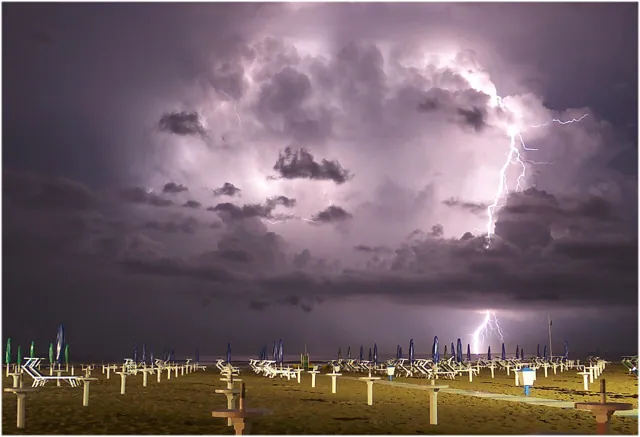

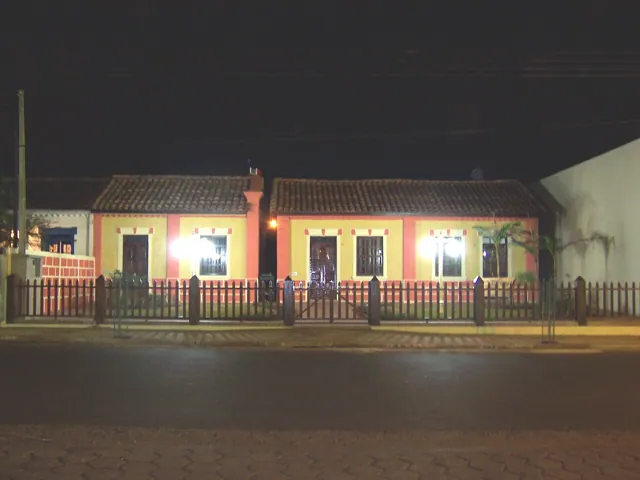



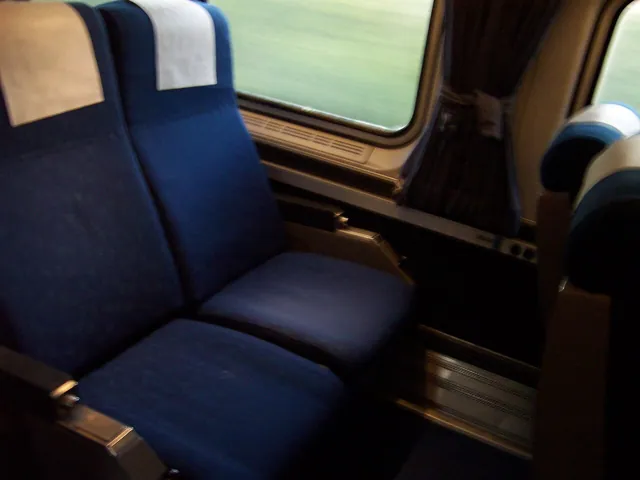

Low-light photos taken with this camera, Wikimedia Commons, exposure time read from each file's EXIF data.
We screened 565 files in the camera's Commons category on 28 October 2026. All of them name the camera in EXIF, but only three of the 553 we kept after screening record an ISO value, so the strip is chosen by exposure time rather than ISO. The 4-second lightning shot matches the 4-second limit in Kodak's guide.3
On eBay right now
Live listings for this camera, supplied by eBay and updated automatically. We earn a commission if you buy through them.
The little wins
Menus in plain English
Imaging Resource liked the plain-English descriptions of menu items in place of cryptic icons, and Popular Photography said no one does a better menu system than Kodak, pointing to the on-screen note that tells you the infinity lock is for distant scenery. Pocket-lint likewise praised a menu that names the setting you chose.4913
White balance that coped indoors
Imaging Resource called the automatic white balance exceptionally capable and said it handled the very yellow incandescent light of its indoor portrait test, a scene it said many cameras find hard.4
How it drew the picture
Colour was the strength. Imaging Resource found it bright, vibrant and somewhat oversaturated, with low noise and less geometric distortion than it was used to (about 0.4 percent barrel at wide angle), which it credited to the Schneider lens.4 Resolution was the weak point: artefacts appeared from about 600 lines on its test chart and strong detail ran to about 950, against 1,100 or more for competing three-megapixel models, though 8 × 10 prints still looked good.4 The contrast ran high and harsh light cost highlight detail, yet Popular Photography's lab rated highlight and shadow detail very good, contrast only slightly high and noise low at ISO 100; it called resolution "acceptable" and colour accuracy "extremely high" (average delta E 9.29, as printed).49 CNET sided with Imaging Resource on highlights: in contrasty photos the camera often blew them out completely, and it saw compression and processing artifacts around colour transitions that were not very noticeable in 4 × 6 prints but left fuzzy edges in larger prints and blow-ups; it called the colour and low noise pleasing.11 Pocket-lint called picture quality good but not excellent, better close up than far away, with greens handled well and whites a problem.13 In 2024 the 35mmc writer shot nearly everything in full automatic and found the colour excellent, the focus right and the detail enough for a 7 × 5 print.15

















Sample photos taken with this camera, from Wikimedia Commons, credited under each picture.
Where it let you down
Start-up was sluggish: 5.75 seconds from power-on to the first shot, and 3.14 to shut down.5 Autofocus shutter lag measured 0.647 seconds at wide angle and 0.998 at telephoto, 0.164 prefocused, with 2.1 seconds between shots until the third high-resolution frame, after which the camera slowed to five or six.5 Kodak lists a flash charge of under 8.5 seconds.3 Pocket-lint found playback very slow, with each picture refreshing twice before it looked right.13
The sources give very different battery numbers. Kodak's guide lists about 450 pictures on a CRV3, 320 on a pair of AA lithiums, 180 per charge on Ni-MH cells or its Ni-MH pack and 110 on two Kodak AA cells, and says Kodak does not recommend or support alkaline batteries.3 Imaging Resource got a bit over 80 minutes with the screen on and nearly 14 hours with it off, using 1,600 mAh Ni-MH cells.45 The Washington Post said it ran for more than 1,000 low-resolution shots on AAs without naming the type, CNET got about 1,000 shots on one charge of Ni-MH cells (about two-thirds with flash) and said alkalines work for a short while, and Pocket-lint called the battery power good.81113 The 35mmc writer, who had only alkaline cells, had nearly used up the first set by the time the clock was set and the menus checked.15 For other CCD cameras with the same battery question, see our guide to CCD digicams that run on AA batteries.
What the reviewers said in 2003
| Outlet | Date | Verdict |
|---|---|---|
| The Washington Post | 1 Jun 2003 | A good example of what Kodak does well, at $330, with a good lens and efficient use of AAs; major weaknesses were its bulk and a too-dainty joystick. One paragraph, no score.8 |
| Imaging Resource | 30 Jun 2003 (news item 2 Jul) | One of the easiest to use of any it had tested, with excellent colour and automatic white balance; resolution a little short of the best 3-megapixel rivals; not for enthusiasts. No score on the pages we read.46 |
| Popular Photography | listed 9 Oct 2003 (page stamped 17 Dec 2008) | A good value and an excellent choice for nervous newcomers, with fast autofocus, clear menus and impressive colour; the test mostly concerned the printer dock.910 |
| CNET | 5 Nov 2003 (listed 6 Nov) | 7.0 out of 10. Extremely easy to use and with room to grow, flexible with the 4x zoom and the priority modes, but its images come up short because of compression artifacts and blown highlights.1112 |
| Pocket-lint | 16 Dec 2003 (page date) | 3.5 out of 5. A good entry-level camera for first-time buyers, with image quality "good enough for family snaps"; look elsewhere if you already know the basics.13 |
| DPReview owner review | 11 May 2004 | 4.8 stars from one owner who found it excellent and pocketable and advised using a card reader instead of the software; the page lists a 4.29 community average over 39 reviews.14 |
We read three full reviews (Imaging Resource, CNET and Pocket-lint; CNET through an Internet Archive copy), a lab-rated test built around a printer dock (Popular Photography), a one-paragraph capsule and one owner's review. They agree on the ease of use and the colour and part company on sharpness, size, build and battery life.
The timeline
- 26–27 February 2003Kodak announces the DX6340 at $329 for May; Imaging Resource posts Kodak's fact sheet on the 27th.114
- 2–3 June 2003Kodak announces the 4-megapixel DX6440 at $399 for August, an update to the DX6340 with the same 4x zoom; Imaging Resource's item also lists "DX6340" at $399 for August, which looks like a slip for the DX6440.7
- 30 June 2003Imaging Resource's review is dated; its quick-look lists availability as "Now".4
- 5 November 2003CNET's review is dated; PhotographyBLOG lists it the next day.1112
- 26 January 202435mmc takes one out for a January day and finds the colour excellent.15
Should you buy one now?
Buy one if you want a simple automatic camera with a real viewfinder, a zoom that reaches 144 mm and Kodak's saturated colour, on AA cells or a CRV3. Skip it if you want sharp detail, quick start-up or a camera for a jeans pocket; the 35mmc writer's verdict was that it is neither small enough for a jeans pocket nor capable enough to be a main camera.15 It launched at a suggested $329;1 what it sells for now is a question for the sold listings, not for us. Before you bid, check these:
- The batteries. It takes two AA cells or one CRV3; Kodak does not recommend alkalines, and Imaging Resource advised buying high-capacity Ni-MH cells and a charger.34 AA rechargeables on Amazon ↗
- The card. It takes SD and MultiMediaCard cards, and Kodak's capacity table stops at 256 MB.3 The 35mmc writer's 32 GB card was rejected and a 512 MB card worked.15 We found no source for a maximum size, so test yours. See our memory card guide.
- The lens. The lens extends about three-quarters of an inch and a shutter-like cover slides out of the way; check both move freely and the lens ring is clean.4
- The dock. It ships with an insert for the 6000-series dock; do not power it from the optional 3-volt AC adapter while in the dock, which Kodak says is not compatible.43
For another AA-powered EasyShare of the same year, see our review of the EasyShare DX4530; for later Kodaks, see the EasyShare C340 and the EasyShare V570. Why cameras like this are being hunted down again is told once, in Pictures that never left the card.
See recent sold prices on eBay ↗Shop on eBay ↗AA rechargeable batteries ↗
Sources
- Imaging Resource news, Kodak: DX6340 digicam on the way, by Mike Tomkins (27 Feb 2003), with Kodak's fact sheet
- MacTech, Kodak debuts new EasyShare cameras (3 Mar 2003; price and availability table)
- Kodak, EasyShare DX6340 zoom digital camera User's Guide (undated; contents page, we cite its sections Camera Specifications, Shutter Speeds, Storage Capacities, Using the Battery, Optional AC Adapter, Picture-Taking Modes and PAS Mode)
- Imaging Resource, Kodak EasyShare DX6340 review by Dave Etchells (review date on the page 6/30/2003)
- Imaging Resource, Picky Details for the DX6340: timing, power and storage (undated page)
- Imaging Resource news, Review posted for Kodak EasyShare DX6340! (2 Jul 2003)
- Imaging Resource news, Kodak announces 2, 3, 4mpix EasyShare digicams, by Mike Tomkins (3 Jun 2003), with Kodak's 2 June release
- The Washington Post, Kodak EasyShare DX6340 (1 Jun 2003; a one-paragraph capsule)
- Popular Photography, Kodak EasyShare DX6340: Prints Charming, by Dan Richards (the page is stamped 17 Dec 2008, which we read as an archive date because PhotographyBLOG listed the test in Oct 2003; a test of the camera with the EasyShare Printer Dock 6000)
- PhotographyBLOG, Popular Photography Reviews Kodak EasyShare DX6340, by Mark Goldstein (9 Oct 2003; dates the Popular Photography test)
- CNET, Kodak EasyShare DX6340 review, by Denny Atkin (reviewed 5 Nov 2003; 7.0 out of 10; read in the Internet Archive's copy of 14 May 2007)
- PhotographyBLOG, CNET Reviews Kodak EasyShare DX6340, by Mark Goldstein (6 Nov 2003; a news item listing CNET's review)
- Pocket-lint, Kodak EasyShare DX6340, by Stuart Miles (page dated 16 Dec 2003; 3.5 out of 5)
- DPReview forums, Kodak DX6340 review: an owner's review posted 11 May 2004 (page also shows the camera's announced date and a community score)
- 35mmc, Kodak DX6340: A Day With a 2003 Digicam for Jankuary, by Michael Zwicky-Ross (26 Jan 2024)
Sample photographs are credited under each one, via Wikimedia Commons. Links to eBay and Amazon are affiliate links.