Kodak EasyShare V · on sale January 2006 · a retrospective
The Kodak EasyShare V570: the pocket camera with two lenses and two sensors
In January 2006 Kodak put a fixed 23 mm ultra-wide lens and a 39–117 mm zoom, each with its own 5-megapixel sensor, into one slim metal body for $399.95. Reviewers had fun with it, then wrote down what the pictures looked like.
Release date and launch price: launched January 2006; launch price $399.95 · £299.991.
Quick answers
- Sensor
- CCD, 1/2.5", 5 MP source
- Lens
- 23–117 mm equivalent, 5× zoom source
- Memory card
- SD, MultiMediaCard source
- Battery
- KLIC-7001 source
- USB / A/V cable
- See our Kodak cable page

Meet the camera
It is a small camera with a metal body, about 101 by 49.8 by 20.4 millimetres and 125 grams without its battery.54 PhotographyBLOG's conclusion praised a stylish, unusual design about 2 centimetres thick.3 Photo Review described two lenses stacked one above the other, both folded inside the body and hidden behind a metal cover when the camera is off.5 Its back carries a 2.5-inch screen of 230,000 dots, and there is no optical viewfinder.46
Kodak unveiled it at CES on 2 January 2006 with a price of $399.95 in the US and £299.99 in the UK, due in shops that month.1 The Associated Press reviewer, who borrowed one to test on a trip and wrote it up in July 2006, called $399 pricey for a point-and-shoot and compared it with their own 5-megapixel Canon PowerShot SD450, listed at $299.6
Why this one was interesting
Two lenses, two sensors
Kodak calls it the first dual-lens digital camera, as the AP review notes.6 Imaging Resource described the wide lens as fixed-focus, and the AP reviewer found that the camera switches to it automatically for wider views.26 Photo Review confirmed the two CCDs, one behind each lens.5 Both lenses are branded Schneider-Kreuznach.5
23 millimetres in a shirt pocket
The AP reviewer found that the wide view widened the field of vision by about two-thirds,6 and Imaging Resource's verdict called it a perfect choice for novices and for more experienced users wanting a fun, travel-worthy camera with a wider view.2 The same AP review was less sure it mattered: it needed the wide lens only once or twice in more than 800 shots, because stepping back often did the same job.6
Panoramas without a computer
Kodak's launch news promised a 180-degree panorama made in camera from three shots.1 Imaging Resource listed the panorama stitching among its likes, saying it worked well,2 while Photo Review found that lining the shots up in bright daylight was hard and that good results needed the camera kept level and turned about its lens.5
Another 2006 compact on our site, for comparison, is the Sony Cyber-shot DSC-W55.
What was lost
There are no manual controls for aperture or shutter speed.3 PhotographyBLOG found zooming and continuous shooting slow;3 Imaging Resource called shot-to-shot speed average and measured about 2.14 seconds between large, fine JPEGs, with only two fast shots before the camera slowed down.2 The AP reviewer found that moving between the internal memory and a memory card meant a trip through the menus.6
The dark: its weak point
The three technical reviews all found noise at higher settings. PhotographyBLOG saw discernible noise even at the lowest sensitivities, blurring to hide it at ISO 200, and a substantial drop in quality at ISO 400.3 Imaging Resource found noise moderate to high even at low ISO, strong blurring at ISO 200 and worse at ISO 400, and called ISO 800, available only at 1.8 megapixels, very noisy.2 Photo Review agreed that noise was visible at ISO 400 and very obvious at 800, where resolution fell to 1.8 megapixels.5
Imaging Resource's print guide was crisp at 8 by 10 inches at low ISO and acceptable up to ISO 200; at ISO 400 it called prints marginal at 5 by 7 but fine at 4 by 6, and at ISO 800 not worth even a 4 by 6 (the same review elsewhere words the ISO 400 verdict a little more kindly).2 The long-exposure mode runs up to 8 seconds, but PhotographyBLOG noted that noise reduction takes as long again and called its night shot just OK.3 Photo Review found that noise showed up in long exposures beyond about 1.5 seconds.5 For flash, Photo Review needed ISO 200 to light an average room;5 PhotographyBLOG found indoor flash adequate with little red-eye and slight under-exposure,3 and the AP reviewer found it did not always light a scene evenly.6
Curious about the look? See recent eBay sold listings for this camera ↗
On eBay right now
Live listings for this camera, supplied by eBay and updated automatically. We earn a commission if you buy through them.
The little wins
Video with the zoom still working
PhotographyBLOG's specification list includes 3x zoom, autofocus and digital stabilisation during video, in VGA at 30 frames a second.4 Imaging Resource listed excellent video among its likes.2
Colour and exposure
Imaging Resource praised vibrant colour and listed good skin tones, automatic white balance and exposure accuracy among its likes, although its lab section found pinkish skin tones in many shots, a slight warm cast and highlights lost under harsh light, and its conclusion said auto white balance could have been better.2 Photo Review called colour accurate with slightly raised saturation and white balance above average, even in auto.5
Distortion correction for the wide lens
Kodak announced in-camera correction of the fish-eye look from the ultra-wide lens, with an off switch.1 Imaging Resource measured about 1.4 percent barrel distortion at 23 mm, roughly halved to 0.7 percent by the correction.2
How it drew the picture
The reviewers disagreed most about the wide lens. Imaging Resource found high chromatic aberration and soft corners at 23 mm, and said overall images looked more like those of a 4-megapixel camera.2 Photo Review thought the wide lens did somewhat better than the zoom but found chromatic aberration moderate to severe on both, with purple fringing near the frame edges in backlit scenes.5 PhotographyBLOG saw only limited purple fringing, even at 23 mm, and said out-of-camera files were a little soft at the default sharpening;3 the AP reviewer found the wide lens very sharp into the corners, though doorways photographed up close showed edge distortion.6














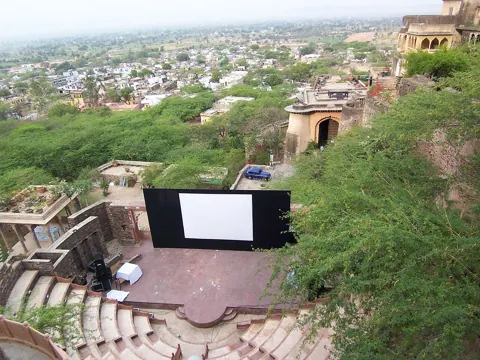

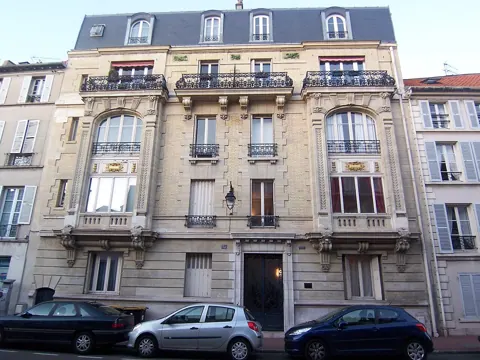

Photos taken with this camera, from Wikimedia Commons, credited under each picture. We cannot tell from the files which lens took each one.
Where it let you down
The gap between the lenses is the oddity. PhotographyBLOG said the jump from 23 to 39 millimetres takes some getting used to,3 and the AP reviewer noted that the camera's digital zoom, used to bridge it, reduces quality.6 Imaging Resource saw quality drop noticeably in the 30 to 39 mm range and suggested turning digital zoom off; Photo Review also advised using it only when necessary.25 Imaging Resource called battery life short, measuring 81 minutes of still shooting;2 the other three reviews gave no battery figure.356
The AP reviewer found that photo transfer needed a bulky dock;6 Photo Review thought the SD card slot cover flimsy enough that it might come off.5 On timing, Imaging Resource measured 0.33 seconds (wide) to 0.54 seconds (telephoto) of lag with full autofocus and a flash recycle of about 11 seconds,2 while Photo Review's figure for average capture lag was 1.2 seconds, falling to about 0.1 to 0.5 seconds when prefocused.5 Treat the timing numbers as testers' own, not as a single truth.
What the reviewers said in 2006
| Outlet | Date | Verdict |
|---|---|---|
| Imaging Resource | 7 Apr 2006 | 4.5 out of 5 and a Dave's Pick: a fun, wide-angle camera for novices and travellers; soft images, noise at higher ISO, short battery life.2 |
| PhotographyBLOG | 2 May 2006 | 4 out of 5: intriguing and fun to use, with only average image quality and some slow operation.3 |
| Photo Review | Undated | Scored 8 out of 10 overall, with 8 for image quality and 8.5 for ease of use; chromatic aberration and noise at higher ISO noted.5 |
| Associated Press | 13 Jul 2006 | Picture quality adequate, price on the high side; the wide lens was useful in tight spaces but rarely needed.6 |
The timeline
- 2 January 2006Kodak unveils the camera at CES, at $399.95.1
- 7 April 2006Imaging Resource publishes its review.2
- 2 May 2006PhotographyBLOG publishes its review.3
- 13 July 2006The Associated Press review is published.6
Should you buy one now?
Buy one if you want a pocket camera with a real 23 mm view and plenty of character, and you accept soft pictures and a poor showing above ISO 200. It launched at $399.95;1 what it sells for now is a question for the sold listings, not for us. Before you bid, check these:
- The battery. It uses a KLIC-7001;45 a replacement is on Amazon ↗, and Imaging Resource found battery life short, so a spare helps.2
- The card. It takes SD and MMC cards, with 32 MB built in;45 see our memory card guide.
- The dock. It shipped with a Photo Frame Dock 2, USB and AV cables and a charger;4 check what the listing includes.
- The card slot cover. Photo Review found it flimsy, so look for damage.5
- Both lenses. Switch between the wide and zoom views and check each looks clean and the metal cover slides smoothly.
If you are wondering why cameras like this are being hunted down again, we tell that story once, in Pictures that never left the card.
See recent sold prices on eBay ↗Shop on eBay ↗KLIC-7001 battery ↗
Sources
- PhotographyBLOG, “Kodak V570 Dual Lens Camera” launch news (CES, 2 Jan 2006; $399.95 / £299.99)
- Imaging Resource, Kodak V570 review by Stephanie Boozer, Shawn Barnett and Dave Etchells (7 Apr 2006)
- PhotographyBLOG, Kodak EasyShare V570 review (2 May 2006): image quality, conclusion and specifications pages
- PhotographyBLOG, Kodak EasyShare V570 specifications page
- Photo Review (Australia), Kodak EasyShare V570 review (undated page)
- Associated Press via NBC News, “Camera's wide-angle lens good but pricey” by Anick Jesdanun (13 Jul 2006)
All photographs are from Wikimedia Commons and credited under each one; we found no free-licence photo of the camera. Links to eBay and Amazon are affiliate links.