Kodak EasyShare DX · announced August 2003
The Kodak EasyShare DX4530: five megapixels for $399, with almost nothing to adjust
We found no other regional name for it; Kodak's announcement and the 2003 reviews call it the DX4530, and Steve's Digicams adds "Zoom".12
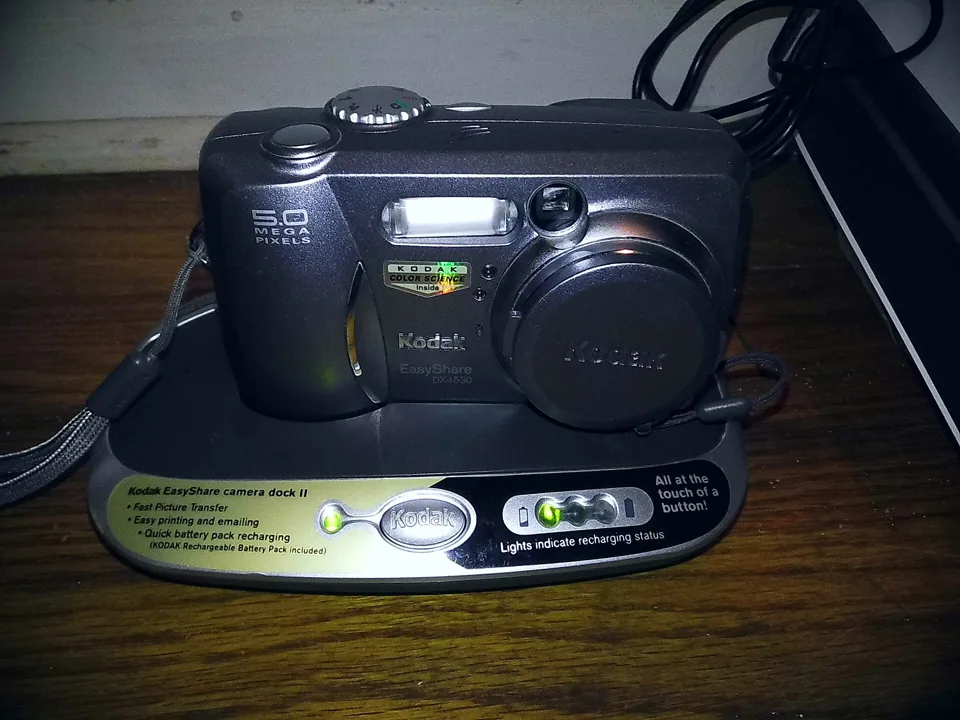

In August 2003 Kodak put a five-megapixel sensor into its beginner EasyShare line at a suggested $399. Reviewers liked the colour and the ease of use, and marked it down for a plain-feeling body, shutter lag and how little the user can adjust.
- Launched
- August 2003
- Sensor
- 5 MP CCD
- Lens
- 38–114 mm, 3×
- Card
- SD, MultiMediaCard
- Battery
- 2x AA, CR-V3
Kodak EasyShare DX4530 specs: sensor, lens, battery, memory card and cable
The Kodak EasyShare DX4530 is a 5 MP CCD compact camera with a 38–114 mm (35 mm equivalent) 3× zoom lens, launched in August 2003 at $399. It uses SD and MultiMediaCard and runs on 2x AA or CR-V3 batteries. Sources
- Sensor
- CCD, 5 MP source
- Lens
- 38–114 mm equivalent, 3× zoom source
- Memory card
- SD, MultiMediaCard source
- Battery
- 2x AA, CR-V3 source
- USB / A/V cable
- See our Kodak cable page
Meet the camera
Kodak announced the DX4530 on 5 August 2003 as its highest-resolution EasyShare digital camera.1 Behind a 3x zoom equal to 38 to 114 mm sits a 5-megapixel CCD, with a 1.8-inch screen on the back, 32 MB of built-in memory and a slot for SD or MultiMediaCard memory.41 Kodak's suggested price was $399, which Imaging Resource called surprisingly low for the pixel count.24
The body is plastic, in dark gunmetal grey.46 Imaging Resource found it light enough that there was little excuse to leave it at home, Pocket-lint said it felt slightly cheap beside other five-megapixel cameras, and 01net thought the plastics looked inexpensive too.467 Imaging Resource's two weight figures disagree: 9.2 ounces (261 grams) in the overview and 7.4 ounces (210 grams) in the design section, both with batteries and card. Steve's lists 210 grams without batteries.42
Why this one was interesting
Five megapixels without the learning curve
Imaging Resource described the DX4530 as very similar to the earlier DX4330, with a larger 5.0-megapixel CCD for more resolution.4 Pocket-lint noticed the mismatch: a range aimed at beginners now carried a pixel count normally found on larger cameras. It said the model "sits uncomfortably in the Kodak range" and that why a newcomer would want five megapixels was initially a hard question to answer, then called the results very impressive.6 Steve's gave the camera its selling line: in November 2003 it was the cheapest five-megapixel camera with a zoom lens.3
Print without a computer
Kodak's dock system was part of the pitch. A Share button on the back tags pictures for printing, e-mail or as favourites; the optional Camera Dock II ($79.95) transfers pictures and recharges a battery pack, and the optional Printer Dock 4000 ($199) prints 4 by 6 inch photos, in about 90 seconds according to Steve's.423 Steve's said the printer dock means you need no computer at all.3
Colour that pleased most people
Imaging Resource credited Kodak's Color Science processing for accurate colour under almost any light source, and wondered why other makers could not match its auto white balance.4 Steve's called the results sharp and richly saturated, like Kodachrome slides: more colour than most professionals would want, but what consumers expect.3
What was lost
Almost everything the user could adjust. Exposure, white balance and ISO stay automatic; the exposure options Imaging Resource listed were compensation in half-stop steps, flash mode and a long-exposure setting.4 01net called it a point-and-shoot with few shooting presets and minimal exposure control.7 The viewfinder was the other loss. Imaging Resource measured it showing about 85 percent of the frame at wide angle and about 84 percent at telephoto, while Steve's said it showed about 78 percent and had no dioptre adjustment; Pocket-lint called it very small.436 The screen framed more accurately: Imaging Resource found it very slightly loose and close to perfect, Steve's put its coverage at about 95 percent, and Steve's added that it struggled in bright sun unless shaded by a hand.43
On handling the reviews split. Imaging Resource described the four-way pad's rubbery centre nub, which doubles as the OK button, as easy to grip, while 01net found that OK button hard to press, causing accidental menu moves, and said that with the joystick where it is, using the menu while framing risks the left hand getting in the way of the lens.47
The dark: its weak point
Night shooting needed a workaround. Automatic exposure stops at half a second, but a long-exposure mode takes manual times up to four seconds, and with it Imaging Resource got bright pictures down to about a quarter of a foot-candle (about 2.7 lux), with colour and noise it called surprisingly good.4 The catch is focus: the reviewer said autofocus cannot work in that darkness, advised Landscape mode (which fixes focus at infinity), and blamed that for its own poorly focused low-light test shots.4 The flash reaches 3.4 metres at wide angle and 2.0 metres at telephoto, per the spec table Steve's reproduced.2
The free sample photos we found do not record their ISO, so this page shows no low-light strip. Most were shot outdoors, and a few are night scenes.
On eBay right now
Live listings for this camera, supplied by eBay and updated automatically. We earn a commission if you buy through them.
The little wins
A self-timer for movies
Imaging Resource called it a useful departure that the 10-second self-timer also works in Movie mode, recording fixed 5, 15 or 30 second clips or running until you stop it.4
Close-ups to four inches
Steve's said Closeup mode gave excellent results down to 4-5 inches, even with the flash, and suggested it for photographing small items for auctions or insurance inventories.3
How it drew the picture
Imaging Resource measured good resolution: artefacts began around 800 lines per picture height, strong detail held to about 1,300, and the test patterns vanished near 1,550.4 It measured barrel distortion of about 0.5 percent at wide angle, below its 0.8 percent average, though chromatic aberration was fairly high in one corner and close-up corners were soft.4 Exposure ran slightly bright outdoors, and harsh light cost highlight detail and filled in shadows, a trade-off the reviewer linked to the bright colour.4 Pocket-lint liked the bold colours, the skin tones and how the camera handled clouds against clear blue sky, and said Sports mode captured the flame of a hot-air balloon.6
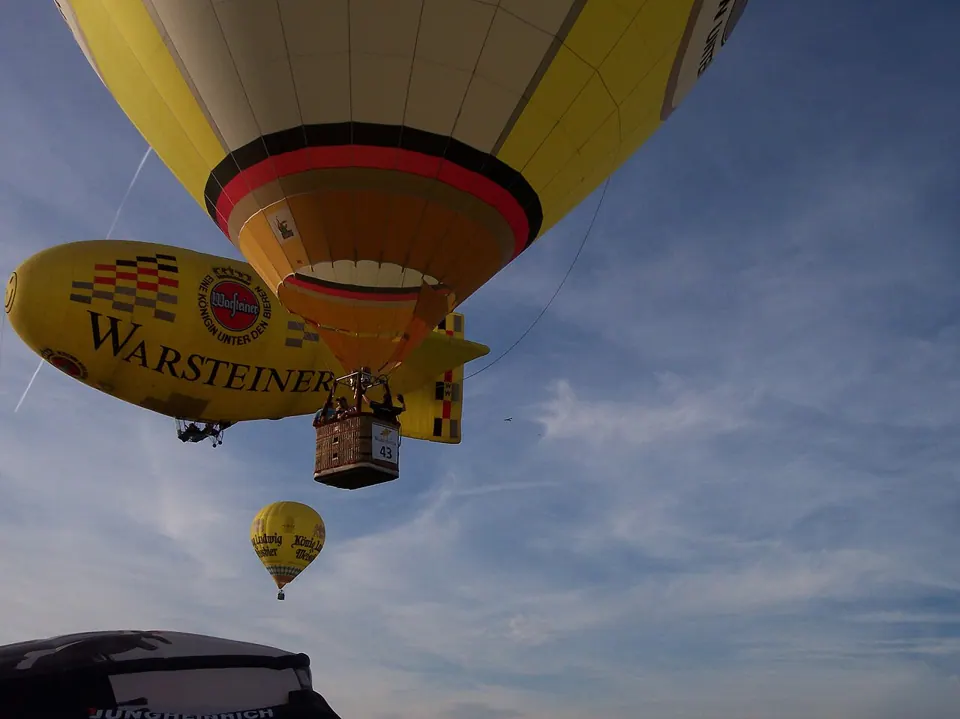
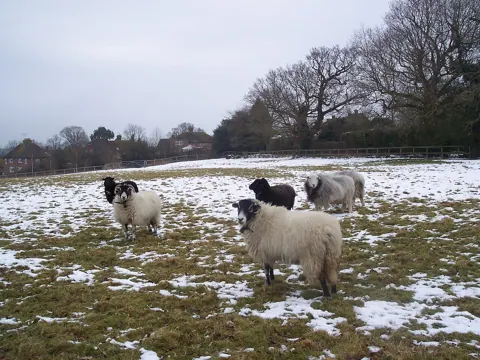

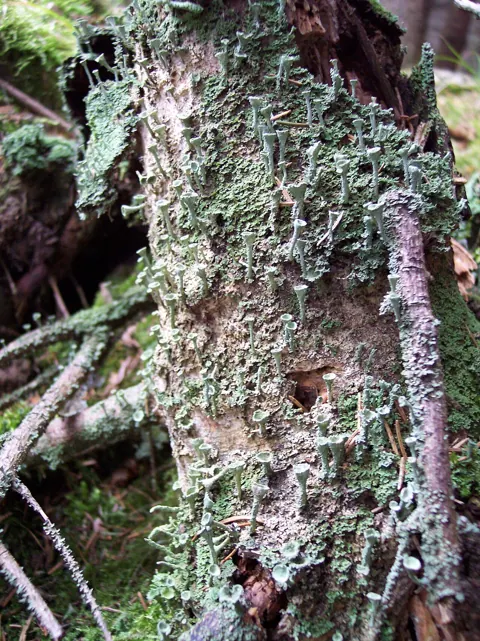



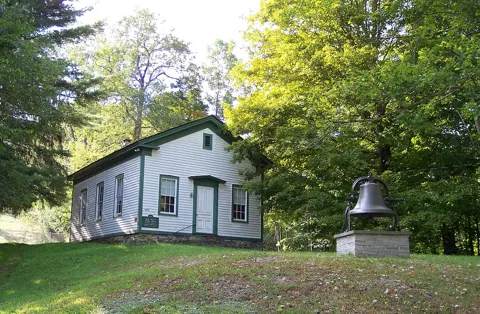



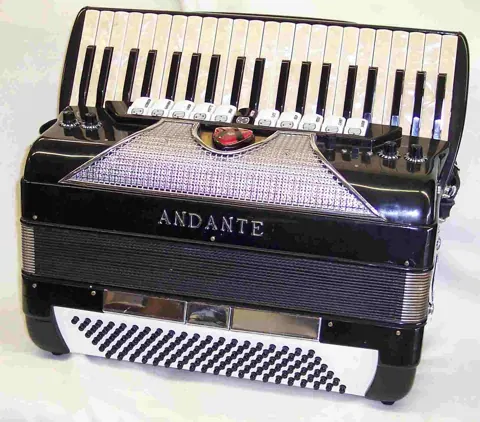



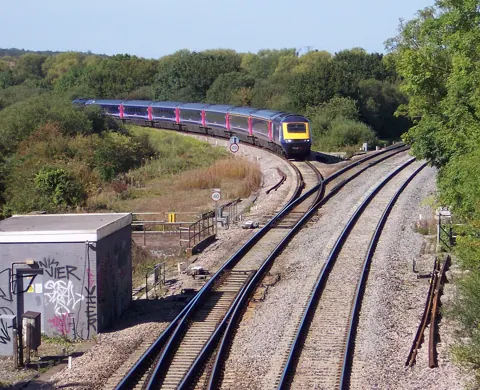

Sample photos taken with this camera, from Wikimedia Commons, credited under each picture.
Where it let you down
Imaging Resource measured a full-autofocus shutter lag of 0.78 to 1.17 seconds, 0.22 seconds pre-focused, and about 3 seconds between shots (3.13 at best quality, 2.99 at lowest), with a six-frame buffer; it called the lag middle of the field but too slow.4 Steve's described the focus as reasonably quick, with an average lock around 0.55 seconds in normal light, and its spec table lists 0.79 seconds to capture and under 2 seconds shot to shot.32 Those numbers do not match Imaging Resource's, so treat speed as a range.
Batteries needed care. With 1,600 mAh NiMH cells, Imaging Resource got about 80 minutes of run time with the screen on in capture mode, and about 14 hours with it off.4 It advised strongly against alkaline AAs, while Steve's said alkalines worked but would not last long with the screen in use, that NiMH cells give 3 to 5 times the power, and that the CR-V3 lithium pack lasts longer still.43 For other cameras with the same battery problem, see our guide to CCD digicams that run on AA batteries.
What the reviewers said in 2003
| Outlet | Date | Verdict |
|---|---|---|
| Imaging Resource | 16 Oct 2003 | A good choice for hassle-free shooting, with good image quality and ease of use at a low price; aimed at novices, kids and anyone wanting many pixels with simple operation. Its news item said it was not the ultimate camera for the Ansel Adams types.45 |
| Steve's Digicams | 7 Nov 2003 | A "perfect camera" for people with little or no experience who want sharp, saturated pictures; calls it an entry-level, high-resolution camera at a street price of $350 or less. No score on the pages we read.23 |
| Pocket-lint | 16 Dec 2003 | 4.0 out of 5. Sceptical at first, then impressed by the results; its list of pluses names familiar Kodak operation and the pixel count, and the text notes a slightly cheap feel and a very small viewfinder.6 |
| 01net.it | 26 Apr 2004 | 7 (the scale is not stated). Very good lens, easy menus and a low price against a cheap-feeling body, awkward controls and minimal exposure control; it said purists might find the colours over-loaded but judged that right for the target buyer. Priced at 350 euros.7 |
We read four reviews, three in English and one in Italian. They agree on the ease of use, the price and the limited controls, and differ on how to read the colour (accurate to Imaging Resource; more saturated than purists or pros would want to Steve's and 01net, who both thought it suited consumers), on the OK button and on focus speed. Imaging Resource's separate specification and "picky details" pages were not read; its review text was.
The timeline
- 5 August 2003Kodak announces the DX4530 as its highest-resolution EasyShare camera.1
- Mid-summer 2003Introduced at just under $400, per Imaging Resource.4
- 16 October 2003Imaging Resource posts its review.5
- 7 November 2003Steve's Digicams posts its review; its conclusion that month puts street prices at $350 or less.23
- 26 April 200401net.it publishes its review, pricing the camera at 350 euros.7
Should you buy one now?
Buy one if you want a simple, automatic 2003 camera that makes saturated, easy pictures in daylight and prints well, and you can live with a slow shutter response. Skip it if you want control over exposure or white balance. It launched at a suggested $399;2 what it sells for now is a question for the sold listings, not for us. Before you bid, check these:
- The name. The camera in our photo carries EasyShare DX4530 on the front; Steve's adds "Zoom" in its title. Imaging Resource called it very similar to the earlier DX4330, so check the model name before you bid.42
- The batteries. It takes two AA cells or one CR-V3;2 bring NiMH rechargeables, since Imaging Resource advised against alkalines.4 AA rechargeables on Amazon ↗
- The card. It takes SD and MultiMediaCard cards, and Steve's said it can use up to 1 GB.3 We found no source for larger cards, so test yours. See our memory card guide.
- The dock. It works with Kodak's Camera Dock I and II and the Printer Dock 4000.2
- The lens. Check the lens extends and retracts cleanly and the lens cap (tethered to the body) is present.4 The tripod socket is plastic and sits close to the battery compartment, so check it is not cracked.4
For later Kodaks, see our reviews of the EasyShare C875 and the EasyShare V570. Why cameras like this are being hunted down again is told once, in Pictures that never left the card.
See recent sold prices on eBay ↗Shop on eBay ↗AA rechargeable batteries ↗
Sources
- DPReview, Kodak EasyShare DX4530 (Kodak announcement, 5 Aug 2003)
- Steve's Digicams, Kodak EasyShare DX4530 Zoom review, introduction and specification table (posted 7 Nov 2003; Internet Archive copy)
- Steve's Digicams, Kodak EasyShare DX4530 Zoom review, conclusion (written Nov 2003; Internet Archive copy)
- Imaging Resource, Kodak EasyShare DX4530 review (16 Oct 2003; author not printed on the page)
- Imaging Resource, Review posted for Kodak EasyShare DX4530 (news item by Dave Etchells, 16 Oct 2003)
- Pocket-lint, Kodak EasyShare DX4530 review by Stuart Miles (16 Dec 2003)
- 01net.it, Il test della Kodak EasyShare DX4530 by Vincenzo Zaglio (26 Apr 2004; in Italian)
Sample photographs are credited under each one, via Wikimedia Commons. Links to eBay and Amazon are affiliate links.