Guide · cables
Digicam cables explained: which USB cable fits your camera (Canon, Nikon, Sony and more)
Most old digicams use a USB cable you can buy cheaply, but not all of it is standard. This guide gives the cable code for each maker's cameras, says how sure we are, and says plainly what no manufacturer will tell you.
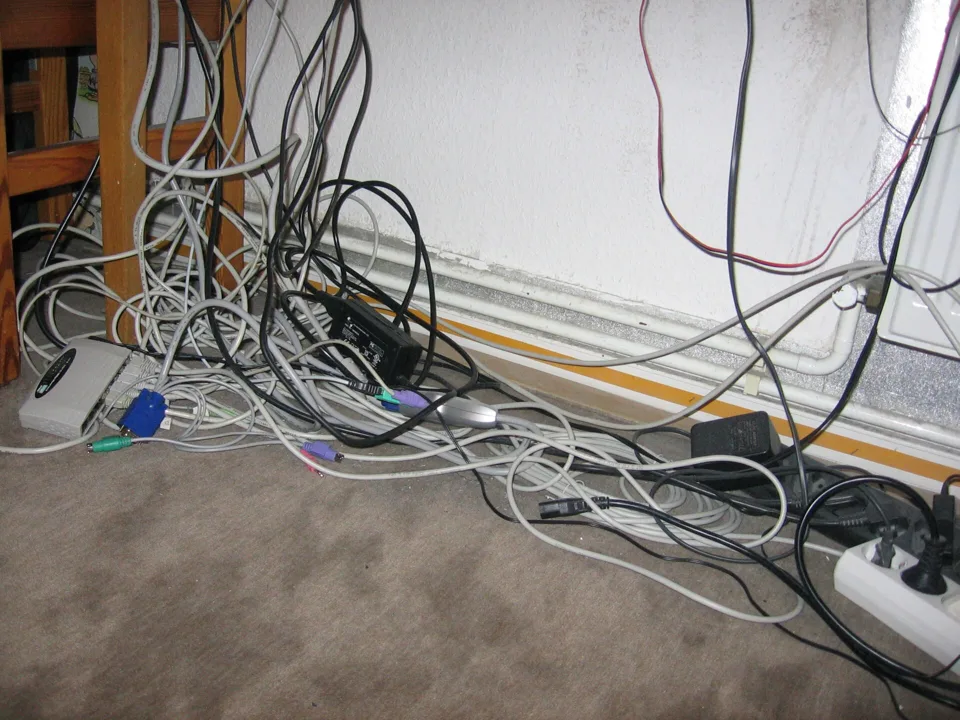
Which cable does my digicam use?
It depends on the maker and the year. Look up your camera on its brand page: Canon's guides name one cable (IFC-400PCU) for well over a hundred compacts from 2004 on, Nikon used many UC-E codes (UC-E6, UC-E16 and UC-E21 are the most common), Olympus used several numbered CB-USB cables, and Sony, Fujifilm, Panasonic and Casio used proprietary connectors on the camera.
| Brand | Connector families | What to look for |
|---|---|---|
| Canon | 12 | USB: IFC-400PCU. A/V: AVC-DC400, AVC-DC400ST or AVC-DC300 (see the table for your model) |
| Nikon | 15 | USB: UC-E6, UC-E16 or UC-E21. A/V: EG-CP14 or EG-CP16 |
| Sony | 14 | Sony's manuals before 2009 print no code: the cable is called the multi-use terminal cable |
| Olympus | 10 | USB: CB-USB5, CB-USB6, CB-USB7 or CB-USB8, depending on the model |
| Fujifilm | 10 | The USB cable has no code in the manuals; AV-C1 is the optional A/V cable on several models |
| Panasonic | 5 | Open the brand page for the codes named for each model |
| Casio | 7 | Open the brand page for the codes named for each model |
| Pentax | 11 | Open the brand page for the codes named for each model |
| Kodak | 5 | Open the brand page for the codes named for each model |
| Ricoh | 7 | Open the brand page for the codes named for each model |
Cable pages: UC-E6 · UC-E16 · UC-E21 · IFC-400PCU · AVC-DC400 and AVC-DC400ST · CB-USB5 and CB-USB6 · CB-USB7 · CB-USB8.
Is it just a mini-USB cable?
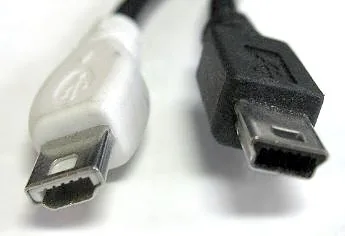
Sometimes. Canon's own spec lines call the camera-side USB connection mini-B, and its IFC-400PCU has a USB Type-A plug for the computer. Nikon's UC-E21 is a micro-USB cable, and Nikon's P340 and P900 manuals say not to use any other USB cable. But several makers used their own connector. Nikon's support table lists some of its ports as Mini-B 5-Pin and others as Mini-B 8-Pin, so a plain mini-USB cable is not automatically the right one, and Olympus's Multi-connector and Sony's Multi connector are named in the manuals.
Several makers put USB and A/V OUT on one socket, sometimes behind a cover: Nikon's UC-E6 connector and Fujifilm's F-series socket are examples from the manuals. Our brand pages show which family each camera belongs to.
What do the proprietary plugs look like?
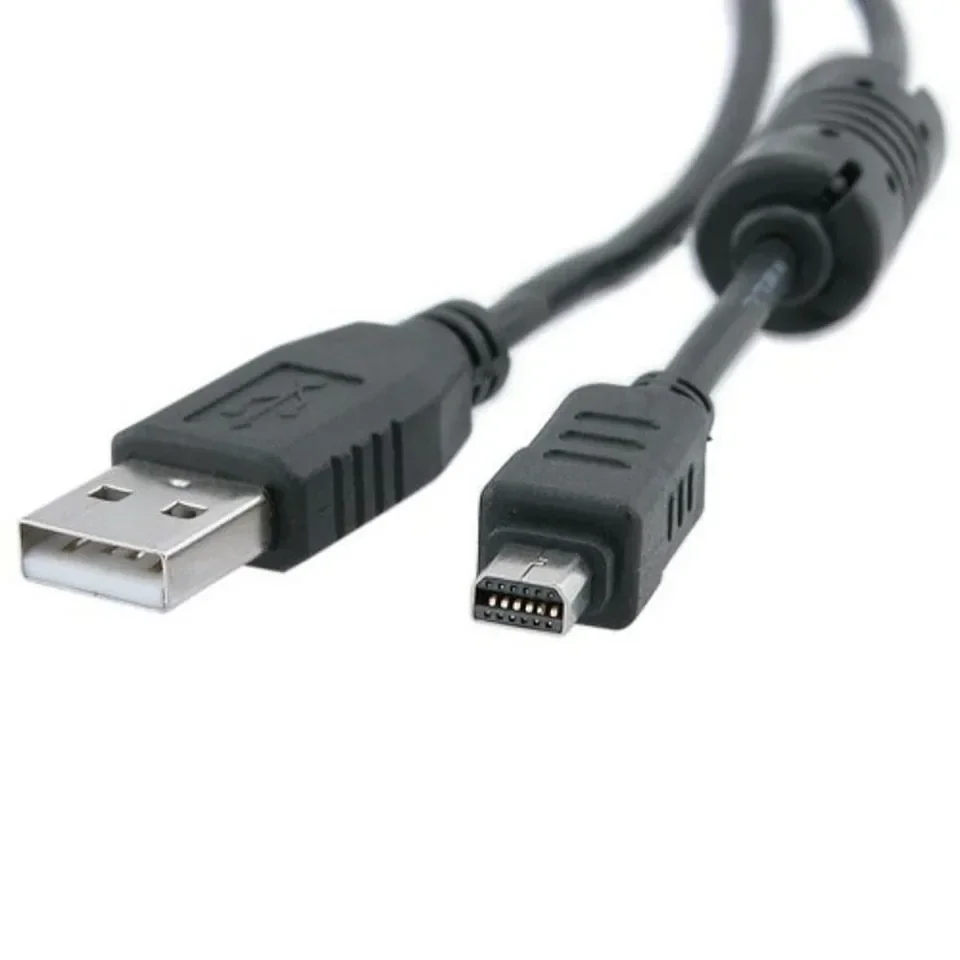
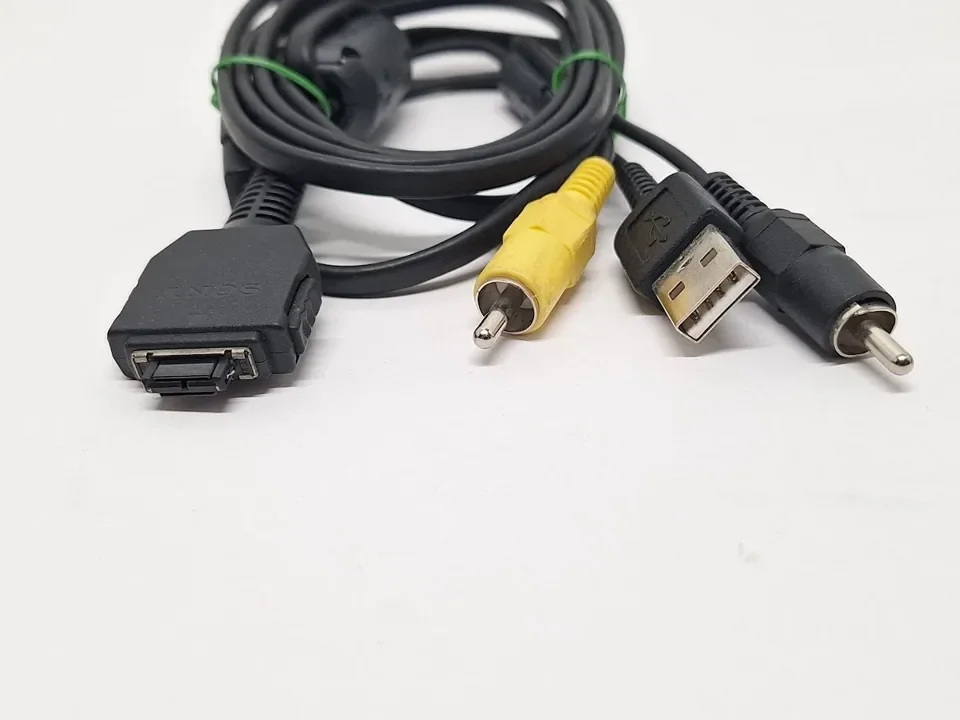
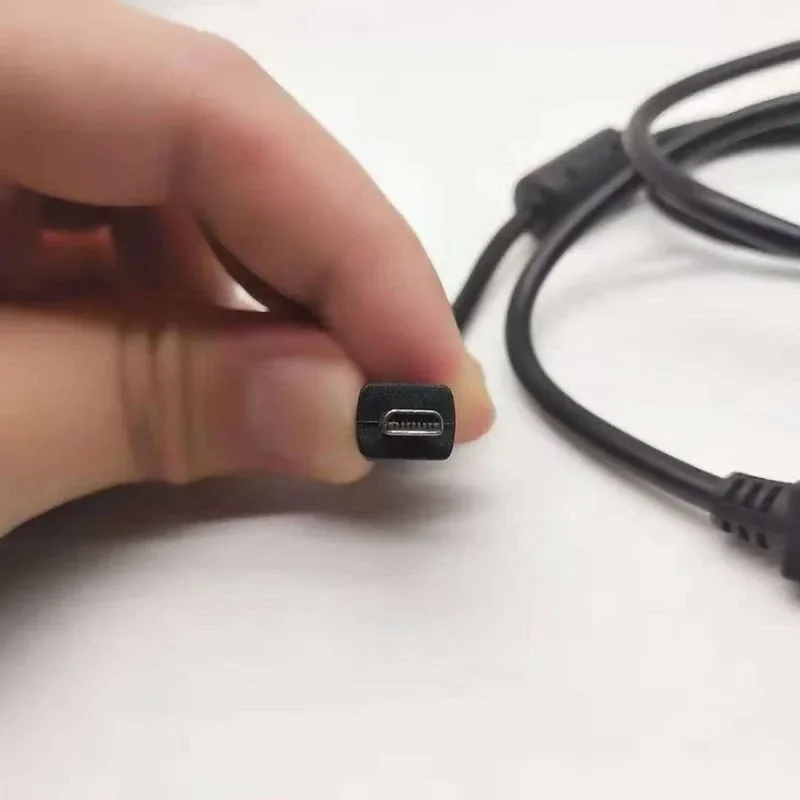
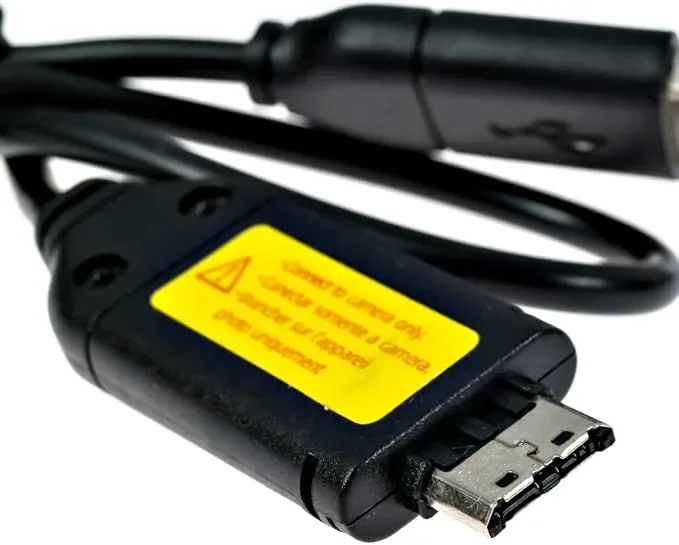
Here are camera-end plugs from our own collection. Makers do not publish pin counts for them, so we show them without claiming one.
How do I find the right cable for my model?
- Find your exact model on its brand page (Canon, Nikon, Olympus, Sony, Fujifilm, Panasonic, Casio, Pentax, Kodak, Ricoh) and read the cable code in the table.
- Check the source link in the same row. It goes to a manual, a maker page or a review.
- If your row says Partly confirmed or Unconfirmed, check the manual's accessory list before you spend money, because we could not prove the code from a maker document.
- Search for the cable code, not the camera name. Sellers often list fit lists that no maker backs up.
Can I charge my digicam through the cable?
Only some models, and only with the maker's own charging adapter. Nikon's P340 manual describes battery charging with the Charging AC Adapter EH-71P and the UC-E21 cable, and Fujifilm's J30 manual says to connect the supplied AC adapter into the USB multi-connector to charge the battery.
For other cameras we found no maker statement that the cable charges the battery, so assume it moves photos only and charge the battery in its own charger.
Why does every brand have a different plug?
The documents show a pattern, not a reason: each maker added a combined USB, audio and video socket and, over about ten years, moved to a shape of its own. None of the manuals we read says why.
| Maker | What the manuals show |
|---|---|
| Canon | A separate DIGITAL (mini-B) terminal and A/V OUT terminal in 2004 to 2011, then one unified connector from 2008 to 2017. |
| Nikon | UC-E6 is named in manuals from the 2002 Coolpix 2100 to 2014 models, UC-E16 from 2012, UC-E21 (micro-USB) from 2013. |
| Olympus | A Multi-connector from about 2004, paired with CB-USB5, CB-USB6, CB-USB7 or CB-USB8 depending on the model. |
| Fujifilm | One shared USB and A/V OUT socket under a terminal cover on the F20 to F100fd era (2006 to 2008), then a USB multi-connector from 2009 to 2013. |
| Sony | A Multi connector on the camera body for many 2005 to 2009 models; Sony's pre-2009 manuals print no cable code. |
What does this have to do with e-waste?
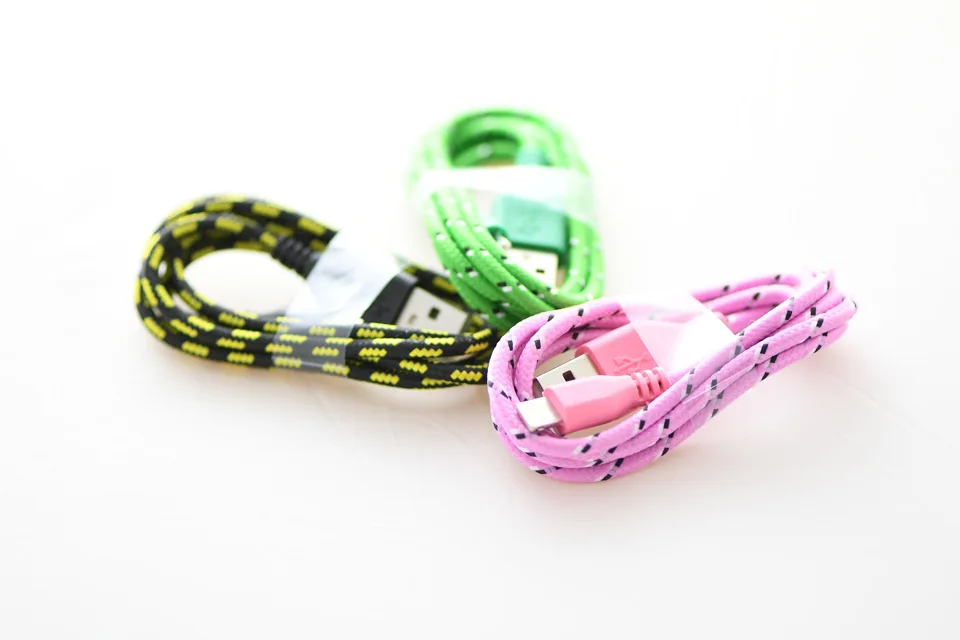
A cable that fits only one maker's cameras is hard to reuse with anything else. The EU decided to standardise: since 28 December 2024 its common-charger rules cover digital cameras, with USB-C as the common port.
The European Commission lists digital cameras among the devices covered, says buyers can purchase a new device without a charger, and estimates that the rules will reduce electronic waste by 980 tonnes a year and save consumers at least €250 million a year on unnecessary chargers.1 Those are Commission estimates for all covered devices; we have not found a figure for cameras alone, and no camera-cable e-waste figure exists in the sources we read.
For scale, the UN's Global E-waste Monitor 2024 reports a record 62 million tonnes of e-waste produced worldwide in 2022, of which less than a quarter (22.3%) was documented as properly collected and recycled.2 We found no figure for camera cables specifically.
What we could not confirm
- Pin counts. Nikon's support table states the port type for its cables: Mini-B 8-Pin for UC-E6, UC-E16 and UC-E17, Micro-B 5-Pin for UC-E21. For Canon, Olympus, Sony, Fujifilm and the other makers we checked, we found no maker document that does; sellers say Olympus is 12-pin, which we treat as unconfirmed.
- Which plugs interchange. Nikon's table says a UC-E6 can be used as an alternative for UC-E17 cameras and a UC-E21 for UC-E20 cameras. We found no maker statement that any other pair interchanges, though some third-party sellers say so.
- Sony cable codes. Sony's manuals before 2009 give no cable code. The VMC-MD1 that sellers list for many Sony models is not named in any Sony document we found.
- Status labels. Confirmed = a maker document or the maker's own store names it. Partly confirmed = box contents or accessory text only. Unconfirmed = sellers or reviews only. A row is published only if its source quote is found at the source link.
Cameras without a cable? Take the memory card out and use a card reader: see which memory cards old digicams use.
Sources
- European Commission, One common charging solution for all (read 2026-10-18)
- UNITAR, Global E-waste Monitor 2024 press release, 20 March 2024 (read 2026-10-18)
- Camera and cable rows: the manuals and maker pages linked in each row on the brand pages; the data is in digicam-cables.csv.
Nikon cable photos and several others are still being collected; we do not use manufacturer or seller photos.