Canon PowerShot ELPH / IXUS · 2009
The Canon PowerShot SD940 IS (Digital IXUS 120 IS): a 28 mm ELPH, and the argument about its sharpness
Sold in Europe as the Digital IXUS 120 IS and in Japan as the IXY Digital 220 IS.
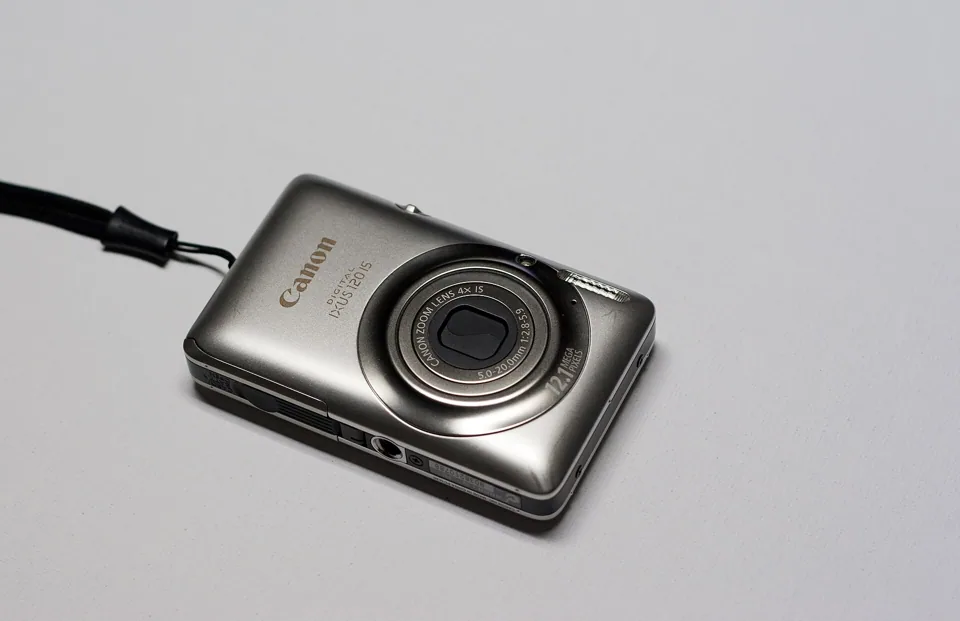

In August 2009 Canon put a 12-megapixel CCD, a stabilised 28–112 mm zoom, a 2.7-inch screen and 720p video into a body 20 mm thick. Five reviewers agreed on the looks and split on the pictures: one called the image quality excellent, another found the resolution below what 12 megapixels should give.
- Launched
- August 2009
- Launch price
- $299.99 · £299 · €3494
- Sensor
- 12.1 MP CCD
- Lens
- 28–112 mm, 4×
- Card
- SD, SDHC, MMC, MMCplus
- Battery
- NB-4L
Canon PowerShot SD940 IS specs: sensor, lens, battery, memory card and cable
Launched in August 2009 at $299.99, the Canon PowerShot SD940 IS (also sold as the Digital IXUS 120 IS and IXY Digital 220 IS) is a 12.1 MP CCD compact with a 28–112 mm (35 mm equivalent) 4× zoom lens. Inside: it takes SD, SDHC, MMC and MMCplus cards and runs on the NB-4L battery. Sources
- Sensor
- CCD, 1/2.3", 12.1 MP source
- Lens
- 28–112 mm equivalent, 4× zoom source
- Memory card
- SD, SDHC, MMC, MMCplus. Largest, in the maker's words: Canon's table: SD: 2 GB max; SDHC: 4 to 32 GB. SDXC not marked as supported Maker-stated source · card guide · all cards
- Battery
- NB-4L source
- Also sold as
- Digital IXUS 120 IS · IXY Digital 220 IS
- USB / A/V cable
- See our Canon cable page
What is the biggest SD card the Canon PowerShot SD940 IS takes?
The Canon PowerShot SD940 IS takes SD, SDHC, MMC, MMCplus. The maker's words on size: Canon's table: SD: 2 GB max; SDHC: 4 to 32 GB. SDXC not marked as supported. A 64 GB card is SDXC, which this row does not name. Maker-stated source
More: SD, SDHC and SDXC guide · lookup table · the full memory card guide
Meet the camera
Canon's museum page lists the camera as marketed in August 2009 and describes a stainless, sleek exterior in four colours, with a body 20.0 mm thick.1 It measures 89.5 by 54.9 by 20.0 millimetres and weighs about 120 grams, body only.1 PhotographyBLOG called it metal and plastic, reassuringly weighty for its size, and said its brown test unit picked up a couple of surface scratches in two weeks.4 Imaging Resource listed the colours as soft metallic blue, black, silver and brown, and called the build attractive and sturdy.3 Trusted Reviews, which tested the silver one, called the body all metal and the build quality superb.7
It had three names. Canon sold it as the PowerShot SD940 IS Digital ELPH in the Americas, the Digital IXUS 120 IS in Europe, Asia and Oceania, and the IXY Digital 220 IS in Japan.1 Imaging Resource gave an MSRP of $300 with availability in September 2009;3 PhotographyBLOG listed $299.99, £299 and €349;4 Photo Review gave an Australian RRP of $499.6 Trusted Reviews put the UK street price at about £260 and thought that a lot of money, more than for the IXUS 110 IS or IXUS 100 IS.7 Canon's museum describes it as the top-end successor to the IXY Digital 210 IS, which our SD780 IS review covers.1
- Sensor
- 12.1 MP CCD, 1/2.3"1
- Lens
- 4x, 28–112 mm equiv., f/2.8–5.9, lens-shift stabiliser1
- ISO
- 80 to 1600, with 3200 as a shooting mode1
- Video
- 1280 × 720 at 30 fps, H.264 in a MOV file, HDMI output1
- Card and battery
- SD/SDHC (MMC also listed) · NB-4L, about 220 shots per charge (CIPA)1
- Size
- 89.5 × 54.9 × 20.0 mm, about 120 g body only1
- Launch price
- $299.99 · £299 · €3494
Why this one was interesting
A real wide angle in a slim body
Cameralabs called it Canon's slimmest IXUS/ELPH with wide-angle coverage, and rated the lens-shift stabiliser highly: at 112 mm and 1/15 s, its crop with stabilisation on was sharp where the crop with it off showed shake, which the reviewer put at about three stops of benefit.5 Imaging Resource listed the wide-angle, stabilised 4x zoom and the tiny pocketable size among its pros.3 Imaging Resource found the cheaper PowerShot SD1200 IS gave better prints than the SD940 IS, while the SD940 IS had higher resolution, a wider lens and more zoom.3
A bigger screen, no viewfinder
PhotographyBLOG noted that the 2.7-inch screen is larger than the 2.5-inch one on the IXUS 100 IS, and that there is no optical viewfinder.4 Imaging Resource found the wide viewing angle good, and Cameralabs praised the brightness and viewing angle but warned that a flush-mounted panel can scratch.35 PhotographyBLOG called sunlight an occasional problem for the screen.4
720p video and HDMI
PhotographyBLOG pointed to HDMI output on an entry-level compact,4 and Imaging Resource listed HD movies and HDMI among the pros, adding that a mini-HDMI cable is needed.3
For the line it belongs to, see our reviews of the SD870 IS, the SD1100 IS, the SD1300 IS and the SD1400 IS.
What was lost
PhotographyBLOG said it was not much of a radical departure from the IXUS 100 IS and read more like a lifestyle accessory than a photographic tool.4 Cameralabs compared the two directly: the IXUS 100 IS is thinner, cheaper and has an optical viewfinder, but a 3x zoom without the true wide angle and a smaller screen.5 There are no manual shutter or aperture controls, and Photo Review added that there are no raw files either.56
The dark: its weak point
Everyone agreed the camera was strongest at low ISO. Cameralabs, shooting a low-light scene, found little visible noise at the lower settings, noise appearing at ISO 200 but not a concern even for big prints, a distinct drop at ISO 400 and gradual worsening at 800 and 1600, and judged Canon's noise reduction a good balance.5 PhotographyBLOG found noise low up to ISO 800 and ISO 1600 relatively clean with some softening.4 Imaging Resource was stricter: softening begins at ISO 200, detail is considerably soft at ISO 400, and luminance noise becomes the problem; its print guide called ISO 200 good at 11 by 14 inches, which it found a little disappointing for 12 megapixels.3 Photo Review said resolution starts to drop at ISO 200 and falls sharply at ISO 400, and noted colour noise in shadows even at low ISO.6
The ISO 3200 shooting mode drew the widest range of opinion. Cameralabs said it shoots at 1600 by 1200 pixels and gives noisy, blurry results, a feature worth having to fall back on where flash is not possible;5 Imaging Resource called it usable at 4 by 6 inches only for subjects with little detail;3 Photo Review called the results essentially unusable.6 Flash was a modest help: Imaging Resource found it slightly weak, bright to about 13 feet at wide angle with the ISO raised to 320, poor in macro, but useful outdoors to fill shadows.3
Like what you read? See recent eBay sold listings for this camera ↗
On eBay right now
Live listings for this camera, supplied by eBay and updated automatically. We earn a commission if you buy through them.
The little wins
A stabiliser that earns its keep
Cameralabs measured roughly three stops of benefit at the long end, and PhotographyBLOG listed continuous, shoot-only and panning anti-shake modes plus off.54
Faces and a Smart Auto
Cameralabs said face detection tracks up to nine faces and that the scene detection in Auto mode is quick and fairly accurate;5 Imaging Resource called Smart Auto effective and Face Detection responsive, and said the on-screen tips help.3
A redesigned menu
Cameralabs said the menu was redesigned to put scene modes inside Program, removing the need for a complicated mode dial, and that hints and tips aid navigation.5
How it drew the picture
Here the reviews diverge. In its daylight test shot Cameralabs found it hard to fault on sharpness and edge detail, with only slightly soft edges and no coloured fringing in that shot (it had to look hard through its other shots to find any), and scored image quality 18 out of 20.5 PhotographyBLOG scored image quality 4 out of 5, calling images just a little soft at default sharpening, with some purple fringing at high-contrast edges, naturalistic colour and even exposures.4 Imaging Resource found the upper-right corners quite soft at wide angle, wide-angle barrel distortion of about 0.6 percent, moderate chromatic aberration, and colours that were generally good with some reds shifting toward orange.3 Trusted Reviews, by contrast, called image quality the weak spot only because the rest of the camera was so good, noting noticeable barrel distortion at wide angle and some chromatic aberration at the far corners, but very good edge-to-edge sharpness.7 Photo Review found colour reasonably good with only minor hue shifts, but resolution below expectations for 12 megapixels, with highlight detail often lost in bright outdoor scenes.6




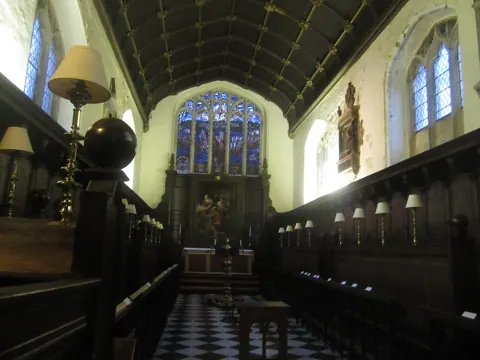



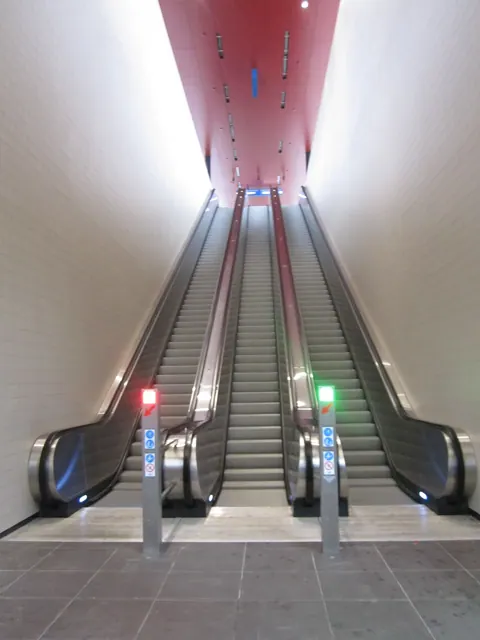

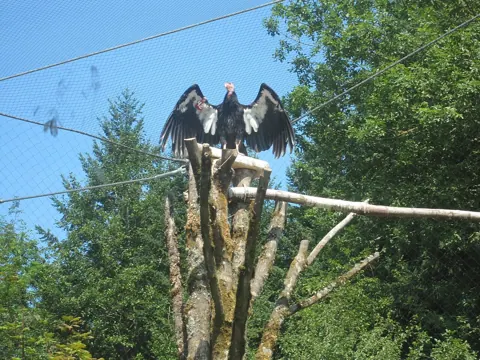

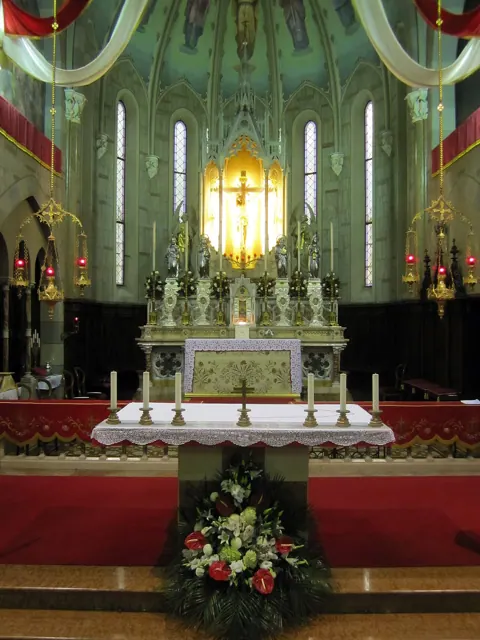

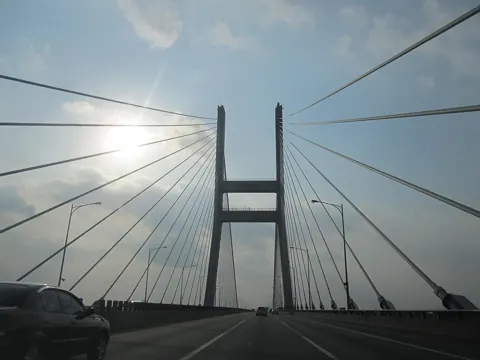

Photos taken with this camera (sold in Europe as the IXUS 120 IS), from Wikimedia Commons, credited under each picture.
Where it let you down
Battery life was rated at 220 shots,1 which Imaging Resource called below average, PhotographyBLOG underwhelming but not disastrous, and Cameralabs listed among its bad points as poor.345 Imaging Resource measured an autofocus shutter lag of 0.48 seconds at wide angle and 0.077 seconds prefocused, a single-shot cycle of 2.37 seconds, and a zoom that was slow to respond, sometimes needing repeated lever presses; PhotographyBLOG and Cameralabs, by contrast, called the zoom responsive and timed a full sweep at about 2 and 1.5 seconds.345 Continuous shooting is rated at 0.8 frames per second and Cameralabs and Imaging Resource both found it slow.153 In video, all four reviews said optical zoom is unavailable while recording, only digital zoom; Imaging Resource added that focus is fixed at the start, and clips stop at about 10 minutes.3456 PhotographyBLOG noted there is no internal memory, so a card is needed at once.4 Photo Review found the auto white balance struggled under incandescent light.6
What the reviewers said in 2009
| Outlet | Date | Verdict |
|---|---|---|
| PhotographyBLOG | 12 Oct 2009 | 4 stars. Design 5, features 4, ease of use 4, image quality 4, value 3.5 out of 5; a well-built, eye-catching snapshot model.4 |
| Imaging Resource | 23 Dec 2009 | 4.0 out of 5. Fun to shoot for snapshooters; good for its class, enthusiasts should look elsewhere; prints not as good as the SD1200 IS.3 |
| Photo Review | No date shown | 8.0 out of 10. Easy, family-friendly and well built; less suited to dim light, high-contrast scenes or anyone wanting manual control.6 |
| Trusted Reviews | Date not shown | A lovely little camera: extremely well made, easy to use and good image quality, marked down for its extremely high price.7 |
| Cameralabs | Pages dated 15 Jun 2011 | 86 percent and Recommended. Stylish and capable with outstanding photo quality, if you can live without manual controls and zoom while filming.5 |
The timeline
- February 2009The IXY Digital 210 IS (SD780 IS) is marketed.1
- August 2009Canon's museum lists the SD940 IS as marketed.1
- September 2009Imaging Resource lists availability, at an MSRP of $300.3
- 12 October 2009PhotographyBLOG publishes its review.4
- 23 December 2009Imaging Resource publishes its review.3
Should you buy one now?
Buy one if you want a slim metal ELPH with a true 28 mm wide end for daylight snapshots and short 720p clips, and accept that reviewers split on sharpness. It launched at $299.99;4 what it sells for now is a question for the sold listings, not for us. Before you bid, check these:
- The name. It is the PowerShot SD940 IS in the Americas, the Digital IXUS 120 IS in Europe and the IXY Digital 220 IS in Japan, so search all three.1 The IXY Digital 510 IS is a different camera, the SD960 IS / IXUS 110 IS.2
- The battery. It uses an NB-4L, rated at about 220 shots;1 a fresh one is on Amazon ↗.
- The card. It takes SD and SDHC cards and has no built-in memory;14 see our memory card guide.
- The screen and body. The flush screen can scratch and PhotographyBLOG's unit scuffed within two weeks, so look closely.54
- The lens. Check that it extends and retracts cleanly and that photos are not hazy.
If you are wondering why cameras like this are being hunted down again, we tell that story once, in Pictures that never left the card.
See recent sold prices on eBay ↗Shop on eBay ↗NB-4L battery ↗
Sources
- Canon Camera Museum: IXY DIGITAL 220 IS / PowerShot SD940 IS DIGITAL ELPH / Digital IXUS 120 IS (names, August 2009, specifications)
- Canon Camera Museum: IXY DIGITAL 510 IS / PowerShot SD960 IS DIGITAL ELPH / Digital IXUS 110 IS (names, February 2009)
- Imaging Resource, Canon SD940 IS review by Theano Nikitas (12/23/2009; MSRP $300, availability 09/2009)
- PhotographyBLOG, Canon Digital IXUS 120 IS review by Gavin Stoker (12 October 2009)
- Cameralabs, Canon Digital IXUS 120 IS / PowerShot SD940 IS review by Gordon Laing (pages dated 15 June 2011)
- Photo Review (Australia), Canon IXUS 120 IS review (no author or date shown; RRP AUD $499)
- Trusted Reviews, Canon Digital IXUS 120 IS review (date not shown on the page; UK price about £260)
Camera photo by BenGrantham (CC BY 2.0); other photographs are credited under each one, all via Wikimedia Commons. Links to eBay and Amazon are affiliate links.