Canon PowerShot ELPH / IXUS · on sale spring 2009
The Canon PowerShot SD1200 IS (Digital IXUS 95 IS): the pocket point-and-shoot that kept its viewfinder
Sold as the Digital IXUS 95 IS in Europe, Asia and Oceania, and the IXY Digital 110 IS in Japan.1
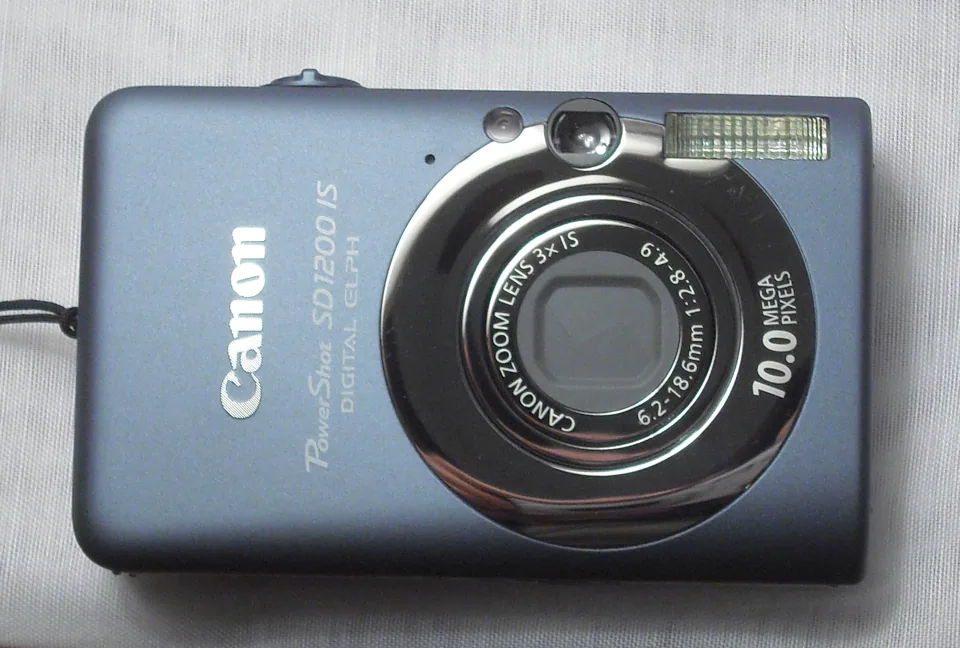

In February 2009 Canon refreshed its slim IXUS with 10 megapixels, a Smart Auto mode and six colours. Reviewers called it easy and good-looking, then picked at its corners, its noise and its price.
- Launched
- February 2009
- Sensor
- 10 MP CCD
- Lens
- 35–105 mm, 3×
- Card
- SDHC, SD, MultiMediaCard
- Battery
- NB-6L
Canon PowerShot SD1200 IS specs: sensor, lens, battery, memory card and cable
The Canon PowerShot SD1200 IS (also sold as the Digital IXUS 95 IS and IXY Digital 110 IS) is a 10 MP CCD compact camera with a 35–105 mm (35 mm equivalent) 3× zoom lens, launched in February 2009 at $229.99. It runs on the NB-6L battery. Sources
- Sensor
- CCD, 1/2.3", 10 MP source
- Lens
- 35–105 mm equivalent, 3× zoom source
- Memory card
- SDHC, SD, MultiMediaCard source
- Battery
- NB-6L source
- Also sold as
- Digital IXUS 95 IS · IXY Digital 110 IS
- USB / A/V cable
- IFC-400PCU, AVC-DC400 Confirmed · all Canon cables
Meet the camera
It is a very small camera: Canon lists it at 88.5 by 54.8 by 21.8 millimetres and about 120 grams, body only.1 The Register gave its weight as 140 grams with battery and card and described a brushed-metal, chrome-effect finish.4 Cameralabs compared it to a pack of playing cards and said the lens retracts fully.6 Imaging Resource counted six colours, from black to hot pink.5
Canon's museum page gives its marketing date as February 2009,1 and PC World, reporting the announcement on 18 February, gave a price of $230 and availability in April, calling it the follow-up to the hot-selling SD1100 IS.2 Imaging Resource's table lists $229.99 and an availability date of 15 March 2009.5 PhotographyBLOG quoted £249, $229.99 and €299.3 The Register put it at £219.4
- Sensor
- 10 MP CCD, 1/2.3" (10.3 MP total)1
- Lens
- 3x, 35–105 mm equiv., f/2.8–4.9, lens-shift stabiliser1
- Screen
- 2.5", about 230,000 dots, plus a small optical viewfinder1
- Video
- 640 × 480 at 30 fps, Motion JPEG AVI, mono sound1
- Card and battery
- SD, SDHC, MMC · NB-6L, about 260 shots with the screen on1
- Size
- 88.5 × 54.8 × 21.8 mm, about 120 g body only1
Why this one was interesting
Smart Auto
PhotographyBLOG said Canon's Smart Auto analyses brightness, contrast, distance and hue and chooses among 18 modes, and found it accurate and quick in use.3 Cameralabs called the scene detection quite an advance, with the caveat that large areas of colour can fool it.6 Imaging Resource called the Smart Auto mode pretty smart, taking most of the work out of photography.5
Faces, and a viewfinder
Face detection tracked up to nine faces, Cameralabs said, working very well in good light and less well indoors.6 PhotographyBLOG noted there was no blink detection, which the dearer IXUS 100 IS offered.3 The optical viewfinder was the camera's other distinction: Cameralabs said it was very small and could show parallax error, but was useful in bright sun or to save battery.6
Where it sat in the line
PhotographyBLOG said the front plate matched the IXUS 80 IS and that the visible change was the jump from 8 to 10 megapixels,3 and Cameralabs named the IXUS 80 as its predecessor.6 Our review of that camera is the PowerShot SD1100 IS. For high-definition video Cameralabs pointed to the IXUS 100 IS, our PowerShot SD780 IS.6 Canon's later SD940 IS is covered in our review too.
What was lost
Cameralabs noted that the direct print button was dropped.6 There is no grip: PhotographyBLOG and Imaging Resource both said so, and Imaging Resource recommended a wrist strap,35 although Cameralabs found it comfortable to hold.6 What Digital Camera called the 3x zoom its main complaint, noting that dearer Canons went wider and longer.7
The dark: its weak point
Reviewers agreed noise rose with ISO and disagreed about where it hurt. PhotographyBLOG saw noise from ISO 400 upward, only under close inspection at first, more noticeable at 800 and readily visible but usable at 1600.3 The Register said noise was no problem up to ISO 400 and rose sharply at 800.4 What Digital Camera called ISO 80 to 400 very clean, 800 good and 1600 fairly noisy with muted colour.7 Imaging Resource was the most critical: softening began at ISO 200, and ISO 800 and 1600 were quite fuzzy, though chroma noise was well controlled.5 Its print guide: ISO 100 good at 11 by 14 inches, 400 at 8.5 by 11, 800 at 5 by 7, 1600 at 4 by 6, and the 3200 mode too soft even for 4 by 6.5 Cameralabs found ISO 400 held up with little added noise but colour saturation starting to drop, and said the 3200 mode, at 1600 by 1200, gave a much better result than full-size 3200 and that the Sony W220's detail broke up quite severely at its 3200 setting.6
We found no free photo from this camera with its sensitivity recorded in the file, so this page shows no low-light strip.
Like that look? See recent eBay sold listings for this camera ↗
On eBay right now
Live listings for this camera, supplied by eBay and updated automatically. We earn a commission if you buy through them.
The little wins
Fast enough
PhotographyBLOG found autofocus very fast in program mode and shutter delay imperceptible, and power-on took just over a second.3 Imaging Resource measured 0.074 seconds when prefocused, but 0.50 seconds at wide angle with autofocus.5
Close-ups
Macro focus reaches 3 centimetres, which Cameralabs said was less close than some Canons but better than most rivals.6 What Digital Camera liked the macro mode paired with the flash.7
Self-timer for groups
The Register liked the Face Self-Timer, which waits for an extra face to enter the frame before firing.4
How it drew the picture
PhotographyBLOG scored image quality 3.5 out of 5: default colour looked washed out, though the Vivid setting added punch, files were slightly soft, and wide-angle corners were soft, especially on white walls.3 Imaging Resource found the wide-angle corners very soft, barrel distortion of about 0.8 percent and moderate colour fringing, but generally good colour, with some yellows shifting toward green.5 The Register noted muted colours, a tendency to overexpose and fringing on some shots.4 What Digital Camera called exposures accurate and well balanced, sharpness on a par with other compacts, and fringing minor.7 Cameralabs said it took excellent photos for web posting and small prints.6
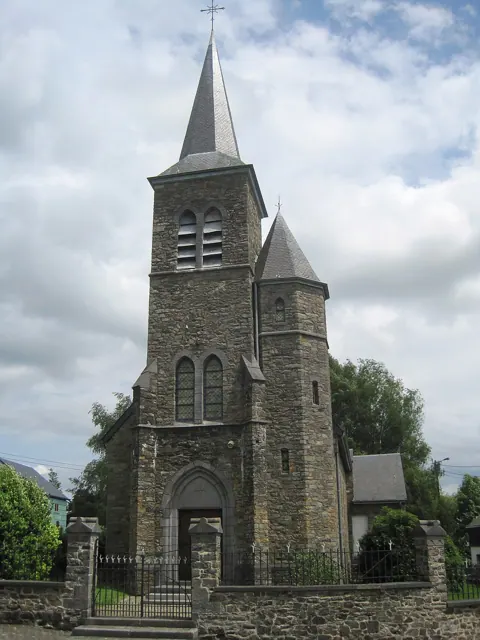

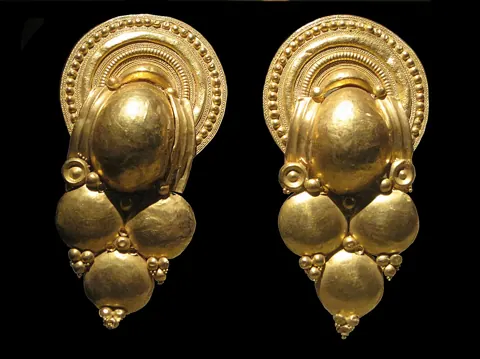

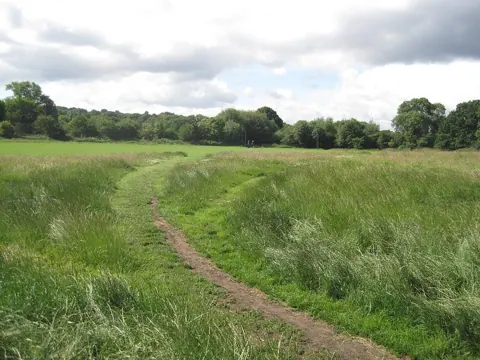












Photos taken with this camera, from Wikimedia Commons, credited under each picture. These nine come from five photographers, so treat them as a sample, not a test.
Where it let you down
The screen was the usual complaint: Cameralabs called it bright and contrasty but harder to see in bright sun, and PhotographyBLOG and The Register agreed it was hard to see in bright sunlight.634 Reviewers disagreed over the viewfinder: PhotographyBLOG called it small and murky and expected most owners to ignore it, while The Register found it useful outdoors.34 Video was VGA only; Cameralabs found no optical zoom while recording and was unimpressed by the digital zoom, though The Register said zooming during recording was allowed.64 The Register also found autofocus noisy and the i-Contrast setting buried on a second menu page.4 Imaging Resource clocked a 2.04-second shot-to-shot time, slower than average, and a flash recycle of about 6 seconds.5 Battery life was about 260 shots; The Register got around 200 frames plus some video on one charge.14
What the reviewers said in 2009
| Outlet | Date | Verdict |
|---|---|---|
| PhotographyBLOG | 25 May 2009 | 4 out of 5 (design 4, features 4, ease of use 4.5, image quality 3.5, value 4). An undemanding point-and-shoot; buy the IXUS 80 IS if cheap, or pay about £50 more for the IXUS 100 IS.3 |
| The Register | 12 Jun 2009 | No score. A smart, easy camera that goes anywhere, but better-specified compacts cost less and £219 is a lot.4 |
| Imaging Resource | 2 Nov 2009 | 4 out of 5 and a Dave's Pick: small, friendly and capable, but enthusiasts should look elsewhere in the line.5 |
| What Digital Camera | Original date not stated | No score on the page. "A thoroughly recommended little gem"; the complaint is the lens range.7 |
| Cameralabs | Page dated 17 Jun 2011 | 83 percent, Highly Recommended; the better of two budget compacts against the Sony DSC-W220, with lower noise, a brighter screen and a viewfinder.6 |
Cameralabs said the Sony had two more megapixels, a zoom about 25 percent longer and a slightly larger screen, but used Memory Stick Duo cards and proprietary connectors.6
The timeline
- February 2009Canon's marketing date for the camera.1
- 18 February 2009PC World reports the announcement: $230, April.2
- 15 March 2009Availability date in Imaging Resource's table.5
- 25 May 2009PhotographyBLOG publishes its review.3
- 12 June 2009The Register publishes its review.4
- 2 November 2009Imaging Resource publishes its review.5
Should you buy one now?
Buy one if you want a tiny, simple, stabilised CCD camera for daylight snapshots and flash portraits, and can live with VGA video and a plain 3x lens. It launched at $229.99;5 what it sells for now is a question for the sold listings, not for us. Before you bid, check these:
- The name. It is the SD1200 IS in the US, the IXUS 95 IS in Europe and the IXY Digital 110 IS in Japan, so search all three.1
- The battery. It uses an NB-6L;1 a fresh one is on Amazon ↗, and a spare was recommended.5
- The card. Canon lists SD, SDHC and MultiMediaCard types;1 see our memory card guide.
- The cable. Canon's specification lists a dedicated multi-connector for USB, audio and video;1 see our cable guide.
- The screen and corners. Check for scratches and that the lens extends and retracts cleanly; reviewers found soft wide-angle corners at the wide end.53
If you are wondering why cameras like this are being hunted down again, we tell that story once, in Pictures that never left the card.
See recent sold prices on eBay ↗Shop on eBay ↗NB-6L battery ↗
Sources
- Canon Camera Museum, PowerShot SD1200 IS (names, marketing date February 2009, specifications)
- PC World via ABC News, Canon announces ten new PowerShots by Tim Moynihan (18 Feb 2009: $230, April)
- PhotographyBLOG, Canon Digital IXUS 95 IS review by Gavin Stoker (25 May 2009)
- The Register, Canon Digital Ixus 95 IS review by George Cole (12 Jun 2009)
- Imaging Resource, Canon SD1200 IS review by Stephanie Boozer (2 Nov 2009; MSRP $229.99, available 15 Mar 2009)
- Cameralabs, Canon Digital IXUS 95 IS / PowerShot SD1200 IS review by Gordon Laing (pages 1, 3 and 5; page dated 17 Jun 2011)
- What Digital Camera, Canon IXUS 95 IS review by Mike Lowe (original date not stated; page shows 2014; pages 1 and 2)
Camera photo by Junocola (public domain); other photographs are credited under each one, all via Wikimedia Commons. Links to eBay and Amazon are affiliate links.