Canon PowerShot ELPH · on sale March 2008 · a retrospective
The Canon PowerShot SD1100 IS: the colourful one with the shake-proof lens
In 2008 Canon put image stabilisation into its smallest ELPH, kept the little optical viewfinder, offered it in five colours and cut the price by fifty dollars. Reviewers called it a bargain, and then looked closely at the noise.
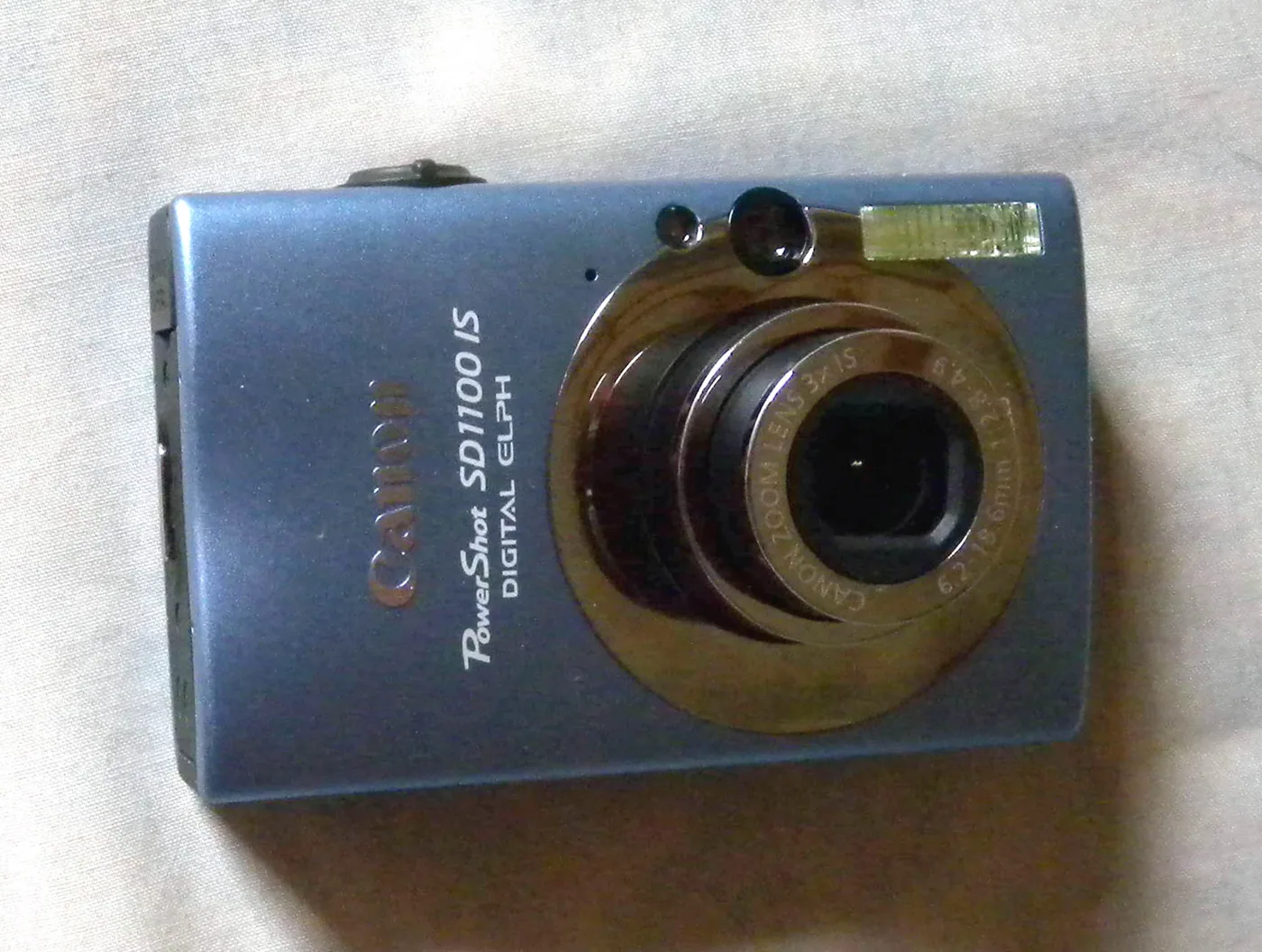
Meet the camera
It is a small slab of coloured metal with a ring of chrome around the lens. Canon's own museum text calls the body bright pure aluminium, modelled on the square form of its predecessor but with sleek curves it calls Curvature Design.1 Imaging Resource put the difference more bluntly: where the SD1000's corners were hard and angular, these taper softly.4 It measures about 87 by 55 millimetres and 22 thick and weighs 125 grams without the battery.1 There is still a real optical viewfinder, a rarity at this size, as Imaging Resource noted.4
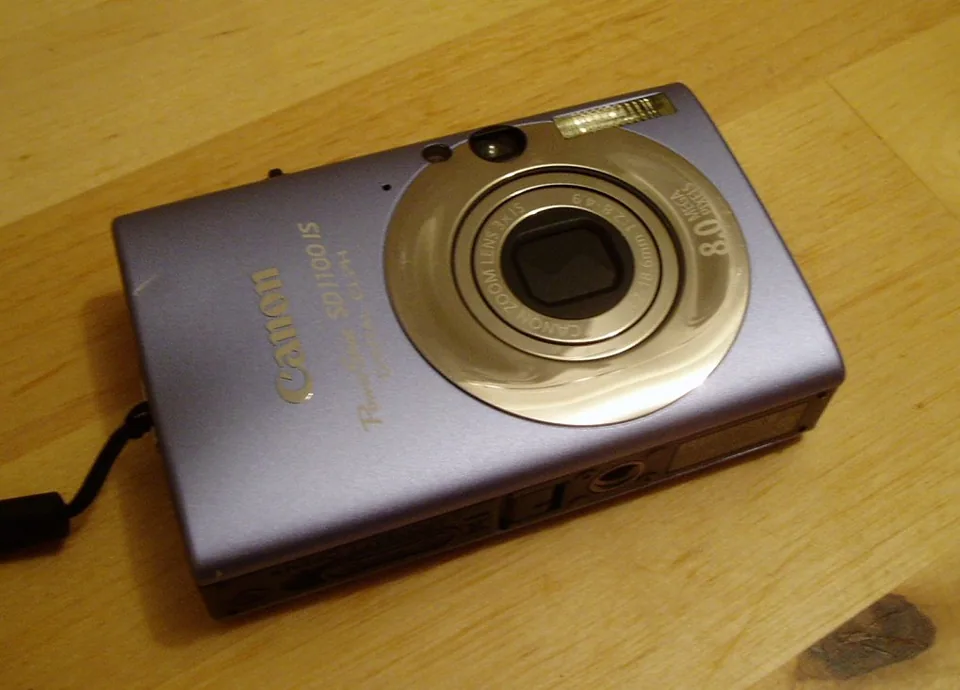
Canon announced it on January 23, 2008, with the price expected around $250 when it reached shops in March.24 Reviewed.com quoted $249, noting that the SD1000 before it had been $299 and had no image stabilisation.5 Canon's museum calls it the successor to the IXY Digital 10 of March 2007, which Americans know as the PowerShot SD1000, and the first core model in its IXY Digital line to come in five colours.1 Imaging Resource listed them: silver, gold, brown, blue and pink.4
Why this one was interesting
A stabiliser in the smallest body
Image stabilisation was the point of the "IS" in the name. Imaging Resource explained that Canon had spent years building optical stabilisation into camcorders and big SLR lenses, and now fitted it into the smallest of its pocket cameras, with lens elements that shift to cancel shake.4 The lens-shift approach, they said, is arguably the better of the stabilisation methods then available.4 DPReview agreed in its own terms, listing efficient image stabilisation as a strength.3 The price of that engineering was a little extra thickness compared with the SD1000.4
Was it a new chip?
Imaging Resource's pros list gave the camera a DIGIC III processor, "just like the big boys."4 DPReview credited Canon's latest-generation DIGIC with making the camera feel snappy and responsive.3 Resolution crept up from the SD1000's 7.1 megapixels to 8.4
A new lens?
Not really. It was a 3x zoom equivalent to 38 to 114 mm,2 and DPReview noted that the wide end was not exactly wide and the long end a little soft.3 The innovation was in what moved inside it.
If you want to see what this replaced, our SD1000 retrospective covers the smaller, hard-edged camera the SD1100 IS followed.
The dark, honestly
Here the reviewers disagreed. Imaging Resource thought low-light performance good, and ISO 1600 still made a decent 4 by 6 inch print, while ISO 80 and 100 stayed good at 13 by 19 inches.4 Its reviewer shot jewellery in a dim antique shop handheld at ISO 800, and called the noise an acceptable compromise for sharp pictures.4 DPReview was less kind: it found the camera pretty noisy at any sensitivity above ISO 200, though with decent detail retention.3 Reviewed.com scored its manual-ISO noise only 4.72 and found it quickly more obvious at the higher settings, especially ISO 1600, and said flatly that a compact like this is not for people who like to shoot in the dark without a flash.5
What the SD1100 did have was a flash that recycled quickly. DPReview thought the recycling times decent, useful at a party or in the pub, even if the flash was underpowered and subjects had to stay close.3 Imaging Resource saw the flash take just under ten seconds to recharge after a full-power shot.4
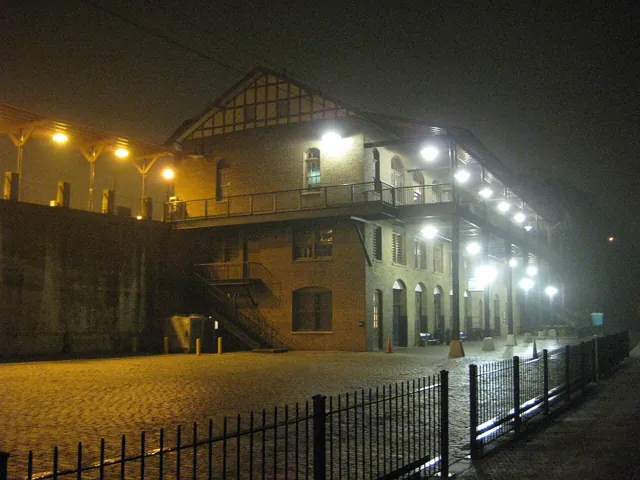



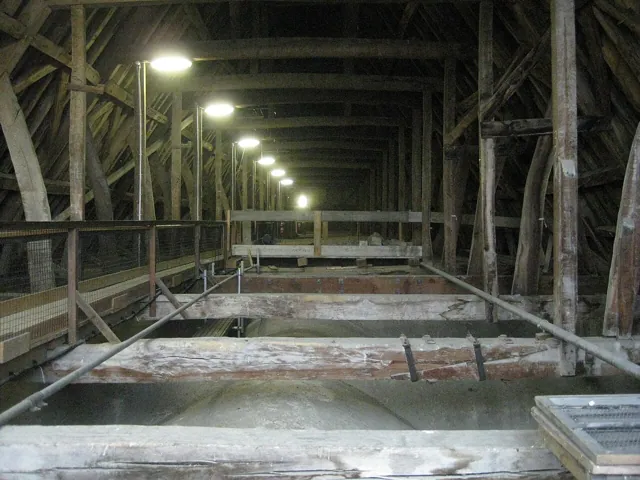



Real photographs taken with this camera family (sold in Europe as the Digital IXUS 80 IS). The sensitivity shown is recorded in each file's own EXIF data.

Like that look? See what SD1100 ISs have recently sold for on eBay ↗
On eBay right now
Live listings for this camera, supplied by eBay and updated automatically. We earn a commission if you buy through them.
The little wins
For a camera that cost $249, the SD1100 IS had a surprising number of things reviewers noticed.
An optical viewfinder, kept
Imaging Resource commended Canon for keeping one, since a viewfinder helps in bright light, where the screen washes out, and in very dark places where it is hard to judge framing.4 It showed only about 84 percent of the scene, so pictures contained more than you saw.4 DPReview, less kind, called it only an emergency solution.3
Faces, counted
Canon advertised face detection for up to 35 faces at once.5 Reviewed.com tested it: boxes appeared on four faces in the live view, five on the quick review, and 18 in playback mode.5
Good video for the time
Movies were 640 by 480 at 30 frames a second, which Imaging Resource called excellent and compared with MiniDV recordings on camcorders; about 16 minutes fit on a 2 GB card.4 DPReview singled out the movie quality and a time-lapse movie mode.3
A metal tripod socket
A small detail: the plastic tripod socket of the SD1000 became metal.4
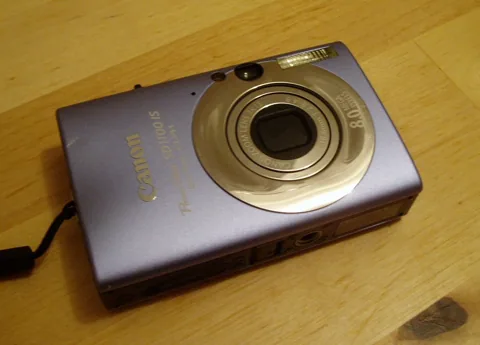 The SD1100 IS in lilac. · Techdawg667 (talk) · Public domain · Commons
A rainbow of colours
Five colours, in a metal body, was a first for the core line, in Canon's words.1 Reviewed.com's loan was in a glittery Bohemian Brown, and its reviewer called the camera a fashion statement.5
A button you could reprogram
The Print/Share button could be set to one of many functions, from white balance to recording a movie. Imaging Resource's reviewer set it to start a movie instantly.4
Macro that behaved
Imaging Resource found good macro performance.4 DPReview noted that the AF point zoom helped macro work and portraits.3
Thirteen scene modes and a 15 second shutter
The scene modes kept it approachable for beginners, and a long-exposure mode allowed up to 15 seconds, which Reviewed.com found came with metering disabled and noisy, weakly coloured results.25 DPReview noted that shutter speeds slower than one second were only available in scene mode.3
How it drew the picture
In daylight at low sensitivity, Imaging Resource found good colour saturation, accurate hues with only reds and cyans slightly oversaturated, and a lens that coped well for its size.4 DPReview liked the bright, print-friendly colour straight from the camera, and the decent edge-to-edge sharpness, but found limited dynamic range with clipped highlights, and some noise reduction blur even at base ISO.3 Auto white balance was poor under artificial light, DPReview said, and Imaging Resource found the same in tungsten while giving the camera good indoor incandescent performance when set correctly.34
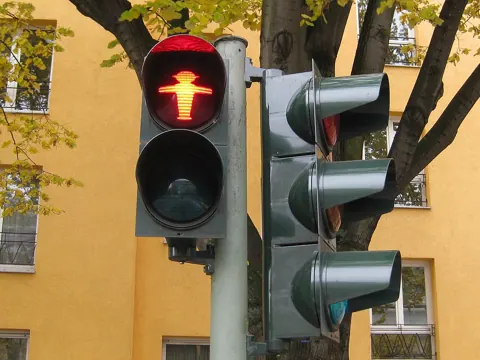

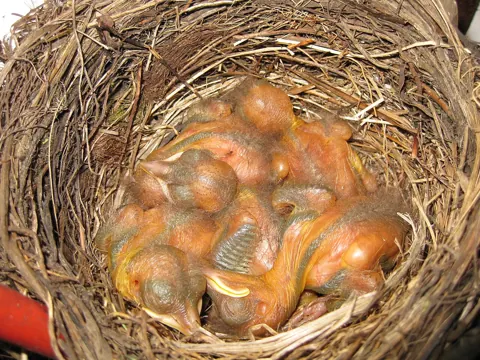





Photos taken with this camera, from Wikimedia Commons, credited under each picture.
Where it let you down
The flash sat in the upper right corner of the front, where fingers wrap round the camera and block it, Reviewed.com pointed out.5 The battery door was extremely flimsy and could be snapped off with rough handling, according to Reviewed.com, and Imaging Resource agreed the plastic door looked fragile.54 The NB-4L battery was rated at about 240 shots, average for the time, though DPReview thought life with the screen on not brilliant.43 Manual control was minimal: Reviewed.com said flatly that serious hobbyists and manual-control fans should look elsewhere.5
What the reviewers said in 2008
| Outlet | Date | Verdict |
|---|---|---|
| DPReview | 27 Feb 2008 | A typical IXUS/SD: compact, well built, responsive, with an excellent interface and efficient stabilisation, but nothing groundbreaking. Noisy above ISO 200, clipped highlights and poor auto white balance in artificial light.3 |
| Imaging Resource | May 2008 | Dave's Pick: easily the greatest bargain among pocket cameras, with stabilisation, a good lens, face detection and a low price. Faults: soft corners at wide angle, slow flash recycling and a tight viewfinder.4 |
| Reviewed.com | Undated | Attractive and compact, fairly priced at $249, but image quality was a concern, noise rose quickly at high ISO and the manual controls were limited.5 |
The timeline
- March 2007The IXY Digital 10, sold in the US as the SD1000, which Canon names as the SD1100 IS's predecessor.1
- 23 January 2008Canon announces the SD1100 IS.2
- 27 February 2008DPReview publishes its review.3
- March 2008On sale at about $249.15
- May 2008Imaging Resource publishes its user report and names it a Dave's Pick.4
Should you buy one now?
Buy one if you want a very small, colourful camera with a stabilised lens, a real viewfinder and simple controls, and you are happy with soft high-ISO pictures. It launched at $249;5 what it sells for now is a question for the sold listings, not for us. Before you bid, check these:
- The battery door. Reviewers called it flimsy.54 Ask for a photo of the compartment and make sure the door latches.
- The battery. The NB-4L was rated for about 240 shots when new;4 a fresh one is cheap on Amazon ↗.
- The card. It takes SD and SDHC;4 the 32 MB card in the box is long gone.
- The flash. It is in the corner where fingers go;5 test that it fires.
- The name. The same camera was sold as the Digital IXUS 80 IS in Europe and the IXY Digital 20 IS in Japan, so search all three.1
If you are wondering why cameras like this are being hunted down again, we tell that story once, in Pictures that never left the card.
See recent sold prices on eBay ↗Shop on eBay ↗NB-4L battery ↗
New to the jargon (CCD, ISO, xD cards, IXUS vs ELPH)? Read our plain-English digicam glossary.
Sources
- Canon Camera Museum: IXY Digital 20 IS / PowerShot SD1100 IS (specifications, SD1000 lineage, colours, marketing date)
- Imaging Resource, “Canon announces PowerShot SD1100 IS” by Mike Tomkins (23 Jan 2008)
- DPReview, Canon SD1100 IS Digital ELPH (IXUS 80 IS) concise review (27 Feb 2008)
- Imaging Resource, Canon SD1100 IS review by Tony Gomez (user report dated 15 May 2008)
- Reviewed.com, Canon PowerShot SD1100 IS review (undated)
Camera photos by Jim.henderson and Techdawg667 (both public domain); other photographs are credited under each one, all via Wikimedia Commons. Links to eBay and Amazon are affiliate links.