Canon PowerShot ELPH · on sale September 2007 · a retrospective
The Canon PowerShot SD870 IS (Digital IXUS 860 IS): a 28 mm ELPH with a 3-inch screen
In 2007 Canon kept the wide lens that made the SD800 IS a favourite, added a bigger screen and a touch wheel, and dropped the viewfinder.
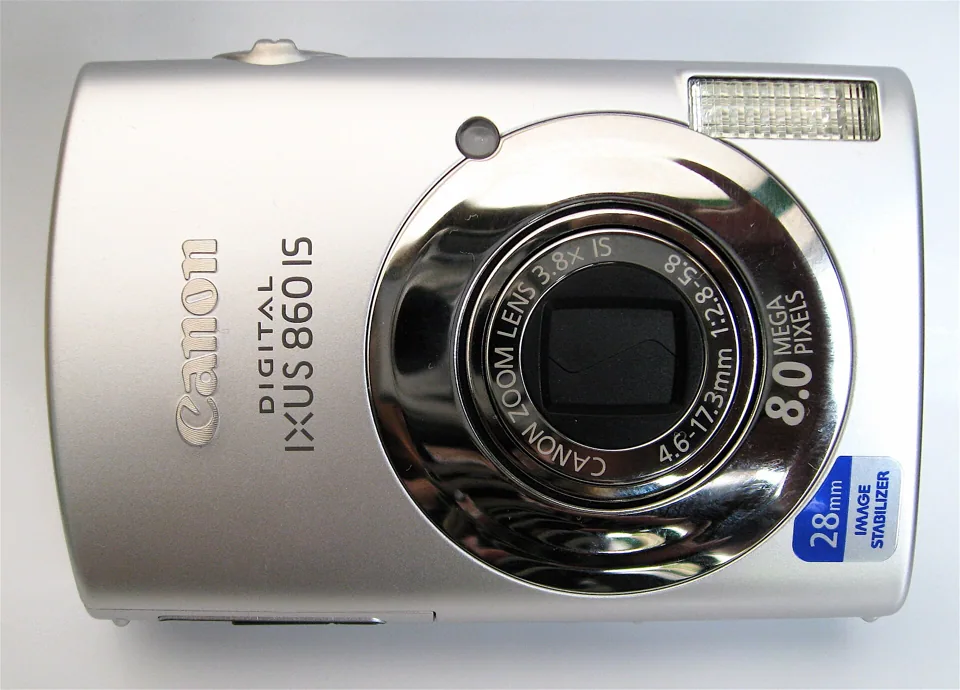
Meet the camera
Canon's launch text said the IXY Digital 910 IS inherits the 28 to 105 mm 3.8x zoom lens of the 900 IS launched in October 2006, now with an 8.0-megapixel CCD, a 3.0-inch screen enlarged from 2.5 inches and a new Touch Wheel; a silver version with a silver lens barrel followed in February 2008.1 Imaging Resource measured it at 94 by 58 by 25 millimetres and 180 grams with battery.3 DPReview praised superb build quality and finish but warned it is easily scratched and scuffed.2
It had three names. Canon sold it as the PowerShot SD870 IS Digital ELPH in North America, the Digital IXUS 860 IS in Europe and the IXY Digital 910 IS in Japan.12 Canon's museum lists September 2007 as the marketing date.1 Imaging Resource said it started shipping on 30 September 2007 and retailed for about US$400.3
Why this one was interesting
Not tinkering with a winner
DPReview wrote that the SD870 IS follows highly regarded cameras, so it is understandable Canon chose not to tinker too much with a successful formula, and found image quality generally very good, especially given a genuinely wide-angle lens.2 Imaging Resource called it the most appealing camera in Canon's high-end Digital ELPH line, thanks to the 28 mm-equivalent wide angle lens.3 The camera it follows is our SD800 IS retrospective.
Auto ISO shift
DPReview singled out the new Auto ISO shift as a good idea well implemented: it lets the camera stay at its lowest sensitivity except when really needed, rather than letting ISO creep up in moderately lit scenes, and it can warn you when it thinks a higher ISO is needed instead of deciding for you.2 Imaging Resource also listed Auto ISO shifting among its pros.3
A big screen instead of a viewfinder
The 3-inch screen was the only way to frame, since the optical viewfinder was gone. Imaging Resource called optical viewfinders something of a joke on cameras with extraordinary optics, said most users would not miss it, and found the screen worked well in bright sunlight.3 DPReview described the screen as large, bright and clear.2
How it drew the picture
Imaging Resource found very sharp images overall, good colour saturation, good shadow detail and prints up to 11 by 14 inches from ISO 80 to 400, with excellent low-light performance and autofocus, but fine detail lost at ISO 800.3 Its cons for the lens were high chromatic aberration at 28 mm, above-average barrel distortion and heavy coma in the extreme corners.3 DPReview, by contrast, found surprisingly good edge-to-edge performance but said image quality suffers above ISO 400 from noise and noise reduction issues, with a tendency to ignore and overexpose bright regions.2








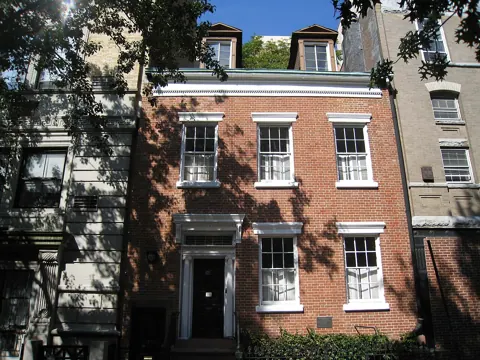







Photos taken with this camera, from Wikimedia Commons, credited under each picture.
On eBay right now
Live listings for this camera, supplied by eBay and updated automatically. We earn a commission if you buy through them.
The little wins
Where it let you down
DPReview found the touch wheel slightly awkward, calling it a fumbled attempt to fit extra functions onto fewer buttons, and listed limited manual control and average battery life.2 Imaging Resource's cons included slightly warm skin tones, below-average flash at telephoto, dark corners from the flash at wide angle, a proprietary battery, mediocre continuous mode and an extremely small 32 MB card in the box.3
What the reviewers said in 2007
| Outlet | Date | Verdict |
|---|---|---|
| DPReview | 19 Oct 2007 | A good all-round impression: very good image quality with a wide lens, superb build, but image quality drops above ISO 400 and the touch wheel is awkward.2 |
| Imaging Resource | 7 Nov 2007 | A clear Dave's Pick: a great fit for an experienced user who wants a reliable, take-anywhere shooter.3 |
The timeline
- August 2007Announced, according to DPReview.2
- September 2007Canon's museum lists it as marketed; shipping from 30 September in the US.13
- 19 October 2007DPReview publishes its review.2
- 7 November 2007Imaging Resource publishes its review.3
- February 2008A silver-lens version goes on sale.1
Should you buy one now?
Buy one if you want a small, solid 2007 compact with a 28 mm wide angle, stabilisation and a big screen, and you can live with noise above ISO 400. It sold for about US$400 at launch;3 what it sells for now is a question for the sold listings, not for us. Before you bid, check these:
- The name. It was sold as the Digital IXUS 860 IS in Europe and the IXY Digital 910 IS in Japan, so search all three.1
- The battery. It uses an NB-5L, rated for about 270 shots;3 a fresh one is on Amazon ↗.
- The card. It takes SD and SDHC cards.3
- The finish. It scratches easily, so expect cosmetic wear.2
- The touch wheel. Check that it responds, since it is part of everyday control.2
- The lens. Check that it extends and retracts cleanly.
If you are wondering why cameras like this are being hunted down again, we tell that story once, in Pictures that never left the card.
See recent sold prices on eBay ↗Shop on eBay ↗NB-5L battery ↗
New to the jargon (CCD, ISO, xD cards, IXUS vs ELPH)? Read our plain-English digicam glossary.
Sources
- Canon Camera Museum: IXY DIGITAL 910 IS / PowerShot SD870 IS / Digital IXUS 860 IS (launch text, specifications, marketing date)
- DPReview, Canon SD870 IS Digital ELPH (IXUS 860 IS) concise review by Richard Butler and Simon Joinson (19 Oct 2007)
- Imaging Resource, Canon PowerShot SD870 IS review by Andrew Alexander (7 Nov 2007)
Camera photo by Gerolsteiner91 (CC BY-SA 3.0); sample photographs are credited under each one, all via Wikimedia Commons. Links to eBay and Amazon are affiliate links.