Canon PowerShot ELPH · on sale February 2010 · a retrospective
The Canon PowerShot SD1400 IS: the slimmest ELPH, and the argument about fourteen megapixels
In 2010 Canon made its thinnest pocket camera yet, gave it HD video and a wide lens, and crammed fourteen megapixels onto a small sensor. Reviewers could not agree whether that was a good idea.
Meet the camera
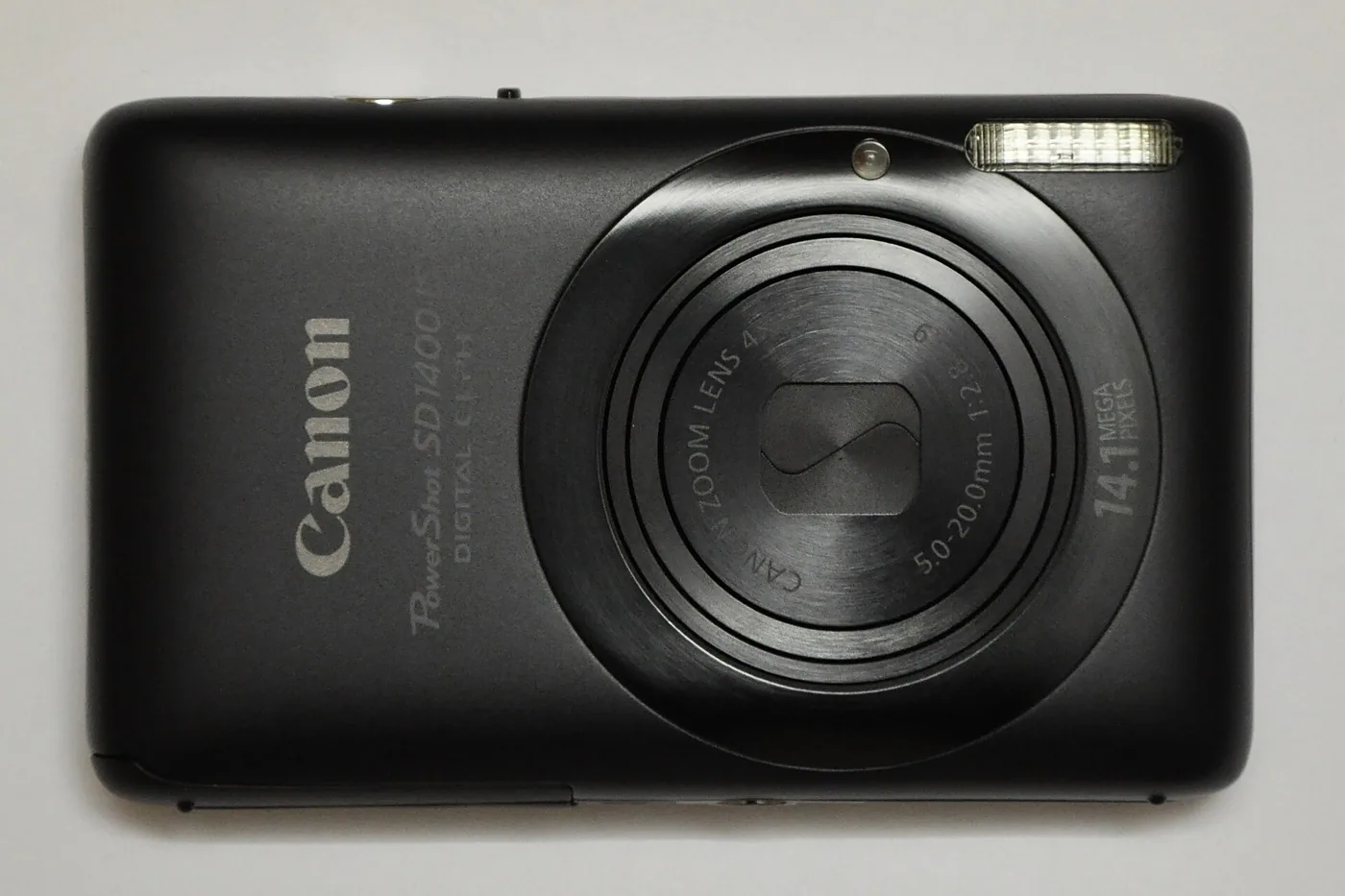
It is nothing but curves. Imaging Resource's reviewer noted that of all the ELPHs it was the first the reviewer recalled that would not stand on end, because it had no flat side to stand on.4 It is 92 by 56 millimetres and only 17.8 thick, which Canon says made it the slimmest model in its whole IXY series,1 and it weighs 114 grams without the battery.1 Cameralabs called it a camera that is all about looks and size, and one you cannot help enjoying handling.5 TechRadar said much the same: tapered corners, rounded edges and a metallic finish that make it a real head-turner.6
Canon announced it with three other models on February 8, 2010, expecting it to ship in late February at about $250.2 PhotographyBLOG listed it in Britain at £279 and in the US at $249.99.3 In Japan it was the IXY 400F, in four colours, and Canon's museum notes that it was compatible with the new SDXC memory cards, which hold much more than the old SD limit.1
Why this one was interesting
A wide lens, at last
Cameralabs said the most important upgrade over the SD780 IS before it was a broader 4x zoom that now included a 28 mm equivalent wide angle, fixing its major complaint with the earlier camera, which had a basic 3x lens and no true wide angle.5 Canon listed the lens at f/2.8 at wide angle.1
HD video in your pocket
The SD1400 recorded 1,280 by 720 pixel video at 30 frames a second and had an HDMI port,14 which Cameralabs noted it inherited from its predecessor.5 The catch, which Imaging Resource and Cameralabs both noted, was that the optical zoom could not be used while filming.45 TechRadar thought the movie mode only average.6
A smarter Auto, and new tricks
Imaging Resource said the enhanced Smart Auto could set the camera 22 different ways, against 18 on the cheaper SD1300 IS, and that the SD1400 added two scene modes, Fish-Eye and Miniature, along with the HD video.4 Canon described the Miniature Effect and Fish-eye Effect as new, alongside Smile and Wink Self-Timer modes.1 Cameralabs found the scene detection did a great job of working out what you were trying to take, and said it would happily leave the camera on Auto for almost anything.5
Was it a new chip?
The processor was DIGIC 4 and the sensor a 14.1-megapixel CCD, in Imaging Resource's account.4 The larger pixel count was the headline and the controversy.34
The same year's other ELPH story was the camera Canon's enthusiasts wanted: PhotographyBLOG, reviewing this one, wished it had one of the new 10-megapixel sensors from the S90 and G11 instead.3 See our S90 retrospective for that camera.
The argument about fourteen megapixels
This is where the reviews split. Cameralabs thought the small boost in resolution was inevitable but did not compromise image quality, which looked good up to ISO 200 and stayed fairly usable at higher settings, as good as or better than most compacts with the same resolution and sensor size.5 PhotographyBLOG saw the opposite: the move to 14 megapixels had not been a good idea, with noise apparent already at ISO 200 and then more noise, softening and colour desaturation higher up, making the camera ill-suited to low-light work.3 Imaging Resource went further. It found excessive noise suppression at all sensitivities and less resolution, even at the lowest ISO, than the noticeably cheaper 12-megapixel SD1300, so it declined to give the SD1400 its Dave's Pick and leaned buyers toward the SD1300.4
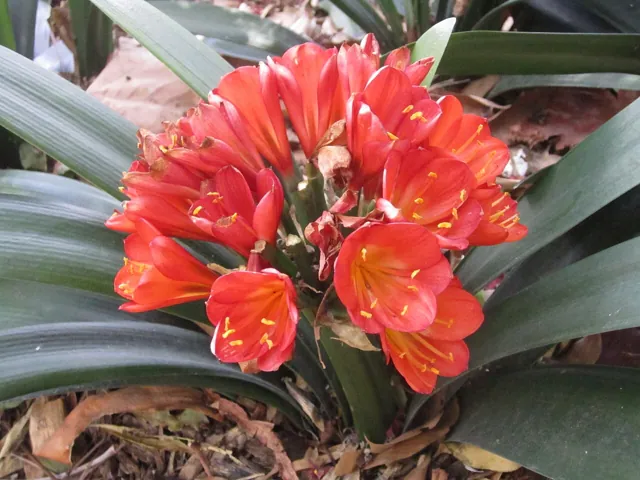
Its ISO ladder ran like this: ISO 400 usable at 8 by 10 inches, ISO 800 soft but usable at 5 by 7, and ISO 1600 better at 4 by 6, with reds blurred by then.4 The pictures below were taken with this camera and recorded as ISO 1600 in their own data.


.jpg)




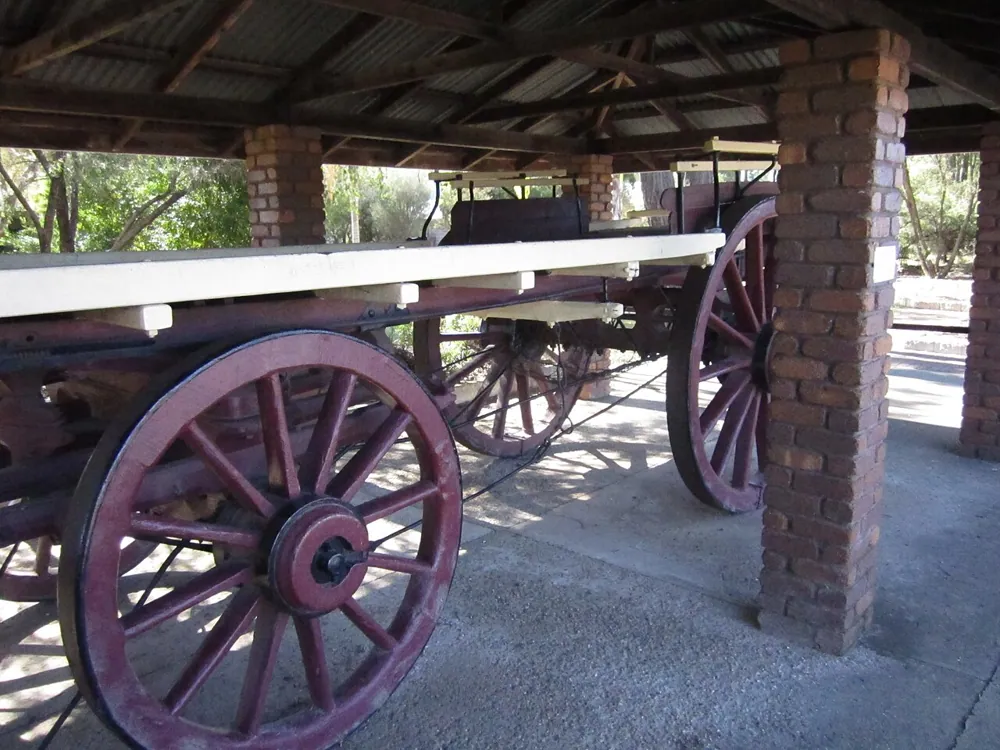
Real photographs taken with this camera family (sold in Europe as the Digital IXUS 130). The sensitivity shown is recorded in each file's own EXIF data.
Like that look? See what SD1400 ISs have recently sold for on eBay ↗
On eBay right now
Live listings for this camera, supplied by eBay and updated automatically. We earn a commission if you buy through them.
The little wins
Away from the sensor, reviewers found plenty to like.
Thinner than the rest
At 17.8 millimetres it was the slimmest ELPH Canon had made.1 Cameralabs called it a camera you would never leave at home, thanks to its tiny dimensions.5
Fish-eye and miniature
The Fish-Eye and Miniature effects, new scene modes, let a pocket camera make pictures that looked like tilt-shift models or ultra-wide fisheye shots.14
A built-in Hints and Tips
PhotographyBLOG noted a useful Hints and Tips feature for beginners.3
A bigger, brighter screen
Cameralabs found the screen slightly larger than before and looking great in use: bright and viewable even in bright conditions or at extreme angles, which made it easy to hold the camera overhead and still compose.5 TechRadar rated the screen excellent.6
Smile and wink timers
Smile, wink and face self-timer modes helped group portraits, though Cameralabs found them hidden among the scene presets where owners might never find them.15
A waterproof case
Canon sold an optional case that allowed use underwater to depths of 40 metres, at the beach and in the snow.1
How it drew the picture
Imaging Resource's list of faults was long: highlights often blow out outdoors, there is high chromatic aberration, soft corners at wide angle and noticeable lens flare in some shots, and the printed results were poor.4 Cameralabs found a little softness in the extreme corners when zoomed out but said the lens outperformed its predecessor and the main rival it compared it with.5 TechRadar summed up that the camera "takes great pictures at a fantastic price."6




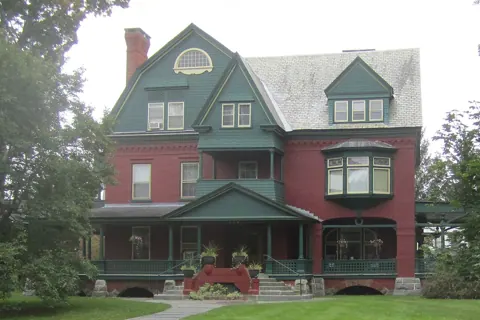

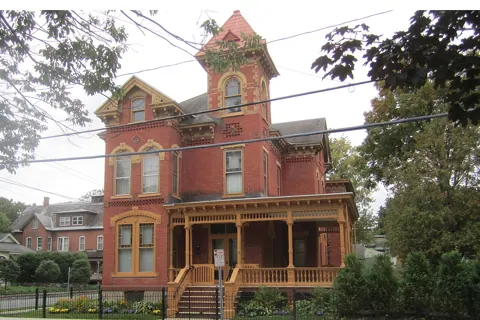

Photos taken with this camera, from Wikimedia Commons, credited under each picture.
Where it let you down
There was no viewfinder, which Cameralabs regretted because it left you unable to compose with the screen off to save a failing battery or in direct sun.5 Continuous shooting managed only 0.7 frames per second at full resolution.54 Imaging Resource measured about 2.6 seconds between shots, a flash that took 7 seconds to recycle and a shutter lag of about 0.6 seconds with autofocus.4 PhotographyBLOG found the zoom lever curiously designed.3 Cameralabs noted that Sony offered an even slimmer camera with the same resolution at a lower price.5
What the reviewers said in 2010
| Outlet | Date | Verdict |
|---|---|---|
| PhotographyBLOG | 24 Mar 2010 | Design 4.5, features 4, ease of use 4, image quality 3.5, value 3 out of 5. A very nice point-and-shoot with a high price and merely average image quality, and noise from ISO 200.3 |
| Imaging Resource | 3 Jun 2010 | One of the most attractive ELPHs, with a smart Auto mode, but excessive noise suppression cost it a Dave's Pick; the cheaper SD1300 had better image quality.4 |
| Cameralabs | 2010 (page undated) | Steady evolution of the slimmest model, good looks and size, a broader lens that now included wide angle, and image quality as good as or better than most compacts with the same resolution. Slow burst and no viewfinder.5 |
| TechRadar | 7 Sep 2010 | Well made, with an excellent screen, uncomplicated operation and excellent value; no manual mode and an average movie mode.6 |
The timeline
- 8 February 2010Canon announces the SD1400 IS with three other PowerShots.2
- February 2010Canon's museum lists it as marketed.1
- 24 March 2010PhotographyBLOG publishes its review.3
- 3 June 2010Imaging Resource publishes its review.4
- 7 September 2010TechRadar publishes its review.6
Should you buy one now?
Buy one if you want the slimmest, curviest ELPH, with a wide lens and HD video, and you will mostly share pictures on a screen rather than print them large. Imaging Resource's advice was not to enlarge beyond 11 by 14 inches.4 It launched at about $250;2 what it sells for now is a question for the sold listings, not for us. Before you bid, check these:
- The corners. Slim, curved cameras are easy to drop,4 so look for dents and cracks in the metal and ask for a photo of the screen.
- The battery. It was rated for about 230 shots when new;4 a fresh NB-4L is cheap on Amazon ↗.
- The card. It takes SD, SDHC and the newer SDXC.1
- The recessed ring. Imaging Resource found the recessed navigator ring hard to press when new,4 so check it responds.
- The name. It was sold as the Digital IXUS 130 in Europe and the IXY 400F in Japan, so search all three.1
If you are wondering why cameras like this are being hunted down again, we tell that story once, in Pictures that never left the card.
See recent sold prices on eBay ↗Shop on eBay ↗NB-4L battery ↗
New to the jargon (CCD, ISO, xD cards, IXUS vs ELPH)? Read our plain-English digicam glossary.
Sources
- Canon Camera Museum: IXY 400F / PowerShot SD1400 IS (specifications, thickness, effects, colours, marketing date)
- Imaging Resource, “Canon announces four new PowerShots” by Mike Tomkins (8 Feb 2010)
- PhotographyBLOG, Canon Digital IXUS 130 review by Mark Goldstein (24 Mar 2010)
- Imaging Resource, Canon SD1400 IS review by Mike Pasini and Stephanie Boozer (3 Jun 2010)
- Cameralabs, Canon IXUS 130 / PowerShot SD1400 IS review by Gordon Laing (2010)
- TechRadar, Canon IXUS 130 review (7 Sep 2010)
Camera photo by Joe Ravi (CC BY-SA 3.0); other photographs are credited under each one, all via Wikimedia Commons. Links to eBay and Amazon are affiliate links.