Canon PowerShot ELPH · on sale February 2010 · a retrospective
The Canon PowerShot SD1300 IS (IXUS 105): the plain ELPH everyone had
In 2010 Canon sold a 12-megapixel, 28 mm, stabilised compact in four colours for about $200. It was not a breakthrough, and reviewers said so.
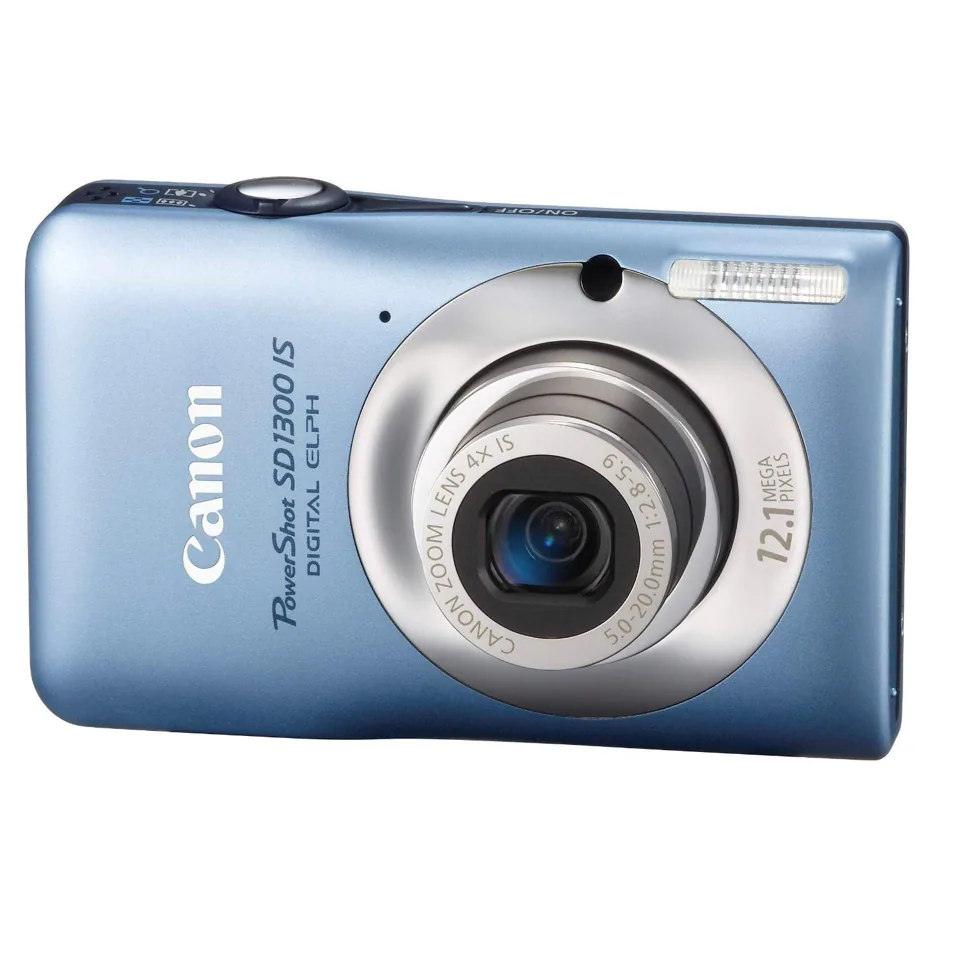
Meet the camera
It is a small coloured slab with a chrome ring round the lens. Canon's own text calls out an alumite finish on the front and back covers and four colours: green, pink, brown and silver.1 It measures about 91 by 56 millimetres and 21 thick and weighs 140 grams with battery and card.1 Cameralabs thought its styling a little fussier and less elegant than its predecessor's, so that part of the appeal of owning an IXUS, its classy distinctive styling, had been diluted.5
It had three names. Canon sold it as the PowerShot SD1300 IS Digital ELPH in the Americas, the Digital IXUS 105 in Europe and Asia, and the IXY 200F in Japan.1 Imaging Resource's announcement on February 8, 2010 listed it with a late-February ship date at about $200,2 and PhotographyBLOG reviewed it at about £189 in Britain, noting that it dropped the letters IS from its name though it still had optical stabilisation.4
Why this one was interesting
Not very, and that was the point
PhotographyBLOG said it did not look, feel or perform like a great departure from its predecessors, which was fine, because Canon had hit on a winning formula in consistent operation, small size and stylish design.4 It called the camera not a breakthrough, merely a point-and-shoot that should be judged on equally inauspicious levels.4 Imaging Resource wrote that Canon's compact, automatic ELPH line had matured in two pleasing ways: it was smaller and lighter, and simpler than ever to just take pictures, with Smart Auto extending that simplicity to more difficult scenes and the scene modes cut back to a minimal set.3
Was it a new chip?
No. It was a 12.1-megapixel CCD with a 4x lens.1 Cameralabs called it the successor to the best-selling IXUS 95 / SD1200 IS, adding 2 megapixels and, most usefully, a wider zoom range.5
A new lens?
A better one for most buyers: a 28 mm wide end where the SD1200 had a plain 3x range, which Cameralabs said took a big step in the right direction.5 Canon listed it at f/2.8 at wide angle.1
The step up with HD video was the SD1400 IS, and Nikon's cheaper rival is in our Coolpix S3000 retrospective.
What was lost: the viewfinder
The optical viewfinder of the IXUS 95 was gone in favour of a bigger screen, Cameralabs noted, and with it went the option of extending battery life by switching the screen off.5 Imaging Resource found it lacked any optical viewfinder, with the screen the only way to frame.3
The dark: its weak point
Imaging Resource found the only disappointments to be shooting into the sun, low-light shooting and the lack of HD video.3 Its prints were good: 13 by 19 inches from ISO 80 and a good 4 by 6 at ISO 1600.3 Against the Nikon S3000, Cameralabs found the Canon better in low light and the Nikon better outdoors.5
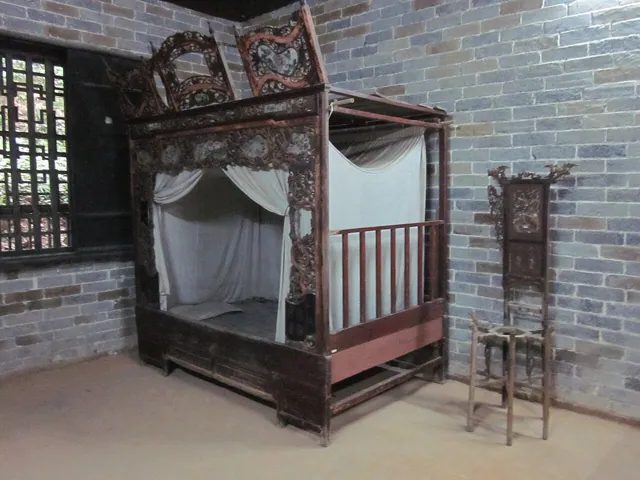
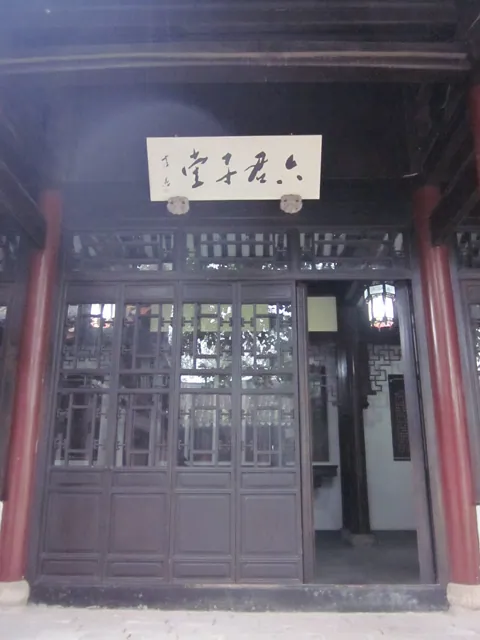


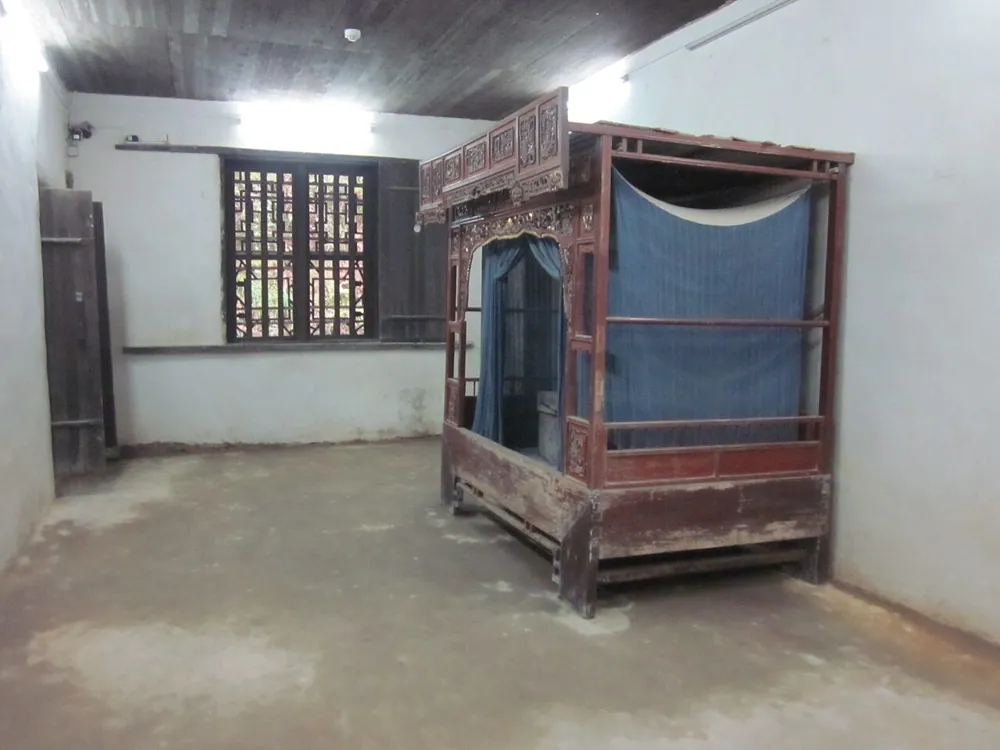
Real photographs taken with this camera family (sold in Europe as the Digital IXUS 105). The sensitivity shown is recorded in each file's own EXIF data.
Like that look? See recent eBay sold listings for this camera ↗
On eBay right now
Live listings for this camera, supplied by eBay and updated automatically. We earn a commission if you buy through them.
The little wins
Quick and responsive
Imaging Resource measured full-autofocus shutter lag of 0.53 seconds at wide angle and a prefocused lag of 0.073 seconds.3
Good prints from a cheap camera
Imaging Resource found good-quality prints at every ISO setting, from an impressive 13 by 19 inches at ISO 80 to 4 by 6 at ISO 1600.3
A real wide angle
The 28 mm wide end, new for this line, was the improvement Cameralabs valued most.5
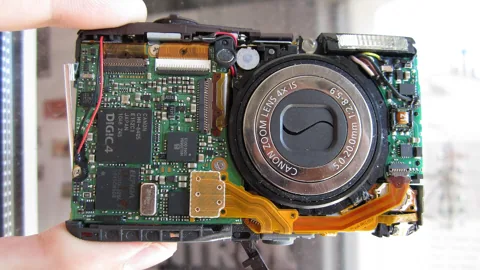


How it drew the picture
PhotographyBLOG rated image quality 3 out of 5, calling it average.4 Cameralabs concluded it delivered decent image quality with very simple operation in an affordable package.5







Photos taken with this camera, from Wikimedia Commons, credited under each picture.
Where it let you down
There was no HD video or HDMI port; Cameralabs pointed buyers who wanted those to the IXUS 130.5 The flash took 6.3 seconds to recycle and a single shot took about 2.2 seconds.3
What the reviewers said in 2010
| Outlet | Date | Verdict |
|---|---|---|
| PhotographyBLOG | 9 Mar 2010 | Design 4, features 3, ease of use 4, image quality 3, value 3.5 out of 5. Not a breakthrough, but consistent, small and stylish.4 |
| Imaging Resource | 14 May 2010 | 4 out of 5. A smaller, simpler ELPH with good prints, held back in the sun, in low light and by SD video.3 |
| Cameralabs | Page dated 14 Jun 2011 | Decent quality and very simple operation at an affordable price; a wider zoom made up for the lost viewfinder. Better in low light than the Nikon S3000, which was better outdoors.5 |
The timeline
- 8 February 2010Canon announces the SD1300 IS with three other PowerShots.2
- February 2010Canon's museum lists it as marketed.1
- 9 March 2010PhotographyBLOG publishes its review.4
- 14 May 2010Imaging Resource publishes its review.3
Should you buy one now?
Buy one if you want a small, simple, stabilised point-and-shoot that is easy to use and pocket-friendly, and you will shoot in good light. It launched at about $200;2 what it sells for now is a question for the sold listings, not for us. Before you bid, check these:
- The name. It was sold as the Digital IXUS 105 in Europe and Asia and the IXY 200F in Japan, so search all three.1
- The battery. It uses an NB-6L;1 a fresh one is on Amazon ↗.
- The card. It takes SD, SDHC and SDXC cards.1
- The screen. It is the only way to frame; check for scratches.5
- The lens. Check that it extends and retracts cleanly.
If you are wondering why cameras like this are being hunted down again, we tell that story once, in Pictures that never left the card.
See recent sold prices on eBay ↗Shop on eBay ↗NB-6L battery ↗
New to the jargon (CCD, ISO, xD cards, IXUS vs ELPH)? Read our plain-English digicam glossary.
Sources
- Canon Camera Museum: IXY 200F / PowerShot SD1300 IS / Digital IXUS 105 (specifications, colours, marketing date)
- Imaging Resource, “Canon announces four new PowerShots” by Mike Tomkins (8 Feb 2010)
- Imaging Resource, Canon SD1300 IS review by Stephanie Boozer (posted 14 May 2010)
- PhotographyBLOG, Canon Digital IXUS 105 review by Gavin Stoker (9 Mar 2010)
- Cameralabs, Canon IXUS 105 / PowerShot SD1300 IS review by Gordon Laing (page dated 14 Jun 2011)
Camera photos by Intel Free Press (CC BY 2.0), ColdFreeze (CC BY-SA 3.0) and El Funcionario (CC BY-SA 4.0); other photographs are credited under each one, all via Wikimedia Commons. Links to eBay and Amazon are affiliate links.