Canon PowerShot ELPH · on sale mid-2007
The Canon PowerShot SD850 IS (Digital IXUS 950 IS): the stabilised metal ELPH that was a modest upgrade
Sold in Europe as the Digital IXUS 950 IS and in Japan as the IXY Digital 810 IS.
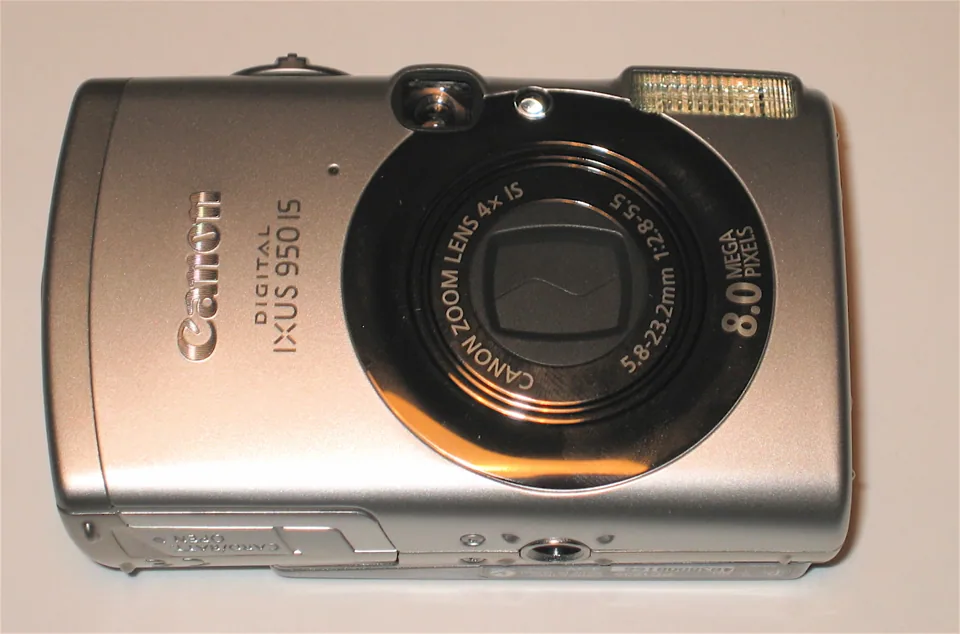

In 2007 Canon gave its stabilised 4x pocket zoom an 8-megapixel sensor, a bigger screen and face detection, and left the body almost alone. Reviewers liked how it was made and how it behaved, split on the noise, and most called it pricey.
- Launched
- June 2007
- Sensor
- 8 MP CCD
- Lens
- 35–140 mm, 4×
- Card
- SDHC, SD, MultiMediaCard
- Battery
- NB-5L
Canon PowerShot SD850 IS specs: sensor, lens, battery, memory card and cable
Launched in June 2007, the Canon PowerShot SD850 IS (also sold as the Digital IXUS 950 IS and IXY Digital 810 IS) is an 8 MP CCD compact with a 35–140 mm (35 mm equivalent) 4× zoom lens. Inside: it runs on the NB-5L battery. Sources
- Sensor
- CCD, 1/2.5", 8 MP source
- Lens
- 35–140 mm equivalent, 4× zoom source
- Memory card
- SDHC, SD, MultiMediaCard source
- Battery
- NB-5L source
- Also sold as
- Digital IXUS 950 IS · IXY Digital 810 IS
- USB / A/V cable
- IFC-400PCU, AVC-DC300 Confirmed · all Canon cables
Meet the camera
Canon's museum page describes an 8.0-megapixel CCD and the DIGIC III processor behind a 4x lens with lens-shift image stabilisation, a 2.5-inch screen with a protective cover, and the same curved body as the model before it, now with a new pearl silver finish.1 DPReview put the same point more bluntly: it called the body almost identical to the SD700 IS, apart from a lighter grey back in place of black, and praised the all-metal front and tight tolerances.7 The body weighs about 165 grams without battery.1
It had three names: PowerShot SD850 IS Digital ELPH in North America, Digital IXUS 950 IS in Europe and IXY Digital 810 IS in Japan.1 Canon's European press release is dated 7 May 2007,2 and Canon's museum lists June 2007 as the marketing month.1 Its predecessor is one camera with two regional names: DPReview and Imaging Resource call it the SD700 IS, PhotographyBLOG the IXUS 800 IS, and DPReview's launch-day note says outright that the SD700 was the IXUS 800.7432 The launch price depends on whose shelf you look at:
| Source | Price |
|---|---|
| Canon UK press release, 7 May 2007 | £329 / €484 recommended retail price including VAT, available at the end of May; PhotographyBLOG's review also gives £329.38 |
| Imaging Resource, Sep 2007 | Shipped mid-June 2007 at $399.99; its spec table lists an MSRP of $400.4 |
| Reviewed.com, 31 Aug 2007 (page metadata) | Called it a $399 tag.9 |
| DPReview, Feb 2008 | Street price in its spec table: US $250 and UK £190.7 |
- Sensor
- 8.0 MP CCD, 1/2.5"1
- Lens
- 4x, 35–140 mm equiv., f/2.8–5.5, optical image stabiliser1
- ISO
- 80 to 1600, plus Auto and High ISO Auto1
- Card
- SD / SDHC / MMC; a 32 MB card was boxed per Canon's launch text and four reviews (Imaging Resource and PhotographyBLOG say SD, Reviewed.com says MultiMediaCard), but Canon's museum spec does not mention one124879
- Battery
- NB-5L; about 230 shots, about 700 with the screen off (Canon's figures)1
- Size
- 90.4 × 56.5 × 26.4 mm, about 165 g body only1
Why this one was interesting
Stabilisation as the habit
Canon's press material said the stabiliser allowed shutter speeds up to three stops slower than normal.3 Imaging Resource left it on almost all the time and said it was usually able to keep the ISO below 200; one dark-room frame at 1/11 second and ISO 200 came out sharp.4 DPReview put the benefit at roughly two to three stops, with handheld shots at 1/8 second acceptably sharp at the wide end.7 PhotographyBLOG found the 8-megapixel count unexciting, save for the stabiliser carried over from the IXUS 800 IS.8
Face detection and Auto ISO Shift
DPReview named these as the two features DIGIC III newly allowed.7 Canon's launch text claimed face detection could track up to nine faces for focus, exposure and flash.3 Imaging Resource found it quick and said it could stay on permanently instead of living in a portrait mode;4 PhotographyBLOG called it a current must-have;8 Reviewed.com said it worked exceptionally well.9 Auto ISO Shift is a button press that raises the ISO and the shutter speed together: DPReview noted it shares the print button, and described it as lifting the ISO to what the camera would have picked on its own.37
Where the noise line fell
This is where the four reviews split. DPReview found noise fairly low from ISO 80 to 400 and the output relatively sharp and clean up to 400, but at 800 and above noise and noise reduction took a heavy toll; it also said fine texture such as hair starts to blur at ISO 200, and listed noise "at anything over ISO 200" among its cons.7 PhotographyBLOG saw noise above ISO 200, more at 800, and called 1600 really quite intrusive.8 Reviewed.com measured low noise from ISO 80 to 200, then very high noise with fine grain and splotchy blue and yellow patches; its ISO 1600 low-light tests showed very high noise at every light level.9 Imaging Resource was kinder: its ISO 1600 cork shot showed good detail and colour with less grain than other ISO 1600 shots it had taken, and it said ISO 1600 gave a good 5 by 7 inch print, while warning not to expect noise-free results and calling its first set of doll shots disappointing.4
A viewfinder reviewers did not trust
Imaging Resource measured the optical finder at about 78 percent of the frame at wide angle and 77 percent at telephoto, skewed toward the lower left, against roughly 100 percent for the screen.6 PhotographyBLOG called it so small and murky that the reviewer quickly forgot it was there, and DPReview called it tiny.87 The payoff is battery life: switching the screen off stretches Canon's 230-shot figure to about 700, which DPReview and Reviewed.com both repeated; the latter noted you then lose menu access.79 Reviewers weighed 230 shots differently: DPReview called it on the low side of average and Reviewed.com found it unimpressive. Imaging Resource disagreed with itself: its overview listed good battery life among the pros and said Canon's six-hour playback figure far exceeded its own day of shooting, while its lab page called the life short with the screen on and strongly recommended a spare battery.7945
For the cameras around it, see our reviews of the SD800 IS, the SD750, the 10-megapixel SD900 and the later SD870 IS.
How it drew the picture
DPReview measured 1600 lines per picture height absolute resolution both ways, with extinction at 2100 horizontally and 2200 vertically, 1.2 percent barrel distortion at wide angle and none measurable at the telephoto end.7 It said the camera clips highlights fairly often and shows purple fringing in contrasty scenes, and that bright reds can turn purple or pink, rarely.7 Imaging Resource measured less barrel distortion, 0.8 percent at 35 mm and under 0.1 percent at 140 mm, but found chromatic aberration high at both ends and the wide-angle corners very soft; the two outlets' distortion figures differ and are shown as printed.6 Reviewed.com's lab found a peak of 1710 lines per picture height horizontally and 1532 vertically, and a colour error it called fantastic, with an overall trend toward oversaturation and the blues straying furthest from their ideals.9 PhotographyBLOG called out-of-camera files vivid and a little soft at the default setting, and said highlight detail goes missing under clear blue skies.8
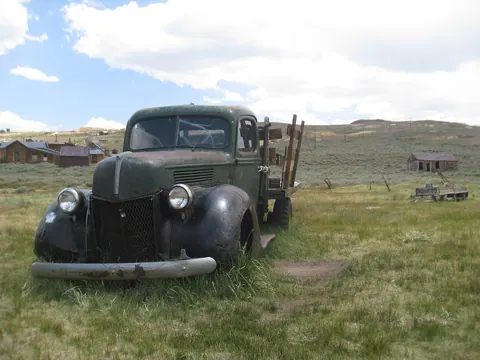



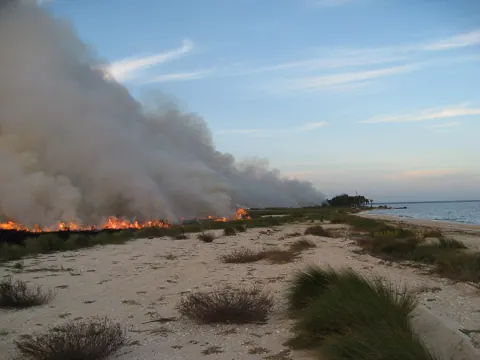













Photos taken with this camera (the file data names it as a PowerShot SD850 IS or a Digital IXUS 950 IS), from Wikimedia Commons, credited under each picture.
Indoors and after dark
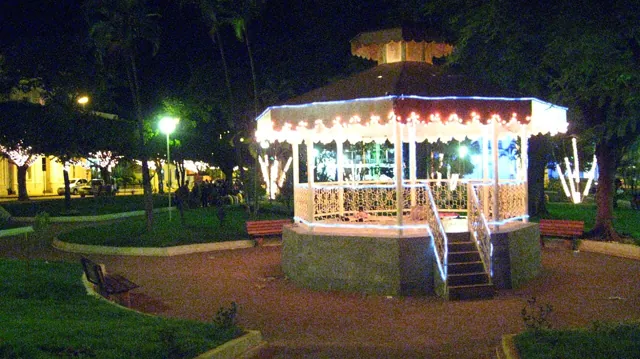
The four photos below carry ISO values read from each file's own data. We picked them for dim light, but cannot tell how each photographer exposed them.



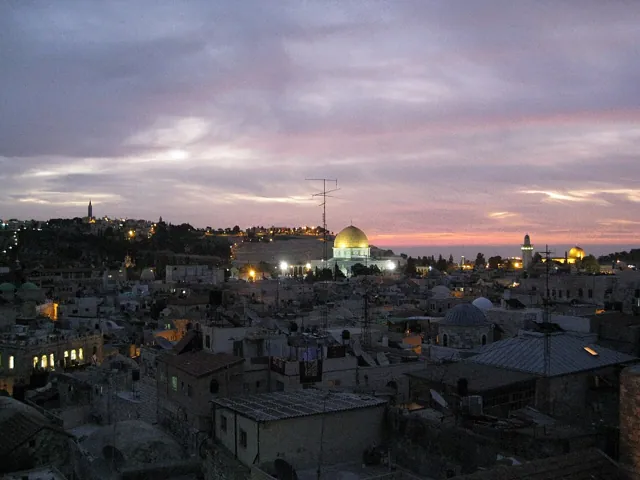

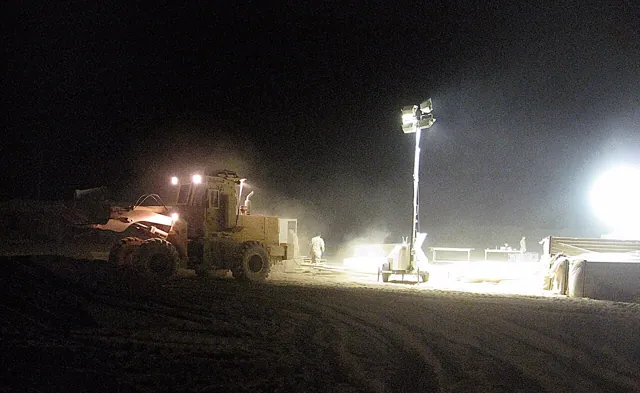

White balance is the other place the reviewers disagree. DPReview found auto white balance fine outdoors but strongly orange under incandescent light and yellow-green under fluorescent, fixed by a preset;7 Imaging Resource listed dependable auto white balance and good performance in harsh indoor light among its pros.4 Reviewed.com found auto white balance extremely accurate except under tungsten light.9
Like what it can do? See recent eBay sold listings for this camera ↗
On eBay right now
Live listings for this camera, supplied by eBay and updated automatically. We earn a commission if you buy through them.
The little wins
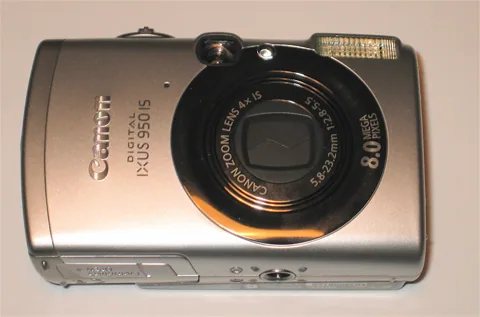 The SD850 IS, front view. · Gerolsteiner91 · CC BY-SA 2.5 · Commons
Slow-motion and time-lapse movies
Canon lists 320 × 240 at 60 frames per second, and Imaging Resource said that mode gives slow motion and that zoom works while recording.14 Its time-lapse mode captures half a frame or one frame per second for up to two hours, played back at 15 or 30 times real speed.4
SDHC and bigger movie files
Imaging Resource noted that the maximum movie clip grew from 1 GB to 4 GB and that SDHC support was new, though the one-hour limit stayed.4
A real macro
Canon lists macro focus from 2 centimetres at wide angle.1 Imaging Resource called macro a highlight, with fine petal texture, and measured the closest coverage at about 30 by 22 millimetres, though it said the flash is practically useless that close because the lens blocks it.46
A sharper screen
Imaging Resource counted the 230,000-dot screen as a step up from 173,000 on the SD700 IS, and found it sharp, usable in bright sun and readable at steep angles;4 PhotographyBLOG likewise found it clear enough to compose in sunlight.8
A scene mode for fish tanks
Imaging Resource noted the new Aquarium scene mode and called the scene modes helpful; its feature list also names Night Snapshot and Kids & Pets.4
How fast it was
Imaging Resource's lab measured 1.2 seconds from power-on to first shot, 0.58 seconds of shutter lag at wide angle and 0.51 at telephoto with full autofocus, 0.08 seconds prefocused, 2.22 seconds between full-size shots, and 7.5 seconds for the flash to recycle at full power.5 It called the lag very good, the single-shot cycle on the slow side of average, and the camera suited to average shooting but in need of something zippier for children or sports.5 DPReview timed about 1.0 second to start, about 0.6 seconds of full-press lag at wide angle (about 0.1 seconds prefocused) and about 1.3 seconds between shots with the flash off.7 Burst speed is a place where numbers conflict: Canon, DPReview and Imaging Resource's overview give about 1.3 frames per second, DPReview adds that this is slower than the SD700's 2, and Imaging Resource's lab page measured 0.68 frames per second. Reviewed.com is split too: its text says 1.3 frames per second for about four frames, while its timing test took a shot every 0.8 seconds.17459
Where it let you down
Two outlets named the same wall: no manual aperture or shutter control. Imaging Resource listed it as a con, and DPReview wrote that there are no A or S modes and little manual control.47 The 35 mm wide end drew complaints from PhotographyBLOG, which said it limits group shots and landscapes, and from DPReview, which suggested shopping around if you want a wider lens.87 The flash was a weak point for several: DPReview called it slightly underpowered with a range of 0.5 to 3.5 metres at wide angle and 2.0 at tele, Imaging Resource found the wide-angle coverage uneven, and Reviewed.com called it unimpressive.749 Grip is a matter of taste: Imaging Resource found the grip minimal but had no complaint, DPReview said there is no grip but the camera feels stable in one hand, and Reviewed.com thought it hard to hold securely.479 PhotographyBLOG found the 8-megapixel count unexciting next to 10- and 12-megapixel rivals, and called the boxed 32 MB card stingy.8
DPReview compared it with two rivals. Against Panasonic's 8-megapixel FX33 it found the Canon sharper at ISO 80 with better lens performance; against the 12-megapixel Fujifilm F50fd, which we have also reviewed (our F50fd page), it said the Fuji showed amazing detail at ISO 80 though the gap was not great, and its output was visibly cleaner and sharper at ISO 800 and 1600.7
What the reviewers said in 2007 and 2008
| Outlet | Date | Verdict |
|---|---|---|
| PhotographyBLOG | 16 Aug 2007 | 4.5 out of 5 for ease of use and image quality, 4 for design and features, 3.5 for value; a good introduction to the IXUS line, but beyond the pixels little new over the IXUS 800, and pricey.8 |
| Imaging Resource | 16 Sep 2007 | 4.5 out of 5 and a Dave's Pick: an excellent, easy-to-use travel camera that tops the PowerShot line by a nose.4 |
| DPReview | 16 Feb 2008 | Highly Recommended, just: scores of 9.0 for build, 8.0 for ergonomics, optics and performance, 7.5 for image quality and value, 7.0 for features; a refined camera that breaks no new ground.7 |
| Reviewed.com | 31 Aug 2007 (page metadata) | Takes excellent pictures and is "perfect for point-and-shooters who can afford it", but does not blow the competition away the way the SD700 IS did.9 |
The timeline
- 7 May 2007Canon's European press release; Europe pricing of £329 / €484 and an end-of-May date are reported the same day.23
- June 2007Canon's museum lists the camera as marketed; Imaging Resource says it shipped in mid-June.14
- 16 August 2007PhotographyBLOG publishes its review.8
- 31 August 2007Reviewed.com's page metadata gives this date for its review.9
- 16 September 2007Imaging Resource publishes its review.4
- 16 February 2008DPReview publishes its review.7
Should you buy one now?
Buy one if you want a metal-bodied 2007 pocket camera with a stabilised 35–140 mm lens, a sharp screen and quick handling, and you can live with a weak flash and noise above ISO 200 or 400. Its launch price was about $400 in the US and £329 in the UK;43 what it sells for now is a question for the sold listings, not for us. Before you bid, check these:
- The name. It was the Digital IXUS 950 IS in Europe and the IXY Digital 810 IS in Japan, so search all three.1
- The battery. It uses an NB-5L, rated about 230 shots;1 a fresh one is on Amazon ↗.
- The card. It takes SD, SDHC and MMC cards, and the boxed card was only 32 MB, so you will want your own; Imaging Resource suggested a 2 GB or 4 GB card as a balance of cost and capacity. See our memory card guide.14
- The cables. The box held a USB cable and an AV cable, so ask whether they are included.4
- The screen. Look for scratches and dead pixels; Canon said it added a protective cover over it.1
- The lens. Check that it extends and retracts cleanly, and that pictures are not hazy at the corners. See the glossary if a term is new.
If you are wondering why cameras like this are being hunted down again, we tell that story once, in Pictures that never left the card.
See recent sold prices on eBay ↗Shop on eBay ↗NB-5L battery ↗
Sources
- Canon Camera Museum: PowerShot SD850 IS DIGITAL ELPH / Digital IXUS 950 IS / IXY DIGITAL 810 IS (names, June 2007, launch text, specifications)
- DPReview news, Canon PowerShot SD850 IS (Canon's European press release, 7 May 2007)
- PhotographyBLOG news, Canon IXUS 950 IS / SD850 IS, by Mark Goldstein (7 May 2007; carries the Canon UK press release: £329 / €484 RRP inc. VAT, end of May)
- Imaging Resource, Canon PowerShot SD850 IS review by Mike Pasini (16 September 2007), overview and spec table
- Imaging Resource, Canon PowerShot SD850 IS: performance (lab timing) page
- Imaging Resource, Canon PowerShot SD850 IS: optics page
- DPReview, Canon PowerShot SD850 IS Digital ELPH (IXUS 950 IS) concise review by Lars Rehm (16 February 2008)
- PhotographyBLOG, Canon Digital IXUS 950 IS review by Gavin Stoker (16 August 2007), pages 1, 2 and 6
- Reviewed.com, Canon PowerShot SD850IS review by Emily Raymond (the page's metadata gives 31 August 2007)
Camera photo by Gerolsteiner91 (CC BY-SA 2.5); sample photographs are credited under each one, all via Wikimedia Commons. Links to eBay and Amazon are affiliate links.