Canon PowerShot ELPH · on sale October 2006 · a retrospective
The Canon PowerShot SD800 IS (Digital IXUS 850 IS): the first ELPH with a wide-angle lens
In 2006 Canon's pocket flagship started its zoom at 28 mm, added image stabilisation and a faster processor, and became the compact that a lot of reviewers wished everyone made.
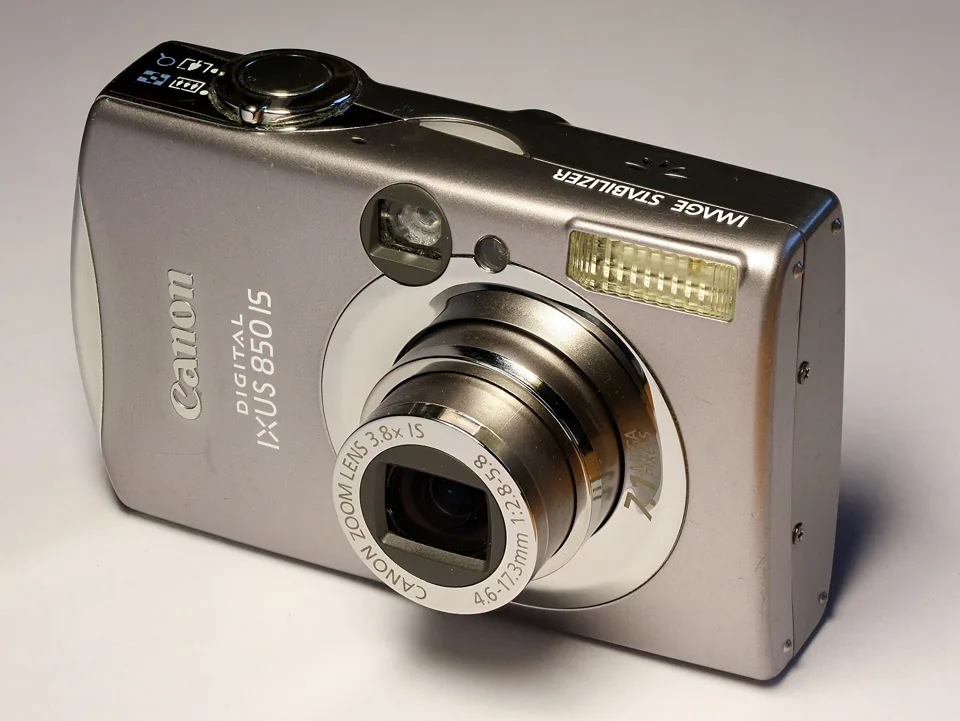
Meet the camera
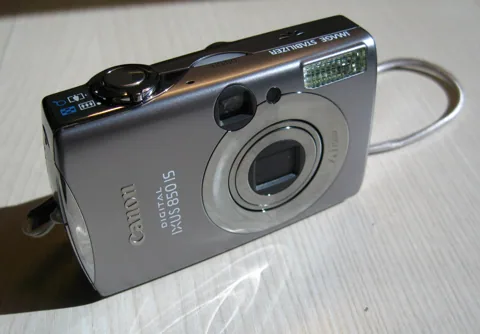
Canon's launch text called the IXY Digital 900 IS the first model in the IXY series to offer a wide-angle optical zoom, a 3.8x lens equivalent to 28 to 105 mm, in a slimmer body.1 Imaging Resource measured it at 89.5 by 58 by 25.1 millimetres and 175 grams with battery and card, about average for its class, and said it fits the hand like a bar of soap.3 DPReview praised superb build quality and styling, though it noted the finish is very susceptible to marks and scratches.2
It had three names. Canon sold it as the PowerShot SD800 IS Digital ELPH in North America, the Digital IXUS 850 IS in Europe and the IXY Digital 900 IS in Japan.1 Canon's museum lists October 2006 as the marketing date;1 DPReview said it was announced just before Photokina in September 2006 as a sister to the SD700 IS.2 Launch price: not confirmed in the sources we read.
- Sensor
- 7.1 MP CCD, 1/2.5"1
- Lens
- 3.8x, 28–105 mm equiv., f/2.8–5.8, stabilised1
- ISO
- Auto, 80 to 16001
- Screen
- 2.5", about 207,000 dots, plus optical viewfinder1
- Video
- VGA at 30 fps; 320 × 240 at 60 fps3
- Card
- SD (a 16 MB card came in the box)3
- Battery
- NB-5L; 270 shots with screen on, 600 with it off3
- Size
- 89.5 × 58 × 25.1 mm, 175 g with battery3
Why this one was interesting
28 mm
Almost every compact of the time started at 35 or 38 mm. DPReview's Simon Joinson said there are so many practical and creative advantages to 28 mm that it is hard to move back to the tunnel vision of a normal 3x zoom, from landscapes to interiors to group shots.2 Imaging Resource listed the true 28 mm equivalent wide angle among its pros, with the limited 3.8x range among its cons.3
Stabilisation and a new brain
The camera had optical lens-shift image stabilisation, which Imaging Resource said drastically reduces the effects of shake and means you can shoot in low light without a tripod, typically in light four times darker than without it.3 It also carried the DIGIC III processor with face detection focus, an ISO 1600 option and a better screen than its predecessor, DPReview noted.2 Face detection, in DPReview's words, worked most of the time but was a bit of a novelty;2 Imaging Resource found it really works.3
Keeping the viewfinder
Imaging Resource called an optical viewfinder rather rare on digicams by then, and the 2.5-inch screen excellent for framing,3 though it also said the viewfinder was not accurate.3 A viewfinder also saved power: it rated the battery at 270 shots with the screen on and 600 with it off.3
Its predecessor in spirit is our SD500 retrospective, and the SD1000 followed in 2007.
How it drew the picture
DPReview listed good resolution and colour, clean, detailed results at lower ISO, reliable exposure, punchy output straight from the camera and effective stabilisation as pros.2 The trade-offs: the edge-to-edge sharpness of the SD700 IS was gone, with slight but noticeable corner softness in some cases, and the heavy noise reduction of the new processor blurred fine low-contrast detail at ISO 200 and 400, and ISO 800 and 1600 were of limited use.2 Imaging Resource said high ISO options were available but not noise-free, and warned it easily blows out highlights.3





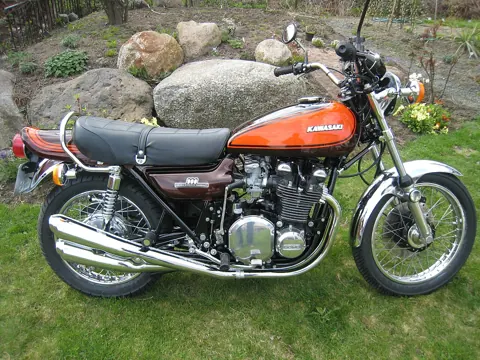


Photos taken with this camera, from Wikimedia Commons, credited under each picture.
On eBay right now
Live listings for this camera, supplied by eBay and updated automatically. We earn a commission if you buy through them.
The little wins


Slow-motion video
A Fast Frame Rate mode recorded 320 by 240 at 60 fps, twice the broadcast standard, so you could shoot slow motion, Imaging Resource said.3
Quick lens, quick camera
The lens telescoped in and out very quickly, above average for its class, with fast start-up and virtually no shutter lag if you pre-focus, according to Imaging Resource.3
External ISO control
DPReview listed external ISO control among its pros, along with a high-quality movie mode.2
Where it let you down
DPReview's cons: AiAF focus a bit unpredictable (turn it off), very little manual control, a finish prone to marks and scratches, no exposure information for shutter speeds over 1/60 second, and some highlight clipping.2 Imaging Resource added a body a little bulky compared with competitors and no manual control over aperture or shutter speed.3
What the reviewers said in 2006 and 2007
| Outlet | Date | Verdict |
|---|---|---|
| Imaging Resource | Preview 10 Nov 2006; full review 8 Jan 2007 | A good take-anywhere camera with great versatility and good colour and tonality; a Dave's Pick in its category.3 |
| DPReview | 12 Jan 2007 | Perhaps a dream come true on paper for anyone who values a 28 mm start, with some trade-offs in corner sharpness and noise reduction.2 |
The timeline
- September 2006Announced just before Photokina.2
- October 2006Canon's museum lists it as marketed.1
- 10 November 2006Imaging Resource publishes its hands-on preview.3
- 8 January 2007Imaging Resource publishes its full review.3
- 12 January 2007DPReview publishes its review.2
Should you buy one now?
Buy one if you want a small, solid 2006 compact with a real 28 mm wide angle, stabilisation and an optical viewfinder, and you are happy with 7 megapixels and a sensor that is soft in the corners. What it sells for now is a question for the sold listings, not for us. Before you bid, check these:
- The name. It was sold as the Digital IXUS 850 IS in Europe and the IXY Digital 900 IS in Japan, so search all three.1
- The battery. It uses an NB-5L;13 a fresh one is on Amazon ↗.
- The card. It takes SD cards.3
- The finish. It scratches easily, so expect cosmetic wear.2
- The focus. If focus seems unpredictable, turn AiAF off and use centre focus.2
- The lens. Check that it extends and retracts cleanly in both stages.3
If you are wondering why cameras like this are being hunted down again, we tell that story once, in Pictures that never left the card.
See recent sold prices on eBay ↗Shop on eBay ↗NB-5L battery ↗
New to the jargon (CCD, ISO, xD cards, IXUS vs ELPH)? Read our plain-English digicam glossary.
Sources
- Canon Camera Museum: IXY DIGITAL 900 IS / PowerShot SD800 IS / Digital IXUS 850 IS (launch text, specifications, marketing date)
- DPReview, Canon SD800 IS Digital ELPH (IXUS 850 IS) concise review by Simon Joinson (12 Jan 2007)
- Imaging Resource, Canon PowerShot SD800 IS Digital ELPH review by Mike Pasini (preview 10 Nov 2006, full review 8 Jan 2007)
Camera photos by D-Kuru, Tobias Abel (both CC BY-SA 3.0), Alan Levine and Syced (both CC0); sample photographs are credited under each one, all via Wikimedia Commons. Links to eBay and Amazon are affiliate links.