Canon PowerShot A series · announced January 2007
The Canon PowerShot A550: a $200 seven-megapixel compact on two AA batteries, with no manual exposure
We found no other regional name for it: Canon's museum lists the same name for Japan, the US and Europe.1
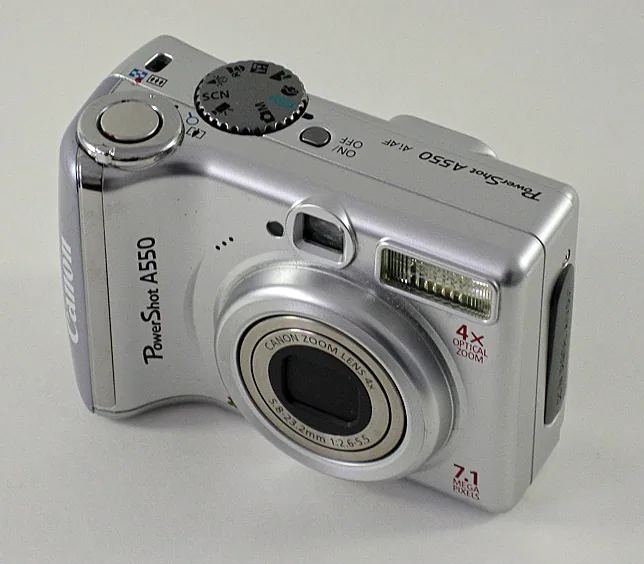

In January 2007 Canon announced a 7.1-megapixel compact with a 4x zoom, an optical viewfinder and an estimated price of $199.99. Three of the four full reviews we read liked its pictures. All four agreed that it had no real manual exposure and a small screen.
- Launched
- January 2007
- Launch price
- Estimated $199.99 in the US2
- Sensor
- 7.1 MP CCD
- Lens
- 35–140 mm, 4×
- Card
- SDHC, SD, MultiMediaCard
- Battery
- AA
Canon PowerShot A550 specs: sensor, lens, battery, memory card and cable
The Canon PowerShot A550 is a 7.1 MP CCD compact camera with a 35–140 mm (35 mm equivalent) 4× zoom lens, launched in January 2007 at $199.99. It runs on AA batteries. Sources
- Sensor
- CCD, 1/2.5", 7.1 MP source
- Lens
- 35–140 mm equivalent, 4× zoom source
- Memory card
- SDHC, SD, MultiMediaCard source
- Battery
- AA source
- USB / A/V cable
- IFC-400PCU, AVC-DC300 Confirmed · all Canon cables
Meet the camera
Canon announced it on 18 January 2007, together with the 5-megapixel A460, and put the estimated US price at $199.99, in stores from mid-February.2 The press release said it replaced the A530 and offered a larger screen, better battery life, SDHC support and 30 frames a second of VGA video.2 Canon UK gave the price as 169 pounds including VAT and said early February.3 It is a chunky, matte-silver plastic camera.9 Reviewed thought the plastic felt cheap and expected shoppers to pass over it for the flashier SD-series;9 DCResource judged the plastic high grade and solid, apart from a flimsy battery door;8 Steves Digicams praised a durable body whose enlarged grip made one-handed shooting easy.7 Canon lists about 160 grams for the body alone, and Imaging Resource gave 7.76 ounces with batteries and card.14
- Sensor
- 7.1 MP CCD, 1/2.5"1
- Lens
- 4x, 35–140 mm equiv., f/2.6–5.51
- ISO
- Auto, High ISO Auto, 80 to 8001
- Screen
- 2.0", about 86,000 dots, plus optical viewfinder1
- Batteries
- 2 × AA, alkaline or NiMH; Canon rates 140 shots on alkaline and 500 on NiMH, screen on (CIPA)1
- Size
- 91.2 × 64.0 × 43.1 mm, about 160 g, body only1
- Launch price
- Estimated $199.99 in the US2
Why this one was interesting
A 4x lens at the entry price
Imaging Resource said the 35 to 140 mm lens beat the more common 3x zoom,4 and Steves Digicams said the longer reach helped fill the frame in portraits.7 Reviewed agreed that 4x was better than the 3x typical of budget cameras and valued the f/2.6 opening at wide angle, but judged the optics poor overall: the zoom ring gave a sharp nub to turn, the lens made mechanical noise, and macro shots showed barrel distortion.9 DCResource noted that the lens was the same as on the A530 and our PowerShot A540.8
A mode dial for the first-time buyer
Canon moved five scene modes onto the dial;2 Reviewed said the A530 had kept most of them in a menu.9 Reviewed listed them as Portrait, Landscape, Night Snapshot, Kids & Pets and Indoor, with five more under SCN: Night Scene, Foliage, Snow, Beach and Fireworks.9 Imaging Resource and Steves Digicams liked the Function menu, which in the Manual position sets exposure compensation, white balance, colours, metering, size and quality without a trip into the main menus.47
Video at 30 frames a second
Canon advertised 30 frames a second of VGA video,2 and Reviewed said the A530 had managed only 10 frames a second at 640 by 480.9 The clip length was capped at 1 GB or one hour, Canon says.1 DCResource said 1 GB at 640 by 480 and 30 frames a second takes about eight minutes; Steves Digicams put the data rate near 1.9 MB a second, which by our arithmetic makes it about nine.87
Why not the A560, or the A570 IS?
DCResource's table put the A550 beside its dearer siblings. The A560 had the same 7.1 megapixels with the DIGIC III processor, a 2.5-inch, 115,000-dot screen, face detection and a 4 GB movie limit. DCResource recommended paying "$30 more" for it, though the street prices in its own table, $184 and $229, differ by $45.8 Imaging Resource withheld its Dave's Pick for the same reason, naming the A560's bigger screen and face detection for $15 to 20 more.4 For full manual controls DCResource pointed to the A570 IS, at about $80 more, and Imaging Resource also suggested it to anyone with a little more to spend;48 see our PowerShot A570 IS retrospective. The A550 itself is a CCD camera: see our glossary entry on CCD sensors.
No manual exposure
The mode dial's M position is not a manual mode. Imaging Resource called it only a little more control and listed the lack of manual aperture or shutter control among its cons.4 Steves Digicams said Manual is still an automatic exposure mode that opens up ISO, white balance and metering,7 and Reviewed said exposure settings cannot be changed by hand.9 DCResource found two real manual controls: a long-shutter option from 1 to 15 seconds, and custom white balance.8 If you want to set aperture and shutter, our A540 retrospective covers a 2006 sibling that offers it.
The AA question: what each source said
| Source | What it said about batteries |
|---|---|
| Canon | 140 shots on alkaline and 500 on NiMH with the screen on (CIPA); 540 and 660 minutes of playback. Also lists the ACK800 AC adapter kit.1 |
| Imaging Resource | Its table: 140 shots on alkaline with the screen on and 1,000 with it off; 550 on NiMH with the screen on and 1,400 with it off, based on CIPA and manufacturer test conditions. In use, with the screen on all day, it rarely changed batteries. Verdict: short life on alkaline, much better on NiMH.4 |
| DCResource | 550 shots on two 2500 mAh NiMH cells (manufacturer figures, CIPA), the best among the cameras it listed; the alkalines in the box would "quickly find their way into the trash" and a four-pack of NiMH and a fast charger were the first purchase.8 |
| Steves Digicams | Repeated Canon's 140 and 500, recommended NiMH, and then got about 90 shots plus several movie clips and other tests from one set of 2700 mAh cells with the screen on throughout. It suspected cold weather.7 |
| Reviewed | 140 pictures on the alkaline set in the box and 500 per charge on NiMH.9 |
The sources agree that the alkaline cells in the box are a stopgap. The published NiMH figures are 500 or 550 shots,17948 and Steves Digicams' own test fell far short of both, possibly because of cold.7 Our reading, which no source states in these words, is to buy NiMH cells and a charger with the camera. Our guide to AA-powered CCD digicams sets the A550 beside its rivals.
The dark, and the noise
Imaging Resource, Steves Digicams and DCResource agreed that noise rose clearly by ISO 400 and differed on how usable the top settings were. Imaging Resource found noise low to moderate at the lower settings and much higher at ISO 400 and 800, with bright noise pixels that shifted colour; in prints it called ISO 400 soft but usable at 11 by 14 inches and ISO 800 still good at 11 by 14 in daylight-balanced light, though indoor incandescent shots were better kept to 8 by 10.4 Steves Digicams saw very little noise at ISO 80 to 200, found it very noticeable at 400 and 800, and thought 4 by 6 prints still usable.7 DCResource found every setting through ISO 200 very clean, called ISO 400 grainy but fine for a small or mid-size print, ISO 800 for desperation only, and said that in low light it would stop at ISO 200; it noted that Canon applies little noise reduction, which leaves grain but less smudging.8
Reviewed's lab was less kind. It gave manual ISO noise a score of 3.81 on its own scale, called that typical of budget cameras, and noted a bit less noise than the predecessors and an extra ISO stop. Its Auto ISO chose ISO 200 under bright studio lights and scored 1.40, so it advised setting the sensitivity by hand.9
In very dim light on a tripod, Imaging Resource captured bright images down to about one-sixteenth of a foot-candle, with exposures of up to 15 seconds at ISO 80 and ISO 100, though it called the ISO 80 picture at that level a bit dim; its autofocus worked to just below a quarter of a foot-candle without the assist lamp.4 Reviewed rated low-light colour accuracy very good at the higher ISO settings.9 The photos below come from the Commons category of files made with this camera; the sensitivity and shutter speed are those recorded in each file's own data, and all four were shot at f/2.6.
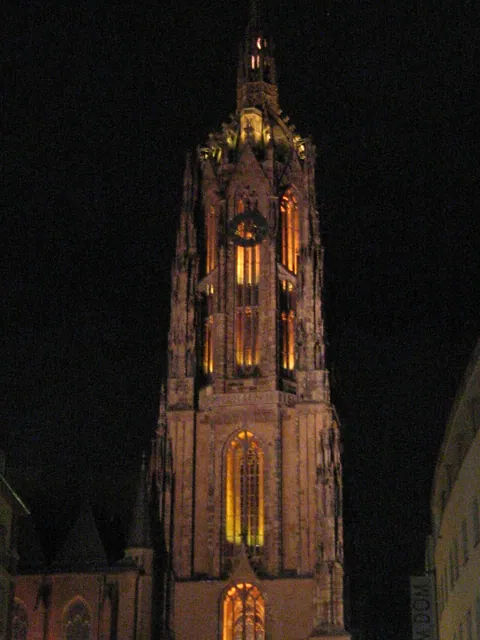





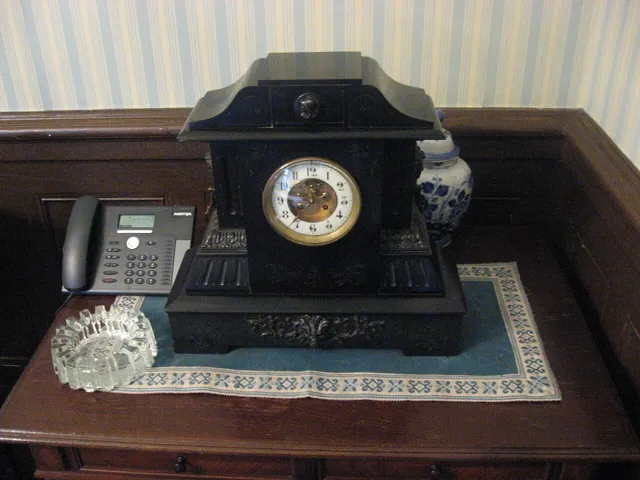

Real photographs taken with this camera.
Like that look? See what A550s have recently sold for on eBay ↗
On eBay right now
Live listings for this camera, supplied by eBay and updated automatically. We earn a commission if you buy through them.
The little wins
A grip built from the batteries
Imaging Resource said the bulge that holds the two AA cells gave the body a nice little grip.4 Reviewed found the thick grip comfortable and the left hand clear of the lens, though its mode dial and rocker button were stiff.9
A custom self-timer
Both Imaging Resource and DCResource described a custom mode with a delay of up to 30 seconds and one to ten shots a cycle; DCResource thought it still exclusive to Canon among the cameras it knew.48
Quick downloads
Imaging Resource measured 2,808 KB a second over USB 2.0 and said that made a separate card reader unnecessary.4
How it drew the picture
In daylight three of the four reviewers were warm about the pictures. Imaging Resource found very good colour with slight oversaturation in reds and blues and slightly warm skin tones, and chart detail strong to about 1,600 lines horizontally and 1,400 vertically.4 Reviewed's lab gave a mean colour error of 6.26 with saturation close to 105 percent, and resolved 1,609 lines horizontally and 1,697 vertically at 18 mm and f/5, which it called decent for the class.9 DCResource called exposure mostly good, with the odd blown highlight, colour saturated and sharpness right.8 Steves Digicams called its large, finest-quality pictures impressive and sharp, with a little edge softness.7
On the lens the verdicts split: Imaging Resource measured 0.7 percent barrel distortion at wide angle, moderate chromatic aberration there and very soft right-hand corners;4 DCResource saw mild to moderate barrel distortion and blurry corners at wide angle, with little purple fringing;8 Steves Digicams found sharp results across the zoom, average barrel distortion and only slight fringing.7








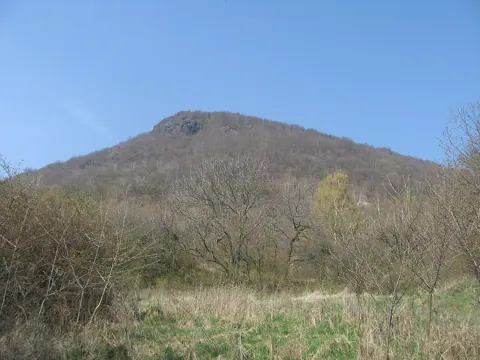

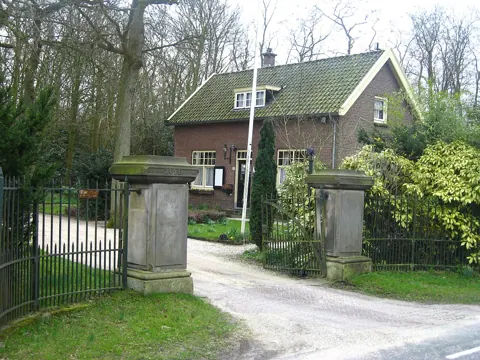



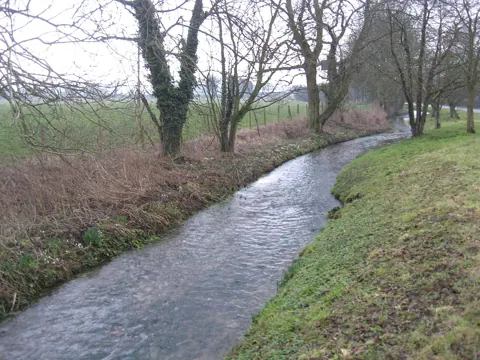

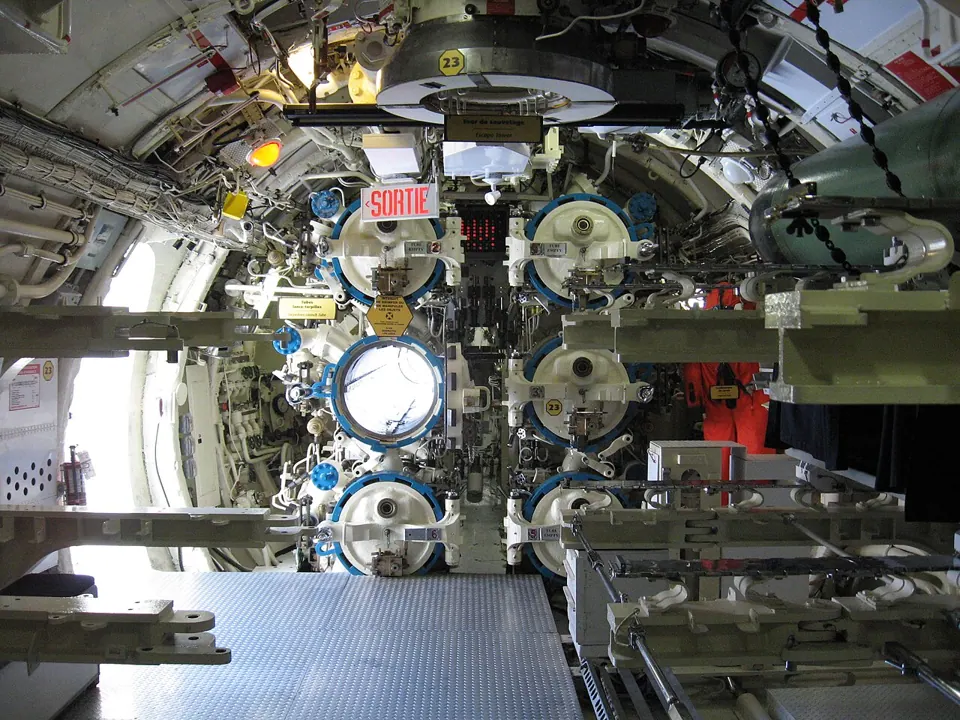
Photos taken with this camera, from Wikimedia Commons, credited under each picture. Each file's recorded camera model is the Canon PowerShot A550.
Where it let you down
All four reviews noted the 86,000-dot, 2-inch screen as small or coarse. Reviewed was harshest: it said the picture goes dark off-axis, glares outdoors, and has neither a brightness control nor an automatic gain, and that faces on playback break up into blocks of colour.9
The others were milder. Steves Digicams found the screen bright and clear outdoors, apart from a few angles, and said it gains up nicely in low light;7 DCResource found outdoor visibility average and low-light viewing very good;8 Imaging Resource found it a bit washed out in bright sun, though still usable.4
The flash was the other weak point: Imaging Resource clocked a 10-second recycle and found flash exposures unusable in macro;4 Steves Digicams timed 4 to 6 seconds between flash shots against 1.3 without;7 Reviewed saw no flash compensation, and Canon's sheet says the same.91
Video scored a low 3.91 in Reviewed's lab: strongly off colour under bright studio lights and undersaturated in dim light, though its outdoor clips beat most digital cameras' in the same test; it said there is no optical zoom while recording.9 There is no face detection, and DCResource noted that the red-eye correction tool in playback came only with the A560 and A570 IS.498 The 16 MB card in the box held four full-size pictures.84
Where the sources disagree
| Point | One source | Another |
|---|---|---|
| Availability | Canon USA: in stores mid-February 2007. Canon UK: from early February.23 | Canon's museum: marketed March 2007. Imaging Resource's spec table: available 28 February 2007.14 |
| Start-up to first shot | Imaging Resource: 1.3 seconds (lab). Steves Digicams: 1.5.47 | DCResource: 1.1. Reviewed: 1.8.89 |
| Shutter lag | Imaging Resource: 0.45 second at wide angle with autofocus, 0.072 prefocused. Steves Digicams: about 0.2 with autofocus, under 0.1 prefocused.47 | Reviewed: 0.4 second.9 |
| Viewfinder coverage | Imaging Resource measured about 83 percent at wide angle and 81 at telephoto; Steves Digicams said 80 to 85.47 | Reviewed said it sees only about a quarter of what the lens records at telephoto, skewed to the top.9 |
| Panorama stitch mode | Imaging Resource called it missing; Reviewed said the new dial replaced it with scene modes.49 | DCResource's dial table lists Stitch Assist, yet the same review says the camera lacks it; Steves Digicams lists it among features.85 |
| 60 frames-a-second video | Canon and Imaging Resource list a 320 by 240 mode at 60 frames a second for one minute.14 | Reviewed could not find it on its unit.9 |
| Dave's Pick | Imaging Resource's 2007 text says it withheld the award.4 | The review page today carries a "Dave's Pick" badge and award metadata.4 |
| Price against the A530 | Imaging Resource: some $50 less than its predecessor, the A530.4 | Reviewed: the A530 "sells for about $50 less" than the A550, which may reflect a later street price.9 |
The rivals Reviewed picked
Reviewed compared the A550 with several budget rivals, and three are worth a line. The Sony Cyber-shot W55 cost the same $199 and had a 3x zoom, a 2.5-inch, 115,000-dot screen and a rechargeable battery rated at 380 shots; see our Sony DSC-W55 retrospective.9 The Nikon Coolpix L5 had a 5x stabilised zoom, a 2.5-inch screen and 150 shots on alkaline, and retailed at $249.9 Pentax's Optio E30 cost $149 with a 3x zoom and no viewfinder.9
What the reviewers said
| Outlet | Date | Verdict |
|---|---|---|
| Steves Digicams | 20 Feb 2007 | Robust performance, great image quality, easy exposure modes and great ergonomics; expected it to be a popular 2007 model. Battery test fell short of Canon's figure.57 |
| DCResource | 25 Mar 2007, updated 21 Dec 2007 | A very good entry-level camera it could recommend easily, though it urged paying $30 more for the A560. Criticised the screen, the flimsy battery door, the lack of manual control and the red-eye.8 |
| Imaging Resource | 17 Apr 2007 | A great little digicam and a real bargain; withheld its Dave's Pick because the A560 offered a bigger screen and face detection for little more. Cons: 10-second flash recycle, no manual aperture or shutter.4 |
| Reviewed | 24 May 2007 (page metadata) | An adequate camera whose pictures will not blow anyone away but will serve basic point-and-shooters; its drawbacks, it said, mostly came with the price.9 |
The timeline
- 18 January 2007Canon announces the A550 and A460 in the US and the UK.23
- Early to mid February 2007Canon's releases give the in-store window; Imaging Resource's table says 28 February.324
- March 2007Canon's museum lists the camera as marketed.1
- 20 February to 24 May 2007The four full reviews appear: Steves Digicams (20 February), DCResource (25 March), Imaging Resource (17 April) and Reviewed (24 May, from its page data).5849
- 21 December 2007DCResource last updates its review.8
Should you buy one now?
Buy one if you want a simple, AA-powered compact with a 4x zoom and a viewfinder, you will run NiMH rechargeables, and you can live without manual exposure or a quick flash. It launched at an estimated $199.99;2 what it sells for now is a question for the sold listings, not for us. Before you bid, check these:
- The battery door. DCResource found the door over the batteries and card flimsy.8 Imaging Resource described a sliding door with a latch, and beside the two AA wells a slot for the CR1220 cell that keeps the clock.4 Check the latch and the contacts for the white crust that old alkalines leave (our advice); if the small cell is flat, we would expect the clock to reset when you change the AAs (our inference).
- The batteries. Two AA cells;1 NiMH rechargeables are on Amazon ↗.
- The card. Canon lists SD, SDHC and MMC.1 Steves Digicams said the slot takes SD or MMC cards up to 2 GB or SDHC cards from 4 GB up;6 see our SD, SDHC and SDXC guide.
- The cables. Imaging Resource's box list names a USB cable (IFC-400PCU) and an AV cable (AVC-DC300), and Canon lists a USB 2.0 Hi-Speed mini-B port;41 see our IFC-400PCU page.
- The dials. Imaging Resource found no lock on the Auto position and said the ISO is easy to change by accident, and Reviewed found its mode dial stiff.49 Check that yours turns cleanly and stays put.
- The lens. Reviewed heard mechanical noise and a small hunt in the zoom ring.9 Check that the lens extends and retracts smoothly, and that the zoom settles (our advice).
If you are wondering why cameras like this are being hunted down again, we tell that story once, in Pictures that never left the card.
See recent sold prices on eBay ↗Shop on eBay ↗AA batteries ↗
Sources
- Canon Camera Museum: PowerShot A550 (specifications, power sources and shot counts, card types, flash, marketing date March 2007)
- Imaging Resource news item of 18 January 2007, Canon: Two new A-series digicams, with Canon USA's press release (A550 and A460, estimated prices $199.99 and $149.99, in stores mid-February; the A550 replaces the A530)
- PhotographyBLOG, Canon A550 and Canon A460 (18 January 2007), with Canon UK's press release (A550 at 169 pounds including VAT, 249.99 euros, from early February 2007)
- Imaging Resource, Canon A550 review by Al Gordon and Shawn Barnett (review date 04/17/07; lab tests, user report, box contents, CIPA battery table)
- Steves Digicams, Canon PowerShot A550 user review, introduction and specifications (posted 20 February 2007; the original site no longer serves it, so this is the Internet Archive copy of 22 December 2008)
- Steves Digicams, Canon PowerShot A550 review, features and controls (Internet Archive copy of 14 July 2009; card and battery notes)
- Steves Digicams, Canon PowerShot A550 review, Steve's conclusion (Internet Archive copy of 4 August 2009; timings, image quality and battery test)
- DCResource (DCRP), PowerShot A550 review by Jeff Keller (originally posted 25 March 2007, last updated 21 December 2007; Internet Archive copy of 12 February 2009, because the original page now returns 404)
- Reviewed, Canon PowerShot A550 digital camera review (the page's own metadata dates it 24 May 2007; Imatest lab scores, design and controls, comparisons)
Camera photo by Steve Johnson; low-light and sample photographs are credited under each one, all via Wikimedia Commons. Links to eBay and Amazon are affiliate links.