Canon PowerShot S · marketed April 2001
The Canon PowerShot S300 Digital ELPH: a 3x zoom in a steel case that nearly hides behind a playing card
Sold as the Digital IXUS 300 in Europe, Asia and Oceania and as the IXY Digital 300 in Japan.1
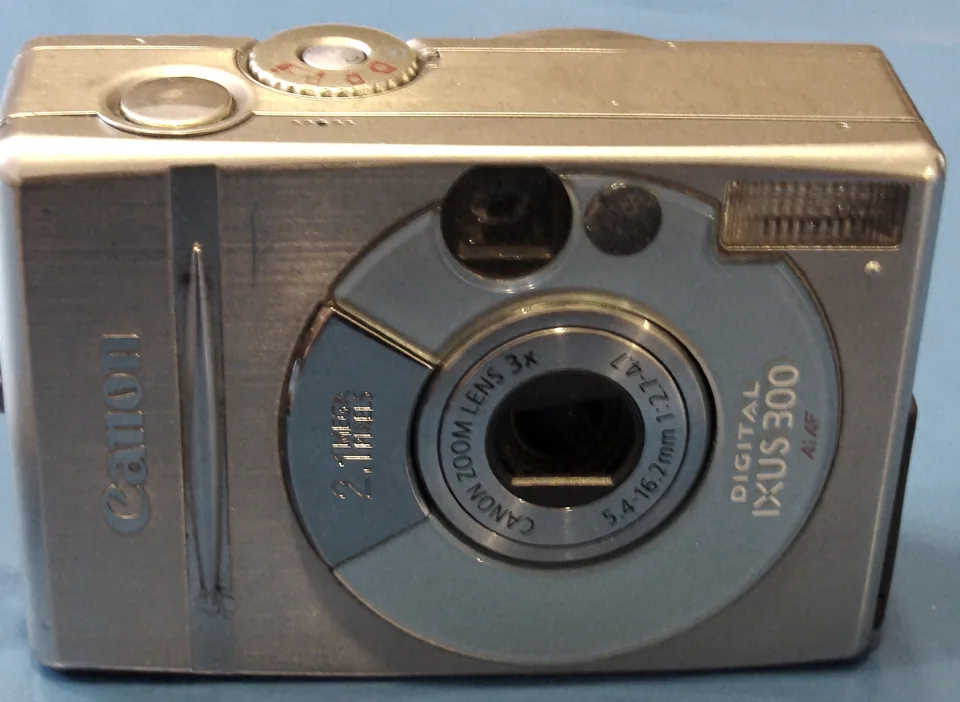
The two full reviews we found both praised the S300's build and speed. They split over its colour, and DPReview thought it pricey. Both complained about the viewfinder and the flash, and both urged buyers to carry a spare battery.
Canon PowerShot S300 specs: sensor, lens, battery, memory card and cable
The Canon PowerShot S300 (also sold as the Digital IXUS 300 and IXY Digital 300) came out in April 2001 at US$599 as a 2.11 MP CCD compact with a 35–105 mm (35 mm equivalent) 3× zoom lens. It takes CompactFlash cards and runs on the NB-1L battery. Sources
- Sensor
- CCD, 1/2.7", 2.11 MP source
- Lens
- 35–105 mm equivalent, 3× zoom source
- Memory card
- CompactFlash source
- Battery
- NB-1L source
- Also sold as
- Digital IXUS 300 · IXY Digital 300
- USB / A/V cable
- IFC-300PCU, AVC-DC100 Confirmed · all Canon cables
Meet the camera
There is no separate power button: it sits in the middle of the mode dial, and you hold it down before the camera wakes. Imaging Resource put the hold at about a second and suspected Canon meant it to keep the camera from switching on inside a pocket.2 Then the lens runs out. DPReview timed that at 1.1 seconds, against nearly three for most extending three-times zooms of the day, and the same again to retract behind its automatic cover.4 The body is metal, stainless steel with a brushed front by Canon's and DPReview's account, and each reviewer lingered on it: Imaging Resource called the build some of the highest quality it had seen in a digicam, and DPReview scored construction 10 out of 10.124
Canon's museum calls it the company's second ultra-compact digital camera and says it was marketed in April 2001 at 85,000 yen in Japan; Canon's text also bills it as the world's smallest 2.1-megapixel camera with a 3x zoom.1 In the US, DPReview gave a street price of US$600 and Imaging Resource's data sheet a retail price of $599.43 The release dates disagree between sources (see the table below). Canon gives the size as 94.8 × 62.5 × 29.9 mm and the weight as about 240 g without battery and card; Imaging Resource found it nearly hidden behind a playing card.12
- Sensor
- 2.11 MP CCD, 1/2.7" (about 2.02 MP effective), 1600 × 1200 maximum1
- Lens
- 3x, 5.4–16.2 mm (35–105 mm equiv.), f/2.7–4.7 per Canon1
- Screen
- 1.5" TFT LCD plus a real-image optical viewfinder1
- Files
- JPEG at three sizes and three compression levels; AVI movies with sound up to 640 × 480 at about 20 frames a second1
- Shutter and flash
- 1 s to 1/1500 s; flash 76 cm to 3.5 m at wide angle, 76 cm to 2.0 m at tele (Canon)1
Why this one was interesting
Three times the zoom, a little more camera
DPReview set the S300 beside the original Digital IXUS (the S100 in the US) in a table. The zoom grew from 2x to 3x and the colour filter changed from CYGM to GRGB (Canon's text mentions an adaptive primary-colour filter); movies with audio and direct printing were new; volume went from 133 to 179 cm³ and weight, battery included, from 210 g to 275 g.4 Imaging Resource, which called the S300 a major update to the original S100, added a mode dial and a rear button for exposure compensation and white balance, both of which had been menu items on the S100.2 Canon's own emphasis was printing: the camera could drive a CP-10 dye-sublimation card printer over one cable and, by Canon's account, make a credit-card-sized print in as little as 56 seconds.1
Quick, once it is running
DPReview called the S300 surprisingly quick and said it shamed many bigger Canons and most rivals. It measured 3.5 seconds from off to a shot taken, 1.6 seconds shot to shot at the largest, finest setting, and 0.1 seconds of shutter lag after focusing.4 Imaging Resource's stopwatch gave 4.2 seconds from off to first shot and 2.09 seconds between large files, and its standout figure came from half-pressing the shutter to prefocus: 0.063 seconds, which it called blazingly fast.2 Without prefocus, its autofocus lag measured 1.15 seconds at normal distances and 2.2 in macro.2
Few controls, on purpose
There is no manual focus, no aperture or shutter priority and no ISO setting. Imaging Resource explained that “Manual” on the dial only frees exposure compensation, white balance and image quality, while the camera still picks the shutter time and aperture.2 DPReview's specification table likewise lists no aperture priority, shutter priority, full manual or manual focus, only an infinity lock.4 Imaging Resource did like one thing about this arrangement: the shutter works at any moment, whatever menu is on the screen.2
The dark: what it did after sunset
Imaging Resource called the low-light result only average. Its tests gave bright, usable pictures down to one foot-candle (11 lux), which it likened to a city night scene under street lighting. At half a foot-candle the target appeared with a pink cast, and at 1/16 of a foot-candle the image was nearly black and white. Noise stayed very low throughout.2 The sensitivity is fixed at ISO 100 and rises only to 150, and the longest shutter time is one second.12 A bright white lamp on the front helps the autofocus in the dark; Imaging Resource said the camera could focus reasonably well, if not perfectly, in total darkness, and both reviewers noted that the lamp cannot be turned off.24
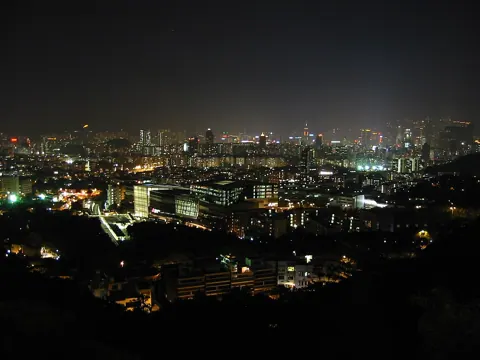
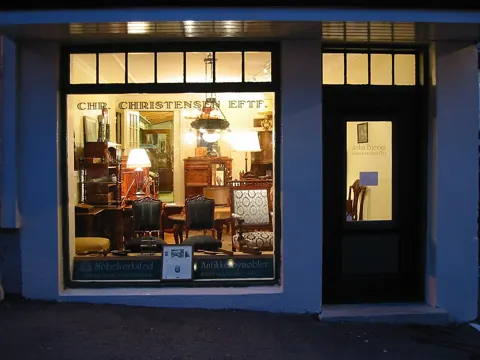
We cannot give an ISO for these two: the EXIF Commons shows for these files carries no ISO value. The shutter times and apertures in the captions are from the EXIF.
Like that look? See recent eBay sold listings for this camera ↗
On eBay right now
Live listings for this camera, supplied by eBay and updated automatically. We earn a commission if you buy through them.
The little wins
A screen you can read in the sun
DPReview praised the 1.5-inch screen, carried over from the first IXUS, for one of the best anti-reflective coatings it had seen on a digital camera.4 Imaging Resource called it one of the most readable it had seen on a digicam, even in full sunlight, and measured it showing just over 99 per cent of the final frame.2
Movies with sound
Canon lists AVI clips at 20 frames a second in three sizes up to 640 × 480, with mono sound; the S100 had no movie mode at all.14 Imaging Resource timed the longest full-size clip at six seconds, and an owner's note says the camera shot all the video clips on an Alaska expedition.25
Small enough to bring everywhere
Imaging Resource said the camera slides into most shirt pockets, and DPReview wrote that you are more likely to have it with you when the crucial shot arrives.24 An owner's note, which says the author took over 11,000 photos and clips with it in seven years, makes the same point: you cannot take a great photo without a camera.5
Exposure and white balance on one button
A first press brings up exposure compensation in thirds of a stop from −2 to +2, a second press the white-balance list, according to Imaging Resource, which called moving these out of the menu a significant interface improvement on the S100.2 DPReview found the presets worked, though Auto only did well in natural light.4
How it drew the picture
Imaging Resource found the lens unusually good for its size: sharp into the corners, aliasing in the resolution chart from about 575 lines per picture height, clear detail out to 700 to 800 lines and almost no colour aliasing. It measured 0.57 per cent barrel distortion at wide angle and faint colour fringes, four or five pixels wide in the corners but pale.2 DPReview's chart gave absolute resolution of 800 to 820 lines, with detail turning to a solid grey alias between 900 and 1,050, and saw almost no visible fringing; its wide-angle barrel distortion figure was about 1.1 per cent.4 In a studio comparison with the Nikon Coolpix 950, DPReview judged the Canon sharper into the corners and better at holding highlights; see our Coolpix 950 review for that camera.4
Colour is where they parted. Imaging Resource said the S300 produced much more accurate colour than the S100, with slightly bright reds and purplish tints in blue flowers, and called the images' colour excellent in its conclusion.2 DPReview measured primary colours as duller than it liked, found the pictures flat, with the camera aiming to keep shadow detail, and said it nearly always added about +15 of saturation in Photoshop. It also noted a tendency to overexpose, usually cured by −0.3 EV outdoors, and said some people might find the images soft.4
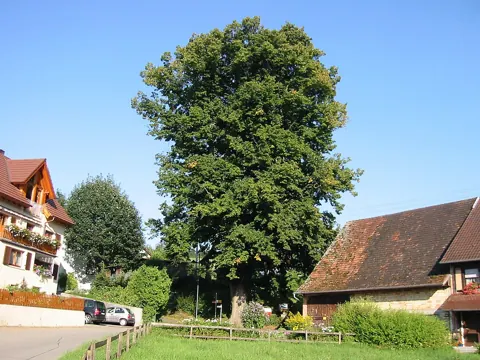
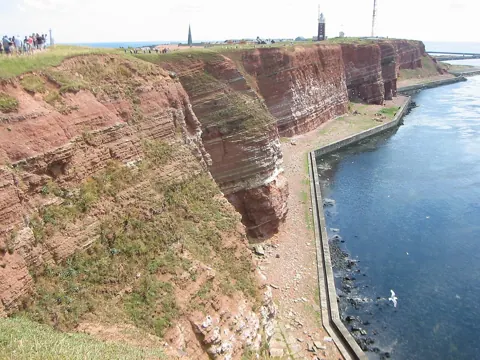
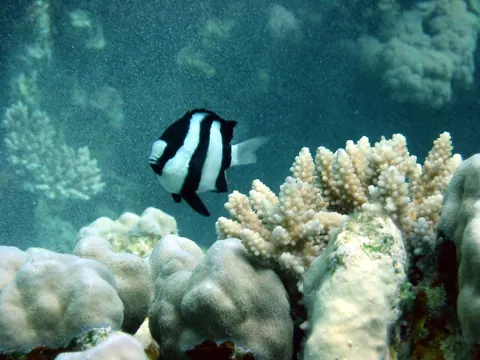
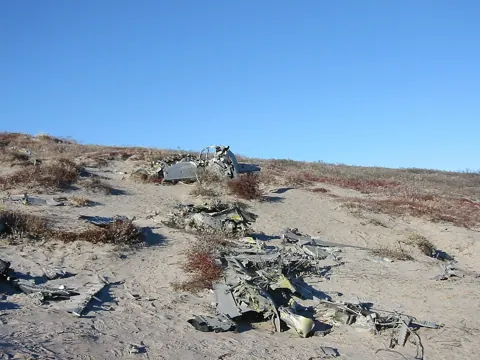



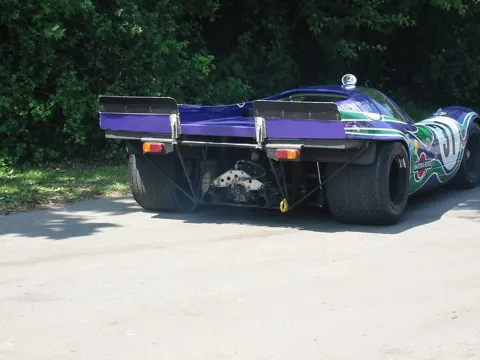



Photos taken with this camera, from Wikimedia Commons, credited under each picture. We do not know what editing the uploaders applied.
Where it let you down
The optical viewfinder drew criticism from both. Imaging Resource measured it showing about 79 per cent of the frame at wide angle and 84 per cent at telephoto, with shots framed through it shifted toward the lower right, against about 99 per cent for the screen.2 DPReview called it small, with no parallax marks and no dioptre adjustment, and suggested you would use the screen often.4 The flash was the next complaint. Imaging Resource put its real range at about 8 feet and DPReview said it lacked the power and coverage to light a wall from two metres, though it noted that skin tones were warmer and more accurate than the first IXUS's blue cast.24
Macro was thin. Imaging Resource's smallest field was 7.81 × 5.86 inches (198 × 149 mm) and DPReview called the mode “a little closer” rather than macro.24 Battery life was a limit on each reviewer's clock: Imaging Resource ran the camera for 60 minutes with the screen on, calling that a bit below average, and DPReview for about an hour and 90 shots before the warning icon, listing poor battery life among its cons though its text said it lasted relatively well for the size. Each advised a second battery.24 The same advice, with a swipe at the 8 MB card as “a joke”, came from the owner's note.5 Smaller irritations: a tripod socket close to the edge of the base that each reviewer remarked on, a rubber flap over the connectors that each faulted, and, per DPReview, a digital zoom you cannot turn off.24
A last limit matters to buyers today. DPReview said the S300 cannot take Type II CompactFlash cards, so no Microdrive, and that a 64 MB Type I card cost no more than about $80 at the time.4
Where the sources disagree
Canon's pages and the two reviews differ on several figures, and we show them rather than choose.
| Detail | What each source says |
|---|---|
| Release date | Canon's museum: marketed April 2001 in Japan.1 DPReview's review is dated 20 March 2001 and says it used a production unit; Imaging Resource first posted on 5 April 2001.42 Imaging Resource's data sheet gives 30 June 2001 as the date available.3 |
| Widest aperture | Canon and DPReview: f/2.7 at wide angle; Imaging Resource's review text: f/2.8, though its own data sheet says f/2.7.1423 The lens ring in our product photo is engraved 1:2.7–4.7. |
| Effective pixels | Canon: about 2.02 million; DPReview: 1.92 million.14 |
| Weight | Canon and Imaging Resource: about 240 g without battery; DPReview: 275 g with battery.124 |
| Close focus | Imaging Resource's introduction lists improved macro focusing range among the changes from the S100; DPReview's table gives the S100's macro range as 10–57 cm and the S300's as 16–76 cm.24 |
| Start-up | Off to first shot: 4.2 s at Imaging Resource, 3.5 s at DPReview, whose off-to-record figure includes a 1.2 s power-button hold, though its text elsewhere says two seconds.24 |
| Burst speed | Canon and Imaging Resource's overview: about 2.5 frames a second. Imaging Resource measured 1.19 (large) and 1.52 (small), with seven frames at large and 64 at small; DPReview measured 1.25 and 1.62, with 7 and 43 frames.124 |
| Movie length, full size | Canon: about 4 s; Imaging Resource: 6 s measured; DPReview: 7–15 s in its text and 5 s in its specification table.124 |
| Flash range | Canon lists 76 cm to 3.5 m in normal mode and 26 to 76 cm in macro mode; DPReview's table gives 26 cm to 3.5 m at wide angle and 26 cm to 2.0 m at telephoto, with no separate macro figure.14 |
What the reviewers said
| Outlet | Date | Verdict |
|---|---|---|
| Imaging Resource | 5 Apr 2001 | Highly recommended; it called the S300 a tiny camera that takes great pictures, with first-rate image quality, while noting limits in macro and low light.2 |
| DPReview | 20 Mar 2001 | “Recommended (but pricey)”. It scored construction 10, lens and CCD 8.5, image quality 8, ease of use 8, features 7 and value for money 6, and said at $100 more you could buy one of the best three-megapixel 3x zoom cameras.4 |
| Lawrence I. Charters | 30 Oct 2001 | An owner's note, not a test: an outstanding camera for an Alaska expedition, with advice to buy a bigger card and a second battery. An undated update says the author took over 11,000 photos and clips with it over seven years.5 |
The timeline
- February 2001A note on Imaging Resource's data sheet dates the billing of the camera as the world's smallest 2.1-megapixel model with a 3x zoom to this month.3
- 20 March 2001DPReview publishes its review of a production unit.4
- April 2001Canon's museum gives this month for the Japanese release.1
- 5 April 2001Imaging Resource first posts its twelve-page review.2
- 30 June 2001The date-available field on Imaging Resource's data sheet.3
- 30 October 2001Lawrence I. Charters posts the owner's note.5
Should you buy one now?
Buy one if you want a two-megapixel pocket camera that is quick to start and well made, and you accept that it picks the exposure, has no real macro and needs a spare battery.124 What it sells for now is a question for the sold listings, not for us. Our PowerShot S30 review covers the three-megapixel Canon of late 2001 and our PowerShot S230 review a later pocket ELPH. Before you bid, check these:
- The names. The same camera was the PowerShot S300 Digital ELPH, Digital IXUS 300 and IXY Digital 300, so search all three.1
- The battery. It uses an NB-1L, which Canon's page says is exclusive to this camera and the original IXUS (S100).1 Amazon ↗ The charger came in the box, but Imaging Resource said US models shipped without an AC adapter, so battery power was the only option.2
- The card. It takes Type I CompactFlash only, not Type II or a Microdrive.14 See our CompactFlash guide. Amazon ↗
- The lens. Switch it on and off a few times: it should run out in about a second and the cover close fully.4
- The port flap. Each reviewer worried about the rubber cover over the connectors; check that it is intact and the connectors behind it are clean.24
- The screen. Look for scratches on the 1.5-inch screen and its coating, and check for dust in the optical viewfinder.
If you are wondering why cameras like this are being hunted down again, we tell that story once, in Pictures that never left the card. DPReview showed its size next to the Nikon Coolpix 880, which we review here.
See recent sold prices on eBay ↗Shop on eBay ↗NB-1L battery ↗
Sources
- Canon Camera Museum, PowerShot S300 DIGITAL ELPH / DIGITAL IXUS 300 / IXY DIGITAL 300 (marketed April 2001, original price 85,000 yen; outline and specifications)
- Imaging Resource, Canon PowerShot S300 review, twelve pages (first posted 5 Apr 2001; lab timings, resolution, low-light and viewfinder tests)
- Imaging Resource data sheet, Canon PowerShot S300 (retail price field $599; date-available field 2001-06-30; its price-update date reads 2007-02-27)
- DPReview, “Canon Digital IXUS 300 (AKA. S300 ELPH) Review” by Phil Askey (published 20 Mar 2001; based on a production unit; one long page with specifications, timings, resolution chart and ratings)
- Lawrence I. Charters, “Canon PowerShot S300 Digital ELPH camera” on nishiryu.us (30 Oct 2001; a short owner's note with an undated update)
The camera photo is by Werner Ochs (CC BY-SA 3.0); other photographs are credited under each one, all via Wikimedia Commons. Links to eBay and Amazon are affiliate links.