Sony Cyber-shot W · announced January 2009
The Sony Cyber-shot DSC-W220: the entry-level W with a 30 mm Zeiss zoom, scene recognition and a price near $190
We found no other regional name for it; the US and UK launch coverage and both full reviews we read call it the DSC-W220.1346
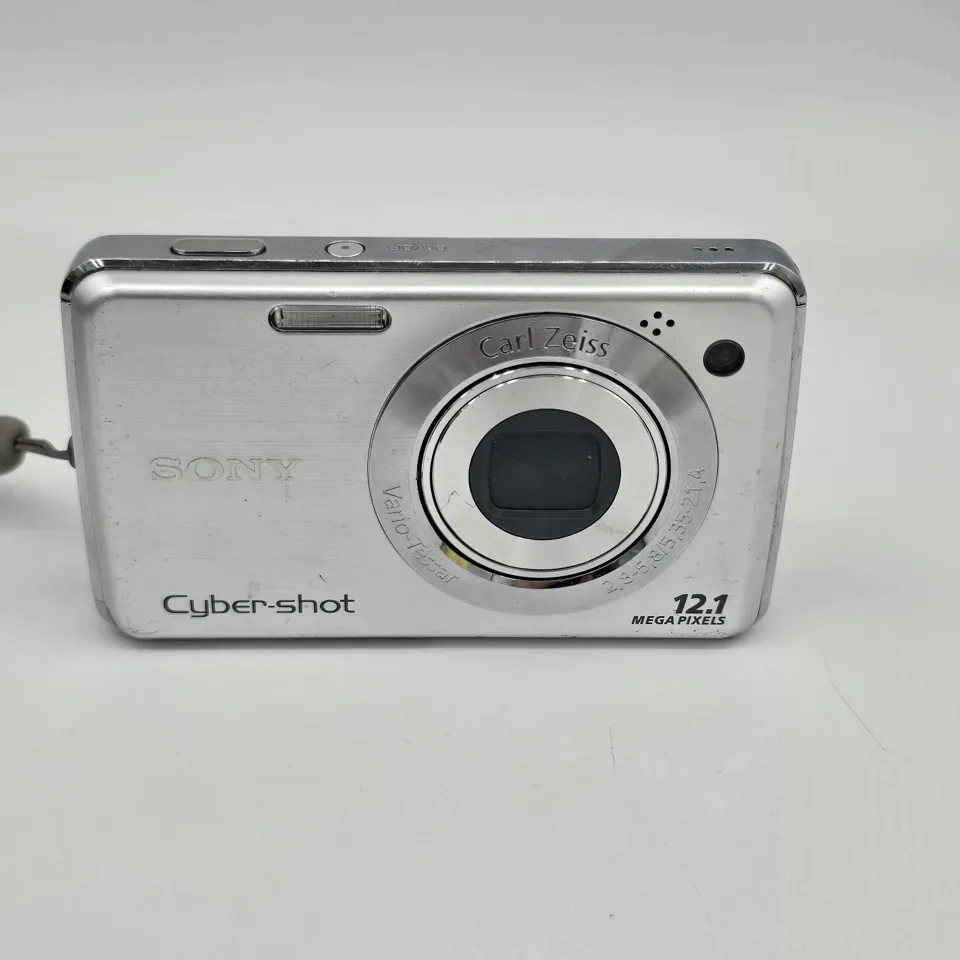
In January 2009 Sony gave its entry-level W-series camera scene recognition, a dynamic-range optimiser and optical stabilisation. Imaging Resource gave it a Dave's Pick for prints that beat its screen crops; Cameralabs found noise at every setting and said Canon's IXUS 95 IS was the better bet if picture quality came first.
- Launched
- January 2009
- Sensor
- 12.1 MP CCD
- Lens
- 30–120 mm, 4×
- Card
- Memory Stick Duo, Memory Stick PRO Duo
- Battery
- NP-BG1
Sony Cyber-shot DSC-W220 specs: sensor, lens, battery, memory card and cable
The Sony Cyber-shot DSC-W220 came out in January 2009 at $190 as a 12.1 MP CCD compact with a 30–120 mm (35 mm equivalent) 4× zoom lens. It takes Memory Stick Duo and Memory Stick PRO Duo cards and runs on the NP-BG1 battery. Sources
- Sensor
- CCD, 1/2.3", 12.1 MP source
- Lens
- 30–120 mm equivalent, 4× zoom source
- Memory card
- Memory Stick Duo, Memory Stick PRO Duo source
- Battery
- NP-BG1 source
- USB / A/V cable
- See our Sony cable page
Meet the camera
The first complaint about the W220 was how little there was to hold. It is a flat, boxy pocket compact listed at 95 by 57 by 22 millimetres,5 and Imaging Resource's reviewer found it hard to grip securely: the big screen leaves little room for the thumb, the smooth front gives the fingers nothing, and the advice was to use the wrist strap.4 Cameralabs agreed that the front has no ridge or finger grip, yet called the camera soundly engineered, handsome and well built, if less desirable than the Canon it was tested against.6 Imaging Resource's table gives its weight as 118 grams without saying what that covers, while Cameralabs gives 147 grams including the battery.56
Sony announced it at CES in Las Vegas on 7 January 2009 as the new entry-level W, due in March in silver, black, pink and blue for about $190.1 PC World reported the same $190 and the same four colours.2 Imaging Resource's review lists a suggested price of US$179.99 and says shipping began in late March,4 and we found nothing that explains the ten-dollar gap. Sony UK's release of 8 January named the W220 beside the W210 and the S950, with UK prices of £176, £157 and £118 and availability from February 2009; for the UK it listed the W220 in silver, black and blue.3
- Sensor
- 12.1 MP Super HAD CCD, 1/2.3"4
Why this one was interesting
Features from the dearer models
Sony's release said the new entry-level W brought in Intelligent Scene Recognition and the Dynamic Range Optimizer, features found until then only in higher-end models, naming the DSC-W150 and the DSC-W170 (we have a review of the DSC-W170).1 The scene recognition picks among five set-ups: twilight portrait, twilight, twilight on a tripod, backlight and backlight portrait; in the twilight and backlight cases an advanced setting made the camera take a second picture so the owner could keep the better one.14 Cameralabs found it generally worked well for backlit and dim scenes, and liked that a camera resting on a wall would pick a slower shutter over a higher ISO.6 Imaging Resource's reviewer was puzzled that it was a menu option, not the default in Auto, and that the people who most needed it were the least likely to find it.4
A 30 mm lens that opens to f/2.8
The lens started at 30 millimetres equivalent, which Imaging Resource said was a little wider than the usual 35 and useful indoors or in cramped spaces.4 PC World compared it with the previous year's entry-level W, which it put at 32 mm;2 our DSC-W120 review covers an earlier W that started at 32 mm. The maximum aperture of f/2.8 at wide angle was brighter than the f/3.2 to 3.5 Imaging Resource said was typical, but the advantage was gone at f/5.8 at full zoom.4
Stabilisation, and a near-twin with a different kind
The W220 had optical SteadyShot, which Cameralabs tested at 120 mm equivalent, shooting at 1/30 second where the usual rule asks for 1/120; it counted about two stops of help, level with Canon's IXUS 95 IS.6 Sony UK's launch material lists the cheaper W210 with the same 12.1 effective megapixels and 4x Zeiss zoom with a 30 mm wide angle, but with electronic stabilisation instead.3 When shopping, check which of the two you are bidding on.
For the W-series cameras on either side of it, see our reviews of the earlier DSC-W300 and the later DSC-W350.
What was lost
There was no manual exposure: Cameralabs listed Easy, Auto and Program modes, with movie, scene presets and Smile Shutter, and said the camera fell short of any kind of manual exposure control.6 There was no optical viewfinder.46 The camera took Memory Stick Duo and PRO Duo cards.146 Video stopped at VGA, with 30 frames a second in the Fine setting, a two-gigabyte file limit and no zooming while filming.64 Cameralabs warned buyers not to be taken in by the "Full HD 1080" sticker on the front: its small print said still image, meaning pictures could be shown at 1080 lines on a television through an optional component cable, not that the camera filmed in HD.6
The dark: its weak point
Imaging Resource's verdict turned on one contrast: soft on screen at full size, good on paper. It found detail only fair at ISO 100, compromised from ISO 200, quite blurry at 400 and worse above that, with ISO 3200 pretty useless even for 4 by 6 prints.4 Its printing tests, which it judged more kindly, found ISO 100 holding up at 11 by 14 inches, ISO 400 able to reach 8 by 10 but blotchy, ISO 1600 good for 4 by 6, and ISO 3200 not usable at any size.4 Cameralabs, harsher on noise, saw digital noise and the marks of its suppression at every sensitivity, including ISO 100 in a bright outdoor frame, which looked noisier than its half-second noise-test frame at the same setting; it guessed the camera applied harder noise reduction to longer exposures, and said that from ISO 800 upward the camera was for emergencies.6 What Digital Camera's short review mentioned a strong textured cast of noise even at low sensitivity in good light.7
The flash did its job, with a catch. Imaging Resource said it easily met Sony's rated 12.8 feet at wide angle and 6.3 feet at telephoto, though its wide-angle test was inconclusive and the telephoto frame came out a little dim, and auto ISO had climbed to 640 and 500 to get there, which makes for softer pictures; Cameralabs gave the quoted wide-angle range as 3.9 metres and saw even lighting to the edge of the frame at that distance.46 The two reviews disagree on recycle time: five seconds measured by Imaging Resource, three to four seconds by Cameralabs.46
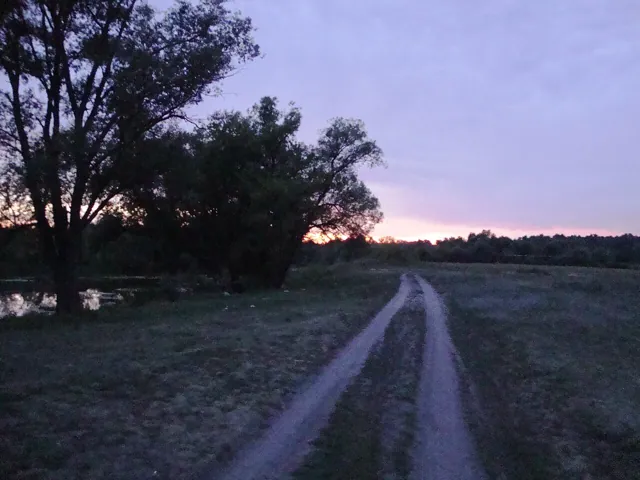







Real photographs taken with this camera at the ISO shown, which is recorded in each file's own EXIF data.
Like that look? See recent eBay sold listings for this camera ↗
On eBay right now
Live listings for this camera, supplied by eBay and updated automatically. We earn a commission if you buy through them.
The little wins
Easy mode
Imaging Resource was impressed by how well Easy mode handled a wide range of lighting with no input, and called it good for complete beginners; Cameralabs described Easy as aimed at total novices.46
Close-ups
Imaging Resource found it focused near or far with equal ease, even without the macro setting, and measured a closest framing of about 1.5 by 2 inches at wide angle.4
Playback to picture
Pressing the playback button turned the camera on in playback, and a half-press of the shutter switched straight back to shooting, which Imaging Resource liked.4
Quick to focus
Imaging Resource measured a full-autofocus shutter lag of 0.37 second at both ends of the zoom and a prefocus lag of 0.009 second, and a frame every 1.69 seconds in single-shot mode.4
Battery
Both full reviews put the rating at 370 shots; Imaging Resource had no quibble with it, and Cameralabs called it generous, though Sony UK's launch summary gave the W220 430 shots and the W210 370.463 Cameralabs added that Sony's pricier NP-FG1 battery would make the screen show minutes remaining.6
How it drew the picture
Imaging Resource found colour accurate rather than oversaturated, with blues pushed more than reds and a slightly warm cast under indoor bulbs, though prints made from those shots still looked surprisingly good.4 Cameralabs called the pictures well exposed and nicely saturated, with natural colour and good shadow and highlight tone, fine at less than full size.6 Both found the lens weak at the edges: Imaging Resource measured 0.9 percent barrel distortion at wide angle and 0.5 percent pincushion at telephoto, saw soft corners at both ends and called wide-angle colour fringing quite high and visible in 8 by 10 prints;4 Cameralabs saw fringing and weak edge definition.6 What Digital Camera also listed purple fringing and softness at the corners and edges, and said the Dynamic Range Optimiser was needed to counter slight underexposure.7
















Photos taken with this camera, from Wikimedia Commons, credited under each picture. The files carry the camera's name but we cannot check each uploader's settings, so treat them as a rough impression only.
Where it let you down
Imaging Resource found the second, Home menu confusing alongside the main one, and Cameralabs was not convinced the extra Home button made the camera easier to use and called its "Shooting" entry fairly pointless.46 Imaging Resource also disliked the zoom's steps, counting nine, where Cameralabs counted eight.46 The screen was bright with a wide side-to-side view, but Imaging Resource found it vanished almost entirely from above in landscape orientation, and Cameralabs found it lacked contrast beside the Canon's.46 The built-in 15 MB held about three full-size pictures.4 Imaging Resource described a wide, narrow connector on the bottom that carried video, stereo audio and USB on one cable, with an optional HD cable for stills; Cameralabs called it Sony's proprietary AV/USB port, named the optional VMC-MHC2 component cable and noted there was no HDMI option.46
What the reviewers said in 2009
| Outlet | Date | Verdict |
|---|---|---|
| Imaging Resource | 10 April 2009 (printed 04/10/09) | 4.0 out of 5 and a Dave's Pick: soft at 1:1 but good in prints, with Easy mode, stabilisation, macro and battery life praised; wide-angle fringing, soft corners, noise and the dual menus marked down.45 |
| Cameralabs | 18 Nov 2009 | 79%: good value and well built, but noisy at every setting; the Canon IXUS 95 IS (sold in the US as the PowerShot SD1200 IS; our review) is the better buy if picture quality matters most.6 |
| What Digital Camera | Page stamped 31 Oct 2014; original date not shown | A short review: good looks and handling, but lack of detail and noise.7 |
The What Digital Camera piece is a capsule review, so we count two full reviews. The two disagree on whether the sensor's pixel count helps: Imaging Resource judged it no worse than many rivals and its prints fine, Cameralabs judged its noise worse than the lower-resolution Canon's.46
The timeline
- 7 January 2009Sony announces the W220 and S950 at CES; the W220 is to cost about $190 and ship in March.12
- 8 January 2009Sony UK announces the W220, W210 and S950; UK availability is given as February 2009.3
- Late March 2009US shipping begins, per Imaging Resource.4
- 10 April 2009Imaging Resource's review is dated 04/10/09; we read this month-first, as the site's US format and its March shipping note imply.4
- 18 November 2009Cameralabs publishes its review.6
Should you buy one now?
Buy one if you want a very simple pocket camera with a wide 30 mm start, stabilisation and a lens that makes decent prints, and you can live with soft corners, noise at every setting and a Memory Stick slot. It launched at about $190;1 what it sells for now is a question for the sold listings, not for us. Before you bid, check these:
- The name. Look for the DSC-W220. The W210 had electronic, not optical, stabilisation.3
- The lens. It extends on power-up and Imaging Resource found the camera ready in just over two seconds (Cameralabs, a little under), so check that it opens and closes smoothly and the glass is clean.4
- The battery. It uses an NP-BG1;4 a fresh one is on Amazon ↗.
- The card. It takes Memory Stick Duo and PRO Duo;4 see our Memory Stick guide and the glossary.
- The cable. Pictures came off through a wide connector on the bottom; an optional component cable was needed for HD output;46 see our cable guide.
- The screen. Check for scratches and a dim image; Imaging Resource found it picked up fingerprints and washed out in direct sun.4
If you are wondering why cameras like this are being hunted down again, we tell that story once, in Pictures that never left the card.
See recent sold prices on eBay ↗Shop on eBay ↗NP-BG1 battery ↗
Sources
- Imaging Resource, 'Sony: Two new Cyber-shot digicams' by Mike Tomkins (7 Jan 2009), with Sony USA's CES release for the W220 reproduced below it
- PC World via ABC News, 'Sony Beefs Up Low-End Cyber-shot Cameras' by Tim Moynihan (7 Jan 2009)
- PhotographyBLOG, 'Sony Cyber-shot W220, W210 and S950' by Mark Goldstein, with Sony UK's release (8 Jan 2009)
- Imaging Resource, Sony DSC-W220 review by Mike Tomkins and Dave Etchells (overview, user report, lens and image-quality tests, performance, conclusion; the page is dated 04/10/09)
- Imaging Resource, Sony DSC-W220 basic specifications (95 x 57 x 22 mm, 118 g, 4.0 out of 5)
- Cameralabs, Sony Cyber-shot DSC-W220 review by Gordon Laing (18 Nov 2009; pages 1 to 5, scored 79%)
- What Digital Camera, Sony Cyber-shot W220 review by Matt Golowczynski (short capsule review; the page is stamped 31 Oct 2014 and shows no original date)
Photographs are credited under each one, all via Wikimedia Commons. Links to eBay and Amazon are affiliate links.