Sony Cyber-shot W · announced January 2008
The Sony Cyber-shot DSC-W170: a 28 mm Zeiss zoom, a smile-triggered shutter and a viewfinder
We found no other regional name for it; Sony's US release and the 2008 reviews we read all call it the DSC-W170.12
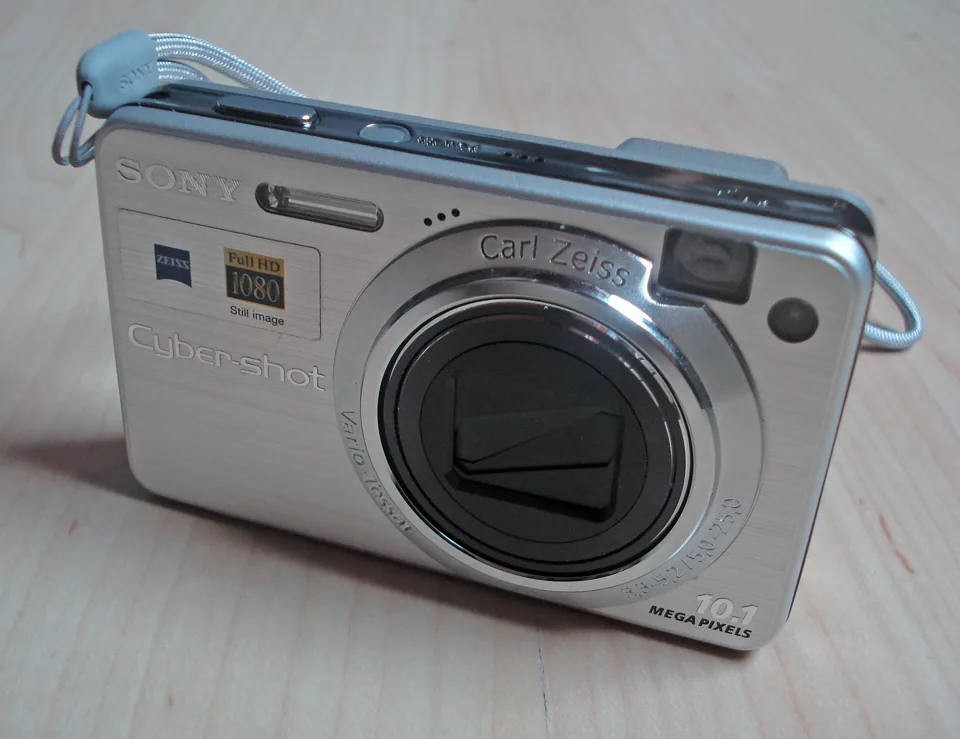

In 2008 Sony's top W-series compact had a lens that started wider than most, a shutter that waited for a smile and a price of about $300. Reviewers loved the prints and the bargain, and disliked the noise reduction, the flash and a menu one called complicated.
- Launched
- January 2008
- Sensor
- 10.1 MP CCD
- Lens
- 28–140 mm, 5×
- Card
- Memory Stick Duo, Memory Stick PRO Duo
- Battery
- NP-BG1
Sony Cyber-shot DSC-W170 specs: sensor, lens, battery, memory card and cable
The Sony Cyber-shot DSC-W170 is a 10.1 MP CCD compact camera with a 28–140 mm (35 mm equivalent) 5× zoom lens, launched in January 2008 at about $300. It takes Memory Stick Duo and Memory Stick PRO Duo cards and runs on the NP-BG1 battery. Sources
- Sensor
- CCD, 1/2.3", 10.1 MP source
- Lens
- 28–140 mm equivalent, 5× zoom source
- Memory card
- Memory Stick Duo, Memory Stick PRO Duo source
- Battery
- NP-BG1 source
- USB / A/V cable
- See our Sony cable page
Meet the camera
It is a pocket compact about 94 by 58 by 24 millimetres and 169 grams with its battery.3 Imaging Resource's reviewer said it was only average in weight for its class, but easy to slip into a shirt pocket, with no real grip.2 LetsGoDigital called the design pleasing, with a brushed-metal front, an optical viewfinder window top right and a flash placed off-centre on the left.5 Sony offered it in champagne, red, black and silver.1
Sony announced it on 23 January 2008 in San Diego, together with the DSC-W150, W130 and W120, with the W170 at the top of the range at about $300 for April; pre-orders began on 31 January at sonystyle.com.1 Imaging Resource's specification page lists the same $300 and April 2008,3 and its review went up on 17 April.4 We found no UK or European launch price in the sources we read.
Why this one was interesting
A wide lens in a cheap camera
The 5x Zeiss-branded zoom began at a 28 millimetre equivalent where most compacts began at 35, and ran to 140.2 Imaging Resource called it wider and longer than most in this class and said a start at 28 mm was essential for real travel photography.24 LetsGoDigital thanked Sony for a wide-angle zoom and found it sharp edge to edge at f/3.3 up to about 55 mm.5 It also switched into macro mode by itself.2
Faces and smiles
Sony's headline feature was the Smile Shutter, which takes the picture when the subject smiles; Sony's release says it works without pressing the shutter,1 while Imaging Resource described pressing the button and then waiting for the smile.2 Face detection could now tell children from adults, with a child or adult priority setting, and found up to eight faces, adjusting focus, exposure, white balance and flash.1 Imaging Resource could not get its office to smile, so its reviewer walked around the house until they found a photo of a smiling person to aim at; the shutter fired and the flash went off.2 LetsGoDigital said the child priority did work in practice, though it sometimes overlooked a child's face.5
Scene recognition and dynamic range
The W170 and W150 also carried intelligent scene recognition: in its Advanced setting the camera could take a second picture if it judged that another setting would do better.1 Imaging Resource listed five scenes it recognised, among them backlight and twilight, and praised the D-Range Optimizer, borrowed from Sony's Alpha line, for holding highlights while keeping shadow detail.24
The 2007 model in the same line is our Sony DSC-W200; for an earlier, cheaper W-series camera see the DSC-W80.
What was lost
The W170 was a fully automatic camera: Imaging Resource found no manual exposure control, only Easy, Auto and Program Auto modes,2 and LetsGoDigital said that apart from the preset scenes there was little to adjust.5 Imaging Resource also noted that, like most Sony compacts of the time, it had no custom white balance.2 The camera was Memory Stick only, which cost the reviewer their SD cards: they needed an adapter, which was not supplied, to use most card readers.2
The dark: its weak point
Both reviews agreed that noise was the camera's problem. Imaging Resource saw a noticeable jump at ISO 200, where aggressive noise reduction smudged hair; more chroma noise and fewer fine details at ISO 400; mottled results at ISO 800; and, at ISO 1600 and 3200, images more like watercolours.2 LetsGoDigital's lab found the signal-to-noise ratio under control at ISO 80 to 200 and said that from ISO 400 the noise "won't be dismissed" despite strong noise reduction, which cost detail.5 The lab also found the real sensitivity far from the nominal figure: 28 percent off at ISO 400 and 44 percent at ISO 800.5 On the other hand it rated dynamic range excellent up to ISO 800.5
The flash was weak. Imaging Resource found its test shots too dark at ISO 100, and said Sony stretched the range by raising sensitivity to ISO 800 at wide angle, for about 13.8 feet, and ISO 500 at telephoto, for about 8.9 feet, with a recycle time of 11.6 seconds.2 The reviewer suggested using the High Sensitivity mode instead of flash when the light failed.2 LetsGoDigital's reviewer summed it up, as PhotographyBay quoted, as a good-weather model, not a camera for the evening.6




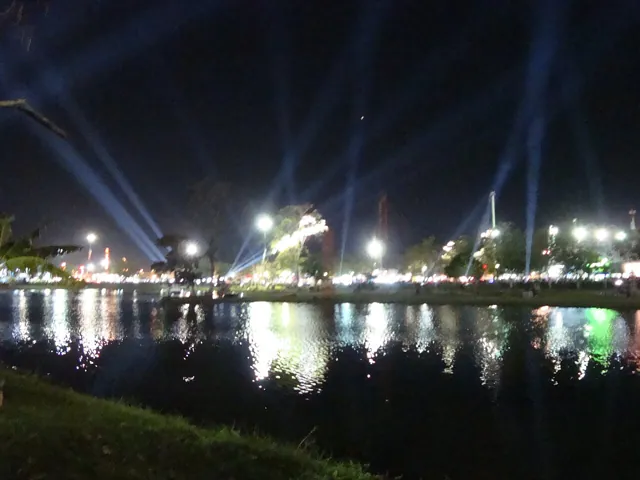

Real photographs taken with this camera at ISO 1600, the second-highest setting. The sensitivity shown is recorded in each file's own EXIF data.
Like that look? See recent eBay sold listings for this camera ↗
On eBay right now
Live listings for this camera, supplied by eBay and updated automatically. We earn a commission if you buy through them.
The little wins
Resolution
Its lab chart showed strong detail out to about 1,700 lines horizontally and 1,600 vertically, which Imaging Resource called very high.2
Quick when ready
Imaging Resource measured a prefocus shutter lag of 0.008 seconds and called autofocus speed above average, though startup and shutdown were sluggish.2
Playback without the lens
Pressing the playback button switched the camera on without extending the lens, and the power button shut it down again, which Imaging Resource liked.2
How it drew the picture
Imaging Resource found colour vibrant, with red and blue a little oversaturated, slightly pinkish skin tones and a warm cast indoors under incandescent bulbs, where neither automatic nor incandescent white balance gave a neutral result.2 Outdoors it found exposure very good, though shadow detail suffered from noise and noise suppression.2 It measured barrel distortion of 0.8 percent at wide angle and pincushion of 0.6 percent at telephoto, called the latter much higher than average, and found soft upper corners at wide angle with moderate chromatic aberration.2 LetsGoDigital reported fairly large chromatic aberration around 55 mm that eased towards 140 mm, and noticeable distortion only at wide angle.5
The reviewers disagreed about the long end. Imaging Resource listed sharp telephoto shots as a plus and found corners very good at full zoom.2 LetsGoDigital said the small lens declined in the telephoto range, slightly blurred in the centre and more towards the edges.5














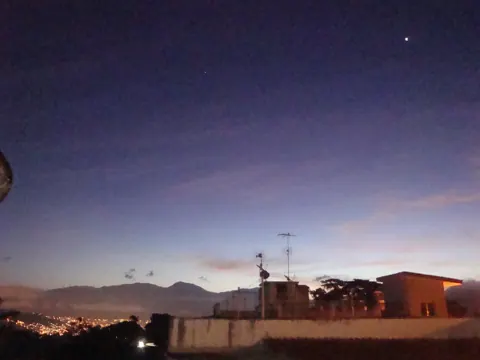

Photos taken with this camera, from Wikimedia Commons, credited under each picture. The files carry the camera's name but we cannot check each uploader's settings, so treat them as a rough impression only.
Where it let you down
Imaging Resource called the menu system unnecessarily complicated, with a Menu and a Home button that overlap, and said Canon and Nikon did it better; the menus also did not wrap around.2 Both reviewers found the buttons very small: Imaging Resource called them petite, and LetsGoDigital sometimes pressed the wrong one.25 The optical viewfinder showed only about three quarters of the picture at wide angle and about 80 percent at telephoto, while the screen was nearly accurate.2 Imaging Resource said the screen was visible, but only just, in direct sun.2
Video was a letdown: Imaging Resource asked why an HD-branded camera could not shoot 720p, and it did not allow zooming while filming.2 The camera could show stills in 1080 high definition on a TV, but only through an optional component cable or cradle that was not in the box.12 Its macro mode needed a minimum area of about 3.9 by 2.9 inches and Imaging Resource called it poor, with uneven flash coverage.2 Autofocus sometimes could not lock onto low-contrast skin, according to the reviewer and their colleague.2 The built-in 15 MB held about three full-resolution pictures,2 and LetsGoDigital noted that the battery and card compartment sits beside the tripod mount, so the door cannot be opened with the camera on a tripod.5
What the reviewers said in 2008
| Outlet | Date | Verdict |
|---|---|---|
| Imaging Resource | 17 Apr 2008 | 4 out of 5 and a Dave's Pick: a compact bargain with the hottest technology in Sony's 2008 line-up, chosen for print quality; the lens, auto macro and face detection are praised, while noise, flash and the viewfinder are not.24 |
| LetsGoDigital | Quoted 8 Sep 2008 | A pleasant camera to work with, but not for the evening or difficult light; the lab results show noise from ISO 400 and strong noise reduction.65 |
We read no other full review. A PhotographyBLOG review may exist, but it blocks our automated fetches and we did not read it, so we have not used it.
The timeline
- 23 January 2008Sony announces the W170, W150, W130 and W120 in San Diego; the W170 is priced at about $300.1
- 31 January 2008Pre-orders begin at sonystyle.com.1
- 17 April 2008Imaging Resource publishes its review.4
- April 2008The camera goes on sale, per Sony's release and Imaging Resource's review page, which gives 30 April 2008.12
- 8 September 2008PhotographyBay links LetsGoDigital's review.6
Should you buy one now?
Buy one if you want a pocketable camera with a wide lens and good daylight pictures, and you can live with Memory Stick cards, soft shadows and no manual control. It launched at about $300;1 what it sells for now is a question for the sold listings, not for us. Before you bid, check these:
- The name. Search the Cyber-shot DSC-W170.1 The W150, with 8.1 megapixels and a 30 to 150 mm lens, looks like a sibling.1
- The lens. It extends on start-up and Imaging Resource found startup a little slow, so check that it opens and closes smoothly and that the glass is clean.2
- The battery. It uses an NP-BG1;2 a fresh one is on Amazon ↗.
- The card. It takes Memory Stick Duo and PRO Duo;2 see our Memory Stick guide and the glossary.
- The cable. Pictures came off through a multi-connector cable that plugs into the bottom, which Imaging Resource called awkward;2 see our cable guide.
- The screen. Look for scratches and a dim image; the glossy coating resisted fingerprints in 2008.2
If you are wondering why cameras like this are being hunted down again, we tell that story once, in Pictures that never left the card.
See recent sold prices on eBay ↗Shop on eBay ↗NP-BG1 battery ↗
Sources
- PhotographyBLOG, Sony Cyber-Shot DSC-W170, DSC-W150, DSC-W130, DSC-W120, announcement by Mark Goldstein with Sony USA's press release (23 Jan 2008)
- Imaging Resource, Sony DSC-W170 review by Mike Pasini (overview, user report, optics, exposure and performance pages, 17 Apr 2008; 4 out of 5, Dave's Pick)
- Imaging Resource, Sony DSC-W170 basic specifications (1/2.3-inch sensor, 169 g, MSRP $300, availability April 2008)
- Imaging Resource, 'Review posted for Sony W170!' by Zig Weidelich (17 Apr 2008)
- LetsGoDigital, Sony Cybershot DSC W170 digital camera review, with DIWA Lab measurements (pages 1 to 5; read from a Wayback Machine copy, the site no longer hosts it)
- PhotographyBay, 'Sony Cybershot DSC W170 review at Let's Go Digital' (8 Sep 2008)
Photographs are credited under each one, all via Wikimedia Commons. Links to eBay and Amazon are affiliate links.