Panasonic Lumix LZ · announced January 2006
The Panasonic Lumix DMC-LZ5: the stabilised 6x zoom that ran on AA batteries
We found no other regional name for it; the announcement and all three full reviews call it the DMC-LZ5.1235
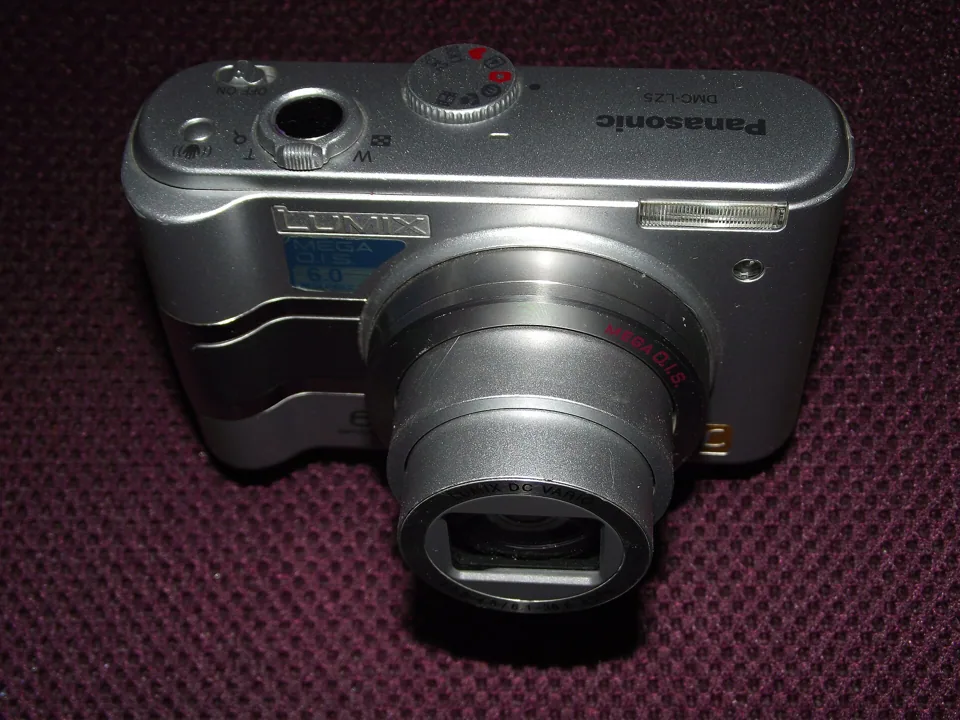
In January 2006 Panasonic put optical image stabilisation and a 6x lens into a $280 snapshot camera. Three reviewers praised the lens and the shake control, and then disagreed about how bad the noise was, the screen, the build, the speed and the menus.
- Launched
- January 2006
- Sensor
- 6 MP CCD
- Lens
- 37–222 mm, 6×
- Card
- SD, MultiMediaCard
- Battery
- AA
Panasonic Lumix DMC-LZ5 specs: sensor, lens, battery, memory card and cable
Launched in January 2006 at $279.95, the Panasonic Lumix DMC-LZ5 is a 6 MP CCD compact with a 37–222 mm (35 mm equivalent) 6× zoom lens. Inside: it uses SD and MultiMediaCard and runs on AA batteries. Sources
- Sensor
- CCD, 1/2.5", 6 MP source
- Lens
- 37–222 mm equivalent, 6× zoom source
- Memory card
- SD, MultiMediaCard source
- Battery
- AA source
- USB / A/V cable
- See our Panasonic cable page
Meet the camera
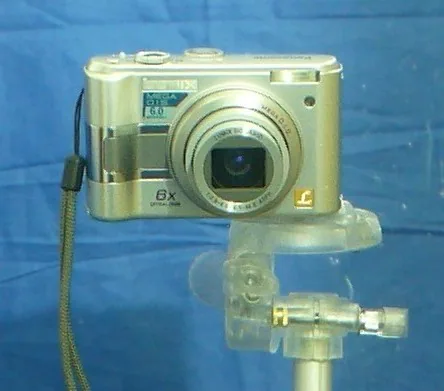
It is a boxy plastic compact with a silver finish, a shallow grip and a big lens on the front.23 PhotographyBLOG's specification table lists 100 by 62 by 45 millimetres and 186 grams without battery or card, or 234 grams with them.2 Imaging Resource's review gave 43 millimetres deep, measured with the lens barrel, and 247 grams with two AA batteries and a card, though its own specification page lists 45 millimetres and 234 grams with batteries.34 Trusted Reviews put the thickness at 45 millimetres and called it a chunky lump, a full 2 centimetres thicker than the Lumix DMC-LX1 and the new DMC-FX01.5 PhotographyBLOG found it still pocketable but a tight squeeze, more at home in a small camera bag.2
Panasonic announced it at the Consumer Electronics Show in January 2006 with a price of $279.95, alongside the 5-megapixel DMC-LZ3 at $229.95, both due in March.1 PhotographyBLOG said it would be on sale in March for around $280;2 Imaging Resource lists availability as March 2006 and leaves its MSRP field blank.4 Trusted Reviews saw it at £199.95 online and about £230 on the high street.5
Why this one was interesting
Stabilisation at a snapshot price
Imaging Resource said Panasonic was justifiably proud of having brought optical image stabilisation to its whole line, and called it remarkable at this price.3 The camera has two modes: PhotographyBLOG described Mode 1 as stabilising all the time, including while you compose, and Mode 2 as working only when the shutter is pressed.2
A lens that went further than its class
Reviewed.com's report of the announcement described a 6x Lumix DC Vario lens of 8 elements in 7 groups, with two aspherical lenses.1 Imaging Resource said the range was larger than most cameras in its class;3 at lower resolutions it also mixes in a small crop, which stretches the zoom to 8.3x with, it said, no extra loss of quality.3
New tricks over the LZ2 and LZ1
PhotographyBLOG listed what changed from those models: a larger screen, a High Angle mode that brightens it when the camera is held overhead, a faster one-point autofocus and a High Sensitivity mode reaching ISO 1600.2
Trusted Reviews described most other Lumix cameras as slim and elegant, which is the gap this one had to defend.5 For where Panasonic's compacts went next, see our Lumix DMC-TZ3, the Lumix DMC-FX35 and the Lumix DMC-LX3.
What was lost
There is no viewfinder, which PhotographyBLOG called a recent trend, and 37 millimetres is not very wide.235 The price of two AA cells was size: Trusted Reviews named two 6-megapixel AA cameras, the Fujifilm FinePix A600 at 30 millimetres thick and the Pentax Optio M10 at 24, that were considerably slimmer.5 The plastic body was another cut: Trusted Reviews said it felt even cheaper than it is, with flimsy non-latching hatches over the battery, card and sockets, while PhotographyBLOG called it quite well built.52
The dark: its weak point
All three reviewers complained about noise, and they differed on how bad it was at the bottom of the range. PhotographyBLOG saw virtually none at ISO 80 and 100, plenty at 200, and called ISO 400 all but unusable.2 Imaging Resource said even the low settings showed more noise than it was used to, and that at ISO 400 only small prints, around 4 by 6 to 5 by 7 inches, held up.3 Trusted Reviews found noise and colour speckle in darker areas of most shots even at ISO 80, and ISO 400 almost unusable.5
The High Sensitivity scene mode lifts ISO to as much as 1600 at reduced resolution. Panasonic said the result suits 4 by 6 inch prints, and PhotographyBLOG called it a partial solution;2 Imaging Resource got decent small prints from shots lit only by a computer monitor.3

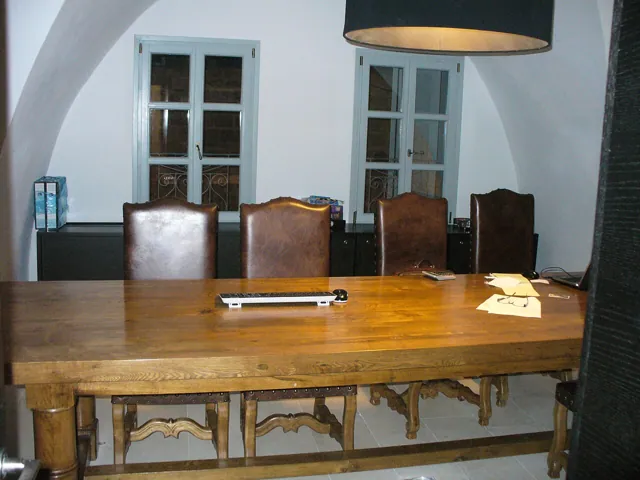
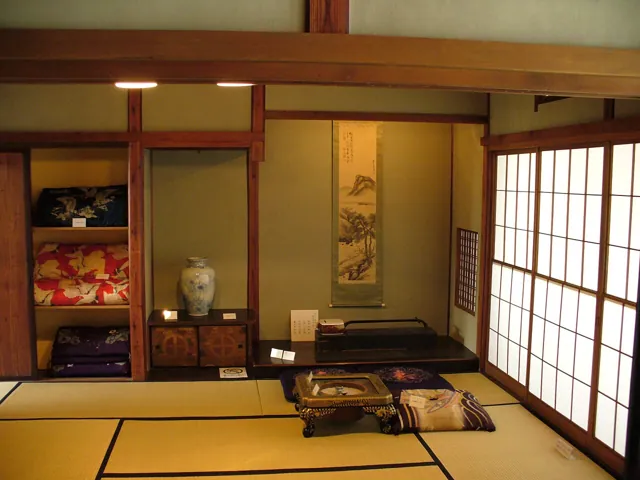

Real photographs taken with this camera. The sensitivity shown is recorded in each file's own EXIF data; the highest we found among free files was ISO 400.
Like that look? See recent eBay sold listings for this camera ↗
On eBay right now
Live listings for this camera, supplied by eBay and updated automatically. We earn a commission if you buy through them.
The little wins
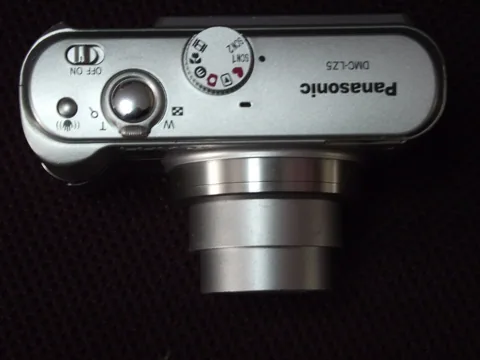 The LZ5 from above. · Yuval Y · CC BY 3.0 · Commons
The stabiliser
PhotographyBLOG's handheld test at 222 mm and ISO 80 lists 1/60 second with stabilisation off and 1/13 second with it on, and the stabilised picture was far sharper.2 Trusted Reviews put the gain at about three stops, enough to hold the full zoom at roughly 1/30 second.5


A sharp lens
Trusted Reviews said the lens gave excellent detail across the frame with little wide-angle barrel distortion, even while it damned the sensor.5 Imaging Resource's lab chart showed sharp lines to about 1,400 per picture height horizontally and 1,250 to 1,300 vertically.3
How it drew the picture
PhotographyBLOG judged image quality average in its image-quality section (its conclusion says good on the whole), with soft files at default sharpening that cannot be raised in the camera.2 Imaging Resource disagreed on that point, listing in-camera sharpening as crisp and good, and found strong reds, deep greens and blues oversaturated a fair amount, most problematically on skin tones, which it said can look too pink or yellow.3 It also said prints reached a sharp 11 by 14 inches.3 Trusted Reviews saw very good colour and exposure in an everyday snapshot, but compression artifacts in the sky, heavy processing and purple fringing it called among the worst in five years.5 PhotographyBLOG saw only limited fringing in high-contrast scenes;2 Imaging Resource measured bright-pixel colour fringing at wide angle that eased at telephoto, and 0.9 percent barrel distortion at wide angle, which it called slightly higher than the average of cameras it had tested, a different picture from Trusted Reviews' "very well controlled".3


















Photos taken with this camera, from Wikimedia Commons, credited under each picture.
Where it let you down
The screen drew the sharpest split. Trusted Reviews said 85,000 pixels is very low for 2.5 inches, that the surface reflects badly in sun and that refresh was slow;5 Imaging Resource found it hard to use in bright light and too slow to follow moving subjects in burst mode;3 PhotographyBLOG called its visibility and refresh acceptable but grainy.2 Speed was another disagreement. PhotographyBLOG found it above average in operation, with a start-up of about a second (Imaging Resource's specification page lists 3.8 seconds) but three seconds to zoom from wide to tele;24 Imaging Resource rated shutter response slower than average, though only 0.012 second when prefocused, with a shot-to-shot time of about 1.98 seconds and a flash recycle of 7.1 seconds on its specification page;34 Trusted Reviews found that, in good light with a high-contrast subject, focus took a good half second for a total shutter lag of almost one second.5 Trusted Reviews alone hated the menus, with four colours and crude icons;5 PhotographyBLOG found them straightforward.2 Imaging Resource's Sports mode held ISO at 200 or lower and gave a lot of blur, and PhotographyBLOG's 15-second Starry Sky example came out almost day-like, and 15, 30 and 60 seconds are the only long exposures on offer.32 Battery life depended on the cells: PhotographyBLOG got over 200 shots on the supplied Oxyride batteries, while Imaging Resource got not much more than an afternoon from them and only a handful from alkalines; its battery table lists 140 shots on alkalines, 235 on Oxyride and 380 on NiMH.23
What the reviewers said in 2006
| Outlet | Date | Verdict |
|---|---|---|
| PhotographyBLOG | 23 Feb 2006 | A versatile, stylish, easy point-and-shoot, held back by noise: ISO 80 and 100 fine, 200 noisy. Not a show-stopper outdoors, but it stops a stronger recommendation. Star rating: 4, read from the rating image's alt text.2 |
| Imaging Resource | 15 May 2006 | Really excellent value and good picture quality at a surprisingly low price; a great all-rounder, not for sport or fast action. Rating: 3.5 out of 5.3 |
| Trusted Reviews | 13 Apr 2006 | A disappointing camera, bulky and cheaply built with very poor image quality despite a good lens. Page scores: value 7, image quality 7, scale not stated in the text we read.5 |
We could read only three full reviews of this camera, which is fewer than for most of ours, and they disagree; treat the sample photos as the tie-breaker.
The timeline
- 4 January 2006Panasonic announces the LZ5 and LZ3 at CES, due in March.1
- 23 February 2006PhotographyBLOG publishes its review.2
- March 2006Imaging Resource's page lists availability.4
- 15 May 2006Imaging Resource publishes its review.3
Should you buy one now?
Buy one if you want a CCD zoom that runs on AA cells, with a stabiliser that works well in daylight and a sharp lens, and you shoot mostly outdoors in good light. It launched at $279.95;1 what it sells for now is a question for the sold listings, not for us. Before you bid, check these:
- The name. Search the Lumix DMC-LZ5, not the 5-megapixel LZ3.1
- The batteries. It takes two AA cells and offers an Oxyride setting;23 rechargeable NiMH cells ↗ are what Imaging Resource recommended.3
- The doors. Trusted Reviews found the battery, card and socket hatches fragile, so check each closes.5
- The card. Sources list SD and MMC cards, and none mentions SDHC, so we have not confirmed larger cards;23 see our memory card guide. Video needs an SD card, not MMC.3
- The screen and mode dial. Check that the screen is not scratched and that the dial clicks between positions.
- The lens. Check that it extends and retracts cleanly and the glass is free of scratches.
If you are wondering why cameras like this are being hunted down again, we tell that story once, in Pictures that never left the card.
See recent sold prices on eBay ↗Shop on eBay ↗Rechargeable AA batteries ↗
Sources
- Reviewed.com, Panasonic Adds LZ5 and LZ3 to Lumix Line by Candace Lombardi (4 Jan 2006, from the Consumer Electronics Show)
- PhotographyBLOG, Panasonic Lumix DMC-LZ5 review, seven pages (23 Feb 2006)
- Imaging Resource, Panasonic Lumix DMC-LZ5 review (15 May 2006)
- Imaging Resource, Panasonic DMC-LZ5 specification page (availability 03/2006, MSRP field blank)
- Trusted Reviews, Panasonic Lumix DMC-LZ5 review by Cliff Smith (13 April 2006)
Photos of the camera by Yuval Y (CC BY 3.0); other photographs are credited under each one, all via Wikimedia Commons. Links to eBay and Amazon are affiliate links.