Panasonic Lumix LX series · on sale August 2008 · a retrospective
The Panasonic Lumix DMC-LX3: the compact photographers got excited about
In 2008 Panasonic sat out the megapixel race, put a fast 24 mm Leica lens on a bigger sensor and made the pocket camera enthusiasts had been wishing for. Reviewers loved the pictures and wished the zoom went further.
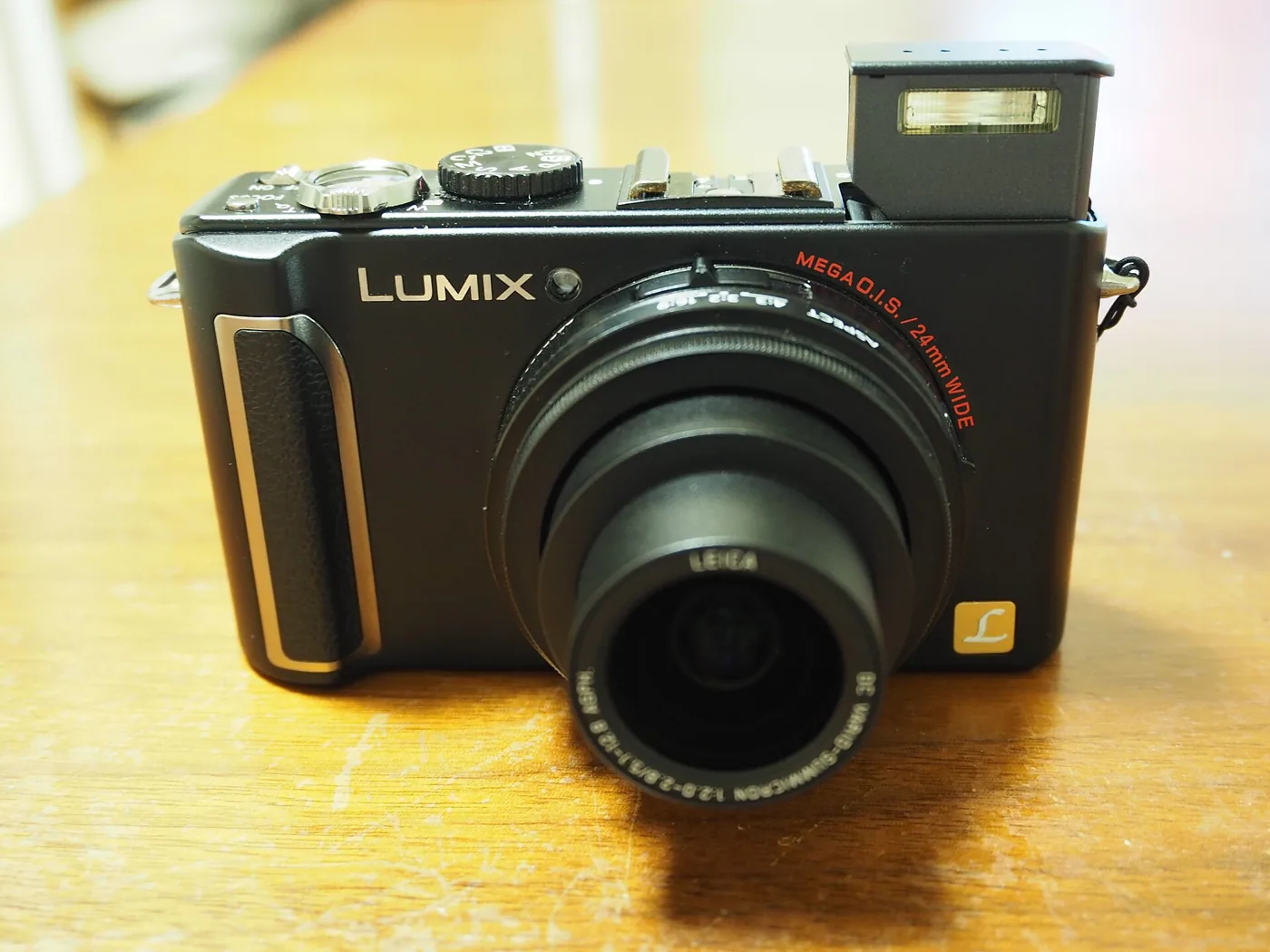
Meet the camera
It looks like a small, serious camera. There is a black metal body, a lens ring with the Leica name and the number 24 on it, a mode dial, a hot shoe on top and a little pop-up flash. Imaging Resource thought Panasonic had the proportions right from the LX1 and had the sense not to mess with a classic, and added a well-integrated grip.2 Trusted Reviews noted a nice finger grip on the front and a small textured thumb grip on the back.4 It measures about 109 by 60 millimetres and 27 thick and weighs about 265 grams.1
Imaging Resource reported the announcement on July 21, 2008, calling it perhaps the most interesting digicam announced that day, with shipments from August at about $500.1 The list price in its review was $499.95.2 In Britain, Trusted Reviews put it at about £300, noting that the essentially identical Leica D-Lux 4 cost nearly twice that, at around £570.4
The year it came out
Compact cameras in 2008 were still racing up the megapixel ladder. DPReview's conclusion called the LX3 an example of a species so endangered that it had begun to worry it was extinct: a compact camera photographers can get excited about, with a specification that goes beyond the unthinking larger-screen-and-more-megapixels trend.3 It said it was hard to tell what impressed it more, the ambitious lens or the decision to sit back during this round of the megapixel race.3 Imaging Resource put the LX3 in a class with only two other cameras at the top of the digicam heap, the Nikon P6000 and the Canon G10.2
It had company in the same camp. Our Canon S90 retrospective covers the rival Canon made a year later, and the SD1400 IS shows the megapixel race continuing at the cheaper end.
Why this one was interesting
A lens that went wide and bright
The star was the lens: a Leica DC Vario-Summicron, image stabilised, covering 24 mm at the wide end with a maximum aperture of f/2.0 to f/2.8.1 DPReview said the lens really set the LX3 apart, even among cameras aimed at keen photographers, because it let you shoot at lower ISOs than competitors.3 Photo Review described it as a full stop brighter than the LX2's, with an angle of view equivalent to 24 mm.5 Imaging Resource said it captured the whole room.2
Was it a new chip?
Yes: a newly developed 1/1.63-inch CCD with 10.1 effective megapixels, said to offer 40 percent higher sensitivity than the company's other ten-megapixel cameras,1 and a new Venus IV processor with Raw support.2 Trusted Reviews pointed out that 1/1.63 inches was the largest sensor normally used in compact cameras at the time, apart from the Sigma DP1.4 Imaging Resource said the new processor greatly improved the noise problems of the LX2.2
The catch: a short zoom
The lens only reached 60 mm. Imaging Resource called that well short of the more common 105 mm and the LX3 a difficult choice for an all-round camera, though great for rooms, landscapes and portraits and a good second camera beside an SLR.2 DPReview agreed that the limit may restrict its appeal, while calling it a great walk-around landscape camera.3
The dark, with a fast lens
The f/2.0 lens was the low-light trick. Imaging Resource called its excellent low-light performance and autofocus in low light strengths, saying the detail the LX2 captured at ISO 200 was roughly equal to ISO 800 on the LX3; ISO 800 was the limit, with ISO 1600 and 3200 showing a pronounced rise in noise.2 DPReview thought the LX3 one of the best high-ISO compact cameras it had seen and listed decent performance up to ISO 1600.3 Trusted Reviews said ISO 1600 still made a decent print, and ISO 3200 was a bit shabby, with serious colour distortion, but not totally unusable for small images.4

.jpg)



.jpg)


Real photographs taken with this camera. The sensitivity shown is recorded in each file's own EXIF data.

Like that look? See what LX3s have recently sold for on eBay ↗
It also shows what the camera was built for. The same obsession drove the Fujifilm F30 two years earlier, which chased sensitivity with a bigger sensor; see our F30 retrospective.
On eBay right now
Live listings for this camera, supplied by eBay and updated automatically. We earn a commission if you buy through them.
The little wins
The LX3 was full of controls that photographers noticed.
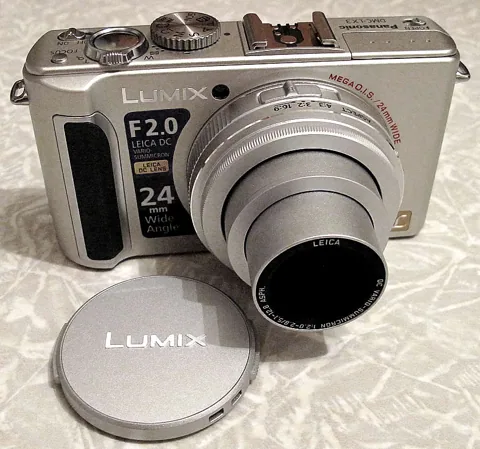 The LX3 in silver. · UR3IRS at Russian Wikipedia · CC BY-SA 3.0 · Commons
An aspect-ratio switch on the lens
A three-position switch on the lens barrel chose 4:3, 3:2 or 16:9 at a consistent angle of view. Trusted Reviews found its reviewer switching aspect ratios to suit the subject far more often than usual.4 There was even a mode that captured three ratios at once.1
Film modes
The Film mode offered presets including three monochrome ones, all adjustable for contrast, sharpness, saturation and even noise reduction.4
A hot shoe
The hot shoe let the camera use an external flash, even off camera, and Imaging Resource also listed an optional aluminium viewfinder that slid into it.2
RAW, and the software to read it
Raw files and a bundled converter came in the box, which DPReview called fully featured, though Trusted Reviews noted the newest Adobe Raw software did not yet recognise the files.34
How it drew the picture
Trusted Reviews called the Leica-branded lens simply fantastic, with virtually no distortion or chromatic aberration, though some of that came from processing, and pictures pin-sharp from corner to corner; its reviewer wrote that the LX3 had better image quality than some SLRs that reviewer had used.4 Imaging Resource found extremely low distortion thanks to in-camera JPEG correction that could not be switched off, very good corner sharpness and impressive prints: good 13 by 19 inches, and decent 11 by 14 at ISO 400.2 DPReview was less starry-eyed about some things: noise reduction could impact low-contrast detail, white balance was disappointing and dynamic range limited in very contrasty scenes.3

_(3875987538).jpg)




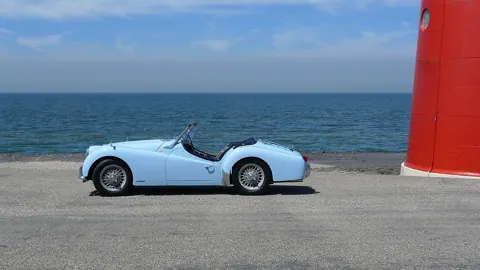

Photos taken with this camera, from Wikimedia Commons, credited under each picture.
Where it let you down
Beyond the short zoom, Imaging Resource found slow start-up, with a 2.3-second start-up and shutdown time, a quirky low-resolution menu system, mediocre autofocus times and slow buffer clearing.2 DPReview said the flash was underpowered and the controls awkward for those with large fingers.3 Trusted Reviews listed expensive, limited zoom, limited video modes and slightly fiddly controls.4
What the reviewers said in 2008
| Outlet | Date | Verdict |
|---|---|---|
| Imaging Resource | 20 Oct 2008 | A five-star Dave's Pick: image quality was an unqualified joy, good for available light, but the short zoom made it a difficult all-round choice.2 |
| DPReview | 2008 (page undated) | A compact photographers can get excited about, with an ambitious lens and one of the best high-ISO results it had seen. A short zoom was the main concern.3 |
| Trusted Reviews | 13 Nov 2008 | One of the very few cameras its reviewer would consider buying personally: exceptional image quality, a fast lens and manual controls, with a limited zoom and a high price.4 |
The timeline
- 21 July 2008Panasonic announces the LX3, to ship in August.1
- 20 October 2008Imaging Resource posts its review.2
- 13 November 2008Trusted Reviews publishes its review.4
Should you buy one now?
Buy one if you want a pocket camera with a fast, wide lens and real manual controls and you can live with a 60 mm zoom. It launched at about $500;2 what it sells for now is a question for the sold listings, not for us. Before you bid, check these:
- The lens. Make sure it extends and retracts cleanly and that the lens cap, or its replacement, is there, since the lens is the point of the camera.2
- The battery. It is rated for about 380 shots when new,1 and an old one will be worse. A replacement is on Amazon ↗.
- The card. It takes SD and SDHC and has 50 MB built in.1
- The switches. Check the aspect-ratio switch, mode dial and joystick respond properly.42
- The name. The Leica D-Lux 4 is essentially the same camera at a much higher price,4 so search both names.
If you are wondering why cameras like this are being hunted down again, we tell that story once, in Pictures that never left the card.
See recent sold prices on eBay ↗Shop on eBay ↗LX3 battery ↗
New to the jargon (CCD, ISO, xD cards, IXUS vs ELPH)? Read our plain-English digicam glossary.
Sources
- Imaging Resource, “Panasonic Lumix DMC-LX3” announcement by Mike Tomkins (21 Jul 2008)
- Imaging Resource, Panasonic Lumix LX3 review by Mike Pasini and Stephanie Boozer (posted 20 Oct 2008)
- DPReview, Panasonic Lumix DMC-LX3 review (2008)
- Trusted Reviews, Panasonic Lumix DMC-LX3 review by Cliff Smith (13 Nov 2008)
- Photo Review (Australia), Panasonic Lumix DMC-LX3 review (lens compared with the LX2)
Camera photos by Motokoka, UR3IRS and others as credited; other photographs are credited under each one, all via Wikimedia Commons. Links to eBay and Amazon are affiliate links.