Panasonic Lumix TZ series · on sale spring 2007 · a retrospective
The Panasonic Lumix DMC-TZ3: the holiday camera that went wide
In 2007 Panasonic gave its pocket 10x zoom a 28 mm wide end, a three-inch screen and a mode for photographing the departures board. Reviewers loved the lens and worried about the noise reduction.
Meet the camera
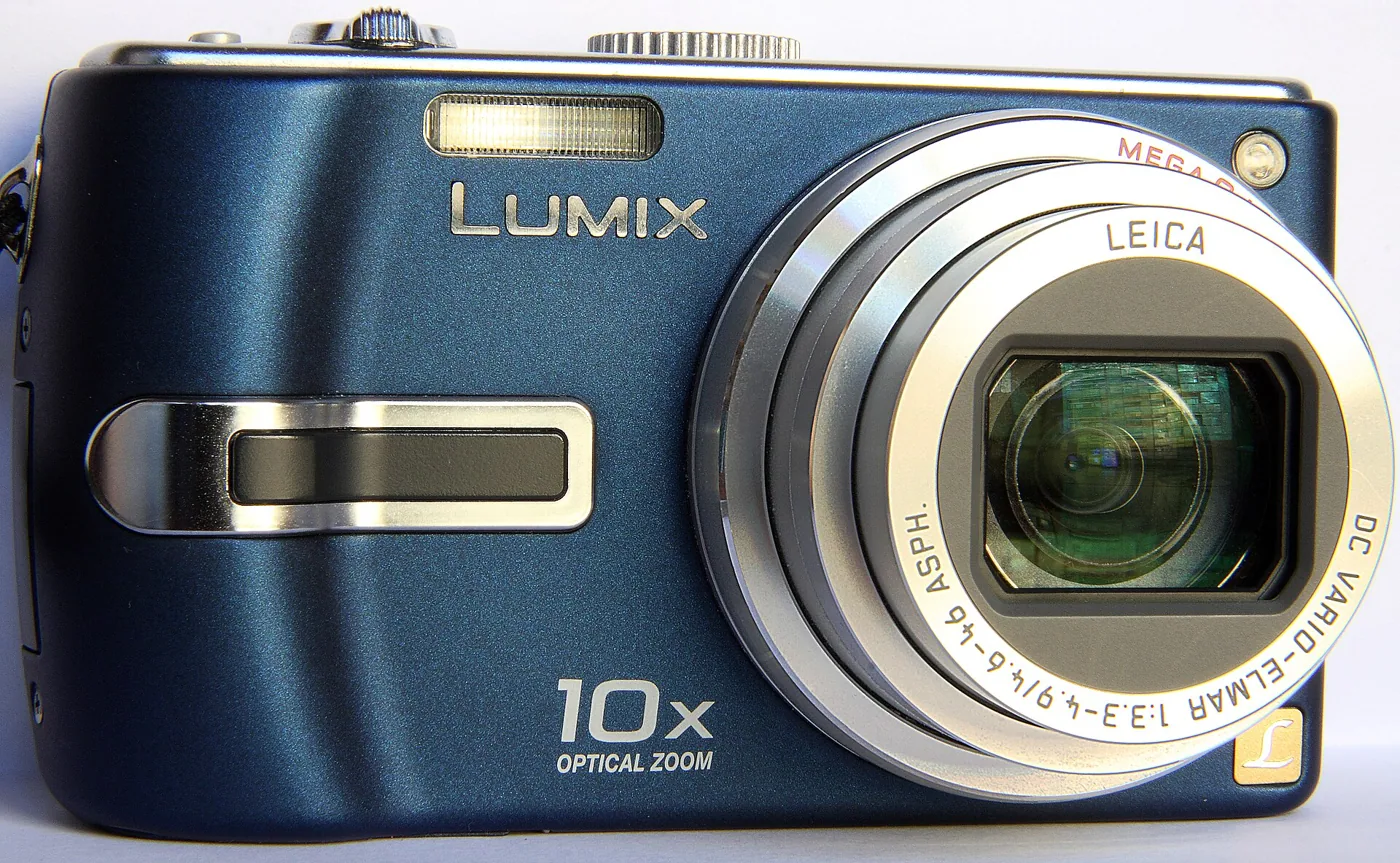
It is a camera built around a lens. A silver ring reads Leica, 10x optical zoom and MEGA O.I.S., and the body around it is a plain slab with a finger grip. Imaging Resource wrote that the TZ3 is more about the zoom than its looks, and noted that it was a hair thinner and lighter than its predecessor, though still not comfortable in a shirt pocket.1 PhotographyBLOG thought you could just about squeeze it into a large pocket.3
The TZ stands for Travel Zoom, Imaging Resource explained, referring to a large 10x zoom in a small package and to special features for travellers.1 The TZ3 was the successor to the TZ1,1 and PhotographyBLOG reviewed it on March 26, 2007, a year on from the original.3 DPReview's review followed in April,2 and Imaging Resource's on July 6.1
Why this one was interesting
It went wide
The headline was the lens: ten times optical zoom, starting at 28 mm.1 PhotographyBLOG pointed out that Panasonic had bucked the trend of most compacts by widening the range to 28 mm, when conventional zooms typically started around 35 mm. Seven millimetres may not sound like much, it said, but it made a big difference.3 Imaging Resource agreed that a true wide angle took the TZ3's value up a notch or two.1 DPReview thought the trade was worth it: you were gaining a lot more at the short end than you were losing at the long end, in its reviewer's opinion.2
Was it a new chip?
It had a larger 7.2-megapixel sensor than the TZ1,3 and Panasonic's processing came in for criticism, which we cover below. PhotographyBLOG said Panasonic had notably improved noise performance, so that ISO 400 on the TZ3 was about equal to ISO 200 on the TZ1.3
A new lens?
Yes, a redesign. Imaging Resource found the TZ3 had a more conventional zoom design than the TZ1, which resulted in less distortion overall,1 and DPReview listed very low distortion and little colour fringing among its strengths.2
The same maker's enthusiast camera of the next year is covered in our Lumix LX3 retrospective.
On eBay right now
Live listings for this camera, supplied by eBay and updated automatically. We earn a commission if you buy through them.
The little wins
This was a camera for holidays, and its features show it.
A mode for the departures board
Imaging Resource called out the new Clipboard mode, which let you photograph maps, timetables and other travel reference material instead of carrying paper.1

Travel dates and local time
You could enter your travel dates and the local time at your destination, so that pictures were tracked by day of the trip.1
A baby mode that counted the age
Two of the 20 scene modes were baby modes that recorded the child's age with each photograph.1
A big, bright screen
DPReview called the three-inch screen superb, bright and high resolution.2 Imaging Resource found it a nice enough screen that the reviewer did not miss the viewfinder, with special modes for shooting from the side or overhead.1
The dark, and the noise
This was the weak side. Imaging Resource found limited low-light abilities, and print quality good at ISO 100 up to 11 by 14 inches but only at 5 by 7 for ISO 1250.1 DPReview complained of heavy noise reduction that made ISO 400 and above usable only for small prints, with smoothing of fine detail and texture even at ISO 100.2 It blamed what it called Panasonic's unmistakable Venus III chroma smearing.2 PhotographyBLOG saw an improvement over the TZ1 but wrote that ISO 100 to 400 still was not particularly versatile.3

.JPG)




.jpg)
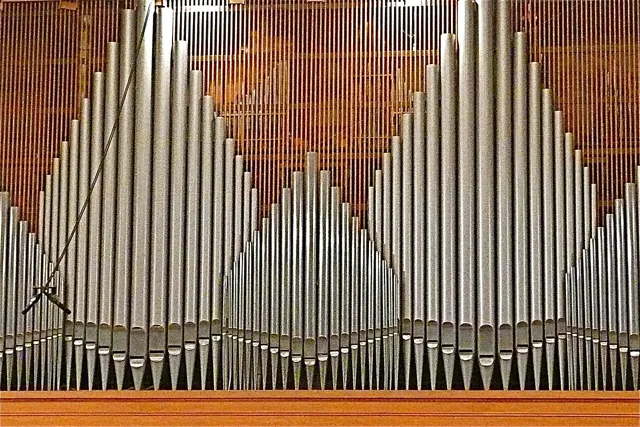
Real photographs taken with this camera. The sensitivity shown is recorded in each file's own EXIF data.

Like that look? See what TZ3s have recently sold for on eBay ↗
How it drew the picture
Imaging Resource found the TZ3's pictures looked pretty good and a remarkable improvement over the TZ1, but also noted somewhat subdued colour, high contrast in harsh sun and pictures that looked better on screen than in print.1 DPReview said the image quality had not come on in leaps and bounds: output at default settings looked softer and flatter and really needed a little post-processing, which it preferred to the camera's own idea of pleasing output.2 It added that the new Vivid setting looked a lot like the TZ1's output.2





.jpg)


Photos taken with this camera, from Wikimedia Commons, credited under each picture.
Where it let you down
There was no manual control of shutter speed or aperture, DPReview noted, which it said would not trouble most users, and zooming during movies was no longer allowed.2 Focus could hunt at the long end in low light and the macro mode slowed down focus.2 Imaging Resource found flash coverage uneven at wide angle and insufficient at telephoto, and only average transfer speed.1
What the reviewers said in 2007
| Outlet | Date | Verdict |
|---|---|---|
| PhotographyBLOG | 26 Mar 2007 | Design 4.5, features 4.5, ease of use 5, image quality 4.5, value 4.5 out of 5. A distinctive camera in a crowded market; zooming from 28 to 280 mm and getting sharp results was a revelation.3 |
| DPReview | April 2007 | A uniquely versatile compact with an excellent lens, but heavy noise reduction and flat default pictures kept it from a wholehearted recommendation.2 |
| Imaging Resource | 6 Jul 2007 | A Dave's Pick: a 10x zoom from a true 28 mm, almost distortion-free and easy to use; muddy detail in reds and limited low-light ability.1 |
The timeline
- 2006The TZ1, the first Lumix travel zoom, which the TZ3 succeeds.13
- 26 March 2007PhotographyBLOG reviews the TZ3.3
- April 2007DPReview reviews the TZ3.2
- 6 July 2007Imaging Resource reviews the TZ3.1
Should you buy one now?
Buy one if you want a wide, long, stabilised lens in a pocketable body for travel and family pictures, and you will look at the results on a screen. Imaging Resource called its pictures better onscreen than in print.1 What it sells for now is a question for the sold listings, not for us. Before you bid, check these:
- The lens. It extends on start-up and must move smoothly through its whole range.1 Ask for a photo with the lens extended and a test picture at full zoom.
- The battery. Battery life was above average when new,1 but an old one will be tired. A replacement is on Amazon ↗.
- The card. It takes SD and SDHC and has 12.7 MB built in.1
- The screen. The three-inch screen is the whole viewfinder; look for scratches and dead pixels.1
- The settings. If pictures look flat, try the Vivid colour option.2
If you are wondering why cameras like this are being hunted down again, we tell that story once, in Pictures that never left the card.
See recent sold prices on eBay ↗Shop on eBay ↗TZ3 battery ↗
New to the jargon (CCD, ISO, xD cards, IXUS vs ELPH)? Read our plain-English digicam glossary.
Sources
- Imaging Resource, Panasonic Lumix DMC-TZ3 review by Theano Nikitas (6 Jul 2007, performance updated 11 Jul 2007)
- DPReview, Panasonic Lumix DMC-TZ3 review (April 2007)
- PhotographyBLOG, Panasonic Lumix DMC-TZ3 review, conclusion (26 Mar 2007)
Camera photos by Gullboy, Stephane8888 and Ypy31; other photographs are credited under each one, all via Wikimedia Commons. Links to eBay and Amazon are affiliate links.