Nikon Coolpix · announced February 2003
The Nikon Coolpix 3100: the small CompactFlash compact with framing guides on its screen
We found no other regional name for it: Nikon's manual calls it COOLPIX 3100 and its US announcement does too.12 Inside, the camera calls itself “E3100”, which is the model name in the EXIF data of the sample photos below.112 It is not the 2011 Coolpix S3100, a 14-megapixel camera.
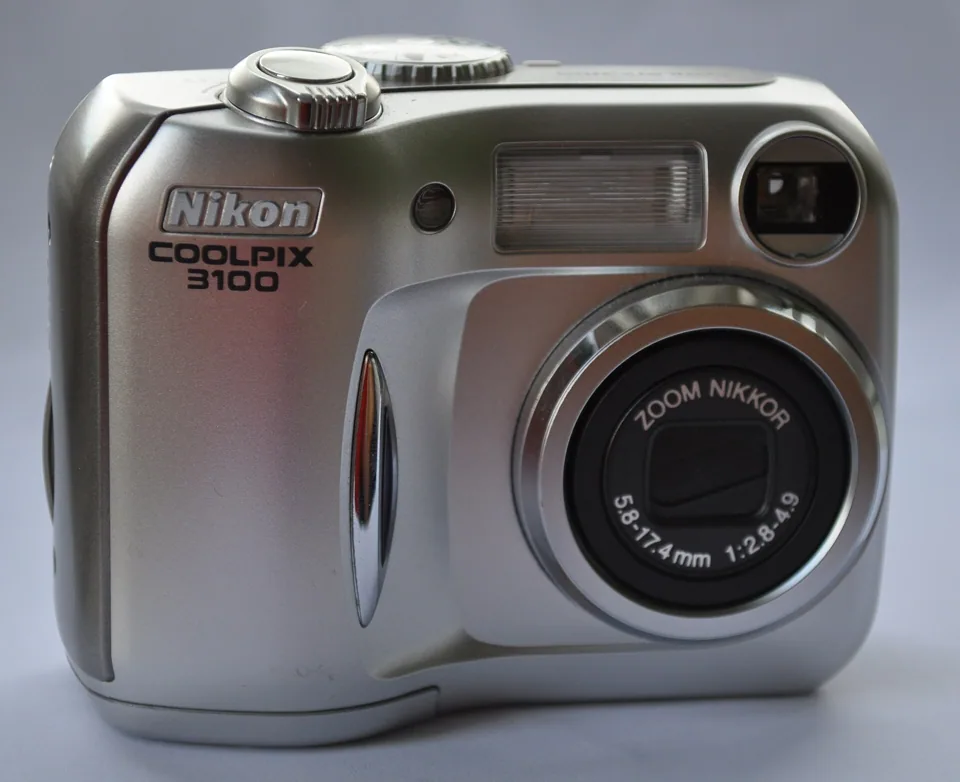

In February 2003 Nikon priced a 3.2-megapixel, 3x-zoom compact at $349.95 and gave it four dial modes that drew framing outlines on the screen. Contemporary reviewers found it small and easy to use and marked down its dim flash, a small burst buffer and, for some, soft lens corners.
- Launched
- February 2003
- Launch price
- $349.95 US list2
- Sensor
- 3.2 MP CCD
- Lens
- 38–115 mm, 3×
- Card
- CompactFlash Type I
- Battery
- 2x AA, CRV3
Nikon Coolpix 3100 specs: sensor, lens, battery, memory card and cable
The Nikon Coolpix 3100 came out in February 2003 at $349.95 as a 3.2 MP CCD compact with a 38–115 mm (35 mm equivalent) 3× zoom lens. It takes CompactFlash Type I cards and runs on 2x AA or CRV3 batteries. Sources
Meet the camera
Nikon lists it at 87.5 by 65 by 38 millimetres and 150 grams without battery or card.1 Imaging Resource said it could almost hide behind a credit card, being just a bit taller, and called its square, slightly knobby shape a firm departure from the swivel-lens Coolpix models before it;4 DPReview found it smaller than the Coolpix 885 it supersedes, with a softer, rounder look, said it shares much of its design with the 4300, and noted that the body is plastic.8
The sources disagree on the basics. Imaging Resource's review text gives 212 grams and its own data sheet 150; DPReview's table says 213 with a battery in; we use Nikon's 150.4781 Imaging Resource also printed f/2.7 at the wide end where Nikon and DPReview say f/2.8.418
Nikon Inc. announced it on 18 February 2003 alongside the 2-megapixel Coolpix 2100 and the swivel-bodied Coolpix SQ, at a US list price of $349.95, available in March; its release called the 2100 and 3100 the first Nikons with Scene Assist.2 Imaging Resource's data sheet lists 31 March 2003 as the date available, at $349.00 retail.7 On 2 October 2003 Nikon cut the price to $299.3
- Sensor
- 3.2 MP CCD, 1/2.7" (3.34 MP total)1
- Lens
- 3x Zoom-Nikkor, 38–115 mm equiv. (5.8–17.4 mm), f/2.8–4.9; 4x digital zoom1
- Screen
- 1.5", 110,000 dots, about 97% coverage, plus a small optical viewfinder (about 82%)1
- Card and power
- CompactFlash Type I, 16 MB card in the US box · two AA cells or one CRV3 lithium pack12
- Size
- 87.5 × 65 × 38 mm, 150 g without battery and card1
- Launch price
- $349.95 US list2
Why this one was interesting
A camera that drew the shot for you
The mode dial carried four “Assist” positions: portrait, landscape, sports and night portrait. Choose a sub-mode and the screen showed a bold outline (one person left of centre, a couple, a figure, a mountain, a grid) to line the subject up against; Imaging Resource called the result a nearly foolproof way to capture great pictures.4 DPReview added that each sub-mode also changes the focus area and the exposure, and called the idea interesting and unique.8 Nikon's own words for it were Scene Assist, built on 14 scene modes, ten of them in a menu.2
Aimed at the first-time buyer
DPReview saw a camera for a first-time buyer who wants to carry something everywhere on a limited budget;8 ePHOTOzine saw one for people new to digital who want it easy and reasonably priced.9 Nikon's October 2003 price-cut release called the 3100 a favourite among reviewers and consumers, which is a manufacturer talking, not a measurement.3 For the cameras that followed, see our Coolpix 3200 and Coolpix 5200, and for its 2003 rivals the Canon PowerShot A70 and Sony DSC-P72.
What was left out
There is no manual focus and no control over aperture or shutter speed; the dial's “Manual” position adds white balance, sharpening and a few other settings, nothing more.48 DPReview also noted no histogram, no flash compensation, no remote and no way to pick the sensitivity, which is why it could not run its usual noise comparison.8 DPReview's main worry was the Canon PowerShot A70, which at the same price offered more features and slightly better image quality, though it was bigger and heavier and took four AA cells to the 3100's two.8
The dark: its weak point
Verdicts on noise were mixed. DPReview called noise low in normal shooting but could not test it by the book;8 ePHOTOzine found little noise at the higher sensitivities the camera chose for itself in low light;9 Imaging Resource found usable pictures down to a quarter of a foot-candle (2.7 lux) with moderate noise, about 50 percent more than the 2-megapixel 2100 showed in the same low-light shots.4 Nikon's spec sheet gives the sensitivity as about ISO 50 with automatic gain,1 and Imaging Resource saw its test unit never record below 100 and, apparently, rise to 400 in low light and to 800 in Night Portrait.4 Our own count, not a reviewer's: we took a random sample of 700 of the 8,768 files in the Commons category, read each file's EXIF data, and found 696 tagged E3100. The lowest ISO among them was 100, the highest 400, and 596 were exactly 100.12
The dark was harder on focus and flash. The 3100 has no autofocus lamp. DPReview timed autofocus lag at 0.7 to 1.6 seconds at wide angle and 0.8 to 2.2 at the long end, saw it hunt in dim light, and still measured a lowest focus light of 5 lux at wide angle and 14 lux at telephoto, which it judged good at wide angle and a little less so at telephoto for a camera without a lamp.8 ePHOTOzine listed slow focus in low light as a fault.9 The flash is rated to 3.0 metres at wide angle and 1.7 at telephoto;1 Imaging Resource named it the camera's one real Achilles' heel, found its test target barely lit at eight feet, and needed a full stop of exposure compensation for an indoor portrait;46 DPReview likewise found flash shots underexposed.8 Nikon's later Coolpix 3200 used its self-timer lamp as an autofocus illuminator, Imaging Resource noted.11








Real photographs taken with this camera. The sensitivity shown is recorded in each file's own EXIF data, and the same data flags the flash as fired in all four.
Like that look? See recent eBay sold listings for this camera ↗
On eBay right now
Live listings for this camera, supplied by eBay and updated automatically. We earn a commission if you buy through them.
The little wins
Framing Assist, in practice
Imaging Resource listed the Portrait set as centred, left, right, close-up, couple and full figure, and a Sport Composite mode that squeezed 16 small frames from two seconds of shooting into one picture.4
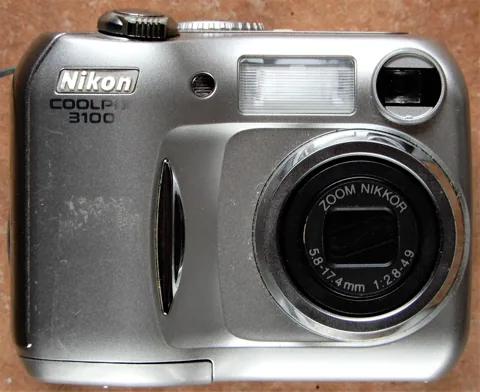 A Coolpix 3100, front on. · Tulumnes · CC BY-SA 4.0 · Commons

Close-ups
Focus to 4 centimetres.1 Imaging Resource measured a minimum area of 51 by 38 millimetres, with fine detail but a flash that overexposed;4 DPReview measured 32 by 24 millimetres at wide angle and said only the central half of the frame was usable.8 The lens barrel is engraved 5.8–17.4 mm and 1:2.8–4.9.
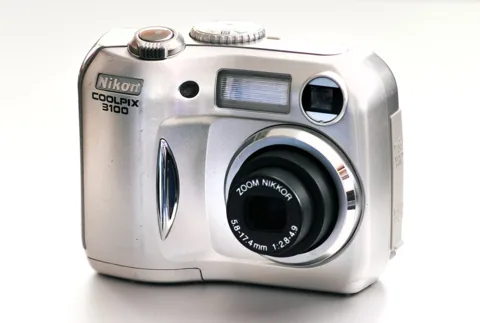 A Coolpix 3100 seen from the front. · Ashley Pomeroy · CC BY 3.0 · Commons

Twenty zoom steps
DPReview counted 20 steps between wide and tele, against an average of 7 to 10 on other brands, so framing could be adjusted finely; it timed the full zoom at 1.5 seconds.8
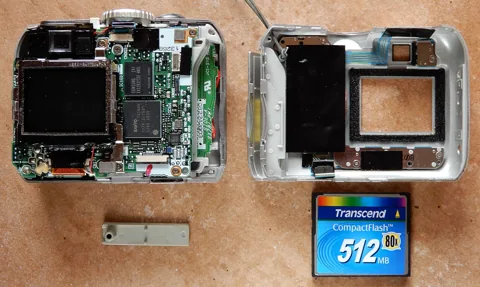 A Coolpix 3100 opened up, with a 512 MB CompactFlash card. · Tulumnes · CC BY-SA 4.0 · Commons

CompactFlash, on a list
Nikon's manual lists cards it tested and approved: its own EC-CF line at all capacities, and SanDisk, Lexar and Hitachi cards, the largest of those a 1 GB SanDisk. It adds that operation is not guaranteed with other makes.1 Imaging Resource advised buying at least 64 MB over the 16 MB card in the box.4 In this teardown picture a 512 MB card lies beside the opened body.
How it drew the picture
Imaging Resource's test chart showed strong detail out to about 1,000 lines per picture height and artefacts from 600, an average result for 3.2 megapixels; it rated the colour excellent, though the red, green and blue primaries ran a touch hot, and judged the sharpness a bit off the best in the class but good for an entry-level model.46 DPReview's chart gave 1,100 lines absolute and 1,300 at extinction, identical to the A70's numbers, but with visible red and blue moiré from about 1,000 lines and white halos from sharpening.8
DPReview found the pictures slightly softer than other 3-megapixel cameras, the lens soft in the corners at full aperture, magenta oversaturated and the tone curve too contrasty, leaving shadows nearly black.8 ePHOTOzine called the image quality excellent for the price, with sharp lens results and good colour.9 Imaging Resource said contrast was a little high too and the dynamic range limited.6 Only the highest JPEG setting was clean; smaller sizes showed ringing and “mosquito noise”, DPReview said.8




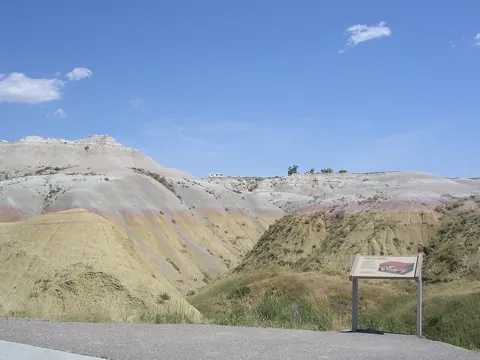

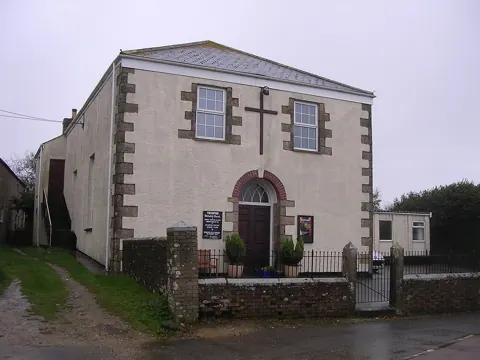





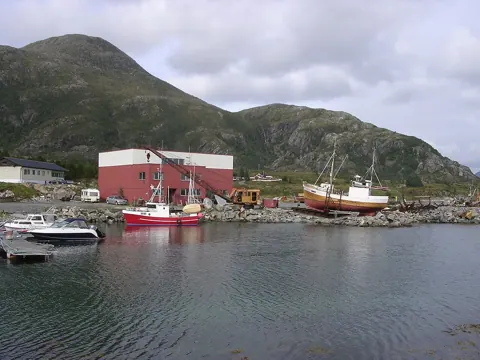





Photos taken with this camera, from Wikimedia Commons, credited under each picture.
Where it let you down
The power switch is the complaint two reviewers shared. It is a flick lever that springs back, and DPReview kept mistaking it for the zoom control and turning the camera off, calling it the number-one design complaint;84 Pocket-lint made the same point, comparing it to the zoom button on a Canon.10 The optical finder has no dioptre adjustment or framing marks; Nikon gives about 82 percent coverage, Imaging Resource measured about 86 at wide angle and 85 at telephoto, and Pocket-lint saw some parallax.14810 The screen did better: DPReview praised its anti-reflective coating, though ePHOTOzine struggled to judge focus on it in bright sun.89
Speed was mixed. Imaging Resource clocked 5.6 seconds from power-on to the first shot, slower than average, with a shutter lag of 0.84 to 0.86 seconds with autofocus and 0.101 prefocused;5 DPReview timed 3.5 seconds to ready and 0.8 seconds of total lag at wide angle, 1.3 at the long end;8 ePHOTOzine said it “flies along”, with a picture in about four seconds.9 The buffer is the clearer weakness: both Imaging Resource and DPReview got three full-size frames in a burst, at about 1 frame a second, before a pause.58
The batteries disagree. Nikon's manual gives about 80 minutes on its rechargeable AA cells and 150 on a CRV3 pack under its own test;1 Imaging Resource projected 83 minutes with the screen on, on 1,600 mAh cells, and some four days with it off;5 DPReview's run-down table gave 1 hour 42 minutes and 175 shots (its text says about 1 hour 45), and it advised a spare pair.8 What came in the box also differs by account: Nikon's US release lists a CRV3 lithium battery, Imaging Resource two alkaline AAs, DPReview's European kit two rechargeable cells with an MH-70 charger, and Pocket-lint a CR-V3 battery and a charger.24810
What the reviewers said
| Outlet | Date | Verdict |
|---|---|---|
| Imaging Resource | 18 Feb 2003 (as printed) | An extremely flexible point-and-shoot with “highly recommended” in its last line; excellent colour, but a weak flash, a tight viewfinder and noisier low-light shots than the 2100.4 |
| DPReview | 13 Aug 2003 | “Recommended”: 8 out of 10 for construction, image quality, lens and CCD, ease of use and value, and 7 for features. A capable point-and-shoot, but the A70 offers more at the same price.8 |
| ePHOTOzine | 18 Aug 2003 | A very good low-budget camera, easy and competitively priced; slow focus in low light and no manual modes. No score.9 |
| Pocket-lint | 16 Dec 2003 (as printed) | 4.0 out of 5, a good starter; smaller than its peers but slightly expensive when it launched, with a charger in the box.10 |
The timeline
- 18 February 2003Nikon Inc. announces the 2100, 3100 and SQ; the 3100 lists at $349.95.2
- 13 and 18 August 2003DPReview and ePHOTOzine publish their reviews.89
- 2 October 2003Nikon cuts the price to $299.3
- 16 December 2003Pocket-lint's review carries this date.10
Should you buy one now?
Buy one if you want a small, uncomplicated CompactFlash camera that runs on two AA cells and you will mostly shoot in daylight; it launched at $349.95.2 What it sells for now is a question for the sold listings, not for us, and we have not tested a unit. Before you bid, check these:
- The name. A listing that says only “3100” can be the 2011 Coolpix S3100, or the SD-card Coolpix 3200;11 the 3100 takes CompactFlash and has a duotone silver body with a chromed finger grip on the front.48
- The power. Nikon's manual lists two EN-MH1 rechargeable cells or one CRV3 lithium pack, with two ZR6 or FR6/L91 AA cells as alternatives, and an EH-61 AC adapter; it says not to mix types.1 Reviewers disagreed about life, so test a charged set: AA batteries on Amazon ↗.
- The card. It takes CompactFlash Type I.1 The third-party cards on Nikon's own list stop at 1 GB (its EC-CF line is listed at all capacities), and we have not tried a larger card. See our CompactFlash guide and glossary.
- The cable. Nikon's manual names a UC-E6 USB cable and an EG-CP11 video cable;1 see our UC-E6 page.
- The lever and the flap. Check that the power lever springs back and that the rubber cover over the connectors, which DPReview thought a poorer solution than a proper hinged door, is intact.8
If you are wondering why cameras like this are being hunted down again, we tell that story once, in Pictures that never left the card.
See recent sold prices on eBay ↗Shop on eBay ↗Rechargeable AA batteries ↗
Sources
- Nikon Corporation, COOLPIX 3100 user's manual (PDF, “Type E3100 digital camera”; specifications, card list, accessories)
- Imaging Resource, “Nikon's Coolpix SQ finally announced” by Mike Tomkins (18 Feb 2003), with the Nikon Inc. press release for the Coolpix 2100, 3100 and SQ
- Imaging Resource, “Nikon announces price cuts, rebates” by Mike Tomkins (3 Oct 2003), with Nikon Inc.'s release of 2 Oct 2003
- Imaging Resource, Nikon Coolpix 3100 Quick Look Review by Dave Etchells (review date printed as 02/18/03)
- Imaging Resource, “Picky Details” for the Coolpix 3100 (timings, power)
- Imaging Resource, Coolpix 3100 test images and analysis
- Imaging Resource, Coolpix 3100 data sheet (date available 31 Mar 2003, retail $349.00, weight 150 g)
- DPReview, Nikon Coolpix 3100 Review by Phil Askey (13 Aug 2003)
- ePHOTOzine, Nikon Coolpix 3100 Digital Camera Review by Will Smith (18 Aug 2003)
- Pocket-lint, Nikon Coolpix 3100 by Stuart Miles (published date printed as 16 Dec 2003)
- Imaging Resource, Nikon Coolpix 3200 review (compares the 3200 with the 3100)
- Wikimedia Commons, Category: Taken with Nikon Coolpix 3100 (EXIF read through the Commons API, 27 Oct 2026)
Camera photos by Lokal_Profil (CC BY-SA 3.0), Ashley Pomeroy (CC BY 3.0) and Tulumnes (CC BY-SA 4.0); other photographs are credited under each one, all via Wikimedia Commons. Links to eBay and Amazon are affiliate links.