Canon PowerShot SD4000 IS · on sale summer 2010
The Canon PowerShot SD4000 IS (IXUS 300 HS): the slim ELPH with an f/2.0 lens and a backlit sensor
Sold as the PowerShot SD4000 IS Digital ELPH in the Americas, the IXUS 300 HS in Europe, Asia and Oceania, and the IXY 30S in Japan.1
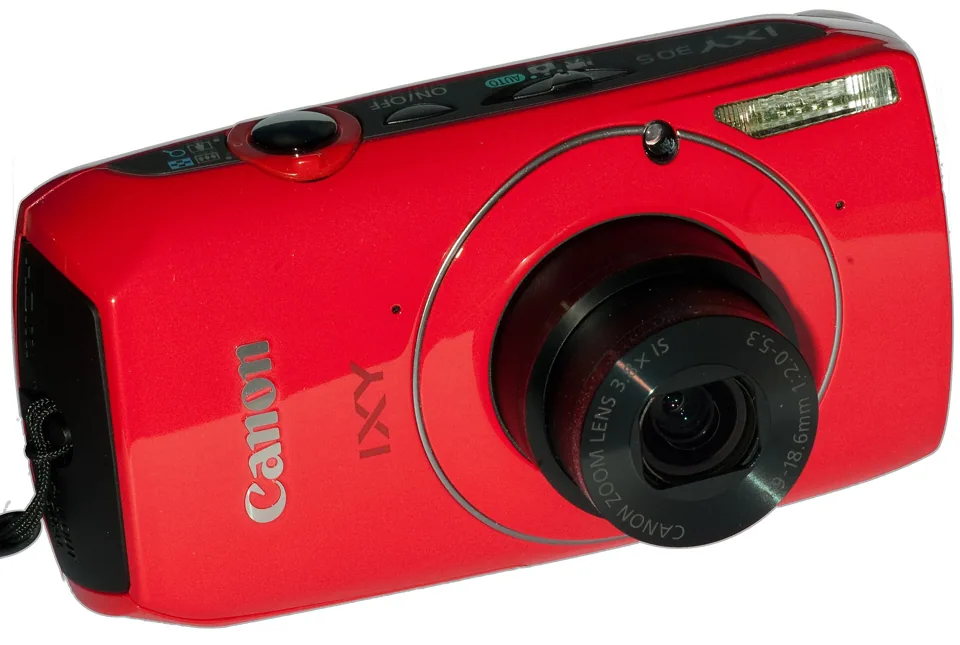
In May 2010 Canon put a 10-megapixel back-illuminated CMOS sensor and an f/2.0 lens into a pocket body and called it the first camera with its HS System. Reviewers praised the dim-light pictures, and most thought $350 steep.
- Launched
- May 2010
- Sensor
- 10 MP CMOS
- Lens
- 28–105 mm, 3.8×
- Card
- SDXC, SDHC, SD, MultiMediaCard
- Battery
- NB-6L
Canon PowerShot SD4000 IS specs: sensor, lens, battery, memory card and cable
Launched in May 2010 at about $350, the Canon PowerShot SD4000 IS (also sold as the IXUS 300 HS and IXY 30S) is a 10 MP CMOS compact with a 28–105 mm (35 mm equivalent) 3.8× zoom lens. Inside: it runs on the NB-6L battery. Sources
- Sensor
- CMOS, 1/2.3", 10 MP source
- Lens
- 28–105 mm equivalent, 3.8× zoom source
- Memory card
- SDXC, SDHC, SD, MultiMediaCard source
- Battery
- NB-6L source
- Also sold as
- IXUS 300 HS · IXY 30S
- USB / A/V cable
- See our Canon cable page
Meet the camera
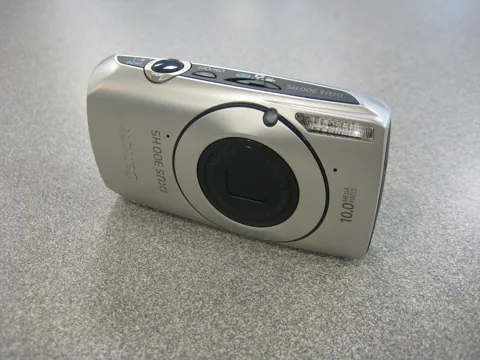
It is a slim, pebble-shaped camera about 100 by 54 by 24 millimetres that weighs about 175 grams with battery and card.137 Imaging Resource described a body of aluminium and polycarbonate and called it one of the best-designed Digital ELPHs.6 PhotographyBLOG said the lens is internally stacked and only protrudes from the body when the camera is in use, and that the body is mostly metal with plastic buttons and port covers.3 Expert Reviews found it heavier than other IXUS models but luxurious, though its matte black finish picked up scratches during testing.5 Canon announced finishes of blasted steel silver, matt black and glossy white, varying by region.2
Canon announced it on 11 May 2010 and the Camera Museum lists it as marketed that month.21 Imaging Resource gave a launch price of about $350, which it called high for a compact, and an availability date of 30 May 2010;6 PhotographyBLOG listed £379, $350 and €419,3 and Expert Reviews listed it at £304 in July.5
Why this one was interesting
The HS System arrives
Canon's press release called it the first model to carry the HS System, which pairs the 10-megapixel high-sensitivity sensor with the DIGIC 4 processor.2 The Camera Museum says the same system was earlier called the Dual Anti-Noise System in the PowerShot G11 and S90, and that it is aimed at night and indoor shooting without flash or tripod.1 The difference was the sensor: DPReview described the S90 it compared the SD4000 with as CCD-based,7 while Gizmodo wrote that the new backlit sensor delivered crisp, clean night shots.4 Cameralabs added that a CMOS sensor avoids the vertical streaks that CCD cameras show in video.8
Fewer pixels on purpose
PhotographyBLOG noted that Canon chose not to chase more megapixels,3 and Cameralabs said Canon held back on resolution to help low-light results.8
An f/2.0 lens, at one end of the zoom
The lens opens to f/2.0 at 28 millimetres and narrows to f/5.3 at 105,1 and Imaging Resource listed the f/2.0 aperture being available only at the wide setting as a drawback.6 Canon said f/2.0 admits twice the light of an f/2.8 lens.38 Imaging Resource's reviewer found the fast lens let them use lower ISO settings than usual, and added that attractive background blur in portraits is limited.6
Its sibling from the autumn before was our PowerShot S90, and the PowerShot S95 followed it. The PowerShot ELPH 300 HS came in early 2011.
What it left out
There is no full manual exposure mode and no raw files,6 no manual focus,3 no viewfinder6 and no internal memory.6 Cameralabs noted there is no live histogram, which it said is common among rivals at this price.8 What you do get is program, aperture-priority and shutter-priority exposure.6 PhotographyBLOG pointed to the S90 as the better buy for a modest extra, with its photographer-oriented features and raw shooting,3 Expert Reviews said serious photographers might be better served by the S90 or the Panasonic Lumix DMC-LX3,5 and Gizmodo said the S90 might be better for anyone who wants to get into photography.4
The dark: its best trick, and its limits
Reviewers agreed on the shape and differed on the numbers. PhotographyBLOG found no visible noise at ISO 125, 200 and 400, some noise and slight desaturation at 800, and a noisier but perfectly usable ISO 1600.3 Imaging Resource found some visible softening beginning at ISO 400 and chroma noise well controlled at every setting, and called its ISO 3200 results above average for the class, though not amazing.6 DPReview said it shows substantially less detail than the S90 only at ISO 1600 and 3200, and that above ISO 400 noise reduction robs pictures of much fine detail while keeping pleasant colour and saturation.7 Gizmodo said noise was very low up to ISO 800, with 1600 and sometimes 3200 still acceptable.4 Imaging Resource's print guide: slightly soft but usable at 11 by 14 inches at ISO 400, soft but usable at 8 by 10 at ISO 800, pretty good at 5 by 7 at ISO 1600 and good at 4 by 6 at ISO 3200.6
Not everyone saw a leap. Expert Reviews said low-light noise stayed low but that noise reduction softened detail, and that the results were better than most compacts but by less than it had hoped.5 DPReview's sub-scores for flash (5.5) and low light and high ISO (6.3) were its two lowest.7 Gizmodo warned that the camera leans on its wide aperture in low light, which can leave a shallow depth of field and a blurry background with no manual mode to prevent it, though it called this a minor quibble.4 In the dark, DPReview said the autofocus assist lamp helps the system lock focus,7 and Imaging Resource called its low-light focusing better than average.6

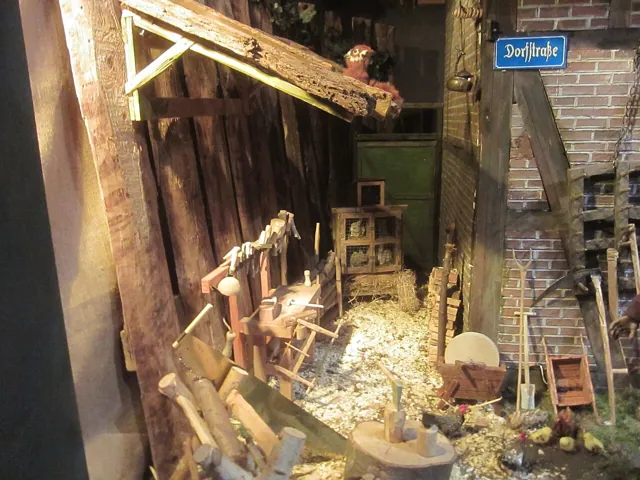
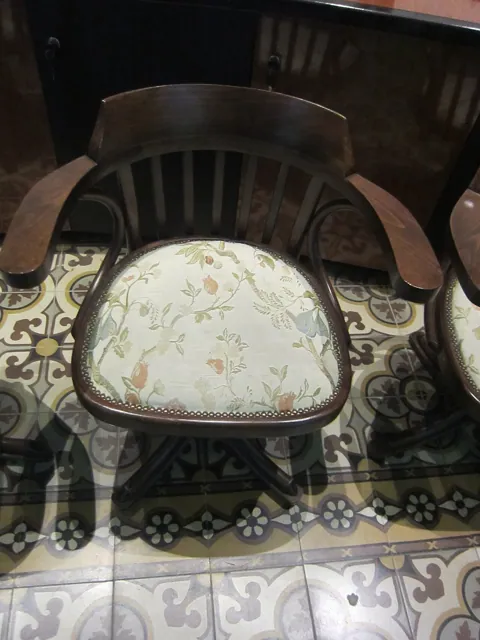
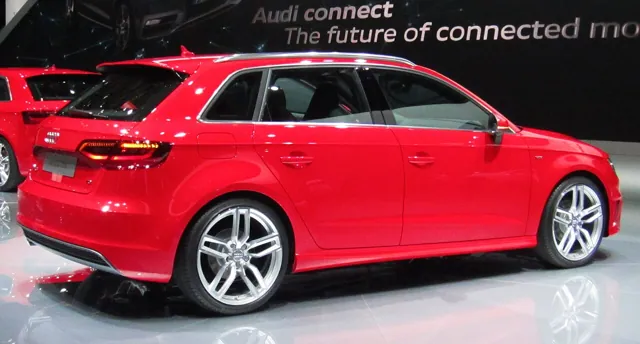
Real photographs taken with this camera (sold in Europe as the IXUS 300 HS), all by the same Commons contributor. The sensitivity shown is recorded in each file's own EXIF data.
Like that look? See recent eBay sold listings for this camera ↗
On eBay right now
Live listings for this camera, supplied by eBay and updated automatically. We earn a commission if you buy through them.
The little wins


Macro
Imaging Resource called the macro unusually good, down to a field of about 37 by 28 millimetres, and DPReview's specifications list a closest focus distance of 3 centimetres.67
How it drew the picture
PhotographyBLOG scored image quality 4.5 out of 5, noting limited purple fringing in high-contrast situations, a little barrel distortion and slight corner softness at 28 millimetres, and files that were a little soft at the default sharpening.3 DPReview wrote that pictures look good at print or screen size, with great colour rendition, but do not always stand up to very close scrutiny, with over-sharpening that creates odd textures, and measured 0.5 percent barrel distortion at wide angle.7 Imaging Resource measured sharp line patterns down to about 2,000 lines per picture height, found bright yellows somewhat muted, and said automatic white balance had a slight reddish tint.6 Expert Reviews found details less crisp than from other cameras at this price, though the gap was small, with lush, slightly warm colours and hardly any duds in hundreds of test shots.5
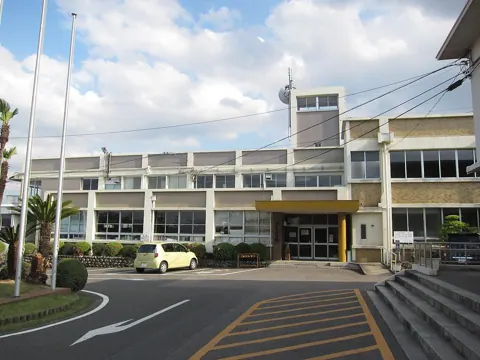

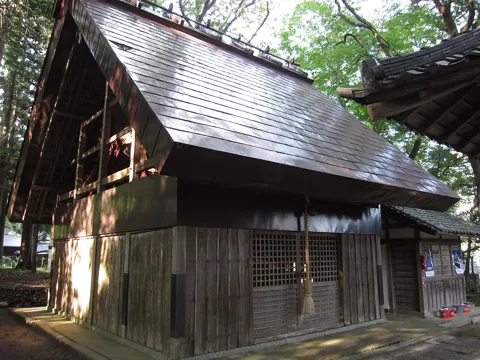









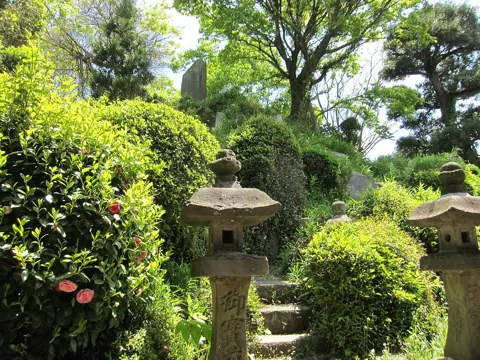




Photos taken with this camera, from Wikimedia Commons, credited under each picture. We could not tell the shooting settings of these files, so they show what the camera can do, not how it was set.
Where it let you down
The controls drew the most complaints. Imaging Resource found the Function menu slow and sometimes unwieldy;6 DPReview said the function menu adds an extra button press to most setting changes;7 Expert Reviews found it disappointing that the navigation pad is not labelled;5 and PhotographyBLOG counted six presses to delete a single shot.3 PhotographyBLOG also said the flash window sits where fingers can cover it.3 The screen was the other sore point: PhotographyBLOG called it grainy,3 DPReview noted that its 16:9 shape leaves only the middle 75 percent for stills,7 and Cameralabs noted that standard 4:3 photos use only about 172,000 of its 230,000 dots.8
The headline speeds were also disputed. PhotographyBLOG said the 8.4 fps burst, only possible at 2.5 megapixels, does not live up to the HS name;3 Expert Reviews measured 2.6 fps against Canon's 3.7,5 Cameralabs measured about 2.6 fps at full size and 6.3 fps at 2.5 megapixels,8 and DPReview measured about 3.8 fps at ISO 125 to 400 with a fast card, falling to 1.25 fps at ISO 1600 and above.7 Slow motion at 240 fps is only 320 by 240 pixels, which Imaging Resource likened to a postage stamp;6 and DPReview found that the lens zoom slows during video, with a faint chirp, and that refocusing is slow.7 Imaging Resource measured a full-autofocus shutter lag of about 0.63 seconds at wide angle and a flash recycle of about 6.9 seconds.6
What the reviewers said in 2010
| Outlet | Date | Verdict |
|---|---|---|
| PhotographyBLOG | 26 May 2010 | 4 out of 5 (design 4, features 4.5, ease of use 3.5, image quality 4.5, value 3). Largely successful, but too expensive to recommend whole-heartedly.3 |
| Gizmodo | 1 Jun 2010 | A great camera for casual shooters who want better night shots without manual controls; the S90 may suit those who want to grow into photography.4 |
| Expert Reviews | 16 Jul 2010 | "A great camera, but only for a small group of people": great looks, operational simplicity and image quality said to rival enthusiast compacts, but a little pricey. No numeric score on the page.5 |
| Imaging Resource | 30 Jul 2010 | 4.5 out of 5 and a Dave's Pick: one of the best compact-style cameras the reviewers had tried; its listed faults included the menu and the price.6 |
| DPReview | 2 Aug 2010 | 74 percent and a gold badge: "a great all-rounder", with only the screen, much of which is regularly unused, a disappointment.7 |
| Cameralabs | Page dated 14 Dec 2011 | 84 percent. Praised its brighter-than-average lens at wide angle, sensible resolution for low-light results and aperture and shutter priority; faulted compelling rivals at a similar price, a 4:3 mode that looks small on the wide screen and minimal control labelling.8 |
Cameralabs said the PowerShot SD4500 IS / IXUS 1000 HS keeps the same sensor, screen and slow-motion mode but adds a 10x zoom and 1080p video.8
The timeline
- 11 May 2010Canon announces the SD4000 IS / IXUS 300 HS.2
- 26 May 2010PhotographyBLOG publishes its review.3
- 30 May 2010Availability date given by Imaging Resource, at about $350.6
- 1 June 2010Gizmodo publishes its review.4
- 16 July 2010Expert Reviews publishes its review.5
- 30 July 2010Imaging Resource publishes its review.6
- 2 August 2010DPReview publishes its review.7
Should you buy one now?
Buy one if you want a slim, well-built pocket camera whose strengths are indoor and evening pictures without flash, and you can live with a fiddly menu and a modest screen. It launched at about $350;6 what it sells for now is a question for the sold listings, not for us. Before you bid, check these:
- The name. It is the PowerShot SD4000 IS in the Americas, the IXUS 300 HS in Europe, Asia and Oceania, and the IXY 30S in Japan, so search all three.1
- The finish. Expert Reviews found the matt black body scratched easily,5 so look at the corners and the screen.
- The battery. It uses an NB-6L, rated at about 250 shots;1 a fresh one is on Amazon ↗.
- The card. It takes SD, SDHC and SDXC cards, and there is no internal memory and no card in the box.163 See our memory card guide.
- The cable. Canon lists a Hi-Speed USB (mini-B) port and a mini HDMI output.1
- The lens. Check that it extends and retracts cleanly and the glass is free of scratches.
If you are wondering why cameras like this are being hunted down again, we tell that story once, in Pictures that never left the card.
See recent sold prices on eBay ↗Shop on eBay ↗NB-6L battery ↗
Sources
- Canon Camera Museum, PowerShot SD4000 IS DIGITAL ELPH / IXUS 300 HS / IXY 30S (names, May 2010, specifications)
- DPReview, Canon releases PowerShot SD4000 IS compact with manual control (announcement, 11 May 2010)
- PhotographyBLOG, Canon IXUS 300 HS review by Mark Goldstein (26 May 2010)
- Gizmodo, Canon PowerShot SD4000 IS review: No More Noisy Nights, by Kyle VanHemert (1 Jun 2010)
- Expert Reviews, Canon IXUS 300 HS review by Ben Pitt (16 Jul 2010)
- Imaging Resource, Canon SD4000 IS review by Dan Havlik and Stephanie Boozer (30 Jul 2010)
- DPReview, Canon PowerShot SD4000 IS / IXUS 300 HS review by Richard Butler (2 Aug 2010)
- Cameralabs, Canon IXUS 300 HS / PowerShot SD4000 IS review by Gordon Laing (page dated 14 Dec 2011)
Camera photos by Jihei and Hanniball76 (public domain); other photographs are credited under each one, all via Wikimedia Commons. Links to eBay and Amazon are affiliate links.