Canon PowerShot S series · on sale August 2010 · a retrospective
The Canon PowerShot S95: the cult pocket camera, a year after the S90
Canon kept the S90's sensor, lens and ring, added 720p video and a stronger stabiliser, and cut the price by $30. Reviewers gave it awards. A decade and a half later, buyers call it a cult camera.
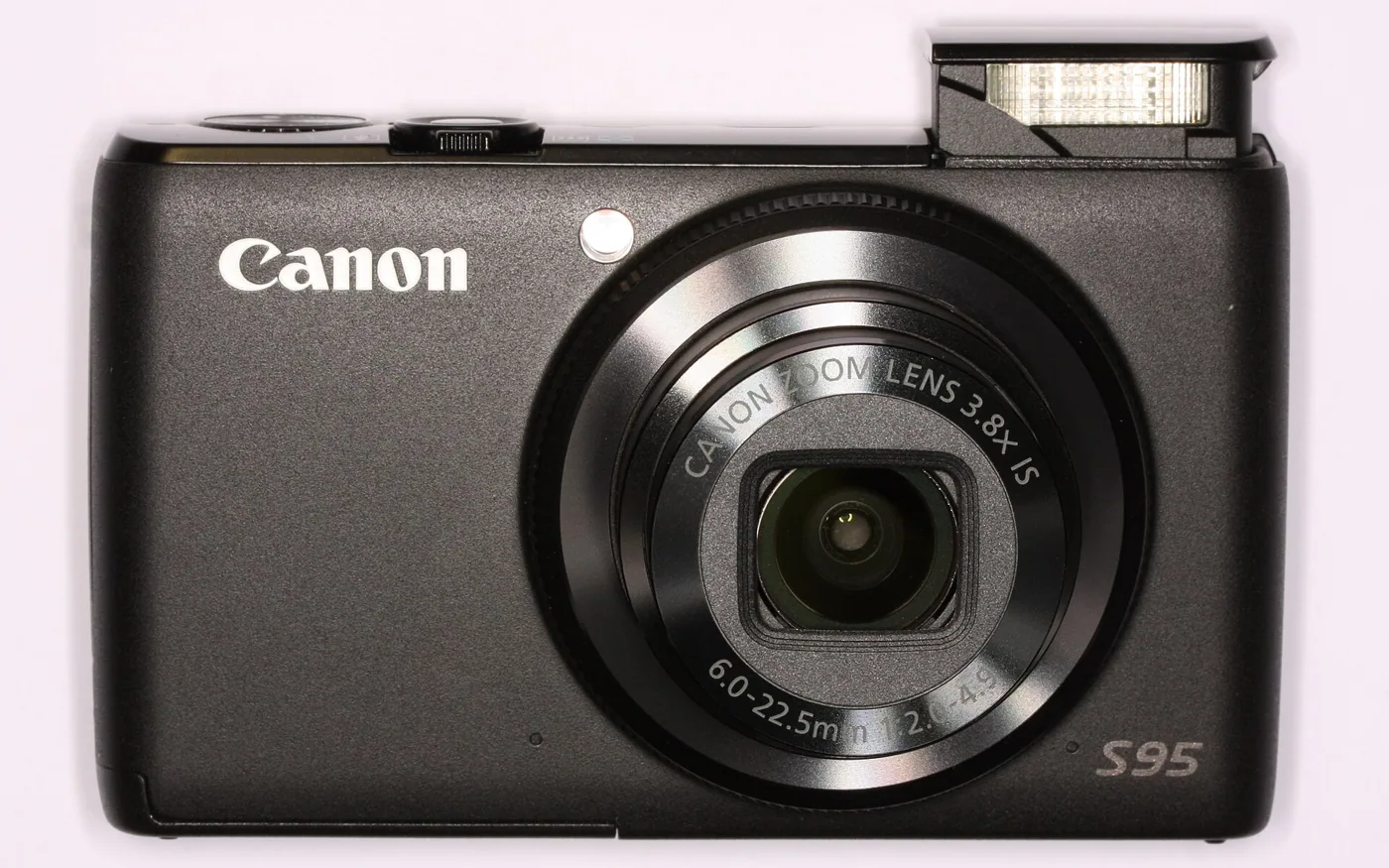
Meet the camera
It is black, small and unadorned, with a ring around the lens. Imaging Resource's reviewer was fond of the small form factor and the rock-like feel and finish, calling it solid with good heft, and a camera that looks like it means business.2 The body is 99.8 by 58.4 millimetres and 29.5 thick, and weighs 170 grams without battery and card or 193 with them.1 The front panel had some added texture compared with the S90, and Imaging Resource said that you would have been hard put to tell the two apart without the model number.2 PhotographyBLOG noted the finish was borrowed from Canon's EOS 7D and helped handling a little, though the camera still lacked anything approaching a grip.3
Canon calls it the successor to the S90, which launched in October 2009, and says it was marketed in August 2010.1 Imaging Resource noted it started shipping in the US in late August at around $400, some $30 cheaper than its predecessor.2 PhotographyBLOG listed £399, €479 or $399.99, against the S90's £449, €519 or $429.99.3
Why this one was interesting
A year of small fixes
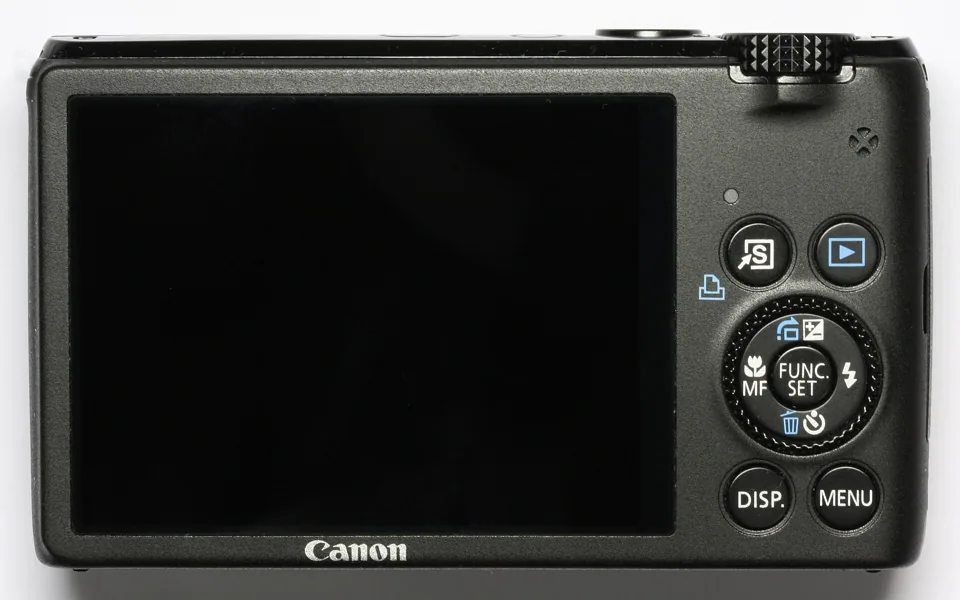
PhotographyBLOG said the S95 addressed virtually all of the issues that detracted from its predecessor, most notably the lack of HD video and the sky-high price, while further improving handling and customisation.3 Imaging Resource agreed that it was improved in just the right ways: it swapped the Power and Ring Function buttons, a necessary fix, and cleared room for the thumb on the back to reduce accidental use of the loose rear control dial.2 Some had been critical that it was not much of an upgrade, Imaging Resource added, but after using it the reviewer thought it an improvement.2
Was it a new chip?
Not a new sensor. The sensor size and resolution were unchanged,2 though Canon described its HS System, the combination of a high-sensitivity 10-megapixel CCD and DIGIC 4, with a revised noise-reduction algorithm that it said improved resolution in high-sensitivity shooting.1
What was new
The biggest addition was 720p HD video with stereo sound, at a slightly lower 24 frames a second, compared with the S90's standard-definition video. It also gained a mini HDMI connector, SDXC card support, an HDR scene mode that combined three exposures (needing a tripod) and extra aspect ratios of 3:2, 1:1 and 4:5.2 The stabiliser became a Hybrid IS system that corrected for both lateral shifts and angular motion.2
The S90 itself is in our S90 retrospective, and the rival Panasonic is in our LX3 retrospective.
The dark: its home ground
With the same f/2.0 lens as the S90, the S95 was made for low light. PhotographyBLOG found image quality still excellent, with a usable ISO range of 80 to 800, and thought it very well suited to low-light, hand-held photography, with the blurred backgrounds that most compacts struggle to produce.3 Imaging Resource found better-than-average noise performance and excellent print quality, 13 by 19 inches from ISO 80 to 400.2 It noted a few problems: trouble with heavy noise suppression in certain reds, and no way to adjust noise reduction.2
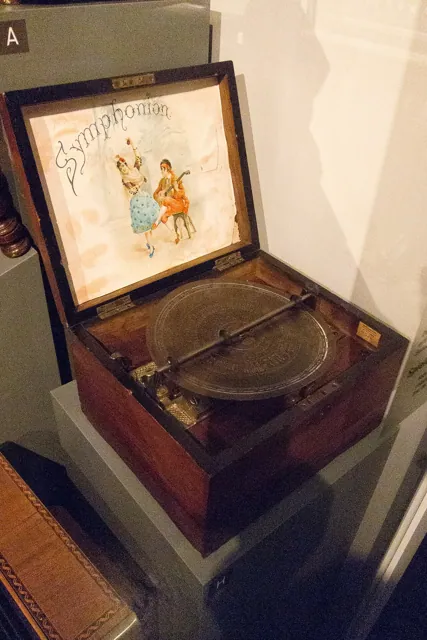

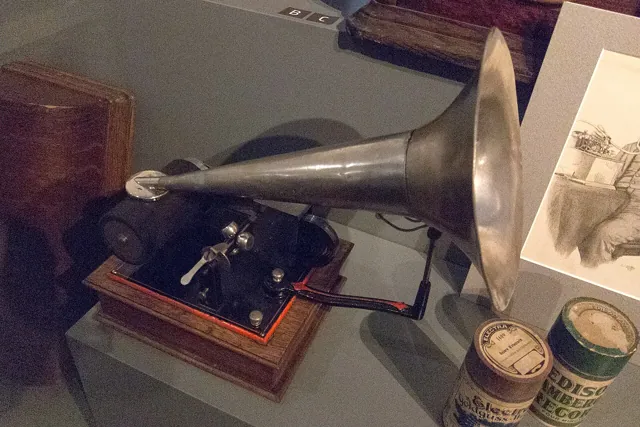



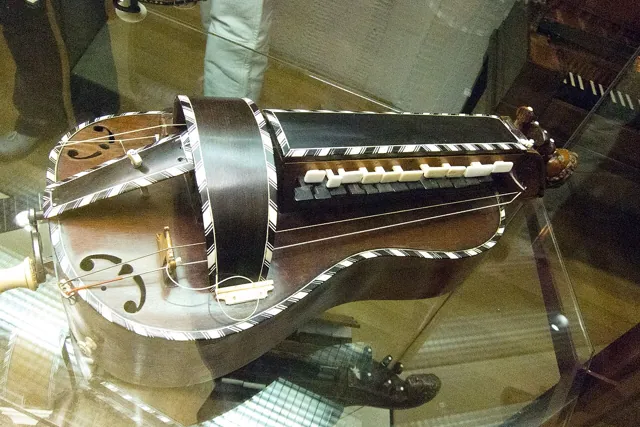

Real photographs taken with this camera: instruments in two music museums, at the camera's top sensitivity. The sensitivity shown is recorded in each file's own EXIF data.

Like that look? See what S95s have recently sold for on eBay ↗
On eBay right now
Live listings for this camera, supplied by eBay and updated automatically. We earn a commission if you buy through them.
The little wins
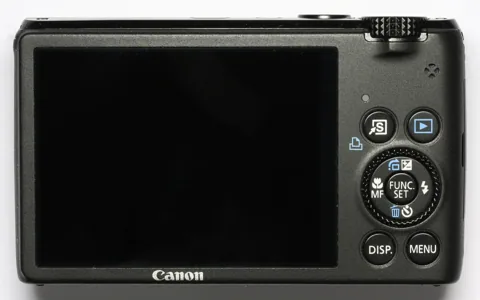 The back of the S95. · D-Kuru · CC BY-SA 3.0 at · Commons
The ring that does things
Imaging Resource called the reprogrammable front control ring unique, a way to change settings without opening a menu.2
RAW and full manual
It offered RAW capture and full manual exposure, with the same lens, sensor and ring as the S90 and an enhanced stabiliser.2
A useful shortcut
A shortcut button for setting a custom white balance quickly, bracketing that was fast and easy, and a My Menu of favourite settings were among Imaging Resource's pros.2
Hybrid stabilisation
Imaging Resource said Canon's new Hybrid IS worked pretty well, and its reviewer took handheld shots in some pretty low light.2
A better screen than the cheap Canons
Imaging Resource said that switching back to the lower-resolution screen of the SD1300 showed why it is good to spend more on a pocket camera: the S95's screen was high-resolution and gorgeous, easy to use indoors and out.2
Faster bursts
The continuous mode managed 1.87 frames a second, better than the S90, which did not quite manage one, though RAW dropped to under one frame a second.2
How it drew the picture
Imaging Resource listed very good colour accuracy, a bright, optically stabilised wide-angle zoom with very good image quality and a better-than-average noise performance.2 It also noted high geometric distortion at wide angle in uncorrected RAW files and moderate chromatic aberration.2 TechRadar found good image quality and good build quality, but missed selectable autofocus points, an ISO button and a movie button.4








Photos taken with this camera, from Wikimedia Commons, credited under each picture.
Where it let you down
Imaging Resource found sluggish performance overall: a wide-angle shutter lag of 0.64 seconds, about 2.6 seconds per shot and a flash that took six seconds to recycle.2 It rated battery life at about 200 shots, down from the S90's 220.2 The pop-up flash rose into the user's finger, there was no grip, and neither optical zoom nor autofocus worked during movies, PhotographyBLOG pointed out.23 Imaging Resource added that the lens did not go as wide as some competitors' and that the camera lacked handheld multi-shot modes and automatic panorama.2
What the reviewers said in 2010
| Outlet | Date | Verdict |
|---|---|---|
| PhotographyBLOG | 1 Sep 2010 | Highly Recommended: an even more attractive proposition than the S90, with HD video and a lower price, even if S90 owners had little reason to upgrade.3 |
| Imaging Resource | 1 Oct 2010 | Dave's Pick at 4.5 out of 5: improved just where the S90 needed it, with a solid, pocketable body and excellent print quality; sluggish and short on battery.2 |
| TechRadar | Page dated 29 Jul 2011 | Small, good-quality pictures and a solid build; missing selectable AF points, an ISO button and a movie button.4 |
The timeline
- October 2009The PowerShot S90, which Canon names as the S95's predecessor.1
- Late August 2010The S95 starts shipping in the US at about $400.2
- 1 September 2010PhotographyBLOG publishes its review.3
- 1 October 2010Imaging Resource publishes its review.2
Should you buy one now?
Buy one if you want the best low-light pocket camera of its time with real manual control, and you will mostly shoot stills. It is also a camera buyers have noticed: a B&H buying guide calls the S95 a cult camera, says its writer paid $130 for one in 2023, and says the going rate has more than tripled since, with the average above $400. The guide suggests the S100, the model after it, which gets less affection and costs less.6 What it sells for today is a question for the sold listings, not for us. Before you bid, check these:
- The lens ring. It must turn cleanly, and the rear dial should click properly; the controls are the point of the camera.2
- The flash. It pops up under a finger;2 check it rises and retracts.
- The battery. It was rated for about 200 shots when new;2 a fresh NB-6L is on Amazon ↗.
- The card. It takes SD, SDHC and SDXC cards.1
- The name. Canon used the same PowerShot S95 name in the US, Europe and Japan.1
If you are wondering why cameras like this are being hunted down again, we tell that story once, in Pictures that never left the card.
See recent sold prices on eBay ↗Shop on eBay ↗NB-6L battery ↗
New to the jargon (CCD, ISO, xD cards, IXUS vs ELPH)? Read our plain-English digicam glossary.
Sources
- Canon Camera Museum: PowerShot S95 (specifications, S90 lineage, HS System, marketing date)
- Imaging Resource, Canon S95 review by Shawn Barnett and Zig Weidelich with overview by Mike Tomkins (1 Oct 2010)
- PhotographyBLOG, Canon PowerShot S95 review by Mark Goldstein (1 Sep 2010)
- TechRadar, Canon PowerShot S95 review (page dated 29 Jul 2011)
- Photo Review (Australia), Canon PowerShot S95 review
- B&H eXplora, “How to Succeed at the Digicam Trend Without Over-Buying” (a retailer's buying guide)
Camera photos by D-Kuru (CC BY-SA 3.0 Austria); other photographs are credited under each one, all via Wikimedia Commons. Links to eBay and Amazon are affiliate links.