Panasonic Lumix TZ · on sale spring 2008
The Panasonic Lumix DMC-TZ5: the pocket superzoom that added 720p video and kept the lens
Sold in Asia, Australia and New Zealand as the Lumix DMC-TZ15; Cameralabs says the two are identical apart from the name.6
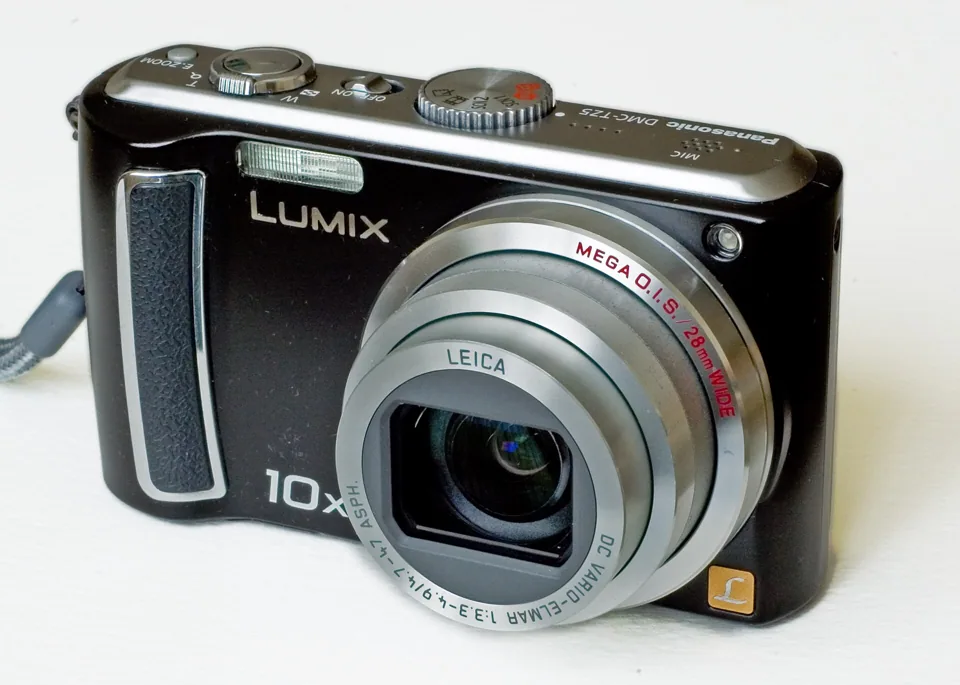
In January 2008 Panasonic kept the TZ3's 28 to 280 mm Leica-branded lens, added two megapixels, a sharper 3-inch screen and 720p video, and priced it at about $350. Reviewers loved the lens and the metal body, and split over the noise.
- Launched
- March 2008
- Sensor
- 9.1 MP CCD
- Lens
- 28–280 mm, 10×
- Card
- SD, SDHC, MultiMediaCard
- Battery
- CGA-S007A
Panasonic Lumix DMC-TZ5 specs: sensor, lens, battery, memory card and cable
Launched in March 2008 at $349.95, the Panasonic Lumix DMC-TZ5 is a 9.1 MP CCD compact with a 28–280 mm (35 mm equivalent) 10× zoom lens. Inside: it runs on the CGA-S007A battery. Sources
- Sensor
- CCD, 1/2.33", 9.1 MP source
- Lens
- 28–280 mm equivalent, 10× zoom source
- Memory card
- SD, SDHC, MultiMediaCard source
- Battery
- CGA-S007A source
- USB / A/V cable
- See our Panasonic cable page
Meet the camera
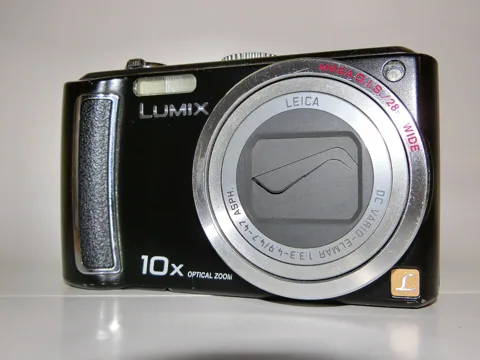
It is a chunky pocket camera with a metal body: DPReview listed 103.3 by 59.3 by 36.5 millimetres and 214 grams without battery,2 and Trusted Reviews put it at 240 grams with battery and card, close to twice the weight and thickness of a typical ultra-compact, and called the body stainless steel and aluminium.5 PhotographyBLOG gave 215 grams, without saying what that included.1 It also said it was a little slimmer and lighter than the TZ3.1 The front carries a Leica-branded 10x zoom covering 28 to 280 millimetres on a 35 mm camera, opening to f/3.3 at the wide end and f/4.9 at the long end.1
PhotographyBLOG reported its announcement, together with the TZ4, on 29 January 2008.7 Imaging Resource lists a retail price of $349.95 and availability from 31 March 2008;4 PhotographyBLOG gave £299 and $349 in its review,1 while DPReview quoted a street price of about $300 in the US and £245 in the UK in April,2 and Popular Photography an estimated $299.8 By August, Trusted Reviews saw it selling in the UK for between £180 and £220.5
Why this one was interesting
HD video, with the zoom still working
The TZ3 topped out at 848 by 480 pixels; the TZ5 added two 720p modes at 30 or 15 frames a second.1 PhotographyBLOG and Cameralabs welcomed the optical zoom working again during filming: the TZ1 had it, the TZ3 did not.16 DPReview said it was only the second camera with HD video that it had reviewed, after the Canon TX1.2 An HD television could be connected through an optional component cable.68
A sharper screen and a simpler dial
The 3-inch screen doubled from 230,000 to 460,000 dots.12 Cameralabs found the extra detail only in playback, because live view and menus looked like a scaled-up 230,000-dot screen.6 The mode dial shrank from ten positions to six, and Imaging Resource noted the new record and playback switch meant that bumping the dial no longer dropped the camera into playback.63
A cleverer Auto
PhotographyBLOG listed Intelligent Exposure and digital red-eye correction as new in the Intelligent Auto mode;1 Cameralabs saw little benefit from Intelligent Exposure in its test shots.6
Earlier in the line, see our Lumix DMC-TZ3; its successor line later stretched the zoom in the Lumix DMC-ZS3 (TZ7).
What was lost
Burst shooting slowed. PhotographyBLOG reported 2.5 frames a second for at most 5 pictures at standard quality and 3 at fine, slower than the TZ3,1 DPReview said the TZ3 managed five frames in a burst where the TZ5 gave three,2 and Imaging Resource clocked 1.88 frames a second at full resolution against 2.99 for the TZ3.3 The stabiliser button on top disappeared, leaving the setting in the menu,63 which PhotographyBLOG did not mind, since it left stabilisation on for 99 percent of its shooting.1
The dark: its weak point
Noise was the argument, and the reviewers disagreed on where it began. PhotographyBLOG saw virtually no noise at ISO 100 and 200, called ISO 400 very good and a definite improvement on the TZ3, and found noise and lost detail at ISO 800.1 Imaging Resource said ISO 200 and 400 still looked very good and that smudging at 800 and 1600 was heavy.3 Cameralabs found softening at ISO 200 and a big drop at 800.6 Trusted Reviews saw a noise-like pattern in dark areas even at ISO 100 and said noise reduction began to erase detail at 400.5 DPReview was the harshest: visible shadow noise at base ISO, smearing visible even in small prints at ISO 200 and a test subject's hair turned into a yellowish mess above that, and an ISO 1600 setting it could not see the point of.2 It also found noise reduction less aggressive than on the TZ3, at the price of more visible noise.2
Even the ceiling was disputed. Panasonic's press release, PhotographyBLOG, Cameralabs and DPReview's spec table put the High Sensitivity mode at up to 6400, at a reduced 3 megapixels according to PhotographyBLOG and Cameralabs; Imaging Resource found 3200 in that mode and 4000 and 6400 only in the Starry Sky scene mode. PhotographyBLOG called the results at the top terrible.71623

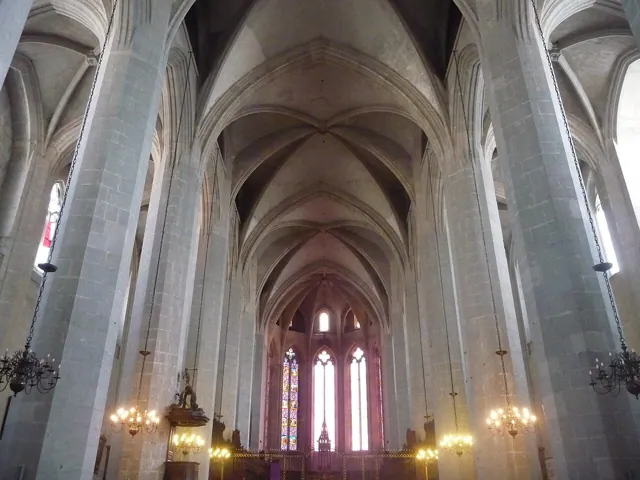


Real photographs taken with this camera. The sensitivity shown is recorded in each file's own EXIF data.
Like that look? See recent eBay sold listings for this camera ↗
On eBay right now
Live listings for this camera, supplied by eBay and updated automatically. We earn a commission if you buy through them.
The little wins
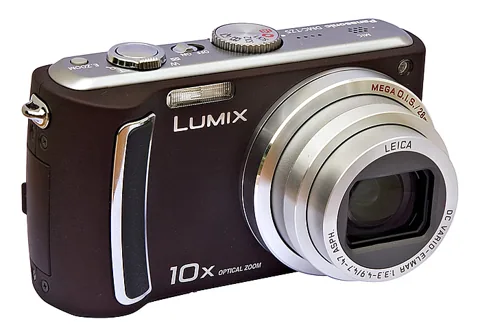 The TZ5, lens extended. · Pep.per de Ré · CC BY-SA 3.0 · Commons
The lens
Imaging Resource measured 0.3 percent barrel distortion at 28 mm and 0.2 percent pincushion at 280 mm,3 while DPReview measured 0.4 percent at wide and 0.1 at tele and called edge-to-edge sharpness strong.2 Imaging Resource found the corners comparatively soft, with 8 to 9 pixels of purple fringing at wide angle, where Cameralabs found coloured fringing virtually non-existent; DPReview saw some on its test charts but hardly any in 400-plus real-life samples, and Trusted Reviews saw minimal purple fringing.3625


The stabiliser
DPReview put the benefit at two to three stops;2 Cameralabs could reliably hand-hold a 280 mm shot at 1/30 second, and found Mode 2 more effective in the hardest cases while preferring Mode 1 every day;6 Imaging Resource got sharp pictures at a quarter of a second.3
Quick to focus
Imaging Resource measured a shutter lag of 0.42 seconds at wide angle and 0.45 at 280 mm, and 0.011 seconds once pre-focused.3 Trusted Reviews said the autofocus assist lamp could focus in complete darkness at about four metres.5
An Auto that guesses well
Cameralabs called Intelligent Auto the cleverest automatic system it had tested to date, and Imaging Resource said it worked very well in practice.63 Imaging Resource's face detection found faces about 30 degrees off axis; Cameralabs found it locked on even in near profile.36
How it drew the picture
The scores were high. PhotographyBLOG gave image quality 4.5 out of 5,1 DPReview 7.5 out of 10,2 Trusted Reviews 9 out of 105 and Cameralabs 16 out of 20.6 Cameralabs measured 2050 lines per picture height, about 20 percent more than the TZ3, and said real-life detail barely improved; it also thought the Fujifilm F30 arguably delivered finer detail at low sensitivities.6 DPReview measured 1800 lines per picture height as absolute resolution on its own chart, and called the output neutral and a little soft.2 PhotographyBLOG found files soft at the default sharpening, with no way to change it in camera.1 Imaging Resource found reds and blues slightly oversaturated, and DPReview said highlights clipped often enough that it dialled in minus a third to minus two thirds of a stop.32
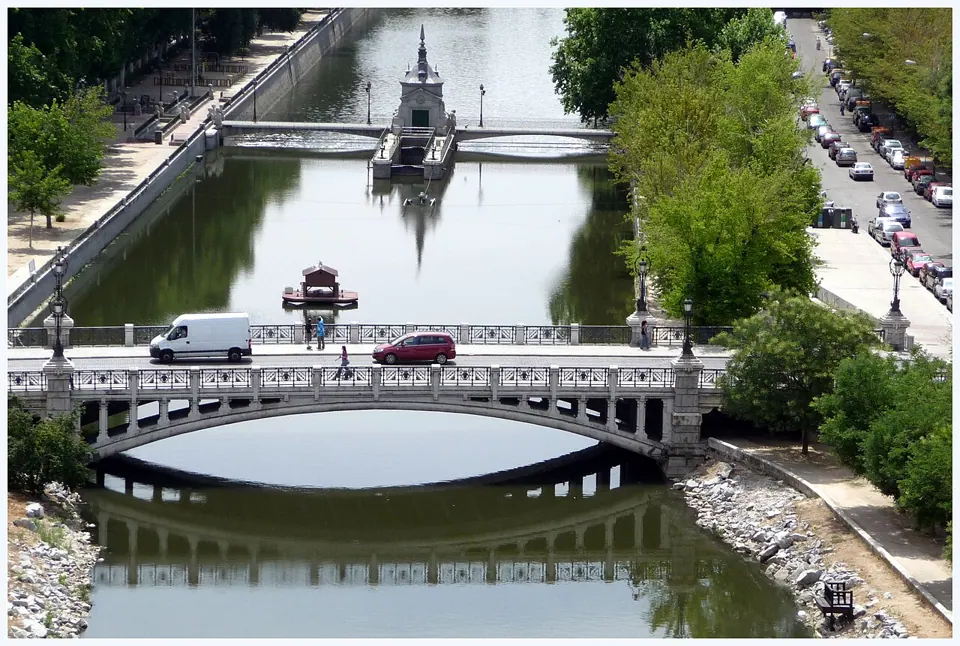




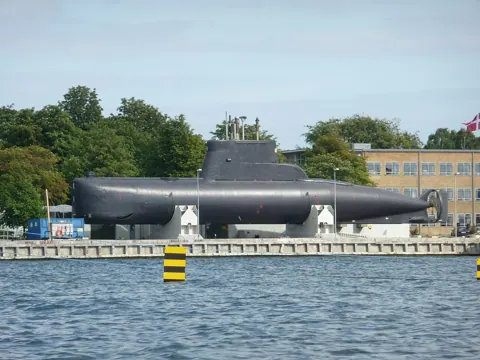











Photos taken with this camera, from Wikimedia Commons, credited under each picture.
Where it let you down
Video was the headline feature, and the verdicts were mixed: DPReview listed the HD mode among its pros,2 while Cameralabs and PhotographyBLOG saw it as no match for a camcorder.61 Imaging Resource's 60x card stopped full HD recording after exactly 10 seconds, and Panasonic recommends a card that writes 10 MB a second;3 the reviewers disagreed on file sizes, with PhotographyBLOG fitting about 10 minutes onto a 2 GB card, Imaging Resource 11, and DPReview about 10 on a 4 GB card.132 Sound was weak: Imaging Resource found 8 kHz mono, and DPReview heard wind and zoom-motor noise.32 Focus lagged behind the zoom while filming, said PhotographyBLOG and DPReview, and PhotographyBLOG saw thin white vertical lines in clips.12 PhotographyBLOG said not to buy the camera for video alone.1
The flash sits beside the grip, and three reviewers warned that a finger can cover it.123 Imaging Resource called the flash average with uneven coverage at wide angle, while DPReview found its colour and exposure reliable.32 Auto white balance was unreliable under artificial light for DPReview, and gave Imaging Resource a yellow cast indoors.23 Macro focuses to 5 centimetres at wide angle and 100 at telephoto.2 There is no manual exposure and no raw option.36 Reviewers differed on the screen in sunlight: DPReview said the screen worked well everywhere except in direct sunlight, while Trusted Reviews had no trouble in bright daylight.25 They also split on the tripod socket: PhotographyBLOG called its corner position unstable, Imaging Resource liked that an offset mount leaves the battery and card reachable.13
What the reviewers said in 2008
| Outlet | Date | Verdict |
|---|---|---|
| DPReview | 22 Apr 2008 | Highly Recommended, by a whisker: excellent lens and handling, but "the electronics behind it frankly cannot keep up with the optics."2 |
| PhotographyBLOG | 12 May 2008 | Design 4.5, features 5, ease of use 5, image quality 4.5, value 4.5 out of 5: an incremental evolution; TZ3 owners need not upgrade.1 |
| Imaging Resource | 25 Jul 2008 | 4.5 out of 5: a strong lens and stabiliser, good performance and an affordable price, with the usual high-ISO problems.3 |
| Trusted Reviews | 27 Aug 2008 | Value 8, image quality 9, build 10: a genuine pleasure to use, quite expensive, hard to beat as a general-purpose snapshot camera.5 |
| Cameralabs | Undated page | Highly Recommended, 87 percent: a unique long zoom in a pocketable body; keep it at ISO 100 or 200; the TZ3 is up to 30 percent cheaper with the same lens.6 |
The timeline
- 29 January 2008PhotographyBLOG reports the announcement of the TZ5 and TZ4.7
- 31 March 2008Availability date in Imaging Resource's table.4
- 22 April 2008DPReview publishes its review, and notes the new Wi-Fi Lumix TZ50, essentially a TZ5 that uploads to Picasa Web Albums.2
- 12 May 2008PhotographyBLOG publishes its review.1
- 25 July 2008Imaging Resource publishes its review.3
- 27 August 2008Trusted Reviews publishes its review.5
Should you buy one now?
Buy one if you want a pocketable CCD zoom with a real wide angle and a good stabiliser for daylight pictures, and can live with automatic exposure and soft, noisy results above ISO 200. It launched at $349.95;4 what it sells for now is a question for the sold listings, not for us. Its sibling the TZ4 has the same lens but 8.1 megapixels, a 2.5-inch screen and no HD video.76 Before you bid, check these:
- The name. It is the DMC-TZ5, or the DMC-TZ15 in Asia, Australia and New Zealand, so search both.6
- The battery. Imaging Resource names a CGA-S007A and says a charger was in the box, while Cameralabs names a CGA-S007E, so check the code on yours;36 a fresh battery is on Amazon ↗.
- The card. It takes SD and SDHC cards;4 for HD video use a fast one, as Imaging Resource's 60x card failed.3 See our memory card guide.
- The cable. It has USB 2.0, AV and component outputs;1 see our Panasonic cable page.
- The shutter button. Imaging Resource's review unit would not always hold pre-focus on a half-press, which it verified was that copy only; test yours.3
- The screen. Cameralabs saw occasional vertical streaks in high-contrast scenes on its sample, and thought it might be a fault of that unit.6
- The lens. Check that it extends and retracts cleanly.
If you are wondering why cameras like this are being hunted down again, we tell that story once, in Pictures that never left the card.
See recent sold prices on eBay ↗Shop on eBay ↗CGA-S007A battery ↗
Sources
- PhotographyBLOG, Panasonic Lumix DMC-TZ5 review by Mark Goldstein (12 May 2008)
- DPReview, Panasonic Lumix DMC-TZ5 concise review by Lars Rehm (22 Apr 2008)
- Imaging Resource, Panasonic DMC-TZ5 review by Andrew Alexander (25 Jul 2008)
- Imaging Resource, Panasonic DMC-TZ5 specification table (retail price $349.95, available 31 Mar 2008)
- Trusted Reviews, Panasonic Lumix DMC-TZ5 review by Cliff Smith (27 Aug 2008)
- Cameralabs, Panasonic Lumix DMC-TZ5 / TZ15 review by Gordon Laing (undated page)
- PhotographyBLOG, Panasonic Lumix DMC-TZ5 and DMC-TZ4 announcement (29 Jan 2008, with Panasonic UK press release)
- Popular Photography, Hands On: Panasonic Lumix DMC-TZ5 (PMA 2008 first look, undated page)
Camera photos by George Rex (CC BY-SA 2.0), Pep.per de Ré (CC BY-SA 3.0) and Nikolas S. Kjoliev (CC BY-SA 4.0); other photographs are credited under each one, all via Wikimedia Commons. Links to eBay and Amazon are affiliate links.