Panasonic Lumix TZ / ZS · on sale spring 2009 · a retrospective
The Panasonic Lumix DMC-ZS3 (TZ7): the pocket superzoom that learned to shoot HD
Sold in Europe as the Lumix DMC-TZ7.
In 2009 Panasonic stretched its pocket zoom to a 25–300 mm Leica-branded lens, added a 3-inch screen and 720p video, and priced it at about $400. Reviewers called it the best travel zoom yet, and then listed what it did not do.
Release date and launch price: launched March 2009; launch price $399.95 · £34931.
Quick answers
- Sensor
- CCD, 1/2.33", 10.1 MP source
- Lens
- 25–300 mm equivalent, 12× zoom source
- Memory card
- SD, SDHC, MultiMediaCard source
- Battery
- DMW-BCG10 source
- Also sold as
- Lumix DMC-TZ7
- USB / A/V cable
- See our Panasonic cable page
Meet the camera
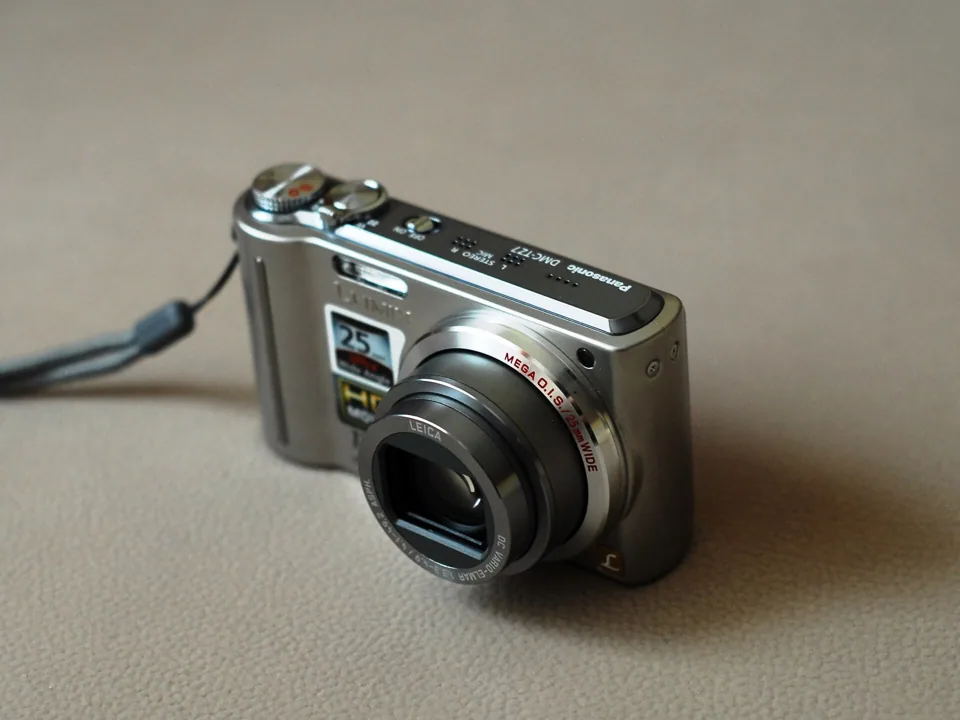
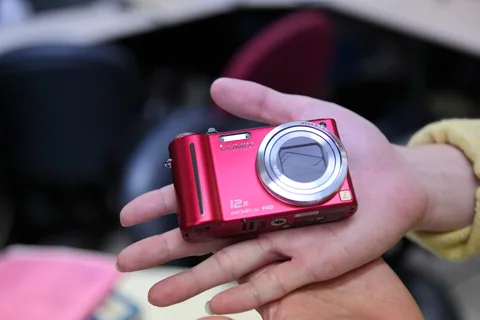
It is a chunky pocket camera with a metal body: PhotographyBLOG measured it at about 103 by 60 by 33 millimetres and 229 grams with battery and card,1 and Cameralabs said the body feels confidently solid, with no creaks or poor joins, though still chunky for a pocket camera.6 Its front carries a 12x zoom branded Leica DC Vario-Elmar, which runs from 25 to 300 millimetres on a 35 mm camera.1
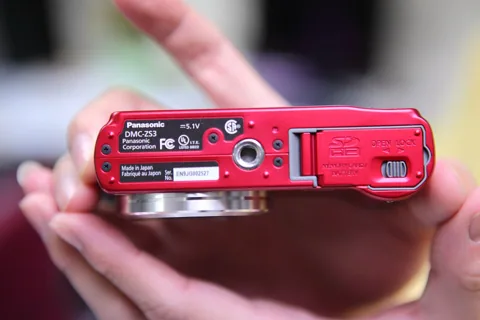
It had two names. Panasonic sold it as the Lumix DMC-ZS3 in the United States and the DMC-TZ7 in Europe.12 Imaging Resource's specification table lists availability from 15 April 2009 at an MSRP of $399.95;3 PhotographyBLOG gave £349 and $399, slightly higher than the TZ5's launch price,1 and Expert Reviews tested it at £280 in June.4
- Size
- 103 × 60 × 33 mm, 229 g with battery and card1
Why this one was interesting
A wider, longer lens
The TZ5 before it started at 28 millimetres; the new camera started at 25, and reached 300, which PhotographyBLOG listed first among its changes.1 Cameralabs thought the Panasonic's wider coverage more useful for most people than the 28–336 mm range of Canon's 12x PowerShot SX200 IS.6
HD video, and a button for it
New were AVCHD Lite and Motion JPEG video at 1280 by 720, a dedicated movie button, stereo microphones and a wind cut filter, all listed by PhotographyBLOG.1 Expert Reviews rated video and sound quality well above average and the zoom, autofocus and exposure during filming remarkably smooth and reliable.4
A bigger screen
The screen grew from 2.7 to 3 inches with double the dots, Expert Reviews noted, giving a sharper image and better colour at oblique angles.4 Cameralabs compared it with the cheaper TZ6 / ZS1, which had the same body and zoom but a 2.7-inch, 230,000-dot screen and no HD video or HDMI.6
Earlier in this line, our Lumix DMC-TZ3 had a 10x lens at 28 mm; the enthusiast alternative was the Lumix DMC-LX3.
What was lost
PhotographyBLOG found the E.Zoom button and Dual Play gone, burst shooting slower than the TZ5's and a smoother hand grip it considered a step backwards.1 Cameralabs agreed the right-hand grip had become less secure, and added that the TZ5's high-angle screen and dual thumbnail playback were gone.6 There is no viewfinder.12
The dark: its weak point
Three reviewers measured or described noise and agreed on the broad shape and differed on where it began. PhotographyBLOG found noise-free pictures at ISO 100 and 200, a good ISO 400 with slight loss of saturation, and obvious noise and softened detail by ISO 800.1 Imaging Resource saw luminance noise from ISO 400, weak results at 800 and a mess at 1600, though chroma noise was well controlled.2 Photo Review called noise negligible at ISO 80 to 200, visible from 400 and quite visible by 800.5 Imaging Resource's print guide: ISO 80 to 200 good at 13 by 19 inches, 400 at 11 by 14, 800 at 8 by 10, and 1600 usable at 5 by 7.2




Real photographs taken with this camera (sold in Europe as the TZ7). The sensitivity shown is recorded in each file's own EXIF data.
Like that look? See recent eBay sold listings for this camera ↗
On eBay right now
Live listings for this camera, supplied by eBay and updated automatically. We earn a commission if you buy through them.
The little wins
The stabiliser
Imaging Resource found the optical stabiliser very effective,2 PhotographyBLOG said it made a noticeable difference to handheld shots, especially at the telephoto end,1 and Cameralabs rated it good for at least three stops.6


How it drew the picture
PhotographyBLOG scored image quality 4.5 out of 5 and called out-of-camera files a little soft at the default sharpening, with chromatic aberration dealt with extremely well.1 Imaging Resource found moderate chromatic aberration at wide angle and softness in the lower corners, with fairly sharp centre detail at the long end.2 Photo Review called resolution marginally below expectations, with edge softening, and saw no coloured fringing in contrasty outdoor shots.5


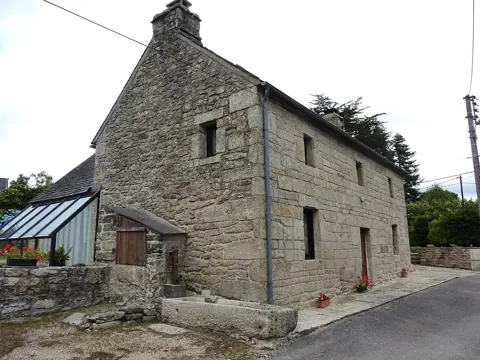













Photos taken with this camera, from Wikimedia Commons, credited under each picture.
Where it let you down
Three reviewers complained that the mode dial was loose enough to change by accident.215 There are no manual or semi-automatic exposure modes and no raw files.265 Imaging Resource found the flash low-powered and automatic white balance slightly warm, and Photo Review found it did not fully remove incandescent or fluorescent colour casts.25 Video clips were capped at 15 minutes (and 2 GB), and Photo Review and Cameralabs found autofocus slow or hunting while zooming in movie mode.456 Imaging Resource measured a shutter lag of 0.67 seconds at wide angle with full autofocus, 0.13 seconds prefocused, and a flash recycle of 5.8 seconds.2
What the reviewers said in 2009
| Outlet | Date | Verdict |
|---|---|---|
| PhotographyBLOG | 26 Mar 2009 | Design 4.5, features 5, ease of use 5, image quality 4.5, value 4.5 out of 5. The best travel zoom yet, easy to recommend.1 |
| Imaging Resource | 21 Apr 2009 | 4.5 out of 5 and a Dave's Pick: a great companion for trips; held back by the loose dial and no manual modes.2 |
| Expert Reviews | 23 Jun 2009 | Mostly the TZ6 with upgrades; the better screen and video mode justify the extra cost for those who can afford it.4 |
| Photo Review | Undated | 8.5 out of 10 overall (image quality 9 for stills): easy to use and feature-rich; no raw, no manual modes.5 |
| Cameralabs | Page dated 2 Jun 2010 | Wide, long zoom, strong stabilisation and solid build; no manual exposure; autofocus hunts while zooming in video.6 |
The timeline
- 26 March 2009PhotographyBLOG publishes its review.1
- 15 April 2009Imaging Resource lists it as available, at $399.95.3
- 21 April 2009Imaging Resource publishes its express review.2
- 23 June 2009Expert Reviews publishes its review.4
Should you buy one now?
Buy one if you want a pocketable CCD zoom with a real wide angle and a good stabiliser for daylight travel pictures, and you can live without manual control. It launched at $399.95;3 what it sells for now is a question for the sold listings, not for us. Before you bid, check these:
- The name. It is the DMC-ZS3 in the US and the DMC-TZ7 in Europe, so search both.12
- The battery. It uses a DMW-BCG10;2 a fresh one is on Amazon ↗.
- The card. It takes SD and SDHC cards;3 see our memory card guide.
- The mode dial. Reviewers found it loose, so check that it stays where you put it.215
- The lens. Check that it extends and retracts cleanly.
If you are wondering why cameras like this are being hunted down again, we tell that story once, in Pictures that never left the card.
See recent sold prices on eBay ↗Shop on eBay ↗DMW-BCG10 battery ↗
Sources
- PhotographyBLOG, Panasonic Lumix DMC-TZ7 review by Mark Goldstein (26 Mar 2009)
- Imaging Resource, Panasonic DMC-ZS3 express review by Shawn Barnett (21 Apr 2009)
- Imaging Resource, Panasonic DMC-ZS3 specification table (CCD, availability 15 Apr 2009, MSRP $399.95)
- Expert Reviews, Panasonic Lumix DMC-TZ7 review by Ben Pitt (23 Jun 2009)
- Photo Review (Australia), Panasonic Lumix DMC-TZ7 review (undated page)
- Cameralabs, Panasonic Lumix DMC-TZ7 / ZS3 review by Gordon Laing (page dated 2 Jun 2010)
Camera photos by Przemysław Jahr (public domain) and Alan Sung (CC BY 2.0); other photographs are credited under each one, all via Wikimedia Commons. Links to eBay and Amazon are affiliate links.