Fujifilm FinePix F · announced February 2003
The Fujifilm FinePix F700: the first Super CCD SR camera, and the argument over what its second photodiodes did
We found no other regional name. Fujifilm's UK release and PhotographyBLOG add "Zoom" to the title, which reads as a descriptive tag rather than a different model.95
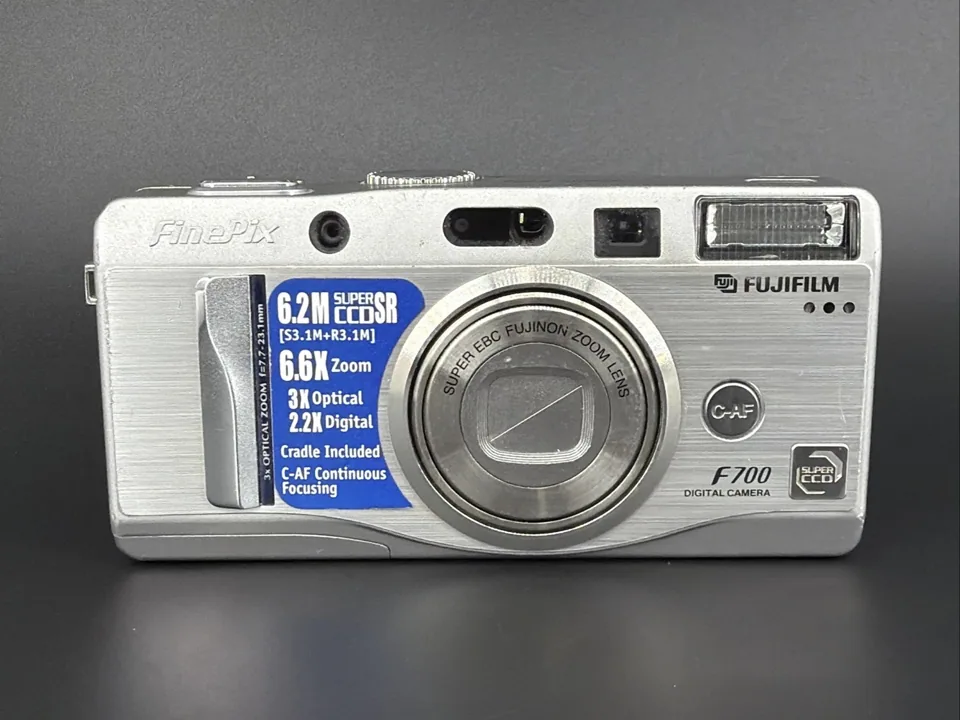
In February 2003 Fujifilm announced a pocket camera whose sensor paired each normal photodiode with a smaller one meant to rescue highlights. Imaging Resource found a tonal range that led the field. DPReview, PhotographyBLOG and Tek.no looked at the same promise and saw little of it.
- Launched
- February 2003
- Sensor
- CCD
- Lens
- 35–105 mm, 3×
- Card
- xD-Picture Card
- Battery
- NP-40
Fujifilm FinePix F700 specs: sensor, lens, battery, memory card and cable
The Fujifilm FinePix F700 came out in February 2003 as a CCD compact with a 35–105 mm (35 mm equivalent) 3× zoom lens. It uses xD-Picture Card and runs on the NP-40 battery. Sources
- Sensor
- CCD, 1/1.7" source
- Lens
- 35–105 mm equivalent, 3× zoom source
- Memory card
- xD-Picture Card source
- Battery
- NP-40 source
- USB / A/V cable
- See our Fujifilm cable page
Meet the camera
Fujifilm's US arm announced the F700 in mid-February 2003 at a suggested price of $599.95 and with US sales planned for April. Imaging Resource called it the first camera to use Super CCD SR.213 The chip measured 1/1.7 inch and carried 3.1 million effective large "S" photodiodes for resolution and 3.1 million effective smaller "R" photodiodes for highlights. Fujifilm added the two and called it a 6.2-megapixel camera, and the largest picture it saved, 2832 by 2128 pixels, was interpolated up from the 3.1 million.14 DPReview's specification table counts it the other way: 3.1 million effective pixels and 6.2 million photodiodes in all.4 Fujifilm's senior marketing manager said the large and small pixels together gave four times the dynamic range of earlier Super CCDs.2
The April plan did not hold. DPReview said the F700 was delayed twice, first in April to "summer" and then at the end of June to October,4 Tek.no's February news already expected it only in September or October,8 and Tek.no's November review said it reached the market only in late autumn.6 PhotographyBLOG's conclusion mentions "constant delays throughout 2003".5 Imaging Resource's data sheet still lists an availability date of 30 April 2003, which we read as the planned date, not the shipping date.7
Why this one was interesting
A second photodiode, for the bright parts
DPReview explained the idea: each photosite had one large photodiode that caught most of the tonal range, and a much smaller, less sensitive one that recorded highlight detail, with the information from the two combined.4 Fujifilm's slides, which DPReview reproduced, said the design was meant to copy negative film and put the smaller diode's dynamic range at four times the larger one's.4
A fast camera
Imaging Resource measured a shutter delay of 0.55 to 0.61 seconds with autofocus, 0.121 seconds when prefocused and a cycle time of about one second, and called it one of the fastest consumer cameras it had tested.3 Tek.no timed 2.28 seconds from switch-on to first picture, the quickest in its comparison table, and autofocus at 0.45 seconds wide and 0.48 at tele.6
Controls for people who wanted them
The mode dial offered program, shutter-priority, aperture-priority and manual exposure, and the F700 could save a 12.6 megabyte CCD-RAW file.14 Tek.no singled out the program shift, which it said is usually found only on advanced SLRs.6 Fujifilm kept SR for the F710 a year later,9 but the later compacts we have reviewed moved to other sensors: our F10, F11 and F30 reviews cover the Super CCD HR line, and the F200EXR review covers the later EXR design, which also worked with pairs of pixels in its own way.
What it cost
All four reviewers flagged the price. PhotographyBLOG said the innovations on paper justified a higher-than-average price, but none was fully realised.5 Imaging Resource called it about the only strike against the camera and wished it were about $100 lower.3 DPReview said that around $500 there were cameras with more effective pixels and comparable dynamic range.4 Tek.no called it the most expensive three-megapixel camera on the market, with xD cards that cost considerably more than CompactFlash, and by February 2004 wrote that it had fallen sharply in price.69
The dark: how far it could go
Imaging Resource's night test found bright, usable pictures down to about 0.67 lux at ISO 800 and 1600, 1.3 lux at ISO 400 and 2.7 lux at ISO 200, with the colour turning warm as the light fell, and judged noise under control at ISO 200 and 400 but high at 800 and 1600.3 DPReview and Tek.no described a camera that hides noise by softening. DPReview found that it lowers its sharpening as ISO rises, so measured noise fell while detail blurred, and Tek.no found flat areas clean at the cost of sharpness, with ISO 800 usable for small prints.46
Framing and focus were weaker. DPReview said the live view was poor in low light because the camera had no auto-gain, and that the green autofocus assist lamp sat offset and did little.4 Tek.no found the screen nearly useless at tele by about 40 lux, and noted that in auto mode the longest shutter time is a quarter of a second with no warning, so night pictures need aperture priority.6






Real photographs taken with this camera at its ISO 800 setting. The sensitivity shown is recorded in each file's own EXIF data. None of the free photos we checked was recorded above ISO 800, and the ISO 800 ones we found are daylight scenes, so we cannot show the night results the reviewers describe. The pictures may have been resized and edited by their authors.
Like that look? See recent eBay sold listings for this camera ↗
On eBay right now
Live listings for this camera, supplied by eBay and updated automatically. We earn a commission if you buy through them.
The little wins
Highlights, a little
Imaging Resource said the F700 held more highlight detail in harsh light than any camera it had tested. Tek.no found it preserved highlights slightly better than rivals, though too little to notice in most pictures.36
Proper video
Tek.no called the 640 by 480, 30 frames per second movie mode among the best on the market, though it defaults to 320 by 240.6
How it drew the picture
The reviewers did not agree on the pictures. Imaging Resource found pleasing, accurate colour, good skin tones and a sharp lens, with chromatic aberration very low.3 DPReview found metering, tone and colour very good, but the tone curve too contrasty, shadow detail that did not reach as far as the FinePix S5000's, and sharpening harsh, with only a very faint purple halo in one or two everyday shots.4 Tek.no called the colour warm, with reds and greens not neutral and the pictures a little flat, and found strong colour fringing around lights in dark scenes.6 PhotographyBLOG saw purple and green fringes in quite a few of its sample photographs and concluded the pictures were on a par with other three-megapixel cameras.5
Resolution split the same way. Imaging Resource put apparent resolution between 3.1 and 6.2 megapixels.3 DPReview said it beat a normal three-megapixel CCD but not a five-megapixel one, and advised shooting at the 6 MP size, while Tek.no found little or no benefit from that setting on normal subjects.46






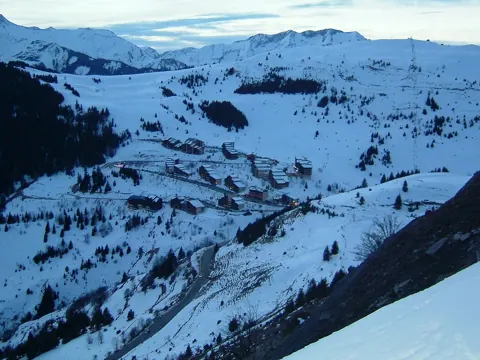



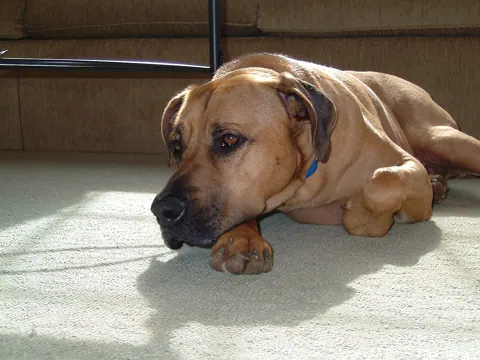





Photos taken with this camera (the ninth is the one at the top), from Wikimedia Commons, credited under each picture. The camera model in each file's EXIF data is the F700.
Where it let you down
PhotographyBLOG found the scene modes printed on the mode dial but reachable only through the LCD menu, and no way to turn digital zoom off.5 Tek.no found the default picture size was one megapixel, the RAW option hidden in the setup menu and the mode dial easy to turn in a pocket.6 Autofocus was fast but, Tek.no said, inaccurate near its close limits, confirming focus from 35 centimetres on a camera rated at 60.6 Imaging Resource and Tek.no both disliked the uncovered USB, AV and power sockets.36 DPReview disliked the macro mode locking the lens to wide angle, which brought noticeable barrel distortion.4
What the reviewers said in 2003
| Outlet | Date | Verdict |
|---|---|---|
| DPReview | 17 Sep 2003 | Out of 10: construction 9, features 8, image quality 7, lens and CCD 8, ease of use 8, value 7. It "doesn't deliver on its technical promise".4 |
| Imaging Resource | Undated page | Highly recommended and a Dave's Pick: a tonal range that led the field, excellent colour, a sharp lens, fast; "I wish it were priced a hundred dollars or so lower".3 |
| Tek.no | 19 Nov 2003 | No score in the text we read. Buyers expecting six megapixels and four times the dynamic range will be disappointed; if price is no object, one of the most exciting pocket cameras, and a good second camera for a professional who usually shoots an SLR.6 |
| PhotographyBLOG | 16 Dec 2003 | No star score given here: the score is an image whose alt text (4 stars) and file name (3.5) disagree. A well-designed, easy-to-use camera that is "not as good as Fujifilm promised"; fine for prints up to A4.5 |
On dynamic range DPReview found a little extra in side-by-side tests and PhotographyBLOG could not pick the F700's pictures out as having the most.45 The yardsticks differ: Imaging Resource compared the F700 with the other digicams it had tested, while PhotographyBLOG, which had only the F700 to hand, compared its pictures with shots of similar subjects from three other cameras.35
The timeline
- 18–19 February 2003Fujifilm USA announces the F700 at $599.95, with US sales planned for April.21 Tek.no's news page lists NOK 6,495 and says the camera, heavily delayed, is expected in September or October.8
- 17 September 2003DPReview publishes its review of a production unit.4
- 19 November 2003Tek.no publishes its review, saying the camera reached shops only that autumn.6
- 19 February 2004Tek.no reports Fujifilm's announcement of the F710 Zoom, also built on Super CCD SR, with a 4x lens and a widescreen screen; Fujifilm's UK release says the F700 stays on sale alongside it.9
Should you buy one now?
Buy one if you want a fast, metal-bodied 2003 compact with real exposure controls and a historical curiosity inside, and you can live with an interpolated "6 MP" that three of the four reviewers compared with three-megapixel cameras.465 It launched at $599.95;1 what it sells for now is a question for the sold listings, not for us. Before you bid, check these:
- The name. Make sure it is the F700, not the F710, which has a 4x lens and a 2.1-inch screen.9
- The kit. It shipped with a PictureCradle, AC adapter and USB and AV cables, and Tek.no said replacement video cables come only from Fujifilm.36 For cable questions, see our Fujifilm cable guide.
- The battery. It uses an NP-40;17 a fresh one is on Amazon ↗. Imaging Resource advised buying a spare.3
- The card. It takes xD-Picture Cards only, and Fujifilm's 2003 specification lists 16 to 256 MB; we found no maker statement about bigger cards.15 See our xD-Picture Card guide.
- The settings, ports and lens. The default size is 1 MP, so set the quality yourself;6 the side sockets are uncovered, so look for damage;3 and check that the lens extends cleanly.
If you are wondering why cameras like this are being hunted down again, we tell that story once, in Pictures that never left the card.
See recent sold prices on eBay ↗Shop on eBay ↗NP-40 battery ↗
Sources
- Imaging Resource, Fuji's first SuperCCD SR digital camera announced, by Mike Tomkins (19 Feb 2003; reprints Fujifilm's specification list, US price and April 2003 sales plan)
- Macworld, Fuji introduces new digital cameras by Dennis Sellers (18 Feb 2003; Fuji USA release: $599.95 suggested list price, available that spring)
- Imaging Resource, Fuji FinePix F700 review (undated page, written in 2003; lab-style tests; Highly recommended and a Dave's Pick)
- DPReview, Fujifilm FinePix F700 review by Phil Askey (17 Sep 2003; ratings out of 10, specification table with US and UK prices)
- PhotographyBLOG, Fujifilm Finepix F700 Zoom review (16 Dec 2003; all seven pages read, pages 3 and 6 are pictures only; the star score is an image whose alt text says 4 stars and whose file name says 3.5, so we give none)
- Tek.no, Test av Fujifilm FinePix F700 by Martin Lexow Wirak (19 Nov 2003; in Norwegian; measured timing, battery and noise tests)
- Imaging Resource, Fuji FinePix F700 data sheet (retail price $599.00, date available 30 Apr 2003, NP-40 battery, notes on the SR sensor)
- Tek.no, Fujifilm Finepix F700 annonseres (19 Feb 2003; Norwegian news with Fujifilm's press release; Norwegian price NOK 6,495, expected September or October)
- Tek.no, Fujifilm Finepix F710 annonsert (19 Feb 2004; includes Fujifilm's UK press release for the F710 Zoom as the F700 Zoom's partner)
Photographs are credited under each one, all via Wikimedia Commons. Links to eBay and Amazon are affiliate links.