Canon PowerShot A · on sale autumn 2005
The Canon PowerShot A620: the four-AA flagship with a screen that twists, and why its sources disagree about the batteries
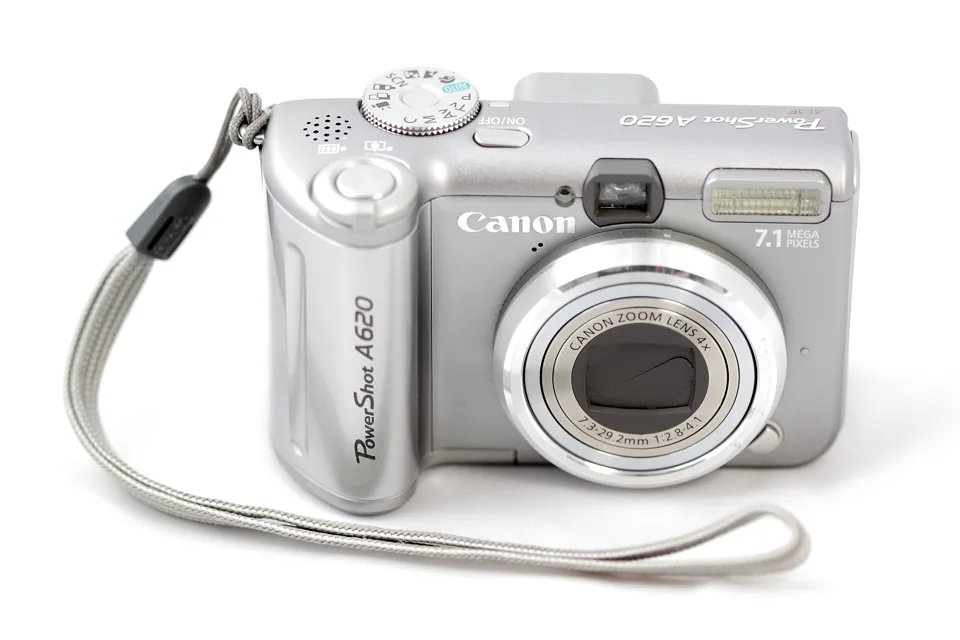
In 2005 Canon's top A-series compact put a 7.1-megapixel CCD, an f/2.8 lens, full manual control and a 2-inch screen that turns in every direction into one body, and fed it with four AA cells. Four contemporary reviewers liked it. Their sources do not agree on how many batteries came in the box.
- Launched
- October 2005
- Sensor
- 7.1 MP CCD
- Lens
- 35–140 mm, 4×
- Card
- SD, MultiMediaCard
- Battery
- AA
Canon PowerShot A620 specs: sensor, lens, battery, memory card and cable
Launched in October 2005 at US$399.99, the Canon PowerShot A620 is a 7.1 MP CCD compact with a 35–140 mm (35 mm equivalent) 4× zoom lens. Inside: it uses SD and MultiMediaCard and runs on AA batteries. Sources
- Sensor
- CCD, 1/1.8", 7.1 MP source
- Lens
- 35–140 mm equivalent, 4× zoom source
- Memory card
- SD, MultiMediaCard source
- Battery
- AA source
- USB / A/V cable
- IFC-400PCU, AVC-DC300 Partly confirmed · all Canon cables
Meet the camera
It is a chunky, silver compact with a deep right-hand grip, and the grip is there for the batteries. Imaging Resource gave its size as 4.1 by 2.6 by 1.9 inches and said the grip makes it too big for anything smaller than a coat pocket or a small bag; it weighed 12.4 ounces with four AA cells and a card.5 Canon lists 104.8 by 66.0 by 49.1 millimetres and about 235 grams for the body alone.1 On the front is a 4x lens covering 35 to 140 millimetres on a 35 mm camera, opening to f/2.8 at the wide end and f/4.1 at full zoom.1
It had one name everywhere: Canon's museum lists the PowerShot A620 for Japan, the Americas and Europe alike.1 Canon U.S.A. announced it on 22 August 2005 with the 5-megapixel A610, for shipping in September at estimated prices of $399.99 and $299.99,2 and PhotographyBLOG carried Canon UK's release on 23 August with £319 and €479 for the A620.3 Canon's museum dates the marketing to October 2005 and describes the A620 as the flagship of the A series, replacing the A95 of September 2004 and the first A-series camera with a 7.1-megapixel CCD.1
Why this one was interesting
A real jump over the A95
Canon's museum lists the changes: a zoom boosted from 3x to 4x, a screen enlarged from 1.8 to 2.0 inches, the DIGIC II processor with shorter start-up times, and autofocus response cut by 60 per cent against earlier models.1 DPReview wrote that the A620 beat its predecessor in nearly every aspect of performance, mostly by a very wide margin.4 DPReview added that the A620 completed Canon's move to SD and MultiMediaCard storage for its compacts; the A95 had used CompactFlash.4
A screen you could point anywhere
Canon says the screen turns through 180 degrees horizontally and 270 degrees vertically.1 Imaging Resource described holding the camera overhead to shoot over a crowd, or at waist level for shy subjects, and found the hinge beefy, on the left edge like the G6's.5 TechRadar called the screen mechanism faultless.10
Manual control, in a camera for families
The dial offers program, shutter-priority, aperture-priority, manual and a custom position.1 Imaging Resource said it suited a family with widely differing photographic skills.5 For older AA-powered Canons with four cells, see our PowerShot A80 and A70; Canon's museum says the PowerShot A640 succeeded the A620,9 and the smaller PowerShot A700 took two AA cells. This is a CCD camera: see our glossary entry on CCD sensors.
What was lost
Very little, and the sources hint at the cost of the extra size rather than a missing feature. DPReview said the A620 was only a few millimetres larger than the A95 and considerably larger than the A510 and A520.4 Imaging Resource called it a little bulky next to earlier models and noted that the higher end of the A series seemed to get larger with each generation.5 Its 5-megapixel twin, the A610, shared the lens and screen,3 and Imaging Resource put it about $100 cheaper; Canon's estimated prices were $299.99 against $399.99.52
The dark: where it was strong and where it was not
On noise, the reviewers agreed on the order and differed on the verdict at the top. Imaging Resource found noise low at ISO 50 and 100, moderately high at 200 and worse at 400, yet said 8 by 10 inch prints made from ISO 400 shots were quite acceptable.5 PhotographyBLOG saw virtually no noise at ISO 50 and 100, called ISO 200 very clean and saw noise at ISO 400 but called it perfectly usable.6 DPReview's graphs put it almost level with the Canon SD550 (Ixus 750), which it said shares the sensor and processor.4
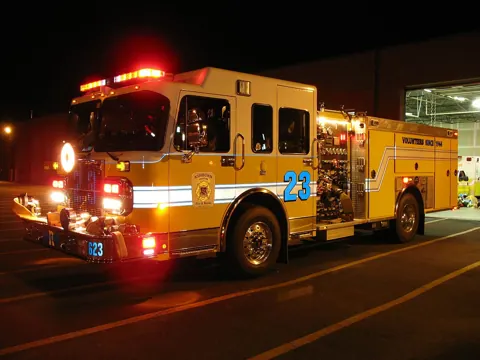
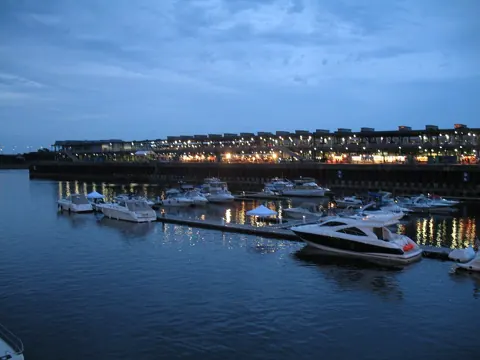
In real darkness, Imaging Resource's low-light chart gave bright, usable pictures at every ISO but 50 at its dimmest level of 0.67 lux, helped by the autofocus assist lamp. Without the lamp, focus held down to a little above 1/4 foot-candle. The longest exposure is 15 seconds, so it wanted a tripod.5 TechRadar was disappointed by its low-light pictures, though it suspected the smoky skittle alley was more to blame than the camera, and said the scene modes, especially Night, beat Auto.10 It found the red-eye reduction fairly ineffective,10 where PhotographyBLOG's flash shots showed no red-eye at all.6 None of the pictures below records its ISO in the Commons file data, so we can say only that they are a night scene and a dusk scene.


On eBay right now
Live listings for this camera, supplied by eBay and updated automatically. We earn a commission if you buy through them.
The little wins
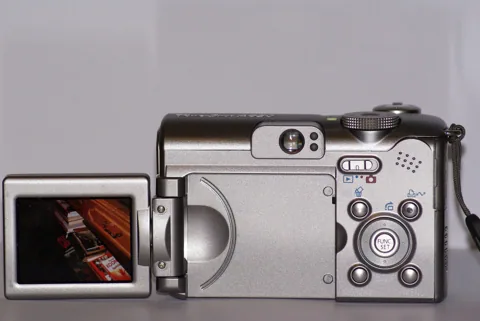 The A620 from the back with the screen swung out, showing a picture. · prawdapunk · CC BY-SA 3.0 · Commons

The screen
DPReview called it bright and clear, quick to brighten when the light drops and close to 100 per cent accurate, with one complaint: like most screens, it is hard to see in bright daylight.4 It can also be stored face-in against the body.4
Colour games
A My Colors position on the dial offers Color Accent, which keeps one colour and turns the rest to black and white, and Color Swap. PhotographyBLOG said that as far as it knew Canon was the only maker offering such effects inside the camera.6
Macro
The wide-angle macro focuses from 1 centimetre.1 DPReview measured a field of about 21 by 16 millimetres and called the 1 centimetre minimum distance very impressive;4 Imaging Resource measured 24 by 18 millimetres and warned that the flash cannot cover the frame at that range.5
Four AA cells
TechRadar noted that some people like the flexibility of AA cells, and called the power consumption very, very impressive;10 Imaging Resource called the battery life excellent.5 The table below gives each source's figures.
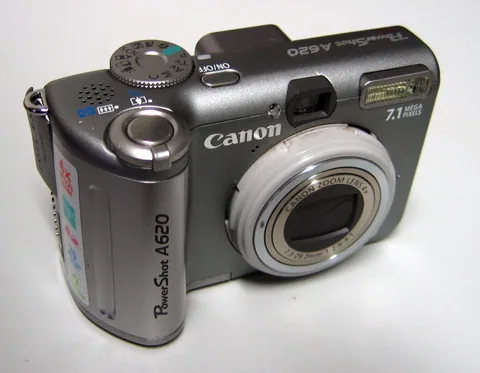 The A620 from the front, with the ring around the lens. · Ralf Roletschek · CC BY-SA 3.0 · Commons

Add-on lenses
A button on the front releases the ring around the lens so that converters can fit. Imaging Resource listed a 0.7x wide converter at $199, a 1.75x tele converter at $149 and a $25 adapter, and said the tele converter would stretch the lens to a 35 mm equivalent of 275 millimetres.5 TechRadar put the converters at around £70.10
How it drew the picture
Imaging Resource found very good colour and hue accuracy, with slight oversaturation in strong reds and blues and a small lift to skin tones, and found 13 by 19 inch prints slightly soft but acceptable for a wall, and 8 by 10 inch prints very sharp.5 PhotographyBLOG called the pictures excellent but a little soft, and DPReview agreed they are a touch soft at 100 per cent; it found purple fringing all but eliminated and wrote that only one or two shots in 500 missed focus.64 Imaging Resource measured strong detail to about 1,400 lines horizontally,5 and DPReview put it up with the best of the 7-megapixel compacts.4 Wide-angle barrel distortion was measured twice, with two answers: 1.1 per cent at DPReview and 0.7 at Imaging Resource.45
The weak spot was contrast. DPReview described harshly clipped highlights from slight overexposure in contrasty scenes combined with a fairly steep tone curve, and listed it as the main fault.4 Imaging Resource saw the same trade, a somewhat contrasty curve that lost highlight detail under harsh light but kept surprisingly good shadow detail.5 Auto white balance was excellent outdoors and under fluorescent light in DPReview's test, and poor under incandescent bulbs, with red 9.5 per cent high and blue 15.3 per cent low.4 Imaging Resource called its tungsten results above average, if a little warm.5






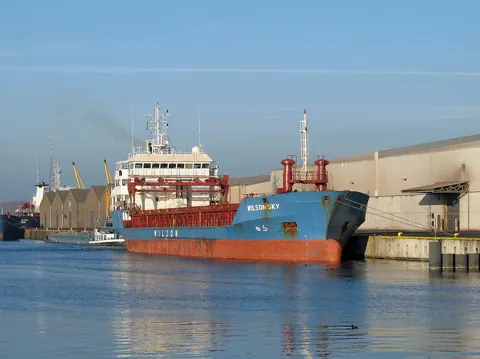

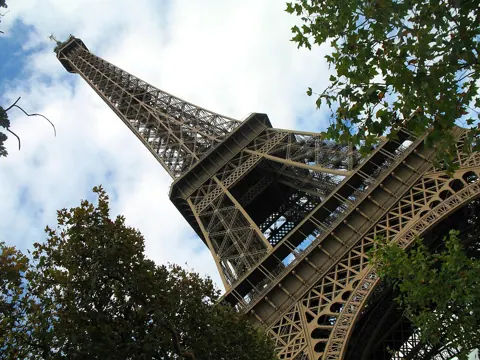



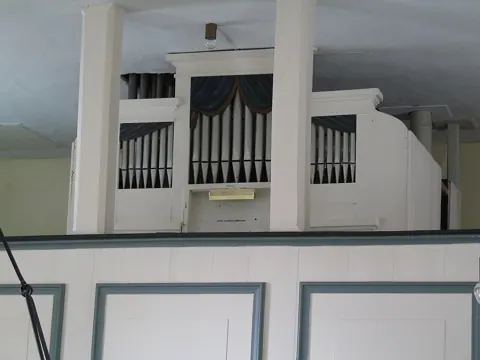

Photos taken with this camera, from Wikimedia Commons, credited under each picture. Eight of the nine carry a date on Commons, from 2006 to 2022; the nine come from eight different photographers.
Speed
Imaging Resource clocked 1.3 seconds from power-on to first shot and 0.51 seconds of autofocus lag at wide angle, 0.72 at telephoto. Its burst ran at 1.99 frames a second without pausing, but only with a fast card (a 133x Kingston SD).5 DPReview averaged about 2.1, a little over Canon's 1.9.4
Where it let you down
The optical viewfinder drew the sharpest criticism. Imaging Resource found it showing only about 78 per cent of the frame at wide angle and 80 at telephoto, skewed toward the upper left, and called it one of the A620's worst shortcomings; the screen showed close to 100 per cent.5 DPReview found no dedicated ISO button, with ISO, white balance and drive mode all in the FUNC menu, and a jumpy zoom with only seven steps across the range.4 PhotographyBLOG shared the ISO complaint and said the A620 was too big for a trouser pocket,6 and DPReview listed focus hunting at the tele end in low light.4 Canon lists JPEG for stills, and PhotographyBLOG noted that there is no raw or TIFF format.17 Imaging Resource found the card door's small plastic tabs breakable if you are careless.5
Where the sources disagree
The body. DPReview said the front and top are lightweight metal and the rear and grip plastic.4 PhotographyBLOG called it a silver plastic body, well built, and said it is smooth all-plastic.6 Imaging Resource used both descriptions: encased in a plastic shell in one place, and metal-jacketed but a bit tinny-feeling in its list of cons.5 A smaller one: PhotographyBLOG's ease-of-use page mentions a 2.5-inch screen, while its own spec page and Canon list 2.0 inches.681
Batteries, exactly as each source says
This is the part the sources get tangled over, so here is each one. The count is four AA cells in every source that gives one; what came in the box, and how many shots you get, is another matter.
| Source | What it says about the batteries |
|---|---|
| Canon museum | Power source: AA-size alkaline batteries (included in camera kit); NiMH NB4-200 and the ACK600 adapter sold separately. It states no count and no shot figure, only that power use fell so that the camera could take 2.5 times as many images as the A95 between charges.1 |
| Canon U.S.A. release, Aug 2005 | Four AA batteries; up to 500 shots with the LCD on, by CIPA standards, using rechargeable NiMH. The kit's supplied accessories include four AA-size alkaline batteries and, for the A620, a 32 MB MultiMediaCard.2 |
| PhotographyBLOG (specification table, Canon's figures) | 4x AA alkaline or NiMH (NB4-200), alkalines supplied; about 350 shots on the supplied batteries and about 500 on optional NB-2AH cells.8 Its features page repeats the 350 and lists the box as holding 4 AA-type alkaline batteries (it calls them rechargeable, which alkalines are not) and a 32 MB SD card.7 |
| DPReview | Four AA; NiMH are not supplied in the box (its spec table says NiMH recommended, alkaline supplied, and its in-the-box list reads 2x AA alkaline batteries, with a note that supplied accessories differ by country). Canon quotes 500 shots on NiMH with the LCD on and up to 1,500 with the LCD off and the viewfinder in use; DPReview said its experience bore this out.4 |
| Imaging Resource | Power supplied by four AA batteries, and ordinary alkalines are included; its in-the-box list, though, reads two AA-type alkaline batteries and a 32 MB SD card. Run times it calculated for 1,600 mAh NiMH cells: 303 minutes with the LCD on, 29 hours with it off, 8.1 hours of playback. It said the camera probably could run on alkaline cells and still recommended NiMH.5 |
| TechRadar | Four AA; it did not name the cell type but said the batteries only started to lag after a few hundred shots. It was not a fan of AA cells, which it said make the camera weighty.10 |
Our reading: four cells is solid, since five sources give that count. The box is not settled. Canon U.S.A. and PhotographyBLOG say four alkaline cells came with it,27 while DPReview and Imaging Resource each list two in their in-the-box lists;45 DPReview warns that supplied accessories differ by country, so the number may have depended on where the camera was sold. We cannot tell which applies to a used camera. Canon's own figures are 350 shots on the supplied alkalines and 500 on NiMH, the 500 appearing in three places.284 We have not tested a unit, so we cannot tell you what a fresh set of alkalines gives today.
What the reviewers said in 2005 and 2006
| Outlet | Date | Verdict |
|---|---|---|
| DPReview | 28 Nov 2005 | One of the rare cameras that handles almost any situation, held back only by highlight clipping; very little suggests a budget model, a much better sensor than the A95's and excellent value, with a street price listed at US$368 and £240.4 |
| Imaging Resource | 30 Nov 2005 | A Dave's Pick: an excellent all-round camera, with surprisingly good pictures even at ISO 400.5 |
| PhotographyBLOG | 11 Jan 2006 | Another winner from Canon, a great all-round camera and a more than worthy successor to the A95; value of just over £200 or $300. Highly recommended.6 |
| TechRadar | 30 Apr 2006 | An awful lot of camera for a bearable outlay; faulted because image processing is not always great, and for the AA batteries.10 |
The timeline
- 22 August 2005Canon U.S.A. announces the A620 and A610; estimated price $399.99 for the A620.2
- 23 August 2005PhotographyBLOG carries Canon UK's release: £319, €479, from September.3
- September and October 2005Canon U.S.A. said September; Canon's museum says October 2005, and Imaging Resource's review lists availability as October 2005.215
- 28 and 30 November 2005DPReview and Imaging Resource publish their reviews.45
- 11 January 2006PhotographyBLOG publishes its review, with the camera at about £200 or $300.6
- 30 April 2006TechRadar publishes its review.10
Should you buy one now?
Buy one if you want a CCD compact with real manual control, a screen that points anywhere and batteries you can buy at any shop, and you will mostly shoot in daylight. It launched at an estimated US$399.99;2 what it sells for now is a question for the sold listings, not for us. We have not tested a unit yet. Before you bid, check these:
- The name. It is the PowerShot A620 everywhere; do not confuse it with the 5-megapixel A610 or the later A640.12
- The batteries. It takes four AA cells, and NiMH rechargeables do better than alkaline: Canon's figure is 500 shots against 350.8 Some sources list only two alkaline cells in the box, so a used camera may have come with fewer than four.45 Rechargeables on Amazon ↗.
- The card. It takes SD and MultiMediaCard; Canon says it tested cards through 2 GB and cannot guarantee all functions with others.1 See our memory card guide.
- The screen hinge. Swing it out, twist it and fold it back. Reviewers praised the mechanism when new; we found no source on how it ages, so test it.105
- The lens ring. Check that the lens runs out and back cleanly, and that the ring around it is present if you want converters.5
If you are wondering why cameras like this are being hunted down again, we tell that story once, in Pictures that never left the card.
See recent sold prices on eBay ↗Shop on eBay ↗AA rechargeables ↗
Sources
- Canon Camera Museum: PowerShot A620 (specifications; marketed October 2005)
- Canon U.S.A. release of 22 Aug 2005 on the A620, A610 and A410 (four AA batteries, kit contents, estimated prices), reproduced by Imaging Resource
- PhotographyBLOG, Canon PowerShot A620 and A610 announced (23 Aug 2005; carries Canon UK's release, UK and euro prices)
- DPReview, Canon PowerShot A620 review by Simon Joinson (28 Nov 2005)
- Imaging Resource, Canon PowerShot A620 review (review date 30 Nov 2005; it names the A620 a Dave's Pick)
- PhotographyBLOG, Canon PowerShot A620 review (11 Jan 2006; introduction, ease of use, image quality and conclusion pages)
- PhotographyBLOG, Canon PowerShot A620 review, page 2: features (file formats, 350-shot figure, box contents)
- PhotographyBLOG, Canon PowerShot A620 review, page 3: specifications (a table with Canon's battery-life figures)
- Canon Camera Museum: PowerShot A640 (says the A640 and A630 succeed the A620 and A610)
- TechRadar, Canon PowerShot A620 review by Dan Grabham, published 30 April 2006 (originally on tech.co.uk)
Camera photos are credited under each one, all via Wikimedia Commons. Links to eBay and Amazon are affiliate links.