Canon PowerShot A · announced February 2006
The Canon PowerShot A700: the 6x zoom, two-AA CCD compact that Canon put at the top of its cheap range
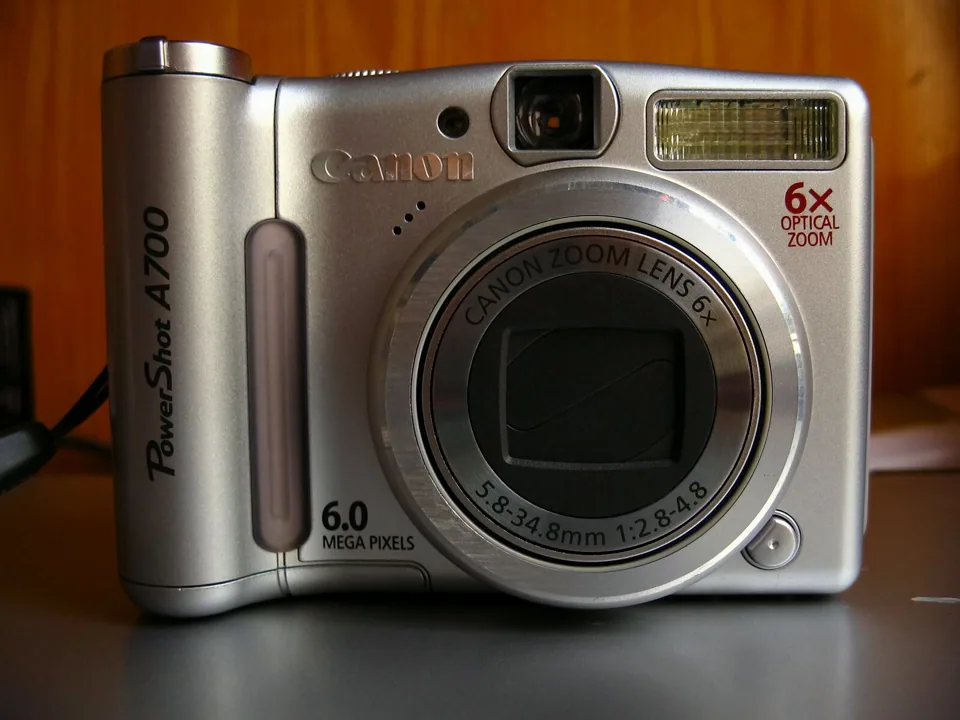

In 2006 Canon gave the budget A series its longest zoom yet, plus an optical viewfinder, real shutter and aperture control and a 2.5-inch screen, in a body fed by two AA cells. DPReview, CNET and Imaging Resource liked it; between them they faulted the missing stabiliser, the slow flash and a noisy ISO 800.
- Launched
- February 2006
- Sensor
- 6 MP CCD
- Lens
- 35–210 mm, 6×
- Card
- SD, MultiMediaCard
- Battery
- AA
Canon PowerShot A700 specs: sensor, lens, battery, memory card and cable
The Canon PowerShot A700 is a 6 MP CCD compact camera with a 35–210 mm (35 mm equivalent) 6× zoom lens, launched in February 2006 at US$349. It uses SD and MultiMediaCard and runs on AA batteries. Sources
- Sensor
- CCD, 1/2.5", 6 MP source
- Lens
- 35–210 mm equivalent, 6× zoom source
- Memory card
- SD, MultiMediaCard source
- Battery
- AA source
- USB / A/V cable
- IFC-400PCU, AVC-DC300 Confirmed · all Canon cables
Meet the camera
It is a small silver camera with a cylindrical grip, and DPReview was struck by the size: remarkably small for a full 6x zoom and considerably less bulky than the A620.4 Imaging Resource found it lighter than the A620, partly because it takes two AA batteries where the A620 takes four.7 On build, DPReview found only the front cased in metal, with a little more plastic than earlier A models, yet still nothing like a toy.4 The lens covers 35 to 210 mm in 35 mm terms and opens from f/2.8 to f/4.8; Canon's UK specification lists nine elements in seven groups.2
It kept one name worldwide: Canon's museum lists it as the PowerShot A700 for Japan, the Americas and Europe alike.1 Canon announced it on 21 February 2006 with the A540, promising shops from March at £289 and €429.99;2 Reviewed.com gave the US price as $349.3 The sources do not agree on when it went on sale: CNET listed a release date of 7 March 2006,5 while Canon's museum says it was marketed in April.1 Canon UK called it the new flagship of the A range.2
- Sensor
- 6.0 MP CCD, 1/2.5", DIGIC II processor2
- Lens
- 6x, 35–210 mm equiv., f/2.8–4.82
- ISO
- 80 to 800, plus Auto and High ISO Auto2
- Screen
- 2.5", about 115,000 pixels, plus an optical viewfinder2
- Video
- 640 × 480 at 30 fps, up to 1 GB per clip2
- Power
- 2 × AA; Canon rates about 100 shots on the supplied alkalines and about 400 on NB-3AH NiMH2
- Card
- SD or MMC; 16 MB card supplied2
Why this one was interesting
A longer lens, and still a viewfinder
Canon's museum calls the 6x zoom the highest in the A series,1 and Imaging Resource described the lens as longer than any earlier A-series model's.7 The viewfinder mattered too. Canon UK described a real-image optical viewfinder as a first for a 6x compact,2 and Imaging Resource noted that the 2.5-inch screen still left room for one, when other makers were dropping them.7 CNET found the small viewfinder useful for framing when bright light washed out the screen.5
Real control for the price
Imaging Resource's Mike Pasini wrote that Canon does not always mean it when it says manual, but on the A700 it does: shutter from 15 to 1/2000 second and aperture from f/2.8 to f/8.7 The same review argued that a PASM dial lets a beginner grow into the camera, which is hard to say of many cameras at its price.7 DPReview also said the A700 has a wealth of features for a budget model, mostly reached through the FUNC menu, and judged the interface well designed and fast.4 CNET said the controls should appeal to enthusiasts and serious beginners.5
ISO 800, and two kinds of Auto
DPReview pointed out the new ISO 800 setting in the FUNC menu, and that High ISO Auto is the Auto that can climb to 800.4 Pasini explained why Canon offered two: normal Auto avoids noisy sensitivities, while High ISO Auto accepts noise to keep the shutter speed up, so the shooter chooses between blur and noise.7 Normal Auto works in Auto, Program, shutter-priority and aperture-priority modes; High ISO Auto only in Auto and Program.7
For two later AA-powered Canons, see our reviews of the PowerShot A640 and the PowerShot A590 IS. The A700 is a CCD camera: see our glossary entry on CCD sensors.
What was lost
DPReview set the A700 against the A620 and A610 above it. The A700 has a bigger 2.5-inch screen but no tilt-and-swivel action,4 the grip is slightly smaller,4 and the Program Shift function of the A620 is missing.4 Imaging Resource missed a live histogram in shooting mode, since the histogram only appears in playback.7 DPReview went so far as to say that if you can live without the tilting screen, it would choose the A700 over the A610 or A620.4
The dark: its weak point
Each outlet found ISO 800 the noisiest setting, and they differed on how much that mattered. DPReview called noise low up to ISO 200, tolerable at 400 for prints up to about 5 by 7 inches before noise reduction, and ISO 800 gritty and useful only to get out of a tight spot.4 CNET said noise was low at ISO 80, noticeably higher at 400, and at 800 images were still usable.5 DCResource's excerpt put it in print terms: large prints are fine through ISO 200, ISO 400 prints well at 4 by 6 inches, and the ISO 800 print showed noticeable grain at that size.6 Imaging Resource's prints ran a size larger: ISO 400 surprisingly clean at 8 by 10, ISO 800 a little rough at 5 by 7 and fine at 4 by 6.7
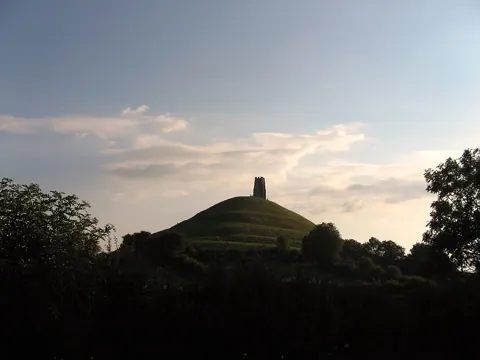
The lab side was kinder. DPReview measured luminance noise at the lower ISOs as lower than the 7-megapixel A620's, and on the low side of average for the class up to ISO 400, putting the jump at ISO 800 down to Canon's decision not to apply heavy noise reduction.4 Imaging Resource called its low-light performance excellent, capable of bright images under average city street lighting and much darker conditions, with a catch: that applied only in shutter-priority or manual mode.7 We found no photo on Commons with a recorded ISO for this model, so the picture below is simply the dimmest scene in our set, a hill at dusk.

On eBay right now
Live listings for this camera, supplied by eBay and updated automatically. We earn a commission if you buy through them.
The little wins
Macro
Canon lists a closest focus of 1 cm.2 Imaging Resource measured the smallest area at 22 by 16.5 mm, warned that the flash does not throttle down well at that distance, and said macro works only at the wide end of the zoom.7 DPReview described it as usable through about the first half of the zoom range.4
The lens
Imaging Resource called its test results a pleasant surprise: much better corner sharpness and chromatic aberration than it normally finds in consumer cameras, with barrel distortion of 0.80 per cent at wide angle and 0.22 per cent pincushion at telephoto, both about average.7 DPReview measured 1.1 and 0.4 per cent and saw very little purple fringing.4
Speed
DPReview described it as fairly snappy thanks to the DIGIC II chip.4 CNET measured 0.4 seconds of autofocus lag in bright light, 1.8 seconds to the first shot and about 2 frames per second in continuous mode with no apparent limit.5 Imaging Resource found shutter response better than average and shot-to-shot time only average.7
Battery life
Canon's CIPA figures are about 400 shots on NB-3AH rechargeables and about 100 on the supplied alkalines.2 DPReview repeated 400 shots and up to 1,000 with the screen off and the viewfinder in use, and said its own experience bore this out.4 Imaging Resource listed the same 100 and 400 CIPA figures, based on 2,500 mAh NiMH cells.7
How it drew the picture
DPReview wrote that image quality left little room for complaint: natural colour, good edge-to-edge sharpness, with the main exception highlight clipping in contrasty scenes.4 It measured about 1,400 lines per picture height horizontally and 1,450 vertically, in the same range as the three other 6-megapixel cameras it compared.4 Imaging Resource saw slightly oversaturated colour, especially reds, and some pink in skin tones, but called the result appealing and reported strong detail to about 1,300 lines.7 CNET said its pictures looked very like those of the cheaper A540, with metering that preserved shadows at the expense of highlights.5


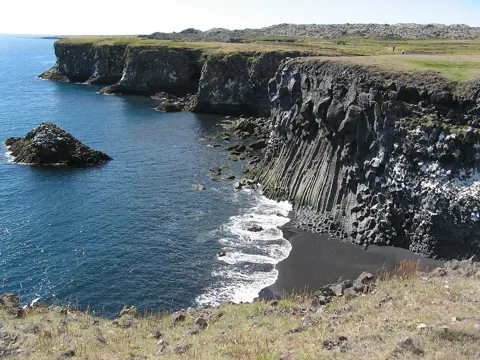









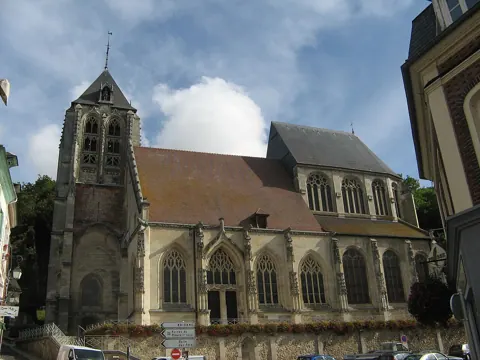

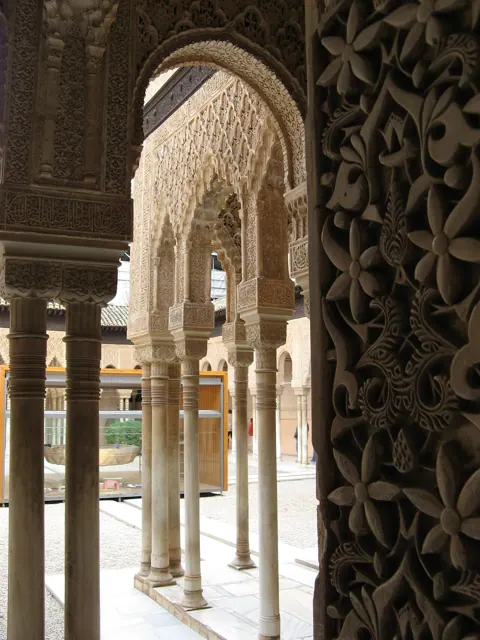

Photos taken with this camera (EXIF model checked), from Wikimedia Commons, credited under each picture.
Where it let you down
With no image stabilisation, DPReview said the long end of the zoom was strictly for bright light when shooting by hand;4 Imaging Resource agreed that as the light fades the lack of stabilisation matters more.7 DPReview also wanted an ISO button and found the zoom jumpy, with 14 steps across the range, a complaint Imaging Resource repeated.47
Flash was the other sore point, and the numbers disagree. DPReview put recycling at 4 to 5 seconds in normal use and 7 to 10 seconds at worst;4 Imaging Resource measured 11.5 seconds after a full-power shot;7 CNET timed 4.9 seconds between shots with flash.5 The optical viewfinder showed about 80 per cent of the frame in DPReview's account and about 77 per cent in Imaging Resource's, which also found it skewed to one side.47 Screens divided the critics: DPReview thought the 115,000-pixel display bright, quick and usable in sun though pixelated,4 while CNET's bad list said the screen washes out.5 Imaging Resource called it bright and reasonably usable in sunlight but less sharp than some.7 The same review disliked the split between a basic and an advanced manual, and the 16 MB card supplied in the US box.7
Weight is reported inconsistently: Canon lists about 200 g for the body alone,2 DPReview's table gives 200 g including batteries,4 and Imaging Resource's text and CNET both give 9 ounces, about 256 g, with batteries and card (Imaging Resource's spec box repeats 200 g).75
What the reviewers said in 2006
| Outlet | Date | Verdict |
|---|---|---|
| DPReview | 11 Apr 2006 | Good value with strong control; clipped highlights and no stabiliser are the main faults. A fairly easy choice for photographic control in a compact, given little direct competition.4 |
| CNET | 17 Apr 2006 | 7.6 out of 10, "very good". Liked the controls, 6x zoom, image quality and usable ISO 800; disliked the washed-out screen and slow flash.5 |
| DCResource (excerpt) | 20 Apr 2006 | Same noise performance as the A540, whose sensor it shares; fine for large prints through ISO 200, noticeable grain at ISO 800 in a 4 by 6 print.6 |
| Imaging Resource | 31 May 2006 | A Dave's Pick: approachable for novices, interesting for experienced users. Noise at ISO 800 on the high side, no stabilisation.7 |
The timeline
- 21 February 2006Canon announces the A700 and A540; UK and US prices published.23
- 7 March 2006The release date CNET lists.5
- April 2006Canon's museum gives this as the marketing month.1
- 11 April 2006DPReview publishes its review.4
- 17 and 20 April 2006CNET reviews it; PhotographyBLOG quotes DCResource's noise verdict.56
- 31 May 2006Imaging Resource posts its full review.7
Should you buy one now?
Buy one if you want a CCD compact with real exposure control, a reach to 210 mm and batteries you can buy anywhere, and you mainly shoot in daylight. It launched at about US$349;3 what it sells for now is a question for the sold listings, not for us. We have not tested a unit yet. Before you bid, check these:
- The name. It is the PowerShot A700 everywhere; do not confuse it with its 4x sibling, the A540.12
- The batteries. It takes two AA cells; Canon's own figures give about 400 shots on NiMH against about 100 on alkaline.2 Rechargeables on Amazon ↗.
- The card. Canon's sources list SD and MMC cards. Canon's museum says it was tested with cards up to 2 GB and that use of all cards cannot be guaranteed;1 we found no source on whether it reads high-capacity SDHC cards;2 see our memory card guide before you buy one.
- The lens. It should extend and retract cleanly; ask whether the removable ring is present if you want converters.4
- The flash. Slow recycling is normal for this model, so judge it against that.47
If you are wondering why cameras like this are being hunted down again, we tell that story once, in Pictures that never left the card.
See recent sold prices on eBay ↗Shop on eBay ↗AA rechargeables ↗
Sources
- Canon Camera Museum: PowerShot A700 (outline, marketed April 2006)
- PhotographyBLOG, Canon PowerShot A700 and A540 (21 Feb 2006; Canon UK press release, UK and euro prices, specification table)
- Reviewed.com, Canon updates A-series with PowerShot A700, A540, A530, A430 (21 Feb 2006; US prices)
- DPReview, Canon PowerShot A700 review by Simon Joinson (11 Apr 2006)
- CNET, Canon PowerShot A700 review by David D. Busch (reviewed 17 Apr 2006; page as archived by the Wayback Machine, 1 Jan 2007)
- PhotographyBLOG, Canon PowerShot A700 Review at DCResource (20 Apr 2006; excerpt of DCResource's review, whose own page we could not reach)
- Imaging Resource, Canon A700 review by Mike Pasini and Dave Etchells (posted 31 May 2006)
The camera photo and samples are credited under each one, all via Wikimedia Commons. Links to eBay and Amazon are affiliate links.