Canon PowerShot ELPH · on sale March 2005 · a retrospective
The Canon PowerShot SD500 (Digital IXUS 700): the pocket camera that went to 7 megapixels
In 2005 Canon put a 7-megapixel sensor, its newest image processor and a curved all-metal body into a camera about the size of a deck of cards. Reviewers loved most of it and argued about the rest.
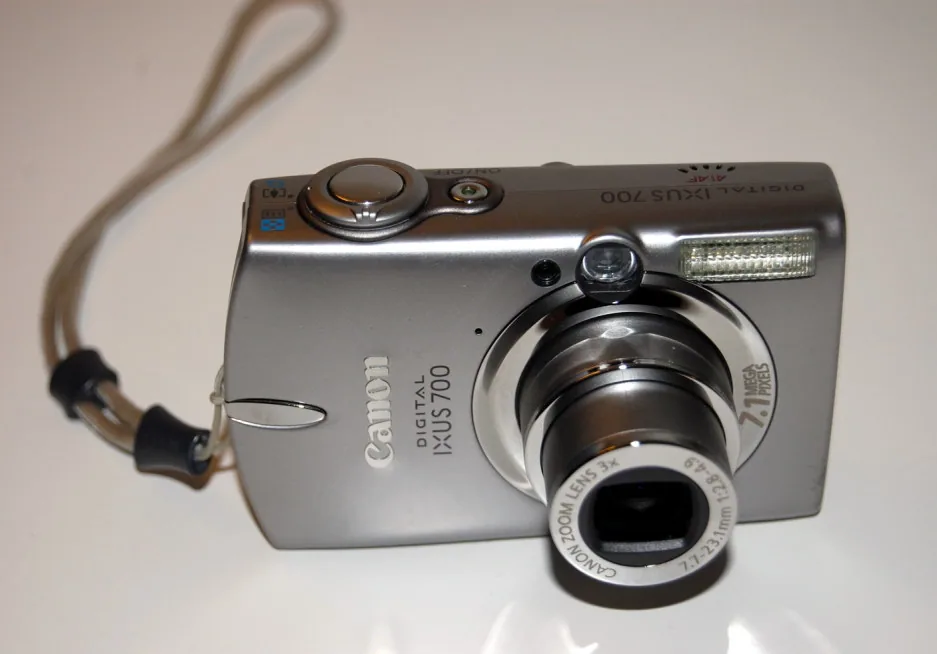
Meet the camera
The SD500 is a curved metal slab with a retractable lens. DPReview called it curvier and slightly wider than previous models and said it replaced the S500 (IXUS 500) as the flagship of the range.2 Canon's own launch text says the same thing in its own way: the flagship of the IXY Digital line, the first IXY Digital with a 7-megapixel sensor, and the first body redesign in two years after the design introduced with the IXY Digital 400 in March 2003.1
It has three names. Canon sold it as the PowerShot SD500 Digital ELPH in the Americas, the Digital IXUS 700 in Europe and the IXY Digital 600 in Japan.1 Canon's museum lists it as marketed in March 2005.1 DPReview gave a street price of $480 in the US and £300 in the UK.2
Why this one was interesting
Seven megapixels in a pocket
Canon called it the first IXY Digital with 7 megapixels.1 DPReview observed that you may question whether you need 7 million pixels in a pocket camera, but its test results showed considerably more detail in everyday scenes than any 4 or 5 megapixel predecessor or competitor.2 Imaging Resource said the sensor made prints as large as 11 by 17 inches, or 8 by 10 with some cropping.4
A faster brain
The camera used the DIGIC II image engine, which Canon noted was also in its EOS-1Ds Mark II flagship SLR, and claimed markedly faster start-up, autofocus and playback.1 Imaging Resource's Dave Etchells called it very responsive for a subcompact3 and Macworld found start-up almost instantaneous and shutter lag virtually nonexistent, with 60 pictures shot in under 30 seconds in continuous mode.5
Thinner, with SD cards
Canon said the 600 was about 1.3 mm thinner and 15% smaller in volume than the 500 and 450 it followed, credited partly to the change from CompactFlash to SD cards, a thinner lens barrel and a compact battery.1 It also kept a small optical viewfinder.1 Imaging Resource felt it seemed a lot smaller than the S500 thanks to its sleekly sculpted body.3
Its successors in the ELPH line are told in our SD600 and SD1000 retrospectives.
A viewfinder that doubled battery life
DPReview rated the battery at around 160 shots using the screen, by the CIPA standard, but well over 550 if you used the optical viewfinder and only glanced at the screen to review pictures.2 The 2.0-inch screen itself had a backlight with a Night View setting and an LCD Booster for bright sun, according to Canon,1 and Macworld found it bright, easy to see in afternoon sun, and said it brightened automatically in low light.5 DPReview's complaint was resolution: too low for a 2.0-inch screen.2
My Colors: Photoshop in the camera
Both the SD500 and the SD400 had what Imaging Resource called extremely unusual and rather cool My Color modes, which could replace one colour with another or keep one colour while turning the rest black and white.4 Canon's list ran to nine modes, including Vivid Blue, Vivid Green, lighter and darker skin tones, Color Swap and Custom Color.1 Macworld found the results spotty and thought you were better off adjusting in an editing program, though it noted you could keep an unaltered copy.5 DPReview counted the novel in-camera effects among its pros.2
How it drew the picture
DPReview's pros list included excellent resolution, excellent colour and exposure, and low noise at ISO 50 to 200.2 Its cons were soft, low-contrast fine detail such as foliage or hair, some purple fringing, slight corner softness at wide angle, and unreliable AiAF focus, which it advised turning off in favour of centre focus.2 Imaging Resource saw it differently on corners, finding the SD500 largely free of the softness seen on the SD200 and SD300, and said noise stayed under control even at ISO 400, with 8 by 10 prints from ISO 400 shots quite acceptable.3 Macworld, rating colour and detail excellent and noise very good, said noise became noticeable above ISO 200.5



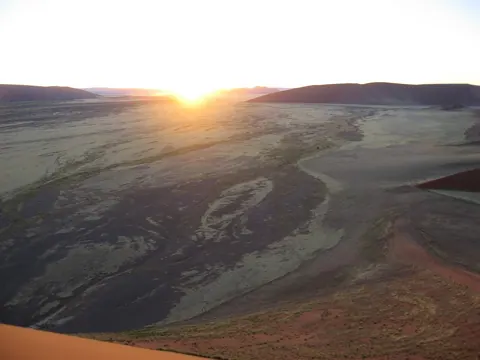



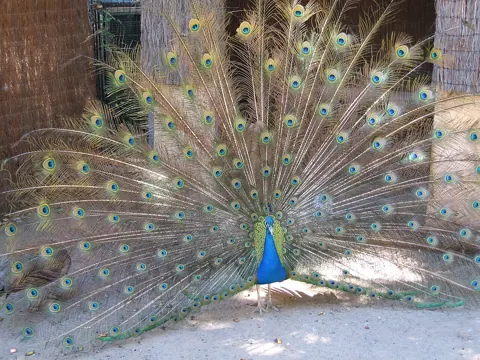
Photos taken with this camera, from Wikimedia Commons, credited under each picture.
On eBay right now
Live listings for this camera, supplied by eBay and updated automatically. We earn a commission if you buy through them.
The little wins


Nine-point AiAF
The camera picked its focus point among nine automatically, wherever the subject sat, with an AF-assist beam for low light, Macworld said.5 DPReview found the system erratic and advised centre focus instead.2
Shutter up to 15 seconds
There were no aperture or shutter controls, but Macworld noted you could set ISO, white balance and a long shutter of up to 15 seconds.5 Imaging Resource said this significantly widened the shooting range.3
Custom white balance
DPReview listed manual custom white balance among its pros for a camera with very little manual control.2
Where it let you down
DPReview listed very little manual control, no exposure information in record or playback mode, and a finish very susceptible to marks and scratches that could be slippery in the hand.2 Imaging Resource also warned the all-metal body would show scratches, so expect to buy a soft case.4 Macworld missed a live histogram and said that at the price it would expect to shoot TIFF or raw files.5 DPReview concluded it was a great little camera that, maybe unfairly, did not quite deliver on its promise.2
What the reviewers said in 2005
| Outlet | Date | Verdict |
|---|---|---|
| DPReview | 15 Apr 2005 | Fast, easy and capable of first-class results in the right situations, with the hallmarks of a design classic, but with erratic AiAF focus and a tendency to miss fine low-contrast detail.2 |
| Imaging Resource | 26 Apr 2005 | An excellent camera and an easy choice as a Dave's Pick.3 |
| Macworld | 25 May 2005 | Excellent pictures and video in a sleek metal body, but few manual features and a high price for a point-and-shoot.5 |
The timeline
- February 2005Announced just before the PMA trade show.2
- March 2005Canon's museum lists it as marketed.1
- 15 April 2005DPReview publishes its review.2
- 26 April 2005Imaging Resource posts its review.3
- 25 May 2005Macworld publishes its review.5
Should you buy one now?
Buy one if you want a small, solid, quick compact from 2005 with a real optical viewfinder, and you accept 7 megapixels, a small screen and a camera that is now more than twenty years old. It sold for about $480 at the time;2 what it sells for now is a question for the sold listings, not for us. Before you bid, check these:
- The name. It was sold as the Digital IXUS 700 in Europe and the IXY Digital 600 in Japan, so search all three names.1
- The battery. It uses an NB-3L;1 DPReview measured only about 160 shots with the screen on, so a fresh battery is worth having: Amazon ↗.
- The card. It takes SD cards.1
- The finish. It scratches easily, so expect cosmetic wear.2
- The focus. If focus seems erratic, switch AiAF to centre focus.2
- The lens. Check that it extends and retracts cleanly.
If you are wondering why cameras like this are being hunted down again, we tell that story once, in Pictures that never left the card.
See recent sold prices on eBay ↗Shop on eBay ↗NB-3L battery ↗
New to the jargon (CCD, ISO, xD cards, IXUS vs ELPH)? Read our plain-English digicam glossary.
Sources
- Canon Camera Museum: IXY DIGITAL 600 / PowerShot SD500 / Digital IXUS 700 (launch text, specifications, marketing date)
- DPReview, Canon PowerShot SD500 Digital ELPH (Digital IXUS 700 / IXY DIGITAL 600) review by Simon Joinson (15 Apr 2005)
- Imaging Resource, “Canon PowerShot SD500 review posted” by Dave Etchells (26 Apr 2005)
- Imaging Resource, Canon PowerShot SD500 Digital ELPH review (2005)
- Macworld, Canon PowerShot SD500 review (25 May 2005)
Camera photos by J-P Kärnä (CC BY-SA 3.0) and David Gerard (public domain); sample photographs are credited under each one, all via Wikimedia Commons. Links to eBay and Amazon are affiliate links.