Canon PowerShot G · on sale September 2004
The Canon PowerShot G6: seven megapixels and a viewfinder you can see through
Canon's museum lists the same name, PowerShot G6, for Japan, the Americas, and Europe, Asia and Oceania.1
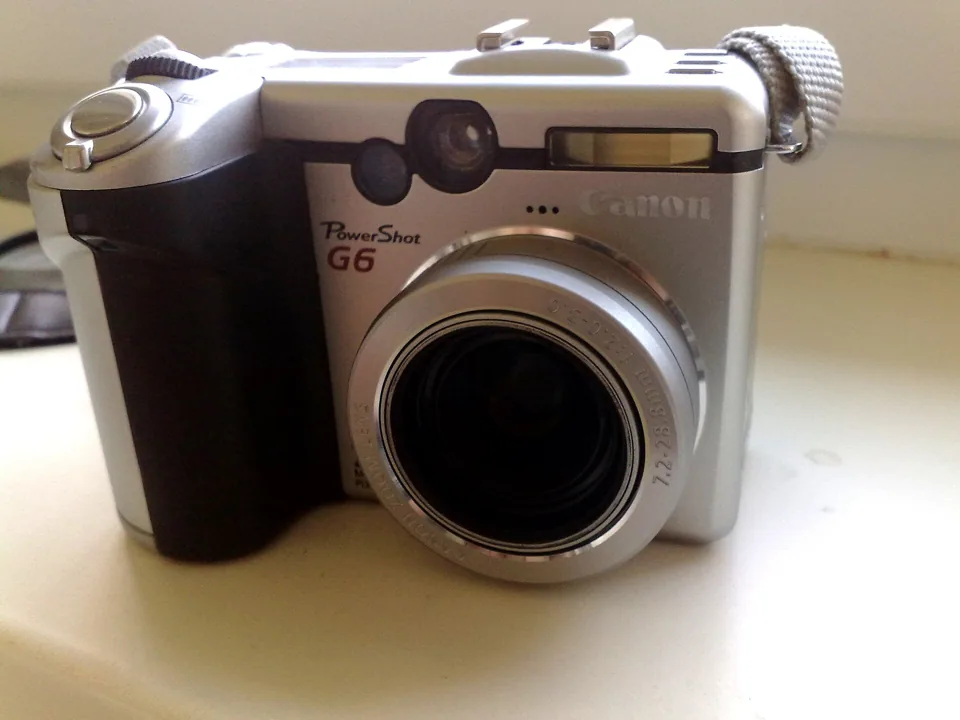

Canon's September 2004 G-series compact kept the G5's lens and put a 7.1-megapixel CCD in a new, narrower body. Imaging Resource and DPReview found less noise than on the five-megapixel G5, all three reviewers we read liked the bigger grip, and they disagreed about how fast it was.
Canon PowerShot G6 specs: sensor, lens, battery, memory card and cable
Launched in September 2004, the Canon PowerShot G6 is a 7.1 MP CCD compact with a 35–140 mm (35 mm equivalent) 4× zoom lens. Inside: it takes CompactFlash cards and runs on the BP-511A or BP-511 or BP-512 or BP-514 battery. Sources
- Sensor
- CCD, 1/1.8", 7.1 MP source
- Lens
- 35–140 mm equivalent, 4× zoom source
- Memory card
- CompactFlash source
- Battery
- BP-511A, BP-511, BP-512, BP-514 source
- USB / A/V cable
- IFC-400PCU, AVC-DC300 Confirmed · all Canon cables
Meet the camera
Canon's museum says the G6 replaced the G5 of June 2003 and gives September 2004 as its market date; it calls the G6 the first of a new generation of G-series cameras and its body the first major redesign since the G3 of 2002.1 DPReview dated the announcement 19 August 2004 and noted that Canon had skipped the six-megapixel sensor to wait for a seven-megapixel one, used in the G6 and the S70 together. Its step from 5.0 to 7.1 megapixels, 2.0 million pixels, was larger than the 1.2 million between the G3 and the G5.2
The body is about 105 by 73 by 73 millimetres, and Canon says it saved 30 grams and more than 10 per cent in size over the G5.1 DPReview called it 16 millimetres narrower, with a deeper grip with a soft rubber coating; the front, top and screen back are metal alloy and the rest plastic.2 Imaging Resource described silver panels with a black rubberised pad inside the grip.3 The G5 had been black, and DPReview said it would have preferred the G6 in black too.2 Weight depends on what is counted. Canon, Imaging Resource and the Digital Camera Resource Page give about 380 grams for the body alone; Imaging Resource says 474 grams with battery and card, and DPReview lists 467 grams with battery in its spec table and 465 with battery and card in its group-test table.1352 We show all of them. DPReview's group test found it the heaviest of five seven-megapixel cameras by a fair margin; the other four weighed 254 to 401 grams.2
All three reviewers gave a US price of $699: the Digital Camera Resource Page in its opening line, Imaging Resource as the MSRP and DPReview alongside a €749 euro price. Imaging Resource's data sheet lists the same retail price and a 30 September 2004 availability date, in a field last updated in 2007.5326 Canon's museum page gives no price.1
- Sensor
- 7.1 MP CCD (about 7.4 MP total), 1/1.8"1
- Lens
- 4x, 7.2–28.8 mm (35–140 mm equiv.), f/2.0–3.01
- Screen
- 2.0" LCD, about 118,000 dots, 100% coverage, tilts, twists and swivels; optical viewfinder, about 80% coverage (Canon)1
- Files
- JPEG or raw; shutter 15 s to 1/2000 s, range varies by mode1
- Video
- 640 × 480 at 10 frames a second for 30 s; 320 × 240 and 160 × 120 at 15 for 3 min1
- Card, battery, port
- CompactFlash Type I or II · BP-511A in the box (BP-511, 512 and 514 also listed) · USB mini-B1
Why this one was interesting
The viewfinder complaint, answered
On the G3 and G5 the lens barrel poked into the optical viewfinder at wide angle, and all three G6 reviewers said Canon fixed it. Imaging Resource, which had called it a major complaint about the earlier cameras, said the viewfinder now sits a little further from the lens, at the cost of slightly more parallax error at close range; DPReview wrote that the problem which dogged the G3 and G5 was fixed; the Digital Camera Resource Page added that the lens no longer casts a shadow on wide-angle flash pictures.325 Our PowerShot G5 review shows how the 2003 reviewers felt about it.
More pixels, less noise
DPReview wrote that despite two extra megapixels and smaller photosites the G6 delivered cleaner images than the G5; against the other seven-megapixel cameras in its group test it performed well, especially from ISO 50 to 200 on the dial. It said the G6 appeared not to use noise reduction to do so, though sharpening might be turned down.2 Imaging Resource saw a significant noise improvement over the G5 and put the G6 between the Nikon 8700 and Konica Minolta A2 on its chart; what mattered more, it said, was a very fine-grained pattern that looks less objectionable.4 DPReview also found Canon's labelling conservative: its tests put the four settings at roughly ISO 100, 160, 320 and 640.2 The Digital Camera Resource Page thought the pictures a bit noisier than the Digital Rebel's, smooth and accurate in colour, with some softening of fine detail such as grass.5
A fast lens that was usually stopped down
The lens was unchanged from the G5 and G3, though DPReview said it apparently had improved coatings to cut chromatic aberration.25 At f/2.0 to 3.0 it was faster than the f/2.8 to 4.0 of the Casio EX-P700 and Sony DSC-V3 in DPReview's group test. DPReview added that because the aperture is large, the lens is usually stopped down, which helps sharpness.2 Imaging Resource said f/2 allows shutter speeds twice as fast as the f/2.8 lenses found on most digicams.3
What was lost
Size and weight first: see the group-test figures above. Then speed, where the reviewers disagreed. DPReview said G5 owners would not notice a big performance improvement: start-up was about three quarters of a second quicker at 3.0 seconds, but shutter lag with the screen on measured slower than the G5's, and its measured continuous rates were 0.7 frames a second at normal speed and 1.6 at high speed, against 1.2 and 2.0 in Canon's specifications (Canon says its figures are with the screen off).21 Imaging Resource measured full-autofocus shutter lag of 0.73 to 0.78 seconds against 1.04 to 1.17 for the G5, and start-up of 3.92 seconds against 4.82, but continuous cycle times a little slower than the G5's and not a first choice for sports.34 The Digital Camera Resource Page said shutter lag was not a problem and shot-to-shot time was about 1.5 seconds, though it took 2.5 seconds to warm up, and noted that the screen goes blank between frames in burst mode.5
DPReview's pick of the group was the Sony DSC-V3, which it found faster, especially in autofocus and shutter lag, while saying the G6 had the ability to win your favour by delivering consistently good images.2
The dark: its weak point
For a camera of 2004 the low-light story was mostly good. Imaging Resource got clear, bright, usable pictures with good colour down to 1/16 foot-candle (0.67 lux) at all four ISO settings, with a slight pink cast at the lowest light levels. Its noise was low at ISO 50 and 100, rose at ISO 200 and was high at ISO 400, though fine-grained enough that the reviewer would not mind shooting at 400. It also said the bright autofocus lamp lets the camera focus in almost total darkness.4 DPReview agreed on focus with the lamp on, and without it found the camera could focus down to about 1.5 EV at wide angle and 2.1 EV at telephoto.2
Long exposures were better than on the G5. Canon says exposures of 1.3 seconds or slower use noise reduction; DPReview explained that this is a dark-frame method which doubles the wait, so an 8-second exposure takes 16 seconds, and found almost no hot pixels or dark pits even in long exposures, noticeably better than the G5.12 The Digital Camera Resource Page called its night shot one of the best it had taken of its city with a fixed-lens camera, with some purple fringing that went away when it closed the aperture.5 The screen was the weak link: the same reviewer found the LCD too dark to use in low light and fell back on the viewfinder.5
The EXIF data in the free G6 files on Commons carries no ISO value, so there is no verified low-light strip. The two night pictures in the grid below show only the exposure time and aperture the files do record.
Curious what they sell for? See recent eBay sold listings for this camera ↗
On eBay right now
Live listings for this camera, supplied by eBay and updated automatically. We earn a commission if you buy through them.
The little wins
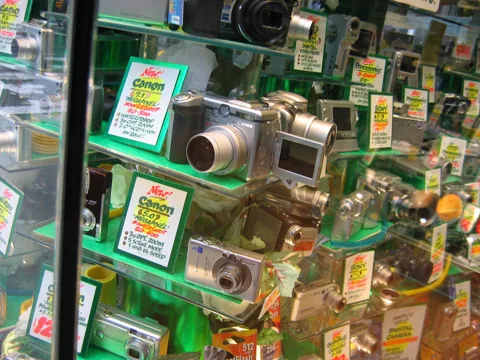 A G6 with its screen swung out, in a shop display case (file title: Time Square NYC 2005; the photo was taken with a Canon PowerShot A80) · saaby · CC BY-SA 2.0 · Commons

A screen that folds away, now bigger
The monitor grew from 1.8 to 2.0 inches with the same 118,000 dots.15 It still swings out, twists and can be folded back with the glass facing inward; Imaging Resource liked that this keeps fingerprints off it, and DPReview noted Canon had moulded the back so the screen sits flush and added an anti-reflective coating.32
A battery that lasted
The BP-511A holds 10.3 watt-hours against 8.1 for the BP-511.52 In DPReview's test the G6 ran 5 hours 38 minutes and 570 shots, close to the top of its table and an hour more than the G5's 4 hours 33 minutes and 460.2 Canon's own claim was about 300 shots by the CIPA standard, which Imaging Resource called a fairly conservative rating standard.3 Different tests: do not compare the two numbers.
Nine-point autofocus and FlexiZone
Canon called the nine-point AiAF long-awaited and said users of its IXY Digital line had received it well.1 It is used in the automatic modes, while in the creative modes FlexiZone lets you move the focus box around the frame; Imaging Resource put its range at roughly the central 60 per cent and DPReview at 345 positions.532
A neutral-density filter built in
A menu option cuts the light by three stops, for wider apertures or slower shutter speeds in bright light. DPReview listed it as unique in its group of five, and Imaging Resource used it to cure a slight flash overexposure in its macro test.24
Raw, decided afterwards
Shoot a JPEG and, during the picture review, change your mind and save it as raw. Imaging Resource and DPReview say the Flash button does it; the Digital Camera Resource Page says the function button.325 Raw files were about 6.8 to 6.9 MB against 2.6 to 3.0 MB for Super-Fine JPEGs.25
Custom modes and a time-lapse timer
The mode dial gained two custom positions, which the Digital Camera Resource Page liked, and the camera has a built-in interval timer for 2 to 100 shots from one to 60 minutes apart; the Digital Camera Resource Page and Imaging Resource both advise the optional mains adapter for long runs.513
How it drew the picture
DPReview found punchy colour, balanced tone with good shadow detail and good sharpness, and wondered whether the anti-aliasing filter was less strong than usual. On its chart it measured 1600 lines horizontally and 1500 vertically before aliasing, and said the vertical reading was hurt by jagged lines at shallow angles of about ten degrees, which it did not find in everyday shots; the Sony DSC-V3 and Olympus C-7000 Zoom resolved more.2 Imaging Resource found very good to excellent colour, bright and accurate with cyans shifted slightly toward blue, a default tone curve a little contrasty, and strong detail to at least 1,550 lines horizontally and about 1,500 vertically; its Imatest figure was 1443 line widths per picture height, or 1523 with standardised sharpening.4 The Digital Camera Resource Page wrote that, shown the pictures unlabelled, it would have guessed they came from a digital SLR, while adding that they did not equal one.5
The lens was well behaved. Imaging Resource measured 0.7 per cent barrel distortion at wide angle and 0.3 pincushion at telephoto, and very low chromatic aberration; DPReview measured 0.9 and 0.3, found purple fringing much reduced against the G5, and measured corner fall-off of 16 per cent at wide angle and f/2.0, which it called borderline.42 Automatic white balance was fine in daylight and fluorescent light but under incandescent light DPReview saw a strong pink cast, and Imaging Resource also found the automatic setting struggling with household incandescent light, though the incandescent and manual settings handled it.24
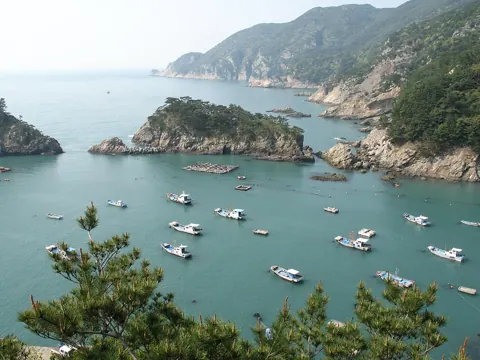



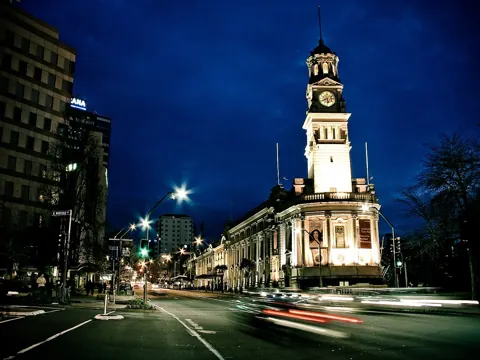

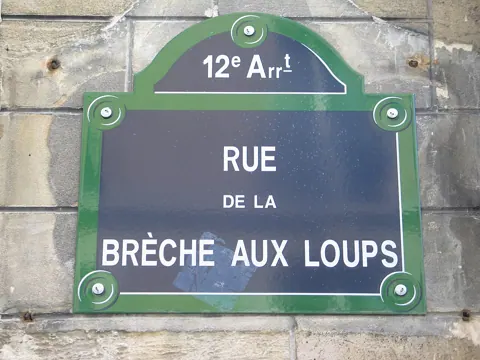



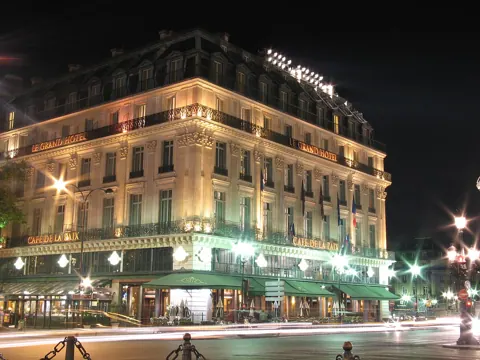

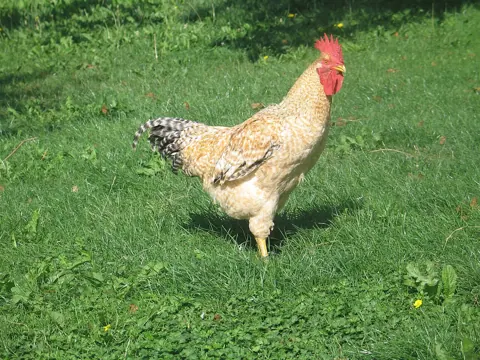





Photos taken with this camera, from Wikimedia Commons, credited under each picture. The two night pictures (third and sixth) record 0.8 s at f/3.5 and 8 s at f/8 in their EXIF; the files carry no ISO.
Where it let you down
The viewfinder was better but not generous. Canon gives about 80 per cent coverage and the Digital Camera Resource Page quoted that; DPReview listed about 84 per cent with no parallax marks; Imaging Resource measured about 83 per cent at wide angle but only about 76 per cent at telephoto and wished for a more accurate one, while its LCD showed about 99 per cent.1524 DPReview also timed three seconds for the lens to extend, which it said felt like an eternity beside the Olympus C-7000 Zoom's one second.2
Smaller grievances varied. All three reviewers missed a live histogram in record mode, and the Digital Camera Resource Page also disliked some red-eye, a lens that starts at 35 mm and a movie mode limited to 640 × 480 at 10 frames a second for 30 seconds.2451 DPReview and the Digital Camera Resource Page both noted USB 1.1.25 The reviewers did not agree on the plastic covers. DPReview praised a proper hinged door over the sockets, while the Digital Camera Resource Page called the cover flimsy and said the card door could snap if forced.25 Imaging Resource found macro corners very soft, and disliked that flash sync is limited to 1/250 second: in shutter-priority and manual modes the camera overrides a faster speed you have set when the flash is on.43 DPReview added that image parameters can only be adjusted one step either way.2
What the reviewers said in 2004
| Outlet | Date | Verdict |
|---|---|---|
| Digital Camera Resource Page | 18 Aug 2004; updated 30 Aug | Thumbs up: beautiful, smooth photos with accurate colour and little fringing, with the caveat that G5 owners need not rush to upgrade. Disliked the dark screen in low light, the blank screen in burst mode and the movie limits.5 |
| Imaging Resource | 28 Sept 2004 | Named it a Dave's Pick; little to complain about beyond the short movie time and the lack of a live histogram. Said it should be at or near the top of a list of rangefinder-style cameras.4 |
| DPReview | 2 Dec 2004 (group test) | Construction 9, features 9, image quality 8.5, lens and CCD 8.5, ease of use 8, value 8 out of 10. Said the G6 can be beaten, especially in autofocus and shutter lag, by competitors such as the Sony DSC-V3 and Olympus C-7000 Zoom; the V3 was its pick of the five.2 |
The timeline
- June 2003Canon's museum gives this as the G5's market date.1
- 18 August 2004The Digital Camera Resource Page's review is first posted.5
- 19 August 2004DPReview's announcement date for the G6, with the S70.2
- 30 August 2004The Digital Camera Resource Page updates its review.5
- September 2004Canon's museum gives the G6's market date.1
- 28 September 2004Imaging Resource first posts its review.3
- 30 September 2004Availability date on Imaging Resource's data sheet.6
- 2 December 2004DPReview publishes its review as part of a five-camera group test.2
Should you buy one now?
Buy one if you want a heavy, chunky compact with an f/2.0 lens,1 full manual controls, raw files, a hot shoe and a swivel screen, and you accept CompactFlash and slow USB. What it sells for now is a question for the sold listings, not for us. Before you bid, check these:
- The name. Canon's museum lists PowerShot G6 for every region, so one search covers it.1
- The battery and charger. The camera shipped with a BP-511A, and Canon lists the BP-511, 512 and 514 as accepted; Imaging Resource said runtime varies with the type.13 The charger was a separate mains-plug unit (DPReview named it the CB-5L) and the mains adapter was an optional extra, so ask what comes with the camera.23 The Digital Camera Resource Page priced a spare battery at about $50 in 2004.5 Amazon ↗
- The card. It takes CompactFlash Type I and II, including IBM's Microdrive, and DPReview and the Digital Camera Resource Page say cards larger than 2 GB (FAT32) work. The 32 MB card in the box is tiny.253 See our CompactFlash guide.
- The cable. Canon lists a USB mini-B socket; our cable guide covers the plugs.1
- The kit. The box held an infrared remote, a lens cap on a cord, neck strap, and USB and AV cables;325 ask whether the remote is included.
- The screen. Swing it out, twist it and fold it back to check the hinge and the glass.
- The lens. It extends about an inch when switched on; make sure it extends and retracts smoothly.3
For the line's other chapters see the PowerShot G2 (2001), G5 (2003) and G9 (2007). If you are wondering why cameras like this are being hunted down again, we tell that story once, in Pictures that never left the card.
See recent sold prices on eBay ↗Shop on eBay ↗BP-511A battery ↗
Sources
- Canon Camera Museum, PowerShot G6 (marketed September 2004; outline and specifications)
- DPReview, Canon PowerShot G6 review by Phil Askey (published 2 December 2004, a group test of five seven-megapixel cameras; production unit, firmware 1.00)
- Imaging Resource, Canon PowerShot G6 review by Dave Etchells, print version of pages 1 to 12 (first posted 28 Sept 2004; timings and feature tables)
- Imaging Resource, Canon PowerShot G6 review, page 13: test results and conclusion
- Digital Camera Resource Page, PowerShot G6 review by Jeff Keller (posted 18 Aug 2004, updated 30 Aug 2004; read in a 2005 Internet Archive copy)
- Imaging Resource data sheet, Canon PowerShot G6 (retail price field $699, date available 2004-09-30, price date 2007-02-27)
Camera photos by Manuel.flury and saaby (CC BY-SA); other photographs are credited under each one, all via Wikimedia Commons. Links to eBay and Amazon are affiliate links.