Canon PowerShot ELPH · 2011
The Canon PowerShot ELPH 100 HS (IXUS 115 HS): the cheap one with the clean low-light pictures
Also sold as the Digital IXUS 115 HS and the IXY 210F.
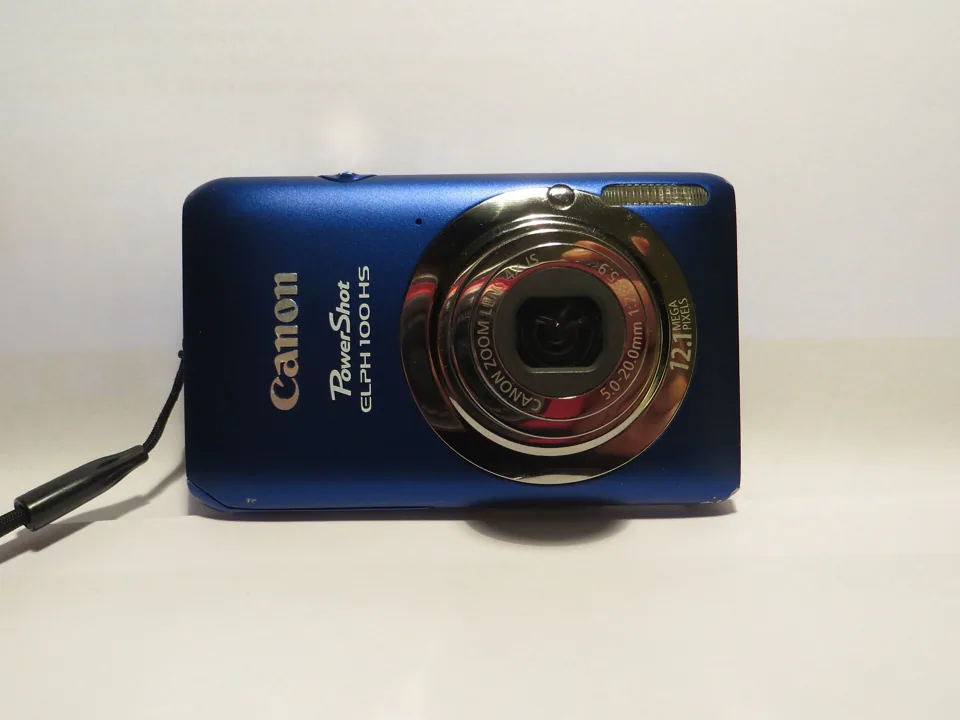

In February 2011 Canon announced a metal-bodied pocket camera with a back-illuminated sensor and Full HD video for an estimated US$199.99, the cheapest of the HS models announced with US prices that day. Reviewers praised its night pictures and complained that the buttons were too small.
- Launched
- February 2011
- Launch price
- US$199.99 (estimated)2
- Sensor
- 12.1 MP CMOS
- Lens
- 28–112 mm, 4×
- Card
- SD, SDHC, SDXC
- Battery
- NB-4L
Canon PowerShot ELPH 100 HS specs: sensor, lens, battery, memory card and cable
Launched in February 2011 at US$199.99, the Canon PowerShot ELPH 100 HS (also sold as the IXUS 115 HS and IXY 210F) is a 12.1 MP CMOS compact with a 28–112 mm (35 mm equivalent) 4× zoom lens. Inside: it takes SD, SDHC and SDXC cards and runs on the NB-4L battery. Sources
- Sensor
- CMOS, 1/2.3", 12.1 MP source
- Lens
- 28–112 mm equivalent, 4× zoom source
- Memory card
- SD, SDHC, SDXC source
- Battery
- NB-4L source
- Also sold as
- IXUS 115 HS · IXY 210F
- USB / A/V cable
- IFC-400PCU, AVC-DC400 Confirmed · all Canon cables
Meet the camera
A slim body, 93 by 56 by 20 millimetres, that weighs about 140 grams with battery and card.12 Imaging Resource found the front and back to be metal around a plastic centre frame, and said that plastic was the main design disappointment;5 Expert Reviews, by contrast, praised the curved metal body and called it extremely petite.4 Imaging Resource's report of the announcement listed silver, blue, gray, orange and pink.2
Canon's museum gives three names: PowerShot ELPH 100 HS in the Americas, IXUS 115 HS in Europe and IXY 210F in Japan, with a marketing date of February 2011.1 The announcement came on 7 February 2011, with an estimated selling price of US$199.99 and shipping planned for March;2 PhotographyBLOG gave the UK and European prices as £179 and €219.3 It was announced alongside the ELPH 300 HS, the ELPH 500 HS and the SX230 HS, which all carried higher US prices (an SX220 HS was announced without one), so it was the cheapest of the four priced models.2
Why this one was interesting
A back-illuminated sensor at the bottom of the range
Imaging Resource's announcement calls the sensor a twelve megapixel back-illuminated CMOS, and the camera's price put it under the 300 HS at US$250, the 500 HS at US$300 and the SX230 HS at US$350.2 Our reading: the pitch was low-light technology without the usual premium. Reviewed.com found the pictures good enough to call them arguably the best of any camera under $200 on the market.6 If you are hunting for the look of a CCD camera, this is not one: Canon's museum lists a CMOS sensor.1 See our glossary entry on CCD sensors.
A lens that stops at 112 mm
The zoom runs 5.0 to 20.0 millimetres, equal to 28–112 mm.1 The 300 HS announced the same day had a 5x lens from 24 mm, though on a smaller 2.7-inch screen.2 The ELPH 100 HS therefore gave up 4 mm at the wide end and one step of zoom. PhotographyBLOG called it a close match for the IXUS 220 HS, which is our ELPH 300 HS, with a bigger screen and a lower price.32
Zoom and focus, locked while filming
Full HD at 24 frames a second came with a dedicated red record button, and PhotographyBLOG noted black bars at the top and bottom of 16:9 frames.3 Three reviewers noted the same limit in different words: Expert Reviews said focus and zoom are fixed for the length of a clip, Imaging Resource listed digital zoom only in movie mode as a con, and Reviewed.com found no optical zoom while recording and poor autofocus.456
The dark: its strongest suit
PhotographyBLOG called low-light performance the most impressive aspect of the camera. It saw no noise at ISO 100 and 200, no noise but slight softening at ISO 400, a clean ISO 800 with some loss of edge detail, slight softening at ISO 1600 on an otherwise clean picture, and grit at ISO 3200 that was still usable if necessary.3 Expert Reviews described noise at ISO 1600 as remarkably low, though details were soft.4 Imaging Resource's prints agree: good at 11 by 14 inches from ISO 100 to 800, good at 8 by 10 at ISO 1600, and usable at 8 by 10 at ISO 3200 (decent at 5 by 7); it called the ISO 3200 noise and detail results slightly better than average.5 Reviewed.com measured noise that never passed 2 per cent in its ISO 3200 test images and found shots eye-pleasing up to ISO 800, arguably ISO 1600, though it rated noise performance overall as about average for the class.6
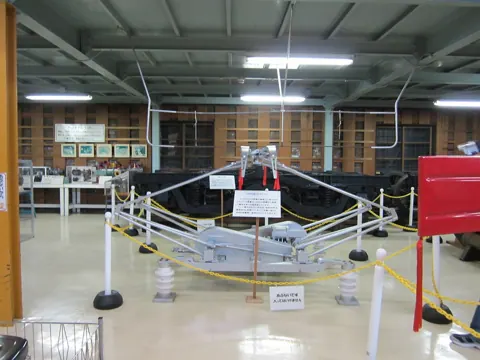
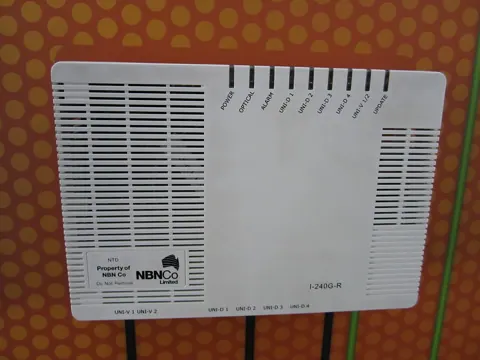
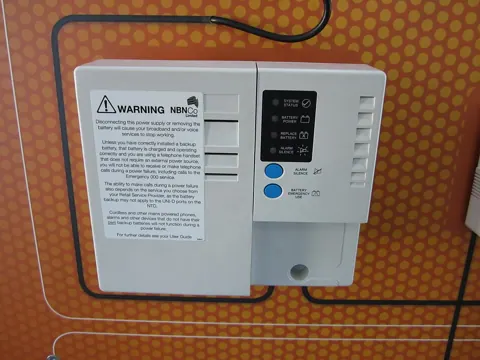
PhotographyBLOG's own night example was shot at 1/8 second and ISO 800, and it said the Handheld Night Scene mode, which takes three pictures in quick succession, gave quite reasonable results if you could rest an elbow on a hard surface.3 Imaging Resource added a detail few reviews measure: with the assist lamp on, autofocus worked in complete darkness, and without it down to just above 1/8 foot-candle.5 Below are four night and interior photographs taken with this camera; the ISO comes from each file's own metadata.





On eBay right now
Live listings for this camera, supplied by eBay and updated automatically. We earn a commission if you buy through them.
The little wins
A night mode that works handheld
PhotographyBLOG said Handheld Night Scene, which takes three pictures in quick succession, gave quite reasonable results when it could rest an elbow on a hard surface.3
Honest colour
Reviewed.com measured a best colour error of 2.48, which it called excellent, and said it beat the 500 HS sibling.6 Imaging Resource found skin tones close to accurate, with muted yellows.5
Sharp 1080p
Reviewed.com measured 575 line widths per picture height on video, one of the best results it had seen for a compact, and called its video colour the best in its comparison group.6
How it drew the picture
PhotographyBLOG scored image quality 4 out of 5: very usable files that need little work, default sharpening slightly soft, and purple fringing in only some high-contrast scenes.3 Imaging Resource's lab found sharp detail to about 2,000 lines per picture height, with the picture falling away near 2,500; it also measured barrel distortion of about 0.5 per cent at wide angle and 0.2 per cent at telephoto, minor softness in the corners at wide angle, and muted yellows with a hue shift in yellow, orange, red and cyan.5 Reviewed.com said its sharpness score was higher than any current sub-$200 compact it had tested, including the Panasonic FP5, Samsung PL120 and Nikon S4100 (the last one "just barely").6 It also reported that stabilisation made the result slightly worse in its test, and concluded that the system does not work, a difference it thought imperceptible to the eye.6 PhotographyBLOG's spec table lists the stabiliser at about three stops;3 the two accounts do not meet, and we have no test of our own to settle it.











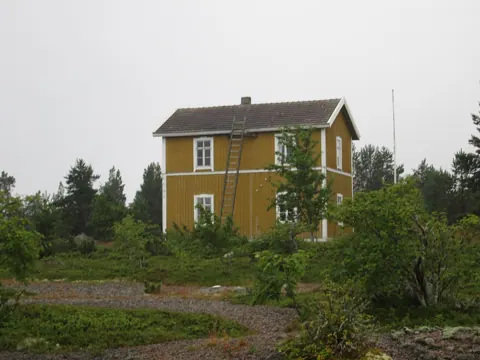

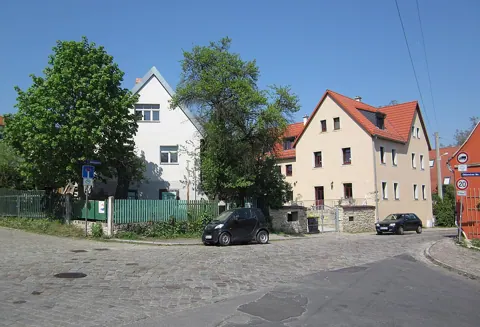

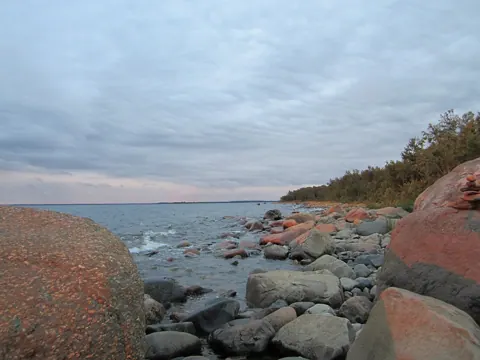

Photos taken with this camera, from Wikimedia Commons, credited under each picture.
Where it let you down
Almost every reviewer found the controls too small. Imaging Resource called the four-way disk a little stiff and so small that larger fingers may struggle;5 Expert Reviews said the pad sits flush with the body and wished for a few extra millimetres of width;4 Reviewed.com described mushy buttons and a body with no grip, which makes one-handed use uncomfortable.6 PhotographyBLOG added that fingers slide on the smooth body and that a thumb can smudge the screen when you hold the camera with both hands.3
The numbers on speed do not quite agree, because the reviewers timed different things. PhotographyBLOG measured about one second to start and three to four seconds to save a full-resolution JPEG; Imaging Resource found start-up closer to two seconds, a single-shot cycle of 1.95 seconds, a prefocused shutter lag of 0.083 second and a flash recycle of about 4.1 seconds; Expert Reviews wrote about 2.5 seconds per shot and 2.2 frames a second in continuous mode against Canon's rating of 3.4.3541 Battery life was rated at about 230 shots, which Imaging Resource called just a little below average for its class.51 Imaging Resource also pointed to the muted default colour and a function menu it found less friendly than older Canon designs,5 and Reviewed.com added that the screen struggles in direct sunlight.6
What the reviewers said
| Outlet | Date | Verdict |
|---|---|---|
| PhotographyBLOG | 27 Apr 2011 | 4 out of 5 for design, features, ease of use and image quality, 5 out of 5 for value for money. A simple point-and-shoot that gives better pictures than you might expect; neither innovative nor a game changer.3 |
| Expert Reviews | 12 May 2011 | An exceptional point-and-shoot and a bargain at £144 despite fiddly buttons; carries a Best Buy badge, no numeric score on the page.4 |
| Imaging Resource | undated page | 5 out of 5, labelled Dave's Pick. An enjoyable pocket camera for everyday snapshots; cons were small buttons and muted default colour.5 |
| Reviewed.com | undated page | Highly recommended for casual photographers, strong value under $200; weak handling, and no optical zoom and poor autofocus in video.6 |
The two undated pages are lab-style reviews that show no review date; Imaging Resource's page lists availability as March 2011. All four reviewers agree on the verdict and differ on stabilisation, speed and battery.
The timeline
- 7 February 2011Canon announces the camera with the ELPH 300 HS, 500 HS and SX230 HS; an estimated US$199.99, shipping planned for March.2
- February 2011The date Canon's museum gives as marketed.1
- 27 April 2011PhotographyBLOG publishes its review.3
- 12 May 2011Expert Reviews publishes its review, at £144.4
Should you buy one now?
Buy one if you want a pocketable metal camera that does better than its price in dim rooms, and you can live with small buttons and a lens that ends at 112 mm. It was announced at an estimated US$199.99;2 what it sells for now is a question for the sold listings, not for us. We have not tested a unit, and the stabiliser question above is worth checking on any camera you buy. Before you bid, check these:
- The name. Search the ELPH 100 HS, the IXUS 115 HS and the IXY 210F.1
- The sensor. It is CMOS, not CCD.1
- The battery. It uses an NB-4L, rated about 230 shots;13 a fresh one is on Amazon ↗.
- The card. It takes SD, SDHC and SDXC cards;3 Imaging Resource says Canon recommends a Class 6 card or faster for Full HD.5 See our memory card guide.
- The controls. Press every button and the four-way disk; reviewers found them small and stiff.56
- The screen. PhotographyBLOG noted thumb smudges on the glass; look for scratches too.3
- The lens. Check that it extends and retracts cleanly, and that a test shot is sharp into the corners; Expert Reviews found focus excellent right into the corners when it tested one.4
For the next year's model in this line, see our ELPH 110 HS review. For why people want cameras like this, we tell the story once, in Pictures that never left the card.
See recent sold prices on eBay ↗Shop on eBay ↗NB-4L battery ↗
Sources
- Canon Camera Museum: PowerShot ELPH 100 HS / IXUS 115 HS / IXY 210F (names, February 2011, specifications)
- Imaging Resource, Canon announces the ELPH 100 HS, 300 HS, 500 HS and SX230 HS (7 Feb 2011)
- PhotographyBLOG, Canon IXUS 115 HS review by Gavin Stoker (27 Apr 2011)
- Expert Reviews, Canon Ixus 115 HS review by Ben Pitt (12 May 2011)
- Imaging Resource, Canon ELPH 100 HS review (undated page, lab measurements)
- Reviewed.com, Canon PowerShot ELPH 100 HS review by Liam F McCabe (undated page, lab measurements)
Sample photographs are credited under each one, all via Wikimedia Commons. Links to eBay and Amazon are affiliate links.