Sony Cyber-shot W · on sale spring 2007 · a retrospective
The Sony Cyber-shot DSC-W80: the metal 2007 compact with the viewfinder and the fast burst
In 2007 Sony put face detection, a new image processor and optical stabilisation into the middle of its W line, for $250. Reviewers agreed it was quick and well built, and split on whether its soft, noise-reduced pictures were good enough.
Release date and launch price: launched March 2007; launch price $250 MSRP34.
Quick answers
- Sensor
- CCD, 1/2.5", 7.2 MP source
- Lens
- 35–105 mm equivalent, 3× zoom source
- Memory card
- Memory Stick Duo, Memory Stick Pro Duo source
- Battery
- NP-BG1 source
- USB / A/V cable
- See our Sony cable page

Meet the camera
It is a small, mostly metal compact: DPReview praised the all-metal body with chrome trim and excellent fit and finish for the money, and measured it at 91 by 58 by 22.9 millimetres and 124 grams without battery.1 Digital Camera Resource agreed it is made mostly of metal, with one exception, a plastic door over the card and battery compartment that it thought flimsy.4 Imaging Resource listed four colours: black, silver, white and pink.3
Sony announced it at the PMA show in February 2007 as one of three near-identical models that differed only in pixel count: the 12-megapixel W200, the 8-megapixel W90 and this 7-megapixel W80.2 Imaging Resource gives a launch MSRP of $250 and shipping from March 2007.3 Digital Camera Resource also gave $250, and noted a street price of $256 when it posted its review in May;4 DPReview quoted $220 in the US and £150 in the UK by October.1 Our sources give it only one name, DSC-W80, and we did not find a second regional name.
- Size
- 91 × 58 × 22.9 mm, 124 g without battery1
Why this one was interesting
Features from higher up the range
Digital Camera Resource's comparison chart shows what the W80 added over the cheaper W35 and W55: image stabilisation, the Bionz processor, face detection, a wider 35 mm start to the lens, an ISO range up to 3200 and component video output.4 It said Bionz was borrowed from Sony's DSLR-A100 and brought faster processing, better continuous shooting and face detection.4 The trade was 31 MB of built-in memory against 56 MB on the W35 and W55, and no conversion lens support.4 Our DSC-W55 retrospective covers the budget sibling.
A viewfinder, still
DPReview called the optical viewfinder very small, but noted that few compacts still had one;1 Digital Camera Resource applauded Sony for keeping it, while noting there is no dioptre correction.4 Imaging Resource measured it as inaccurate, showing about 80 percent of the frame at wide angle and 77 percent at telephoto.3
Speed
Imaging Resource measured a full-autofocus shutter lag of 0.46 seconds at wide angle and 0.75 at telephoto, and 0.008 seconds when prefocused.3 Burst figures differed by outlet. Digital Camera Resource reported up to 100 shots at 2.7 frames a second;4 CNET, as quoted by PhotographyBLOG, got 19 full-size photos in 7.1 seconds;5 DPReview measured about 2.1 frames a second for the first 12 frames and about 0.8 after that.1
HD output, but not HD video
The camera could feed an HDTV at 1080i, but only through an optional cable or dock, and Digital Camera Resource found movies would not play at all over that connection and could not be recorded in HD.24 For a slimmer, pricier camera from the year before, see our Cyber-shot DSC-T9; DPReview described the W series as the cheaper alternative to Sony's ultra-slim T series.2
What was lost
There are no manual controls: Digital Camera Resource said it is a 100 percent point-and-shoot, with no custom white balance and no control over shutter speed, and that you would need the W200 for manual controls.4 It could not shoot RAW.4 The menu was new for 2007 and unpopular: Imaging Resource found it difficult to navigate, and Digital Camera Resource called it clunky and confusing, with three separate menus.34
The dark: its weak point
All three full reviews found low light the weakest side, though they disagreed on why. DPReview wrote that indoors, autofocus became painfully slow, the flash was weak, and the screen grainy and slow to refresh.1 Imaging Resource called low-light performance poor, but noted a bright autofocus-assist lamp and autofocus that worked unassisted down to a very dim level, one-eighth of a foot-candle.3 Digital Camera Resource said low-light focusing often took more than a second yet locked on consistently, found the screen excellent in the dark, and said its night shot came out too dark because there was no control over shutter speed.4 Noise: Imaging Resource found low noise at ISO 100 to 200 and low to moderate at 400, a stippled look at 800, and a watercolour look at 1600;3 DPReview thought noise reduction noticeable from ISO 200 and would not use anything above that for important work;1 Digital Camera Resource called the high-sensitivity mode, which goes up to ISO 3200, borderline useless.4 The flash reaches about 3.3 metres at wide angle and 1.8 at telephoto.14
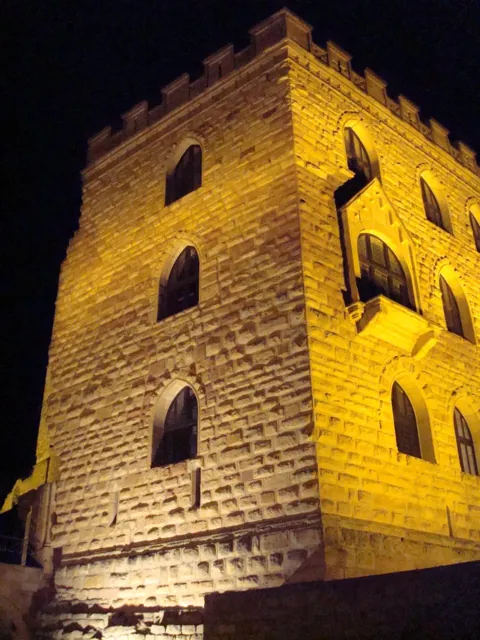



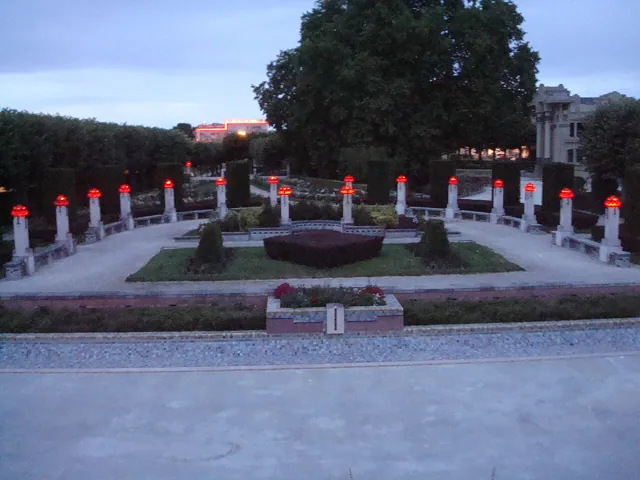



Real photographs taken with this camera. The sensitivity shown is recorded in each file's own EXIF data; they were not made under test conditions.
Like that look? See recent eBay sold listings for this camera ↗
On eBay right now
Live listings for this camera, supplied by eBay and updated automatically. We earn a commission if you buy through them.
The little wins
How it drew the picture
DPReview found good-light pictures bright, sharp and colourful, but over-processed, with heavy sharpening and saturation, and listed highlight clipping, purple or red fringing, corner softness and barrel distortion of about 1.3 percent at wide angle.1 Imaging Resource found good detail and colour, oversaturated reds, clay-like skin under incandescent light and a very soft lower-right corner at full telephoto, and good 11 by 14 inch prints at ISO 100.3 Digital Camera Resource's verdict was good but not great: well exposed with pleasing colour, but noise reduction blurred grass, leaves, hair and roof tiles, and the corners were blurry.4
















Photos taken with this camera, from Wikimedia Commons, credited under each picture.
Where it let you down
Digital Camera Resource disliked the poorly placed power button, a tiny, stiff four-way controller and a very slow supplied charger, which took 4.5 hours.4 DPReview found the rear controls small and the body slippery in one hand, and the screen coating prone to smearing.1 DPReview called the low-resolution screen grainy.1 The camera records only to Memory Stick Duo, not SD,3 so see our memory card guide.
What the reviewers said in 2007
| Outlet | Date | Verdict |
|---|---|---|
| Digital Camera Resource | 25 May 2007 | Performance is the real strong point; sub-par image quality, no manual controls and a clunky interface mean the negatives outweigh the positives and better options exist.4 |
| Imaging Resource | 24 Sep 2007 | 4 out of 5 and a Dave's Pick: a strong bargain for its features; the trade-off is detail lost at high ISO, so best for 4 by 6 prints and everyday use.3 |
| DPReview | 11 Oct 2007 | Rated Above Average; image quality 7.0 out of 10, build 8.0. A reasonable walk-around camera at about $200, hard to recommend for indoor or night use.1 |
CNET also reviewed it in 2007; we could only read PhotographyBLOG's summary of its burst test, so we do not cover its verdict.5 We found no Cameralabs or Photo Review page for this model.
The timeline
- February 2007Sony announces the W80, W90 and W200 at PMA.2
- March 2007Shipping begins, at an MSRP of $250.3
- 3 April 2007PhotographyBLOG reports CNET's review.5
- 25 May 2007Digital Camera Resource posts its review.4
- 24 September 2007Imaging Resource reviews it.3
- 11 October 2007DPReview publishes its review.1
Should you buy one now?
Buy one if you want a metal 2007 CCD compact with a viewfinder, a fast burst and good daylight colour, and you accept soft detail and weak indoor performance. It launched at $250;3 what it sells for now is a question for the sold listings, not for us. Before you bid, check these:
- The model. The W80 has a 7.2-megapixel sensor; the W90 is the 8-megapixel twin and the W35 and W55 are cheaper models with a 38 mm lens.4
- The battery. It uses an NP-BG1;3 a fresh one is on Amazon ↗.
- The card. It takes Memory Stick Duo or Pro Duo only.3
- The screen and door. Look for a scratched screen and a cracked plastic card door.14
- The lens. Check that it extends and retracts cleanly.
If you are wondering why cameras like this are being hunted down again, we tell that story once, in Pictures that never left the card.
See recent sold prices on eBay ↗Shop on eBay ↗NP-BG1 battery ↗
Sources
- DPReview, Sony Cyber-shot W80 review by Simon Joinson (11 Oct 2007)
- DPReview, Sony Cyber-shot W80 review, introduction page (announced at PMA, February 2007; the W80, W90 and W200)
- Imaging Resource, Sony Cyber-shot DSC-W80 review by Mike Pasini (24 Sep 2007; MSRP $250, specifications)
- Digital Camera Resource Page, Sony Cyber-shot DSC-W80 review by Jeff Keller (posted 25 May 2007; archived copy, the original page has gone)
- PhotographyBLOG news, “Sony Cyber-Shot DSC-W80 Review at CNET” (3 Apr 2007; quotes CNET's burst test, we could not open CNET's own page)
Photographs are credited under each one, all via Wikimedia Commons. Links to eBay and Amazon are affiliate links.