Nikon Coolpix L · announced February 2011
The Nikon Coolpix L120: a 21x CCD superzoom on four AA batteries, with a lever for your left hand
We found no other regional name for it; Nikon's release and every review we read use the Coolpix L120 name.13456
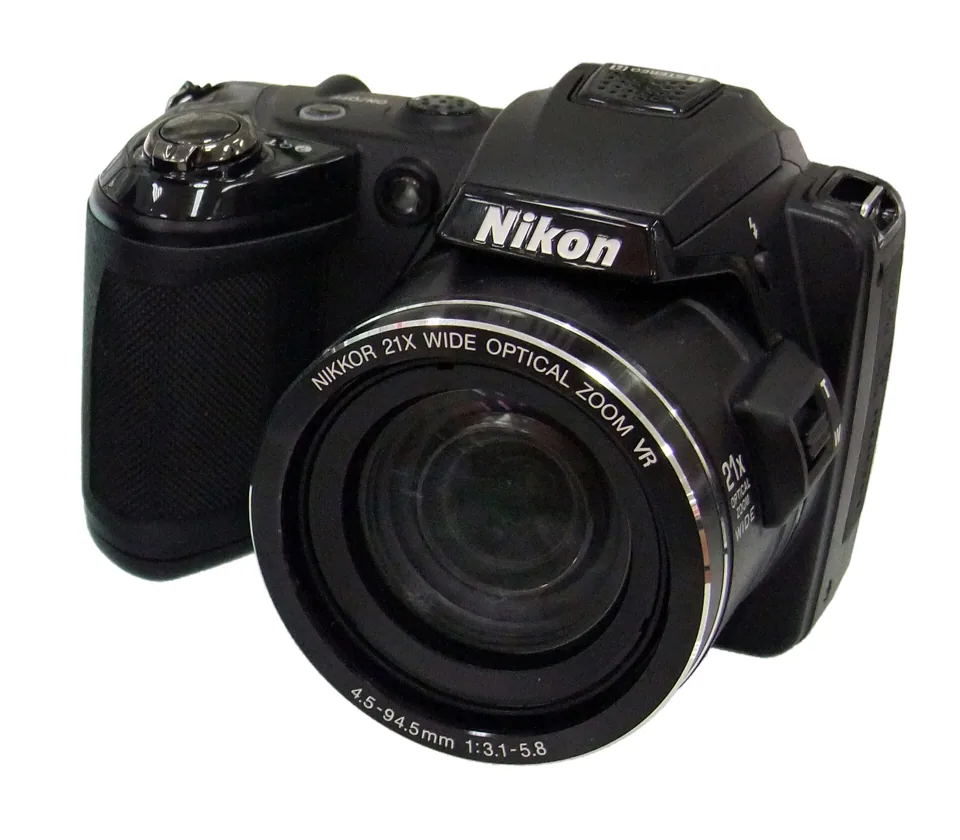

In February 2011 Nikon sold a 25 to 525 mm zoom for $279.95, powered by cells you could buy anywhere. Most reviewers praised the lens, then split over the video, the autofocus and how far the noise reduction went.
- Launched
- February 2011
- Sensor
- 14.1 MP CCD
- Lens
- 25–525 mm, 21×
- Card
- SD, SDHC, SDXC
- Battery
- 4 x AA
Nikon Coolpix L120 specs: sensor, lens, battery, memory card and cable
The Nikon Coolpix L120 is a 14.1 MP CCD compact camera with a 25–525 mm (35 mm equivalent) 21× zoom lens, launched in February 2011 at $279.95. It takes SD, SDHC and SDXC cards and runs on 4 x AA batteries. Sources
Meet the camera
The L120 is a bridge-style superzoom: a big grip, a lens barrel that dominates the front, a pop-up flash above it and no viewfinder, only the rear screen.634 Nikon Inc. announced it in the US on 8 February 2011 at $279.95, with availability in late February, and Nikon Corporation's own release in Tokyo is dated 9 February; Nikon called it the successor to the L110.12 Photography Blog listed £249.99, €290 and $279.95, and noted that the UK price had jumped from £179 for the L110 while the US and European prices stayed level.3 Expert Reviews, in March, quoted £210 including VAT.4
Nikon lists a body of 109.9 by 76.5 by 78.4 millimetres and 431 grams with batteries and a card; Imaging Resource's review header gives 454 grams with batteries.16 Nikon Inc. named three colours (black, red and bronze), while Photography Blog described a wine red and a black.23 Nikon called the front finish simulated leather and the grip rubber-coated.1
Why this one was interesting
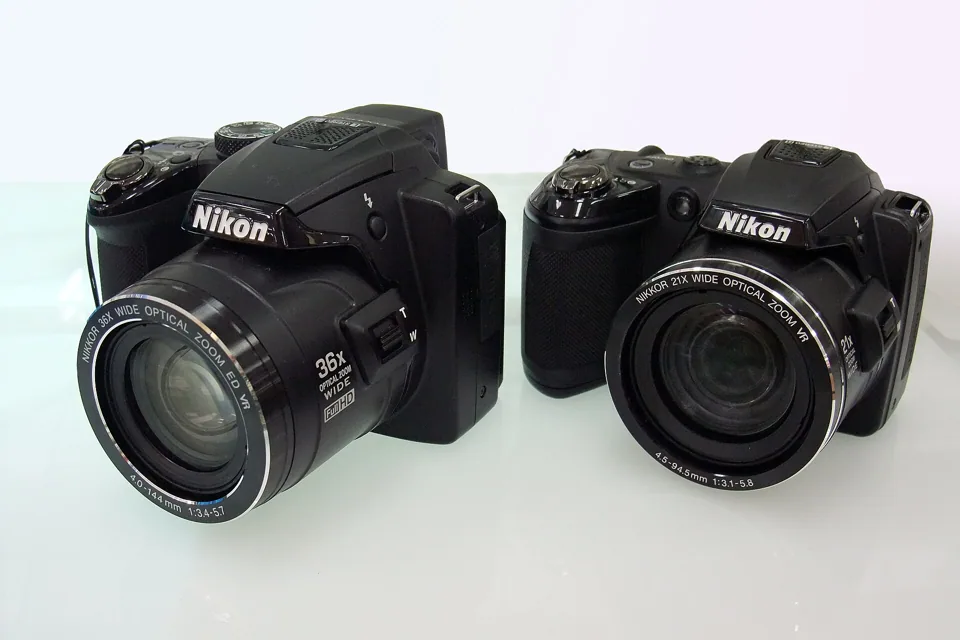
A lever for the left hand
The L120's most talked-about new feature was a second zoom control on the side of the lens barrel. Imaging Resource said it makes the focal length easier to change in shooting position and encourages the left hand to support the lens, which steadies long shots.6 Photography Blog called it a "genuinely innovative and helpful design feature" and found it especially useful while recording movies.3 Nikon Inc. announced a similar extra zoom control on the Coolpix P500 the same day.2
A screen better than the price
Photography Blog said the 921,000-dot screen had doubled from the L110's 460,000 dots and felt over-specified for a budget superzoom.3 Expert Reviews noted that a screen of this size, HDMI output and 720p video with stereo sound did not fit a cheap camera, and that ultra-zooms with those features tended to cost at least £250 when the cheapest ran to £130.4
Power from any shop
The L120 runs on four AA cells: alkaline, lithium or Nikon's EN-MH2 rechargeables, with alkaline cells in the box.16 Nikon pitched this as worry-free shooting away from home, since the cells can be bought anywhere.1 Expert Reviews took the opposite view: AA cells are bulkier than a lithium-ion pack and carry a hidden cost because rechargeables are not supplied, a budget sign.4 Our guide to CCD digicams that run on AA batteries sets this against other models.
Nikon announced the L120 alongside the 18x Coolpix S9100 ($329.95) and the 36x P500 ($399.95).2 Our S9100 review covers the pocket model, and our Coolpix L810 review the 2012 successor, which Cameralabs described as replacing the L120.7
What was lost
This was an automatic camera. Expert Reviews listed no viewfinder, no manual exposure or focus, and no way to choose the autofocus point.4 Imaging Resource said buyers wanting manual, shutter-priority or aperture-priority modes should look elsewhere.6 Photography Blog added that it saves no Raw files, shows no histogram while shooting or in playback, and hides ISO in the main menu, available only in Auto mode.3 Expert Reviews missed an orientation sensor, so portrait-format shots had to be rotated on a computer.4 The flash must be raised by hand with a button.3
The dark: its weak point
All four reviewers saw heavy noise reduction; they differed on how bad it looked. Photography Blog called it heavy-handed: no picture looked truly noisy, but fine detail went, ISO 800 printed acceptably at 4 by 6 inches, ISO 1600 suited screens only, and ISO 3200 and 6400 (3 megapixels only) could only be enjoyed at 640 by 480 pixels or smaller.3 Expert Reviews found ISO 800 and 1600 smudged but better than the "spidery, blotchy messes" it saw from the Panasonic FZ45, though not as clean as the Fujifilm HS10's back-illuminated sensor.4 TechRadar saw lines merging at ISO 800 and unusable images at ISO 6400,5 and Imaging Resource's lab saw softening from ISO 200.6
Imaging Resource's print tests give the clearest scale: ISO 80 and 100 made a good 16 by 20 inch print, ISO 400 was usable at 11 by 14, ISO 800 looked good at 8 by 10 and ISO 1600 was better at 4 by 6.6 Photography Blog found the longest exposure is 2 seconds and cannot be set by hand, so it called the camera hardly ideal for night shots,3 and TechRadar said its autofocus struggled in low light and low contrast.5 Three Commons contributors shot dusk and interiors at ISO 800, recorded in each file's EXIF. They are single pictures by single photographers, not a test.






Like the sound of it? See recent eBay sold listings for this camera ↗
On eBay right now
Live listings for this camera, supplied by eBay and updated automatically. We earn a commission if you buy through them.
The little wins
How it drew the picture
Photography Blog scored image quality 4 out of 5 and called it acceptable to good for a small-sensor superzoom, sharp in the centre and passable at the edges, softer at long focal lengths.3 Expert Reviews found punchy, vivid colour and sharpening that sometimes looked over-processed, and TechRadar called colour and detail replication outstanding.45 Imaging Resource was cooler: bright blues oversaturated, corners soft, and image quality adequate but not stellar; its chart showed lines to about 2,000 per picture height horizontally and 1,900 vertically.6 The photographs below come from Commons contributors and show subject and light more than the camera's limits.




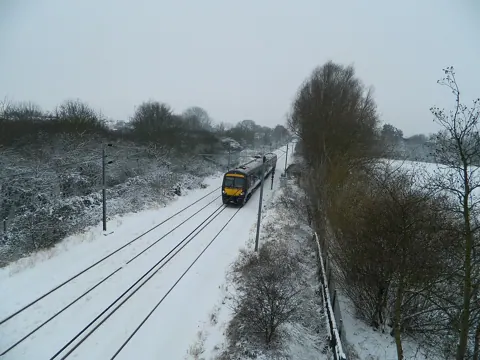













Photos taken with this camera, from Wikimedia Commons, credited under each picture. We cannot tell the zoom setting or processing of these files.
Where it let you down
Autofocus at the long end was the most common complaint. Imaging Resource said upwards of 20 percent of its full-zoom shots were out of focus, and that the lens struggled to lock on at maximum zoom.6 Expert Reviews found focus quick at wide angle and reasonable at telephoto, but said the lack of an adjustable focus point sometimes caused errors that grew at long focal lengths, so it took a handful of shots to improve the odds.4 TechRadar disagreed on one point: it said white balance, ISO, exposure compensation, metering and AF area could be set in Auto, whereas Expert Reviews found no way to adjust the autofocus point.54
The reviewers split over the video. Expert Reviews called it one of the better ultra-zoom examples it had seen, with excellent picture quality and a 29-minute maximum clip length.4 Imaging Resource called the quality so-so, soft in detail, blocky with moving subjects, and saw a vertical smear from bright light sources, which it said is not unusual for CCD sensors.6 Both agreed that the electronic stabilisation used in video was weak at telephoto, and Expert Reviews described occasional violent jerks.46
Other limits were smaller. Full-resolution bursts ran at 0.7 frames per second in all four reviews, and the faster Sport Continuous mode drops to 3 megapixels.3456 The panorama mode only helps you line up shots and does not stitch them, so you need the supplied software.36 Expert Reviews saw flash use stretch the gap between shots to as much as 10 seconds.4
Where the sources disagree
| Item | What each source says |
|---|---|
| Sensor type | Nikon's table, Photography Blog's list and Imaging Resource say CCD; TechRadar's text and spec box say CMOS. We follow Nikon.1365 |
| Longest focal length | Nikon, Photography Blog and Imaging Resource: 525 mm; TechRadar: 535 mm. We follow Nikon.1365 |
| Built-in memory | Nikon and Photography Blog's specification list: about 120 MB; Imaging Resource and TechRadar: about 102 MB. We show both.1365 |
| Sport Continuous speed | Photography Blog and TechRadar: 15 fps, 20 frames, at 3 MP; Imaging Resource measured 14.6 fps against 15.3 in the manual.356 |
What the reviewers said
| Outlet | Date | Verdict |
|---|---|---|
| PhotographyBLOG | 25 Feb 2011 | Solid on most fronts and recommended to anyone wanting an easy do-it-all camera that will not break the bank; scores: design 4.5, features 3.5, ease of use 4.5, image quality 4, value 4.3 |
| Expert Reviews | 23 Mar 2011 | Called "an odd mixture of cut-price and highly capable features", with solid image quality and a competitive price; the Fujifilm HS10 beat it on zoom, noise, video size, speed and controls, while the L120 was more compact with much better video sound.4 |
| TechRadar | 1 Apr 2011 (page metadata) | Liked the 21x zoom and the colour; disliked the lack of manual control and the autofocus in low light; judged it worth its £249 price.5 |
| Imaging Resource | Undated; page metadata 28 Oct 2011 | 3.5 out of 5: a decent snapshot camera that does not reach the standard it expects from Nikon; image quality is not stellar and the video is soft.6 |
The timeline
- 8 February 2011Nikon Inc. announces the L120 in the US at $279.95, with the S9100 and P500.2
- 9 February 2011Nikon Corporation publishes its release for the L120 and the L23.1
- 25 February 2011PhotographyBLOG publishes its review.3
- 23 March 2011Expert Reviews publishes its review.4
- 1 April 2011TechRadar's review page, by its own metadata.5
Should you buy one now?
It suits someone who wants a lot of reach from a simple camera that runs on ordinary batteries, and who will shoot mostly outdoors in good light. It launched at $279.95;2 what it sells for now is a question for the sold listings, not for us. Before you bid, check these:
- The batteries. It takes four AA cells, and alkaline ones came in the box.6 Imaging Resource recommends Nikon EN-MH2 or other rechargeables and a good charger.6 AA rechargeables on Amazon ↗. The cells share one compartment with the card, and Photography Blog warned that nothing holds them in when the door is open.3
- The card. It takes SD, SDHC and SDXC cards;1 Imaging Resource suggests an 8 or 16 GB card.6 See our memory card guide.
- The cable. Nikon's list of supplied accessories includes a UC-E6 USB cable and an EG-CP16 audio/video cable;1 see our UC-E6 page before you buy a replacement.
- The lens cap. Photography Blog said the lens will not extend with the cap on; you must remove it and restart the camera.3 Run the zoom through its whole range both ways.
- The test shots. Take a few at full zoom in good light and check them at full size, because Imaging Resource found many were out of focus.6
If you are wondering why cameras like this are being hunted down again, we tell that story once, in Pictures that never left the card.
See recent sold prices on eBay ↗Shop on eBay ↗AA rechargeables ↗
Sources
- Nikon Corporation, Digital Compact Camera Nikon COOLPIX L120 / L23, news release (9 February 2011), including the specification table
- Imaging Resource, Nikon S9100, L120: Two new long-zoom Coolpixes, by Mike Tomkins (8 February 2011), with Nikon Inc.'s US press release (prices and availability)
- PhotographyBLOG, Nikon Coolpix L120 Review by Mark Goldstein (25 February 2011), including its specification list
- Expert Reviews, Nikon Coolpix L120 review by Ben Pitt (23 March 2011)
- TechRadar, Nikon Coolpix L120 review (six pages; the page metadata gives 1 April 2011; the byline names Natalie Johnson)
- Imaging Resource, Nikon L120 Review: lab tests and sample images (undated in its text; the page metadata gives 28 October 2011)
- Digicam Atlas, our own Nikon Coolpix L810 and S9100 reviews (their sources are cited there)
Sample photographs and product photos are credited under each one, all via Wikimedia Commons. Links to eBay and Amazon are affiliate links.