Nikon Coolpix P · on sale autumn 2010 · a retrospective
The Nikon Coolpix P7000: the flagship Coolpix with every dial, and a very slow raw mode
In 2010 Nikon built its most serious compact yet: a 28–200 mm f/2.8 lens, raw files, a hot shoe and a built-in ND filter, for about $500. Reviewers loved the pictures and the controls, then waited for the menus.
Release date and launch price: launched September 2010; launch price $499.95 · £489.9923.
Quick answers
Meet the camera
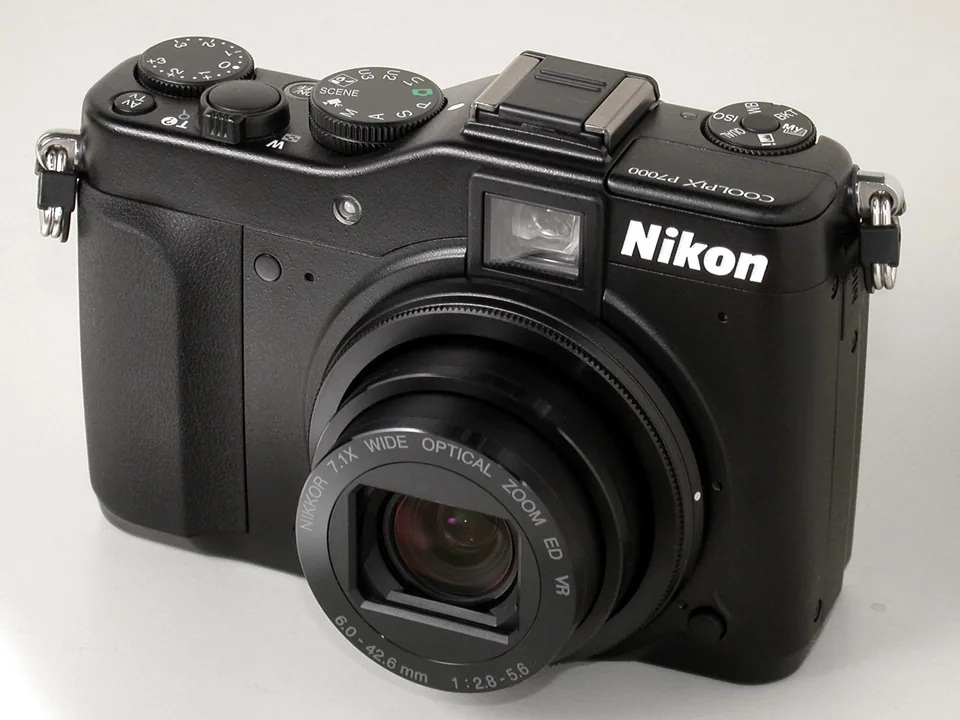
The P7000 is a big compact, built around a magnesium-alloy body that PhotographyBLOG praised, though the reviewer also noted that it was bulkier than its predecessor and no longer fitted comfortably in a trouser pocket.2 Nikon quoted about 114 by 77 by 45 millimetres and 360 grams with battery and card.1 Imaging Resource found it comfortable to hold, with a rubber grip, and slimmer than Canon's G12.3
Nikon announced it on 8 September 2010 as the latest flagship of the Coolpix line.1 PhotographyBLOG gave the launch price as £489.99, €580 and $499.95,2 and Imaging Resource listed it as available from 30 September 2010 at US$499.95.3 By February 2011 Expert Reviews priced it at £320.4
Why this one was interesting
The most serious Coolpix
Nikon's own phrase was "flagship",1 and the feature list backed it: exposure modes P, S, A and M, raw files in Nikon's NRW format, a hot shoe, bracketing and a virtual horizon.123 Neocamera described it as suited to creative, advanced shooting and not to action.5 Imaging Resource and Expert Reviews both noticed how closely it resembled Canon's G-series in layout, and Imaging Resource listed the unoriginal design as a drawback.34
A bigger sensor than a pocket camera
The 1/1.7-inch sensor gave it, in Expert Reviews' words, about 50% more surface area than a typical 1/2.3-inch compact sensor. Resolution dropped to 10 megapixels from the 13.5 of the Coolpix P6000 before it.4
A lens that was bright at the wide end
The zoom runs 28 to 200 millimetres at f/2.8 to f/5.6.1 Expert Reviews noted that an f/2.8 lens needs double the ISO speed of the f/2 lenses on rival cameras.4 One of those rivals was our Canon PowerShot S95, which Canon launched in August 2010, the month before the P7000.
What was lost
PhotographyBLOG found the body larger than the P6000's, and also listed a stiff mode dial, a vibration-reduction switch buried in the menus with no button of its own, no live histogram, and an optical viewfinder it called murky.2 Imaging Resource measured the finder at about 83 to 84 percent coverage with parallax, and Neocamera called the optical viewfinder "very poor", though it said you could still follow action through it.35 Imaging Resource also noted that the screen does not articulate.3
The dark: its weak point
Three reviewers described noise; they agreed on the shape and differed on where the usable range ended. PhotographyBLOG found noise negligible from ISO 100 to 400 and noticeable around 800, with 800 and 1600 still usable, degradation at 3200 and ISO 6400 unusable.2 Expert Reviews found quality excellent up to ISO 800 and 1600 and 3200 good enough for casual shots.4 Imaging Resource was stricter: its lab saw smudging from noise suppression as early as ISO 200, more prominent grain at ISO 800 and strong chroma and luminance noise from ISO 1600 up, and found that ISO 100 prints well at 13 by 19 inches, ISO 200 is best at 11 by 14, and ISO 6400 is usable only at 4 by 6.3 The Nikon announcement adds that noise reduction is adjustable, and Imaging Resource said the Low setting raises the chance of better detail.13


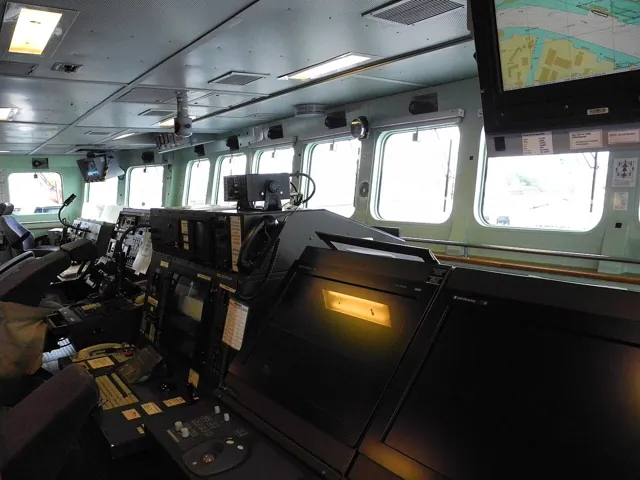
Real photographs taken with this camera. The sensitivity shown is recorded in each file's own EXIF data.
Like that look? See recent eBay sold listings for this camera ↗
On eBay right now
Live listings for this camera, supplied by eBay and updated automatically. We earn a commission if you buy through them.
The little wins
A built-in ND filter
Nikon built in a neutral density filter that cuts light by three stops, so you can use slower shutter speeds in bright light.1 Neocamera listed it among the camera's strengths.5
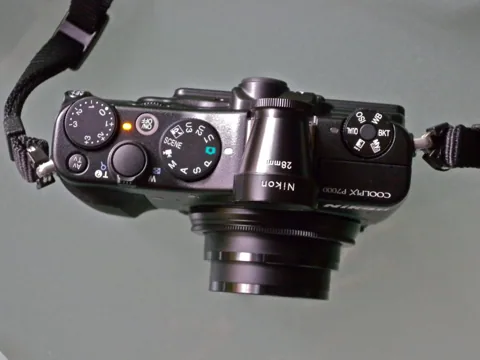 The P7000 from above. · raneko · CC BY 2.0 · Commons
Dials where you want them
Imaging Resource liked the thumb-operated exposure compensation dial, the mode dial with three user settings (U1 to U3), and the external controls for manual, aperture and shutter priority.3 Expert Reviews counted a top dial with six selectable functions, a separate exposure compensation dial and three further quick-access controls.4


How it drew the picture
PhotographyBLOG scored image quality 4.5 out of 5.2 Imaging Resource measured about 1,600 lines of resolution from JPEG files and 1,700 to 1,800 from converted raw, found colour good but somewhat oversaturated, with pinkish skin tones and a slight magenta cast indoors under automatic white balance, and saw mild corner softness at both ends of the zoom.3 It also found dynamic range pretty good for the class and chromatic aberration low to moderately low.3 Expert Reviews described bright-light pictures as very sharp, noise-free and richly coloured, with distortion at the extremes of the zoom that the Distortion Control setting fixed (it is not applied to video).4


















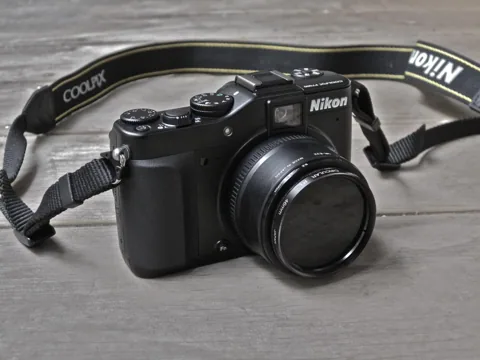
Photos taken with this camera, from Wikimedia Commons, credited under each picture.
Where it let you down
Speed was the complaint. PhotographyBLOG said raw shooting locks the camera for about five seconds per file, and raw bursts stop after five frames and then take about 15 seconds to write; it called the raw speeds "painfully slow" and said the raw mode was what ultimately put the reviewer off.2 Imaging Resource timed a raw plus JPEG cycle at 6.84 seconds, improved to 4.1 seconds after firmware 1.1, and a start-up of 2.9 seconds in the lab, against Nikon's claim of about 0.95 seconds.31 Expert Reviews found a delay of about a second when choosing from the top dial, and over two seconds to leave the main menu.4 Imaging Resource found the Quick Menu dial equally slow and said autofocus under indoor incandescent light was unreliable.3 Shutter lag, by contrast, was quick: Imaging Resource measured 0.20 to 0.23 seconds with full autofocus.3 Continuous shooting was about 1.4 frames per second.43
Coverage of this camera is thinner than for a mainstream model. We read three full reviews, plus Nikon's announcement, and only part of a fourth.
What the reviewers said in 2010 and 2011
| Outlet | Date | Verdict |
|---|---|---|
| PhotographyBLOG | 4 Oct 2010 | "Something of a flawed gem": 4.5 out of 5 for design, features, ease of use and image quality, 3.5 for value, held back by slow raw writing.2 |
| Neocamera | 26 Oct 2010 | Well suited to creative photography but not to action; built-in ND filter and raw listed among the high-end features; viewfinder called very poor. No clear verdict in the part we read.5 |
| Imaging Resource | 23 Nov 2010 | 4 out of 5: a big step up for Nikon's enthusiast compacts; sluggish interface and slow raw keep it from being great, but deliberate shooters will be happy.3 |
| Expert Reviews | 13 Feb 2011 | Excellent pictures and features, but slow menus; the Canon S95 and Panasonic LX5 are the more attractive choices.4 |
The timeline
- 8 September 2010Nikon announces the P7000.1
- 30 September 2010Imaging Resource lists it as available, at $499.95.3
- 4 October 2010PhotographyBLOG publishes its review.2
- 23 November 2010Imaging Resource publishes its review.3
- 20 January 2011Imaging Resource updates its timings for firmware 1.1.3
- 13 February 2011Expert Reviews publishes its review.4
Should you buy one now?
Buy one if you want a pocketable-ish CCD camera with real manual dials, raw files, a hot shoe and a 28–200 mm zoom, and you are happy to shoot deliberately. It launched at $499.95;23 what it sells for now is a question for the sold listings, not for us. If you like Nikon's older, simpler cameras, see our Coolpix 2500. Before you bid, check these:
- The battery. It uses an EN-EL14;1 a fresh one is on Amazon ↗, and Nikon supplied an MH-24 charger.1
- The cable. It uses Nikon's UC-E6 USB cable; see our UC-E6 cable page.1
- The card. SD, SDHC and SDXC work and MMC cards do not;1 see our memory card guide.
- The raw files. NRW files need Nikon's ViewNX 2 or Capture NX 2 to open.1
- The controls. Reviewers found the mode dial stiff and the menus slow;24 check that every dial turns and the lens extends and retracts cleanly.
- The firmware. Imaging Resource's raw timings improved with firmware 1.1;3 check which version a seller's camera has.
If you are wondering why cameras like this are being hunted down again, we tell that story once, in Pictures that never left the card.
See recent sold prices on eBay ↗Shop on eBay ↗EN-EL14 battery ↗
Sources
- Nikon, Digital Compact Camera Nikon COOLPIX P7000 (press release dated 8 Sep 2010)
- PhotographyBLOG, Nikon Coolpix P7000 review by Mark Goldstein (4 Oct 2010)
- Imaging Resource, Nikon Coolpix P7000 review (reviewed 23 Nov 2010, updated 20 Jan 2011 for firmware 1.1)
- Expert Reviews, Nikon Coolpix P7000 review by Ben Pitt (13 Feb 2011)
- Neocamera, Nikon Coolpix P7000 review (26 Oct 2010; the part we could read is thin)
Camera photos by Hiyotada (CC BY-SA 3.0), raneko (CC BY 2.0) and osaMu (CC BY 2.0); other photographs are credited under each one, all via Wikimedia Commons. Links to eBay and Amazon are affiliate links.