Fujifilm FinePix S · shipped June 2002
The Fujifilm FinePix S602 Zoom: the SLR-shaped camera that wrote six megapixels from three
DPReview and Imaging Resource both call it the FinePix S602 Zoom; we found no other regional name.12
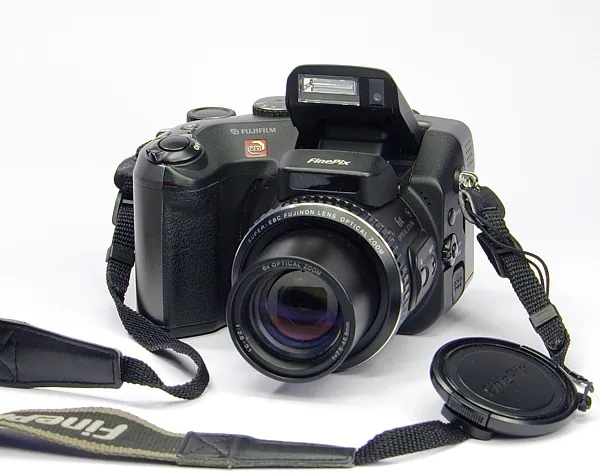

In 2002 Fujifilm put a 35–210 mm f/2.8 lens, four AA batteries, two card slots and 30 frames-per-second video into one bulky body for $799. Two reviewers loved handling it and disagreed about the pictures.
- Launched
- June 2002
- Sensor
- 3.1 MP CCD
- Lens
- 35–210 mm, 6×
- Card
- SmartMedia, CompactFlash Type I, CompactFlash Type II
- Battery
- 4 x AA (NiMH or alkaline)
Fujifilm FinePix S602 Zoom specs: sensor, lens, battery, memory card and cable
Launched in June 2002 at $799, the Fujifilm FinePix S602 Zoom is a 3.1 MP CCD compact with a 35–210 mm (35 mm equivalent) 6× zoom lens. Inside: it runs on 4 x AA (NiMH or alkaline) batteries. Sources
- Sensor
- CCD, 1/1.7", 3.1 MP source
- Lens
- 35–210 mm equivalent, 6× zoom source
- Memory card
- SmartMedia, CompactFlash Type I, CompactFlash Type II source
- Battery
- 4 x AA (NiMH or alkaline) source
- USB / A/V cable
- See our Fujifilm cable page
Meet the camera
The S602 Zoom looks like a small SLR but has no mirror: you frame on an electronic viewfinder or a rear screen. Imaging Resource called it a bulkier, more traditional 35 mm shape than the rest of the FinePix line and, for all that, surprisingly compact for its 6x zoom.2 DPReview said the body was plastic over a metal substructure, with a deeper, sculpted grip, and rated its grip among the most comfortable of any consumer digital camera it had held.1
It succeeded the 6900 Zoom, which Imaging Resource said sold far beyond Fuji's expectations in late 2001.2 Fujifilm announced the S602 Zoom in January 2002, just before the PMA show, and Imaging Resource reported on 19 June 2002 that it was shipping in the United States at $799.4 The two sources disagree on its size: Imaging Resource's data sheet gives 499 grams and 122 × 81 × 97 mm,3 DPReview 587 grams with batteries and 110 × 79 × 95 mm including the grip in its spec list,1 though its own comparison table gives 121 × 81.5 × 97 mm, close to Imaging Resource's figure.1 DPReview put the street price at $800 in the US and £699 in the UK, and had seen it for $700.1
- Sensor
- 3.1 MP effective Super CCD III (DPReview's spec list also gives 3.3 MP CCD pixels), 1/1.7", output interpolated to 6 MP (2832 × 2128)13
- Lens
- 6x, 35–210 mm equiv., f/2.8–3.11
- Finder and screen
- 0.44" EVF, 180,000 pixels · 1.8" LCD, 110,000 pixels1
- Cards and power
- SmartMedia (up to 128 MB) and CompactFlash I/II · four AA batteries1
Why this one was interesting
It fixed what 6900 Zoom owners complained about
DPReview's verdict says Fujifilm had addressed several of the issues that frustrated 6900 Zoom owners, and the body of its review credits a sharper viewfinder with a dioptre adjustment and a tripod socket now in line with the lens.1 The camera moved from the small NP-80 battery to four AA cells, which DPReview said would improve battery life, allow ordinary rechargeables and add weight, and it added a CompactFlash slot beside SmartMedia.1 Imaging Resource added improved white balance under household incandescent light, which it called a huge improvement over earlier Fuji cameras, although its indoor portrait test still showed colour casts.2
Video that did not stop
Both reviewers made the movie mode a headline. Imaging Resource called 640 × 480 at 30 frames per second astonishing, and DPReview called it the best video recording capability of any digital camera: clips were limited only by storage, and on a 1 GB IBM Microdrive it estimated 15 minutes at VGA.21 The catch lay in the card, which we come back to below.
Handling that rewarded practice
The camera put most settings on external controls, so Imaging Resource found it could avoid the menu system most of the time.2 DPReview described a Focus Check button that magnifies the centre and, unlike some rivals, showed more detail rather than larger pixels, plus a 7 × 7 grid of 49 selectable autofocus points.1 Fujifilm's later compacts took a different road: see our FinePix F30, F31fd and F40fd reviews for what the company was selling four to five years on.
What was lost
DPReview praised the new rear screen for showing 100 per cent of the frame, but noted that the viewfinder showed only 92 per cent.1 The new 1.8-inch screen was smaller than the 6900 Zoom's 2 inches, and its shiny cover made it hard to read in direct sun.1 The one-touch manual white balance button of the 6900 Zoom was gone.1 And DPReview did not see a significant improvement in image quality over the 6900 Zoom, which was the one thing it had hoped for from the new sensor.1
The dark: its weak point
Here the two reviewers read the same camera differently. DPReview found noise fairly low up to ISO 400, with more clearly visible beyond, and noted that ISO 800 and 1600 worked only at 1 megapixel and cropped about six per cent of the frame, a crop the screen did not show until playback.1 Imaging Resource said the high settings cleverly traded resolution for lower noise.2 In its tests the camera captured bright, clear images down to 1/16 foot-candle (0.067 lux) at every ISO, with a warm colour balance, using exposures up to 15 seconds.2 It also noted that the viewfinder and autofocus quit at light levels close to one foot-candle.2 DPReview measured focus failing at 3.0 EV (about 20 lux) and regretted the lack of an autofocus assist lamp.1 Our reading of the two reviews together: a camera that could expose in near-darkness but needed light, or your own hand on the focus ring, to focus.
The Commons photographs on this page were taken at ISO 200 in eight cases and ISO 400 in one, according to their EXIF data, so we cannot show you the 1-megapixel high-ISO modes.
Like that look? See recent eBay sold listings for this camera ↗
On eBay right now
Live listings for this camera, supplied by eBay and updated automatically. We earn a commission if you buy through them.
The little wins
Last 5 frames
The camera could shoot at 5 fps, but a burst stopped after five frames. Its new 'Last 5' mode shot up to 25 frames and kept only the final five, so you could release the shutter just after the action.1 Imaging Resource found the first four shots in continuous mode ran at 0.25 seconds per frame, then slowed while the buffer cleared; in its conclusion it named the camera, with this mode, a good choice for amateur sports shooters.2
Battery life
On DPReview's standard test with four 1600 mAh NiMH cells it ran for 3 hours 29 minutes and 350 shots, against 2 hours 29 minutes and 250 for the 6900 Zoom.1 Imaging Resource, estimating from power draw rather than a shooting test, gave 159 minutes in capture mode with the screen on and 146 with the shutter half-pressed.2
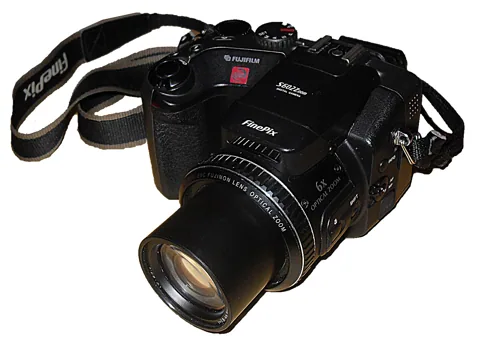 The S602 Zoom with its lens extended. · Andre Chalmers · CC BY-SA 3.0 · Commons

A macro lens in disguise
In Super Macro mode the lens focused down to 1 centimetre. Imaging Resource measured a picture area of 38 × 28 mm and called the resolution high,2 while DPReview warned of strong barrel distortion and difficulty lighting subjects so close.1
A viewfinder worth using
DPReview called the 180,000-pixel finder notably sharper, brighter and more detailed than almost any other it had used, with overlays that also worked in playback.1
How it drew the picture
DPReview found good colour, dynamic range and tonal balance, but said the six-megapixel files looked soft and over-processed, and that Fujifilm's in-camera interpolation meant each photosite fed at least two output pixels. At 3 megapixels it called the files at least as good as the best 3-megapixel cameras, and against Canon's 4-megapixel G2 the Fuji lost on resolution.1 It measured 1,200 lines per picture height of absolute resolution and 1,400 to 1,450 at extinction.1 Imaging Resource saw artifacts begin around 800 lines, strong detail to about 1,150 and extinction near 1,450, and called colour pleasing, with skin tones a little pink.2 Each had a complaint: DPReview saw reds drift orange in some shots, and Imaging Resource found detail lost in strong highlights and a tendency to overexpose.12




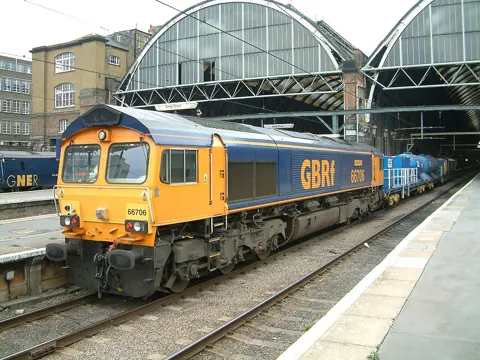







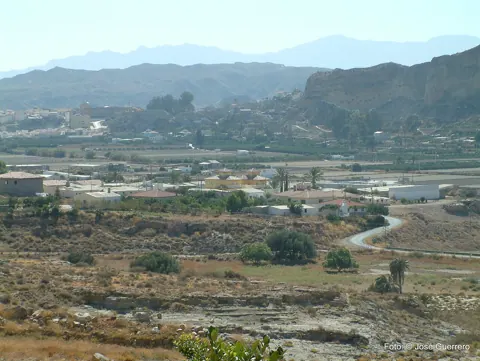



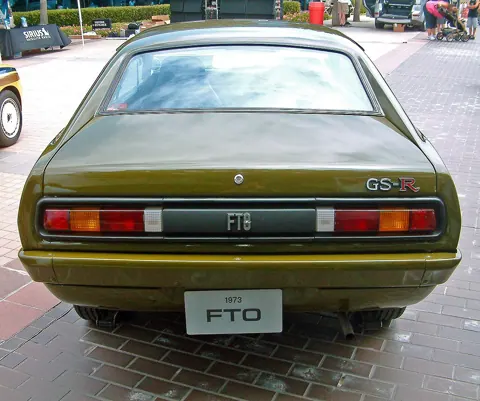

Photos taken with this camera (Polish trams, trains at King's Cross, a lamp post, a 1903 car, a Spanish hillside, a window and a 1973 Mitsubishi), from Wikimedia Commons, credited under each picture.
Distortion was the other complaint. DPReview measured 1.8 per cent barrel distortion at wide angle and 0.8 per cent pincushion at the long end, more than it liked.1 Imaging Resource wanted less as well.2 DPReview also noticed that the camera let you select f/2.8 at full telephoto although the lens is specified at f/3.1, which it called plain wrong.1
Where it let you down
The same card flexibility that made it appealing made it fussy. Imaging Resource found performance depended on the card: a generic 256 MB CompactFlash card stopped recording a movie after 15 seconds and produced a movie that errored on playback; a Lexar 12x card stopped at 63 seconds; SmartMedia and an IBM Microdrive recorded until full.2 A TIFF took up to 40.5 seconds to clear on the slowest card.2 After a burst of five 6 MP Fine frames DPReview had to wait 12.6 seconds before shooting again.1 Start-up took 4.3 seconds for DPReview and 3.1 for Imaging Resource, which said it felt slower.12 In play mode DPReview found browsing frustrating because of the delay between images, and found the normal sharpening level too hard.1
What the reviewers said in 2002
| Outlet | Date | Verdict |
|---|---|---|
| Imaging Resource | 18 Apr 2002 | Highly recommended: a home run for enthusiasts, with fast response, excellent colour and resolution; less lens distortion wanted.2 |
| DPReview | 29 Apr 2002 | Recommended, with scores of 8 to 8.5 out of 10 across six categories; it wanted to give a higher rating, but the 1:1 Super CCD images and the 1-megapixel-only high ISOs held it back, and $800 meant it should deliver more.1 |
The timeline
- 30 January 2002Fujifilm announces the camera just before PMA (the date is DPReview's).14
- 18 April 2002Imaging Resource first posts its review.2
- 29 April 2002DPReview publishes its review.1
- 19 June 2002Imaging Resource reports it shipping at $799 (its data sheet lists 30 June 2002 as the available date).43
Should you buy one now?
Buy one if you want a big but well-handling 2002 zoom with a proper electronic viewfinder and manual controls, and you will shoot at 3 megapixels or accept soft 6-megapixel files. It launched at $799;4 what it sells for now is a question for the sold listings, not for us. We have not tested a unit, and our coverage rests on two contemporary reviews. Before you bid, check these:
- The power. It takes four AA batteries, with NiMH recommended;1 DPReview's spec list says no charger and its box list non-rechargeable AA cells (its comparison table says NiMH included), while Imaging Resource's data sheet lists NiMH cells and a charger as included and its review text says alkaline cells,32 so check what comes with the unit and see AA rechargeables on Amazon ↗.
- The card. It uses SmartMedia (DPReview lists up to 128 MB) or CompactFlash Type I or II;1 for movies, test the card, since Imaging Resource saw two CompactFlash cards fail at it. See our memory card guide.
- The viewfinder and screen. Check both for dead pixels or scratches, and that the EVF/LCD button switches between them.
- The lens. It extends on power-up; check that it extends, zooms and retracts smoothly, and that the focus ring turns.
- The extras. The hot shoe and the optional filter adapter ring were part of the system;1 do not pay extra for accessories you will not use.
If you are wondering why cameras like this are being hunted down again, we tell that story once, in Pictures that never left the card.
See recent sold prices on eBay ↗Shop on eBay ↗AA rechargeables ↗
Sources
- DPReview, Fujifilm FinePix S602 Zoom review by Phil Askey (published 29 Apr 2002; 15 pages read in full)
- Imaging Resource, Fuji FinePix S602 Zoom review (first posted 18 Apr 2002; all 12 pages read; the text is in the first person and no author is named)
- Imaging Resource, FinePix S602 Zoom data sheet (retail price $799.00, date available 2002-06-30)
- Imaging Resource news by Mike Tomkins, Fuji FinePix S602Z now shipping (19 Jun 2002)
Coverage is thin on the maker's side: we could not read Fujifilm's own announcement or spec page, so launch facts come from Imaging Resource's news item. Camera photos by Afrank99 (CC BY-SA 2.5) and Andre Chalmers (CC BY-SA 3.0); other photographs are credited under each one, all via Wikimedia Commons. Links to eBay and Amazon are affiliate links.