Canon PowerShot G · announced February 2016
The Canon PowerShot G7 X Mark II: the same 1-inch pocket camera, polished
Sold under the same name in the US, Europe and Japan. Not the 2014 original or the 2019 Mark III.
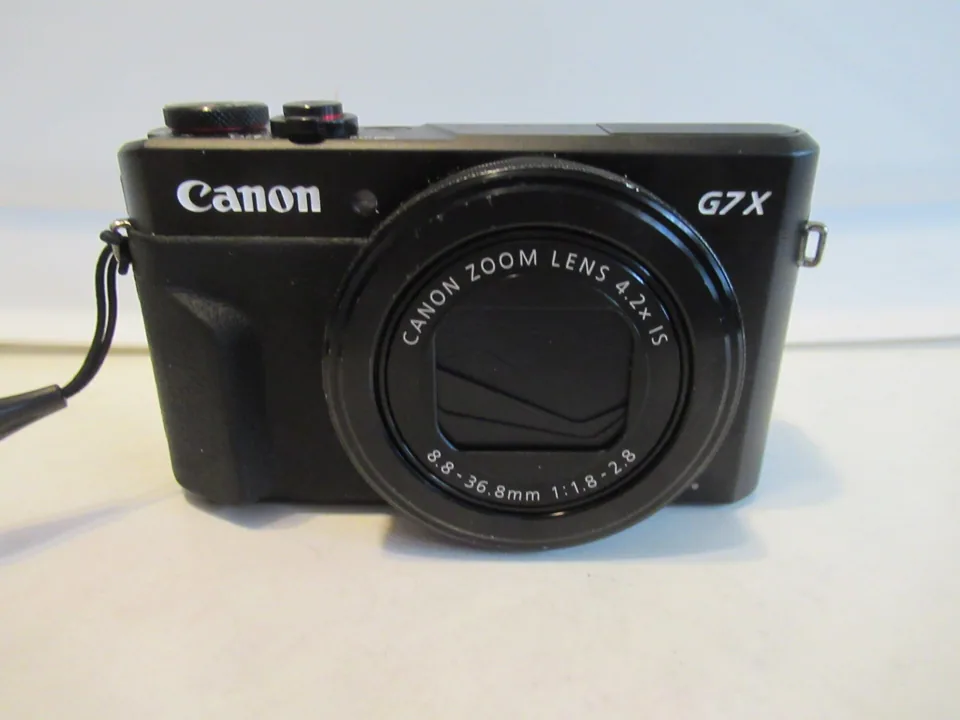

In 2016 Canon kept the 1-inch sensor and the f/1.8 lens of its 2014 pocket camera and changed what surrounds them: a new processor, a rubber grip, a screen that also tilts down and a battery rated for 265 shots. The US price stayed at US$699.99. Reviewers liked the polish and still missed a viewfinder.
- Launched
- April 2016
- Launch price
- US$699.99 · £549.99 · €769.994
- Sensor
- 20.1 MP CMOS
- Lens
- 24–100 mm, 4.2×
- Card
- SD, SDHC, SDXC
- Battery
- NB-13L
Canon PowerShot G7 X Mark II specs: sensor, lens, battery, memory card and cable
The Canon PowerShot G7 X Mark II came out in April 2016 at US$699.99 as a 20.1 MP CMOS compact with a 24–100 mm (35 mm equivalent) 4.2× zoom lens. It takes SD, SDHC and SDXC cards and runs on the NB-13L battery. Sources
- Sensor
- CMOS, 1.0-type (13.2 x 8.8 mm), 20.1 MP source
- Lens
- 24–100 mm equivalent, 4.2× zoom source
- Memory card
- SD, SDHC, SDXC source
- Battery
- NB-13L source
- USB / A/V cable
- IFC-600PCU Confirmed · all Canon cables
Meet the camera
It is a metal-bodied compact. What Digital Camera found the construction largely sturdy metal, with plastic on the base, the battery and card door and the flash, and milled metal for the dials and the lens ring.12 Canon lists it at 105.5 by 60.9 by 42.2 millimetres and about 319 grams with battery and card;1 the original was 103.0 by 60.4 by 40.4 millimetres and about 304 grams.2
The two outward changes, said What Digital Camera, were the dual-hinged screen and a small rubber grip that adds little bulk.12 Imaging Resource called it very comfortable to hold, and PhotographyBLOG noted there is no front control dial.76
Canon's museum lists it as marketed in April 2016.1 PhotographyBLOG's announcement estimated US sales for May, and Imaging Resource's spec table lists availability from 15 May 2016.411
Sources disagree slightly: Imaging Resource's spec table says 20.2 effective megapixels and its review text 20.1;117 Canon's museum lists the original at 20.2 million effective pixels and this camera at 20.1, while Imaging Resource calls the sensor unchanged;217 PhotographyBLOG's review text says about 265 shots per charge and its spec table 240.6
Why this one was interesting
Nothing changed where it counted most
Imaging Resource listed what stayed the same: the 24–100 mm f/1.8–2.8 lens, the 20.1-megapixel 1-inch sensor and 1080p video at up to 60 fps.7 What Digital Camera noted the lens reaches further than most rivals, which typically stop around 70 to 75 mm.12 Canon's first G7 X had arrived in October 2014 at £579, €599 and US$699.99;5 for the Mark II the US price stayed put, the UK price fell slightly and the euro price rose.4 For the original's story, see our PowerShot G7 X review.
What the new processor bought
PhotographyBLOG described it as the first camera to include Canon's DIGIC 7.4 Imaging Resource listed what changed against the original: 8 fps bursts, up from 6.5 fps; 8 fps for raw, up from 1.2 fps; 14-bit raw files, up from 12-bit; a time-lapse movie mode; a Wi-Fi button; and a battery rated at 265 shots, up from 210, with the same NB-13L.7 What Digital Camera added that the stabiliser now gives up to four stops of compensation, against three on the original.12
Where it sat in the market
PhotographyBLOG listed the Fujifilm X70, the Panasonic Lumix DMC-LX100 and the Sony Cyber-shot DSC-RX100 IV as its main rivals, and gave the edge to the Sony because it has a viewfinder.6 What Digital Camera said the original had little competition, while the Mark II arrived among many pocketable cameras with big sensors.12 Expert Reviews found the Sony better for video but with a shorter zoom and a price £250 higher.13 For the line the Canon was chasing, see our Sony RX100; for another camera built around a 1-inch sensor, see our Lumix ZS100.
What it still went without
There is no viewfinder and no hot shoe to add one, which What Digital Camera judged likelier to be seen as a serious omission than the missing 4K.12 Video stops at 1080p, which What Digital Camera called a non-issue for many people;12 Expert Reviews called the video good rather than great and noted that recording stops without warning at 4 GB, about 16 minutes.13 The new second hinge lets the screen tilt down 45 degrees, but What Digital Camera also found some touch controls small and close together.12
In the dark
Four reviewers who looked at noise liked what they saw, with different cut-offs. PhotographyBLOG found noise-free pictures from ISO 125 to 1600, some noise at ISO 3200, more obvious noise at 6400 that stayed perfectly usable, and ISO 12800 best avoided.6 What Digital Camera's measurements put JPEG resolution at roughly 3,200 lines per picture height at ISO 125 and 2,400 at ISO 3200; it called ISO 3200 a good upper limit.12 Expert Reviews thought ISO 3200 a little grainy and ISO 6400 pretty grainy but passable.13 Imaging Resource's print guide listed prints up to 8 by 10 inches at ISO 3200 and 5 by 7 at ISO 6400, and found high-ISO JPEGs improved over the original, though with slightly less detail at low ISO in default settings.10








Four photographs taken with this camera; the ISO is read from each file's metadata.
On eBay right now
Live listings for this camera, supplied by eBay and updated automatically. We earn a commission if you buy through them.
The little wins
Raw you can process in the camera
What Digital Camera called the ability to process raw files in the camera the most significant post-capture change from the original, and listed 14-bit raw files and Picture Styles on raw among the gains.127
Quicker to the shot
Imaging Resource measured a shot-to-shot time of 0.60 seconds and a shutter lag of 0.176 seconds at wide angle with full autofocus, against about 0.2 seconds for the original.9
How it drew the picture
Reviewers were mostly happy with the pictures, with one soft spot at the wide end. Imaging Resource found sharpness very good over much of the frame at 24 mm and f/5.6, but soft corners, and noted that stopping down slightly worsened them. It put the uncorrected raw barrel distortion at about 4.8 percent at 24 mm against about 0.3 percent in the JPEGs, and said heavy correction can soften corners.8 What Digital Camera also found corners soft at f/1.8 and worse at f/4, and found detail best at 40 to 75 mm.12 PhotographyBLOG scored image quality 4.5 out of 5.6 Expert Reviews called photo quality the star attraction and found slightly sharper detail than the RX100 IV at low ISO in its studio test.13










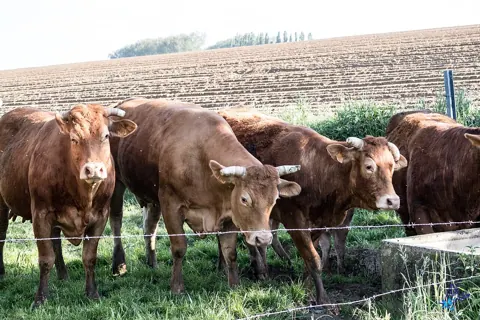

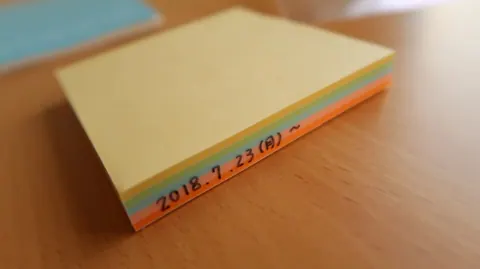





Photos taken with this camera, from Wikimedia Commons, credited under each picture.
Where it let you down
Battery life drew the same verdict twice. Imaging Resource called 265 shots below average for its class, about 55 better than the original, and Expert Reviews, which gave 240 shots, called the improvement welcome but still below average.913 Reviewers disagreed on focus. Imaging Resource found continuous autofocus unsuitable for fast subjects;10 What Digital Camera found the 31-point contrast-detect system strong though not the fastest, and noted there is no option to fire only once focus is confirmed.12 Start-up figures differ: PhotographyBLOG put it at under a second, while Imaging Resource timed power-on to first shot at about 2.2 seconds, slower than the original's 1.7.69 Imaging Resource found a weak automatic white balance under incandescent light;10 What Digital Camera called it very reliable, including under mixed light.12
What the reviewers said
| Outlet | Date | Verdict |
|---|---|---|
| Imaging Resource | Posted 17 Feb 2016, updated 29 Jul 2016 | A good compact with a lot of performance for the price; a Dave's Pick. Soft wide-angle corners, no viewfinder and a mediocre battery counted against it.710 |
| PhotographyBLOG | 4 May 2016 | 4.5 stars. It does just enough to keep up with the main competition; the Sony RX100 IV's viewfinder gave it the edge.6 |
| What Digital Camera | 29 Jun 2016 | Canon fixed the main issues of the original; exciting for enthusiasts on paper, though the market had grown more crowded. Marked WDC Recommended.12 |
| Expert Reviews | Page dated 25 Jan 2021; the text reads as 2016 | Photo quality the star attraction; the reviewer said it was on course to be their favourite camera of 2016. Battery life below average.13 |
The family
Canon's museum lists the original as marketed in October 2014, this camera in April 2016 and the Mark III in August 2019.213 The Mark III moved to a DIGIC 8 processor and a stacked 1-inch sensor and added 4K video and live streaming from the camera over Wi-Fi.3 We have not reviewed the Mark III yet. For why people want compact cameras again, we tell the story once, in Pictures that never left the card.
The timeline
- October 2014The original G7 X goes on sale at US$699.99.52
- 18 February 2016PhotographyBLOG's announcement gives £549.99, €769.99 and US$699.99.4
- April 2016PhotographyBLOG's announcement gives UK and European availability from April; Canon's museum lists it as marketed.41
- 4 May 2016PhotographyBLOG publishes its review.6
- 29 June 2016What Digital Camera publishes its review.12
- August 2019The Mark III is marketed.3
Should you buy one now?
Buy one if you want a pocketable 1-inch camera with a bright, long lens, real dials and an improved raw workflow, and can live with no viewfinder and a battery you will want a spare for. It launched at US$699.99;4 what it sells for now is a question for the sold listings. Before you bid, check these:
- The generation. The front badge in our photo reads only G7X. Look for the rubber front grip and a screen that tilts down as well as up, the two outward changes from the original, and ask for the model name.126
- The battery. It uses an NB-13L rated at 265 shots;119 a fresh one is on Amazon ↗. The camera can charge over USB, but PhotographyBLOG found no cable in the box, so ask whether the charger is included.6
- The card. It takes SD, SDHC and SDXC cards, with UHS-I support listed, and no card was included.11 See our memory card guide.
- The screen. Test the touch controls and both tilt directions: up 180 degrees, down 45.612
- Wi-Fi and NFC. Wi-Fi is 2.4 GHz only;6 we have not checked whether it still pairs with Canon's current phone app.
See recent sold prices on eBay ↗Shop on eBay ↗NB-13L battery ↗
Sources
- Canon Camera Museum: PowerShot G7 X Mark II (marketed April 2016; size, weight, lens, sensor)
- Canon Camera Museum: PowerShot G7 X (marketed October 2014; size and weight of the original)
- Canon Camera Museum: PowerShot G7 X Mark III (marketed August 2019)
- PhotographyBLOG, Canon PowerShot G7 X Mark II announcement by Mark Goldstein (18 Feb 2016; prices, availability)
- PhotographyBLOG, Canon PowerShot G7 X announcement by Mark Goldstein (15 Sep 2014; original's prices)
- PhotographyBLOG, Canon PowerShot G7 X Mark II review by Mark Goldstein (4 May 2016)
- Imaging Resource, Canon G7X Mark II review overview by Jeremy Gray, Zig Weidelich and William Brawley (posted 17 Feb 2016, last updated 29 Jul 2016)
- Imaging Resource, Canon G7X Mark II review: optics page
- Imaging Resource, Canon G7X Mark II review: performance page (timings, burst, battery)
- Imaging Resource, Canon G7X Mark II review: conclusion page (undated)
- Imaging Resource, Canon G7X Mark II specification table (retail price $699.99, available 15 May 2016)
- What Digital Camera, Canon PowerShot G7 X Mark II review by Matt Golowczynski (29 Jun 2016, ten pages; pages 2 to 9 read)
- Expert Reviews, Canon G7 X Mark II review: Pocket-sized brilliance by Ben Pitt (the page data says 25 Jan 2021, the text and photos date from 2016)
Camera photo by Urban Versis 32 (CC BY-SA 4.0); sample photographs are credited under each one, all via Wikimedia Commons. Links to eBay and Amazon are affiliate links.