Canon PowerShot ELPH · launched March 2006 · a retrospective
The Canon PowerShot SD600: the pocket camera that took the dark seriously
Also sold as the Digital IXUS 60 and the IXY Digital 70.
In the spring of 2006 Canon put ISO 800 and a sharper screen into a metal compact and priced it at $349. Reviewers noticed what it could do in a dim room.
Meet the camera
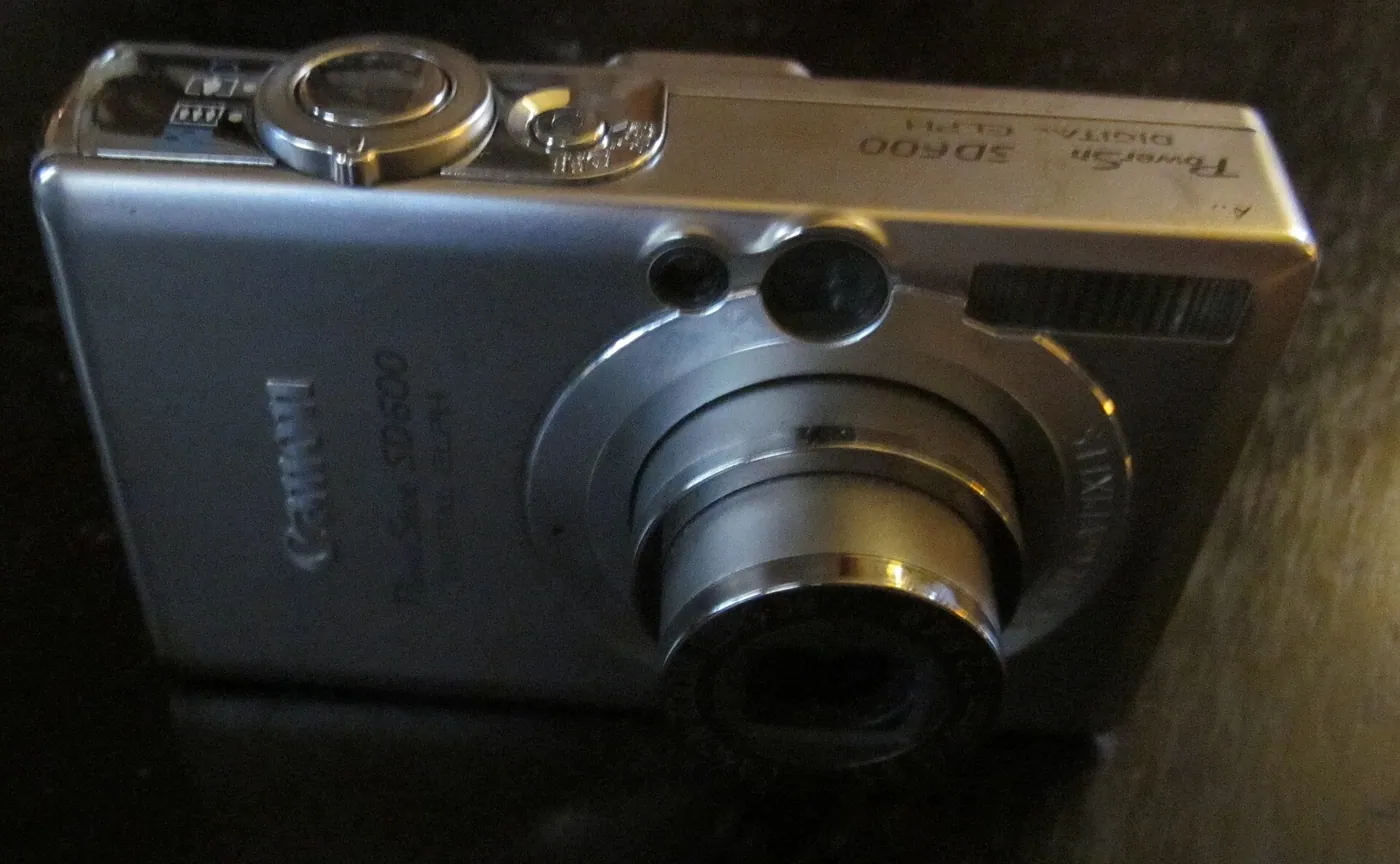
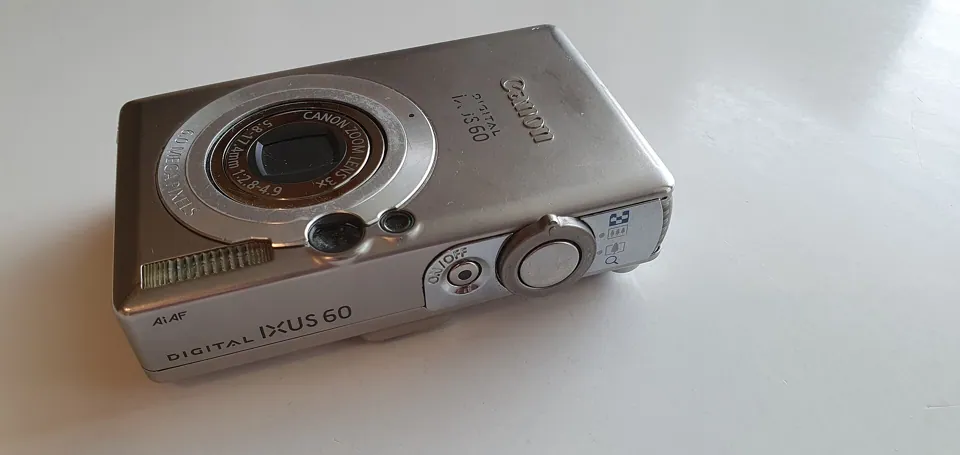
Pick it up in a photograph and you see a camera that has clearly been used. Silver metal worn at the corners, the model name engraved across the front, a ring of lens that slides out of the body when you switch it on and folds back flush when you do not. It is 86 millimetres wide and a little over 21 millimetres thick, and it weighs 140 grams without the battery.1 Dan Havlik at Imaging Resource called its look the long-running Digital ELPH "box and circle."5

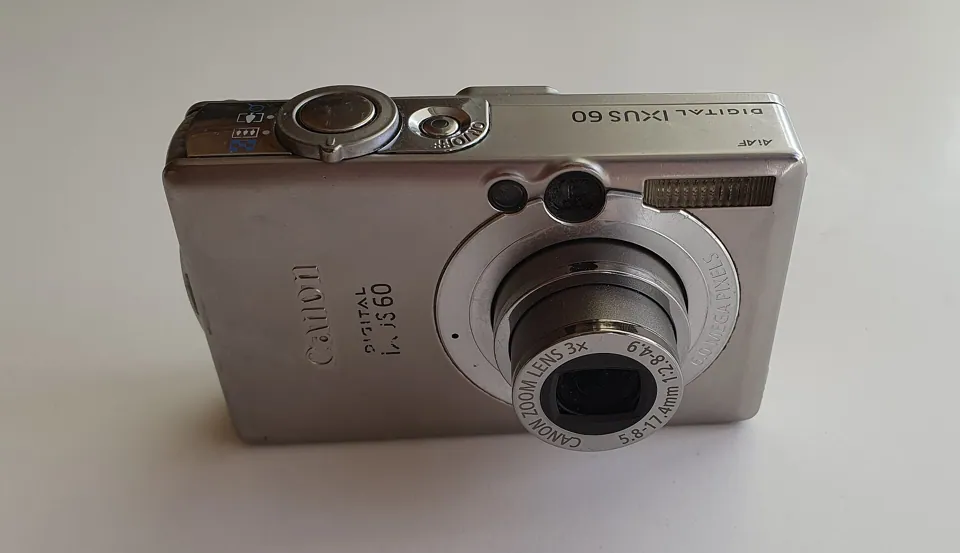

Canon announced it on February 21, 2006, alongside the SD630 and the image-stabilised SD700 IS, and it reached shops in March at $349.99.43 Canon's own museum text calls it the successor to the "highly acclaimed" IXY Digital 60 of September 2005, which had a 5-megapixel sensor.1 It shipped with a 16 MB card.3
The spring it came out
In 2006 about 106 million digital cameras shipped worldwide, up 14.5 percent on the year before. Canon led with 19.7 million units, an 18.7 percent share, Sony came second with 16.7 million, and Kodak, third at 10.6 million, shrank by almost a quarter as it walked away from unprofitable sales.7 In October Google agreed to buy YouTube for $1.65 billion in stock,8 and the SD600 recorded VGA video at 30 frames per second with sound.1 The iPhone, with its 2 megapixel camera, was not announced until January 2007.9 For one more year, the thing in your pocket that took pictures was a camera.
Why this one was interesting
Next to its predecessors, the SD600 improved almost everything a snapshooter would notice. Here is what changed, and who said so.
| What changed | The detail |
|---|---|
| Resolution | 6.0 megapixels, up from the 5.0 of the IXY Digital 60 that Canon names as its predecessor.1 |
| Screen | 173,000 pixels, up from 115,000 on the SD450, with a wider viewing angle.5 |
| Sensitivity | ISO 80 to 800, a wider range than earlier models, plus a new High ISO Auto mode.41 |
| Viewfinder | An optical viewfinder kept in the body, unlike the SD630 beside it.3 |
Was it a new chip?
The processor was DIGIC II, paired with what Canon described as a new 6-megapixel sensor.4 The real news was what Canon did with the sensitivity. Its launch material promoted High ISO Auto and ISO 800 for flash-free shooting indoors,3 and Canon's museum text says High ISO Auto exists to reduce the effects of camera shake and prevent subject blur.1
A new lens?
Not one Canon made a fuss about. Its launch text points to the "highly acclaimed" ultra-compact 3x zoom, 35 to 105 mm equivalent at f/2.8 to f/4.9, as a strength it was keeping.1 The attention went to the dark.
It took the dark seriously
The thing reviewers kept coming back to was low light. Dan Havlik at Imaging Resource found that its ISO 800 pictures looked better than rival cameras' ISO 400 pictures, and that its ISO 400 matched what competitors managed at ISO 100 or 200. Noise was barely visible in 4 by 6 prints and slight in 8 by 10s.5 Pocket-lint found images very clean at ISO 80 or 100 and noise at ISO 800 that was not intrusive, though it felt the noise reduction was weaker than some rivals'.6
That is why High ISO Auto mattered. A flash can fix a dim room and ruin it at the same time. Raising the sensitivity instead meant the shutter stayed fast enough to freeze people, so a candlelit table could still look like a candlelit table.13 For the times when no sensitivity would do, the SD600 had shutter speeds all the way up to 15 seconds, with noise reduction applied automatically to the long ones,1 and Havlik found its Long Shutter mode effective.5

.jpg)

.jpg)
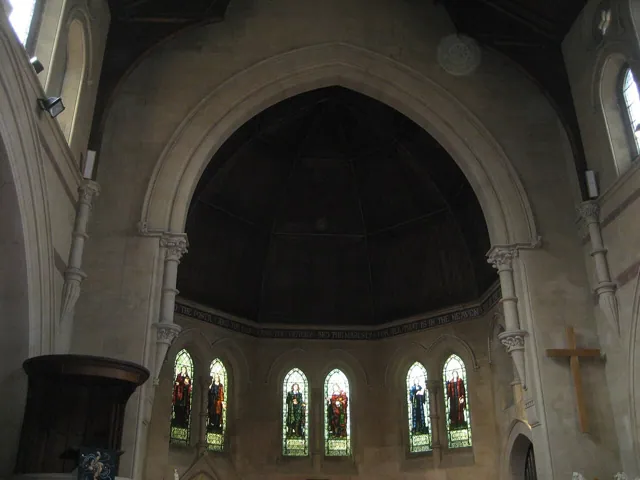



Real photographs taken with this camera, from Wikimedia Commons. Where the file's own data records a high sensitivity, we show it.
On eBay right now
Live listings for this camera, supplied by eBay and updated automatically. We earn a commission if you buy through them.
The little wins
Low light was the headline. Around it, the SD600 was full of smaller decisions that explain why reviewers enjoyed carrying it.
A street kiosk photographed at ISO 800. · Andrew Nash from Vienna, Aus · CC BY-SA 2.0 · CommonsISO 800, and it meant it
Canon's pitch was flash-free pictures indoors,3 and Havlik found the high settings usable. The street scene here was recorded at ISO 800, according to the file's data.5
Fast enough to catch the moment
Havlik measured about 1.8 seconds from switch-on to first shot, shutter lag of about 0.076 seconds when pre-focused, and about 2 frames a second in continuous mode.51
Nine focus points and a scene brain
The camera used 9-point AiAF and iSAPS, Canon's scene analysis.3 Pocket-lint found iSAPS sets the camera effectively without being asked.6
A battery that hated the screen
With the screen on the camera managed about 160 shots; with it off, about 600, by the CIPA standard.5 The optical viewfinder was the way to make it last, even though Havlik found it only about 80 percent accurate.5 A fresh NB-4L battery on Amazon ↗ is the first thing to buy.
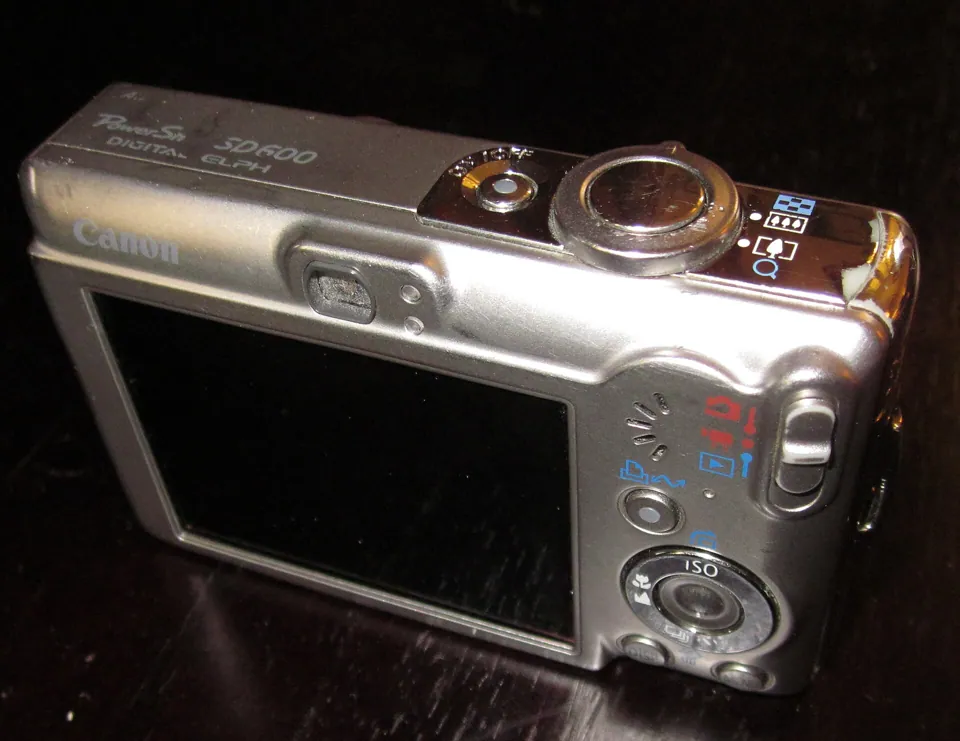
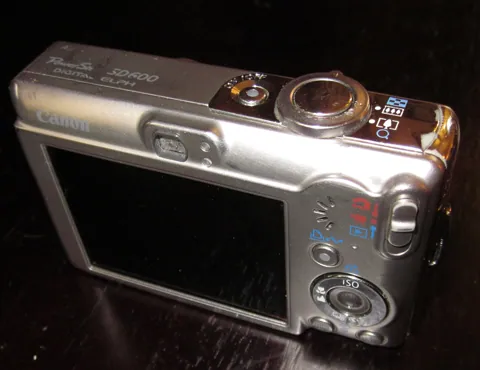 The back of the camera: screen, viewfinder window and controls. · Infrogmation of New Orleans · CC BY 3.0 · Commons
A screen 50 percent sharper
The 2.5-inch screen went from 115,000 to 173,000 pixels. Havlik found it sharp with a wide viewing angle, and Canon rated the picture coverage at 100 percent.51
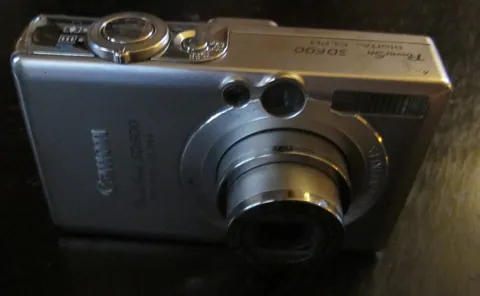 The zoom lens extended. · Infrogmation of New Orleans · CC BY 3.0 · Commons
A lens that folds away
The 35–105 mm zoom travels out when you power up and slides back into the body, which is how a 21 mm thick camera carries a 3x lens.1
Colour tricks and wide pictures
My Colors effects could be applied before or after shooting, a 16:9 mode gave widescreen stills, and Stitch-Assist helped with panoramas.35 Movies had Color Accent and Color Swap, which kept one colour or swapped it for another, at VGA and 30 frames per second with sound.13
Skin tones that behaved
Havlik singled out good skin tones along with reliable automatic white balance and exposure.5 In a pocket camera, that counts for more than a spec sheet.
How it drew the picture
Havlik called the colour vibrant, the skin tones good and the exposure and white balance reliable, but it found the contrast high enough to lose highlight and shadow detail in harsh light.5 The lens showed low distortion with some colour fringing at wide angle.5 Pocket-lint thought the pictures natural in colour and sharp.6 The samples below are daylight pictures from the same camera model.



.jpg)




Photos taken with this camera, from Wikimedia Commons, credited under each picture.
What the reviewers said in 2006
| Outlet | Date | Verdict |
|---|---|---|
| Pocket-lint | 18 Apr 2006 | 4 out of 5. A strong, simple, pocketable compact, "worth putting on your list." Held back by modest battery life, screen flare in bright light, convoluted menus and limited manual control.6 |
| Imaging Resource | 21 Jun 2006 | Dave's Pick. An excellent camera, with low-light performance that matched its ISO 800 rating. Faults were hard-to-reach scene modes, an inaccurate viewfinder, short battery life with the screen on and a styling it called dated.5 |
The timeline
- September 2005The IXY Digital 60, with a 5-megapixel sensor, arrives.1
- 21 February 2006Canon announces the SD600, SD630 and SD700 IS.4
- March 2006The SD600 reaches shops at $349.99.3
- 18 April 2006Pocket-lint publishes its review.6
- 21 June 2006Imaging Resource publishes its review.5
- October 2006Google agrees to buy YouTube.8
- 9 January 2007Apple announces the iPhone.9
- 21 February 2007Canon announces the SD1000, which Canon's museum names as the SD600's successor.2
When the SD1000 arrived a year later, it kept the optical viewfinder, moved to DIGIC III and added face detection.2 The SD600 stayed what it had been: a small silver camera that did its best work at the end of the night.
Should you buy one now?
It is a CCD camera with a 6-megapixel sensor,1 and the same body was sold as the IXUS 60 and IXY Digital 70, so search all three names. It takes SD cards; Canon lists no SDXC or SDHC, so use a card of 2 GB or smaller.1 The NB-4L battery is the part most likely to be worn out after all these years, and even when new it was only rated for about 160 shots with the screen on.5 Expect high contrast in harsh sun and treat it as a camera for dim rooms and daylight snaps.
If you are wondering why cameras like this are being hunted down again, we tell that story once, in Pictures that never left the card. For the camera that replaced this one, see our SD1000 retrospective.
Recent sold prices on eBay ↗Shop on eBay ↗NB-4L battery ↗
New to the jargon (CCD, ISO, xD cards, IXUS vs ELPH)? Read our plain-English digicam glossary.
Sources
- Canon Camera Museum: IXY Digital 70 / PowerShot SD600 / Digital IXUS 60 (specifications and launch text)
- Canon Camera Museum: IXY Digital 10 / PowerShot SD1000 (names its predecessor)
- DPReview, “Canon PowerShot SD600 and SD630” (Feb 2006)
- Reviewed.com, “Canon adds three digital ELPHs” (21 Feb 2006)
- Imaging Resource, Canon SD600 review by Dan Havlik (updated 21 Jun 2006)
- Pocket-lint, “Canon Digital IXUS 60” review by Doug Harman (18 Apr 2006)
- Imaging Resource, “2006 worldwide digital camera market share” (IDC figures, 4 Apr 2007)
- ITProToday, “Google buys YouTube for $1.65 billion” (Oct 2006)
- Wikipedia, iPhone (1st generation) (announcement and on-sale dates)
Camera photos by Infrogmation of New Orleans (CC BY 3.0) and Priwo (public domain); other photographs are credited under each one, all via Wikimedia Commons. Links to eBay and Amazon are affiliate links.