Panasonic Lumix LX series · on sale late August 2010 · a retrospective
The Panasonic Lumix DMC-LX5: the LX3 with a longer lens and a movie button
In 2010 Panasonic kept the big-sensor, fast-lens formula of the LX3, stretched the zoom from 60 to 90 mm and added HD video. Expert Reviews called it the ultimate enthusiast compact, and said an LX3 owner could reasonably keep the older camera.
Release date and launch price: launched August 2010; launch price US $499.951.
Quick answers
- Sensor
- CCD, 1/1.63", 10.1 MP source
- Lens
- 24–90 mm equivalent, 3.8× zoom source
- Memory card
- SD, SDHC, SDXC source
- Battery
- DMW-BCJ13 source
- USB / A/V cable
- See our Panasonic cable page
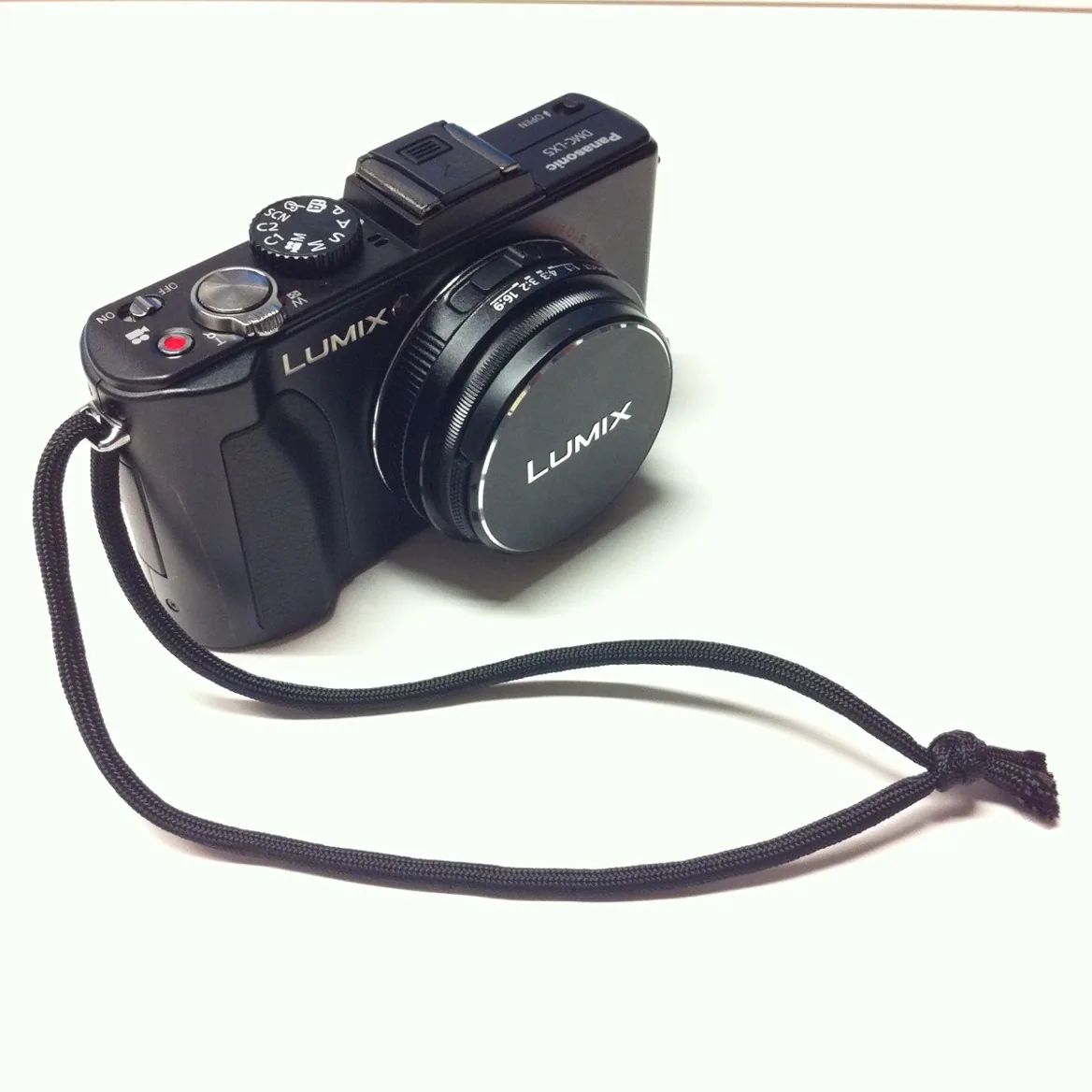
Meet the camera
It is a small black (or, at launch, white) metal compact with a Leica-branded lens, a mode dial, a hot shoe and a little pop-up flash.4 PhotographyBLOG praised the solid metal build and said it fits a jeans pocket.4 It measures about 110 by 66 by 43 millimetres and weighs 271 grams with the battery.12 The grip is new, with a turn-and-push jog dial where the LX3 had a joystick, plus dedicated movie and playback buttons.1
Panasonic announced it on 21 July 2010, with sales planned for late August and a US price of $499.95, the same as the LX3's launch price.1 In Britain, Expert Reviews tested it at about £400 against a recommended £480 and found most shops out of stock;3 PhotographyBLOG gave the UK launch price as £449.99.4
Why this one was interesting
This was the sequel to a camera enthusiasts already loved: our Lumix LX3 retrospective covers the 2008 original. Expert Reviews had given the LX3 its top award, and said Panasonic had done an excellent job and done well to surpass the LX3's high benchmark. The reviewer called it a natural upgrade if you wanted better high-ISO quality, better video or a wider zoom range, and said that otherwise an LX3 was a reasonable thing to keep.3 At the time that was a live question, because the LX3 was still on sale for under £315 while the LX5 cost about £400.3
A lens that reached further
The headline change was the lens: a 3.8x Leica DC Vario-Summicron covering 24 to 90 mm equivalent, f/2.0 at the wide end and f/3.3 at the long end, against the LX3's 24–60 mm, f/2.0–2.8.31 PhotographyBLOG counted ten elements in nine groups with three aspherical elements, and a zoom run of just over three seconds from wide to tele.4 PhotographyBLOG still found the range modest next to Panasonic's own TZ and FZ100 models.4 If you want a pocket superzoom instead, our Lumix ZS3 retrospective covers one.
New sensor, new processor
The sensor is still a 1/1.63-inch, 10.1-megapixel CCD, but Imaging Resource said Panasonic enlarged the microlenses, shrank the gaps between them and deepened the wells, for better dynamic range and less high-ISO noise. It was paired with the three-core Venus Engine FHD processor.1 Expert Reviews reported that its RAW files beat the LX3's by at least a stop below the extreme settings.3
The dark, with a fast lens
The top sensitivity was raised from the LX3's 3200 to 12800,3 and the reviewers were less excited about it than the spec sheet. Expert Reviews called the 6400 and 12800 modes essentially unusable: resolution falls to 3 megapixels, there is no RAW option there and the pictures show colour shifts and blotchiness.3 PhotographyBLOG likewise reported a drop to roughly 3 megapixels at those two settings, with a painterly rather than grainy look.5 Below that the two reviewers disagreed on degree. PhotographyBLOG found images clean up to ISO 1600 and compared that with ISO 800 on lesser compacts, with noise noticeable at 3200.5 Expert Reviews found images noisy from ISO 800 upward before noise reduction, though still bright and detailed, with banding from about ISO 1600, and called the in-camera noise reduction a little aggressive; it suggested shooting RAW.3 A year later Neocamera called ISO 1600 usable for small prints and ISO 3200 borderline, and said firmware 2.0 added extra noise reduction at those two settings.6







Real photographs taken with this camera. The sensitivity shown is recorded in each file's own EXIF data. All were shot at ISO 3200, but the outdoor ones in daylight, so they show how clean that setting is rather than dark-room shooting; we found no free LX5 photos taken in genuine darkness.
Like that look? See what LX5s have recently sold for on eBay ↗
On eBay right now
Live listings for this camera, supplied by eBay and updated automatically. We earn a commission if you buy through them.
The little wins
The LX5 was full of small changes that spoke to people who had liked the LX3.
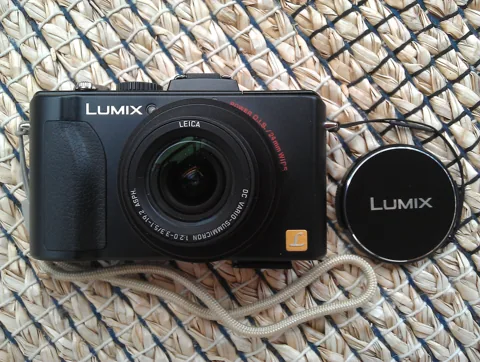 The LX5 from the front. · Anders Lagerås · CC BY-SA 3.0 · Commons

Extra optical zoom
Panasonic's Extra Optical Zoom trades resolution for reach: PhotographyBLOG listed 4.5x at 7 megapixels, 5.4x at 5 megapixels and 6.7x below 3.4
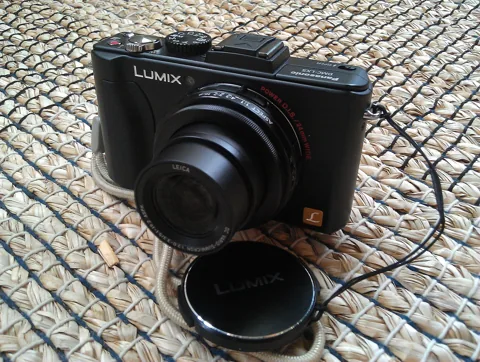 The LX5 seen at an angle. · Anders Lagerås · CC BY-SA 3.0 · Commons

A hot shoe and an optional viewfinder
The hot shoe took the optional DMW-LVF1 electronic viewfinder, the same finder Panasonic offered for the GF1, or an external flash.1 PhotographyBLOG noted the screen was hard to see in bright sun.4
A square option on the lens
The aspect-ratio switch on the lens barrel offered 4:3, 3:2 and 16:9 and a 1:1 square.41
A jog dial and a better grip
Expert Reviews said the thicker grip made the camera easier to hold and the clickable jog dial sped up changing settings, though it lost the thumb rest and found the thumb position slightly less comfortable.3
A movie button and manual video
A one-touch movie button started 720p video, with AVCHD Lite or Motion JPEG, and a Creative Movie mode that allowed manual exposure.14 Expert Reviews rated video quality very good but found the mono microphone a disappointment, with the gain set too high.3 The two reviewers disagreed on the zoom: PhotographyBLOG found it quiet while filming, Expert Reviews could hear the motor.43
How it drew the picture
PhotographyBLOG found bright-daylight results strong, with good highlight and shadow detail, though the default sharpening looked slightly soft; it reported minimal chromatic aberration and barrel distortion that was not a problem.45 Expert Reviews saw noticeable barrel distortion at the wide end, well-controlled colour fringing and corner sharpness that was adequate but weakest at wide angles.3 Neocamera said the JPEG colours never looked fully real, that auto white balance struggled under artificial light and that dynamic range was limited, while praising low noise for the class and especially good RAW results.6
















Photos taken with this camera, from Wikimedia Commons, credited under each picture.
Where it let you down
PhotographyBLOG's list of complaints was long: a price high for a compact, no built-in viewfinder, no automatic lens cover so the separate cap can get lost, a mode dial that felt slightly loose on its sample and a modest zoom next to superzooms.4 Neocamera added a slow-zooming lens, slow start-up of about three seconds, autofocus that was only decent, a fiddly modal control dial and a poorly placed tripod mount and a flimsy battery door.6 Imaging Resource's spec page lists 400 shots per charge, up from the LX3's 380, but the memory built into the body shrank from 50 MB to 40 MB.2
What the reviewers said
| Outlet | Date | Verdict |
|---|---|---|
| Expert Reviews | 25 Aug 2010 | Surpasses the LX3: better high-ISO RAW quality, video and zoom range, but the top ISO modes are essentially unusable and the launch price was high.3 |
| PhotographyBLOG | 6 Sep 2010 | A Highly Recommended 4.5-star camera for enthusiasts, held back on value; the reviewer would not pay the launch price and advised waiting for about £400.4 |
| Neocamera | 7 Oct 2011 | An excellent camera for creative photography, with a bright lens and strong RAW files, marked down for JPEG colour, white balance and a slow, fiddly feel.6 |
The timeline
- 21 July 2010Panasonic announces the LX5 for late August.1
- 25 August 2010Expert Reviews publishes its review.3
- 6 September 2010PhotographyBLOG publishes its review.4
- October 2010Leica's rebadged D-LUX 5, at about $800, is expected on sale.7
- 7 October 2011Neocamera posts its review.6
Should you buy one now?
Buy one if you want a pocket camera with a fast lens, a hot shoe and RAW files and you can live without a viewfinder and a high ISO that you will not use. It launched at $499.95;1 what it sells for now is a question for the sold listings, not for us. We have not tested a unit, and our coverage rests on three reviews, one of them written a year after launch. Before you bid, check these:
- The lens cap. There is no automatic cover, so make sure the cap is included and the lens is clean.4
- The mode dial. One reviewer found it loose; check it clicks firmly.4
- The battery. It is rated for about 400 shots when new,2 and an old one will be worse. A replacement is on Amazon ↗.
- The card. It takes SD, SDHC and SDXC and has 40 MB built in.2
- The name. The Leica D-LUX 5 is a rebadged LX5 that cost about $300 more at launch, and lacks the slightly raised front grip,7 so search both names.
If you are wondering why cameras like this are being hunted down again, we tell that story once, in Pictures that never left the card. For the camera this one replaced, see our LX3 retrospective.
See recent sold prices on eBay ↗Shop on eBay ↗LX5 battery ↗
New to the jargon (CCD, ISO, xD cards, IXUS vs ELPH)? Read our plain-English digicam glossary.
Sources
- Imaging Resource, Panasonic Lumix DMC-LX5 announcement (21 Jul 2010)
- Imaging Resource, Panasonic DMC-LX5 basic specifications (battery, size, weight, card types, MSRP $500)
- Expert Reviews, Panasonic Lumix DMC-LX5 review by Tim Smalley (25 Aug 2010)
- PhotographyBLOG, Panasonic Lumix DMC-LX5 review by Gavin Stoker (6 Sep 2010)
- PhotographyBLOG, Panasonic Lumix DMC-LX5 review, image quality page (ISO 80 to 12800)
- Neocamera, Panasonic Lumix DMC-LX5 review (7 Oct 2011; author not stated)
- Imaging Resource, Leica D-LUX 5 basic specifications and note on the rebadging
Camera photos by Chris de Kok and Anders Lagerås as credited; other photographs are credited under each one, all via Wikimedia Commons. Links to eBay and Amazon are affiliate links.