Olympus Tough · on sale June 2012 · a retrospective
The Olympus Tough TG-1 iHS: the rugged compact with a bright f/2.0 lens
Sold in the US as the Tough TG-1 iHS and in the UK as the Tough TG-1.21
In 2012 Olympus put a fast f/2.0 lens, a GPS and a depth gauge into a body it rated waterproof to 12 metres. Reviewers liked the speed and the macro and argued about the exposure.
Release date and launch price: launched May 2012; launch price $399.99 · £359.9921.
Quick answers
- Sensor
- CMOS, 1/2.3", 12 MP source
- Lens
- 25–100 mm equivalent, 4× zoom source
- Memory card
- SD, SDHC, SDXC source
- Battery
- LI-90B source
- Also sold as
- Tough TG-1
- USB / A/V cable
- See our Olympus cable page

Meet the camera
It is a chunky compact, about 111.5 by 66.5 by 29 millimetres and 230 grams with battery and card.3 TechRadar said that, despite a plastic outer shell, it feels very solid, with exposed bolts and double-locking hatches over the card compartment and ports;5 PhotographyBLOG and the Olympus press release both describe the body as metal, so the sources differ on the material.31 The lens is a 4x zoom covering 25 to 100 millimetres in 35 mm terms, and its widest aperture is f/2.0.34
Olympus announced it on 8 May 2012, for shipping from mid-June.12 The US estimated street price was $399.99,2 DPReview lists an MSRP of $399,6 and the UK press release gave £359.99.1 The maker's rating, in its own wording, was "waterproof to 12 m", "shockproof to 2 m", freezeproof to minus 10 degrees Celsius and crushproof to 100 kilograms, with footnotes saying the waterproofing follows the IEC 529 IPX8 standard, the shock rating is equivalent to a MIL standard under Olympus's test conditions and the freeze rating follows Olympus's own test conditions.1
Why this one was interesting
A fast lens in a tough body
Photography Blog called the f/2.0 wide end bright for any compact, especially a rugged one, and credited the lens for a clear step up in image quality from its predecessors.3 TechRadar said that, unlike rivals with slower lenses, the f/2.0 lens lets the camera hold faster shutter speeds and lower ISO settings as the light fades.5 Imaging Resource also listed the fast lens among its likes.4 For an earlier Olympus rugged compact, see our Stylus 1030 SW review.
Three instruments in a camera
The TG-1 has a built-in GPS for geotagging and track logs, an electronic compass and a manometer that shows altitude or depth and warns as you near the rated depth.3 Tap Control lets you operate some functions by tapping the body, which TechRadar found a pretty effective alternative when the buttons are hard to use in gloves or underwater.5
Faster than earlier Tough models
Two reviewers made the same point: TechRadar said start-up and shot-to-shot times were noticeably quicker than on earlier Tough models,5 and PhotographyBLOG found it more responsive than previous ones.3 Imaging Resource measured a start-up of 0.9 seconds, autofocus shutter lag of 0.32 seconds at wide angle and 0.040 seconds prefocused.4
What was missing
There is no manual, aperture-priority or shutter-priority mode,346 and Imaging Resource added that there is no raw support.4 PhotographyBLOG found no direct buttons for ISO or exposure compensation.3 The charger was an optional extra in both of those reviews, and Imaging Resource priced it at US$60.34 Photography Bay's launch article, by contrast, listed a USB cable and charger in the box, so check what a seller includes.2
The dark: its weak point
The three reviewers put the practical ceiling between ISO 1600 and 3200. TechRadar found pictures sharp and noise-free up to around ISO 800 and called ISO 3200 about as far as it would push the camera in an emergency.5 PhotographyBLOG saw very nice prints up to 8 by 10 inches and a bit beyond as long as you stay below ISO 1600, usable ISO 3200 for smaller prints and screen viewing with reduced saturation, and heavy detail smearing at ISO 6400.3 Imaging Resource found noise reduction, not colour noise, the bigger problem: colour noise stayed under control until ISO 6400, but fine detail was smudged as ISO rose, and it judged ISO 3200 good at 4 by 6 inches and ISO 6400 not recommended for prints.4 TechRadar added that the f/2.0 lens keeps you out of high ISO in most low-light situations.5
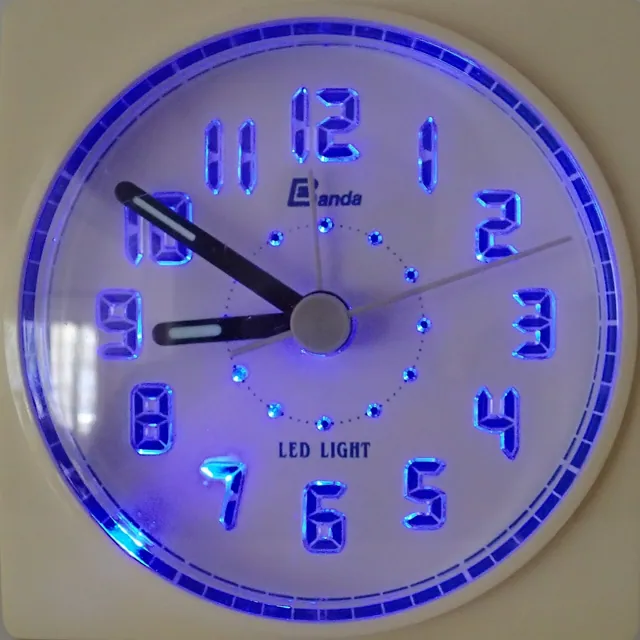

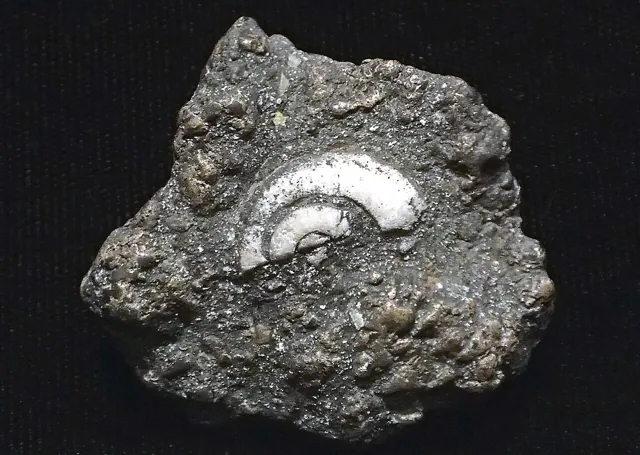

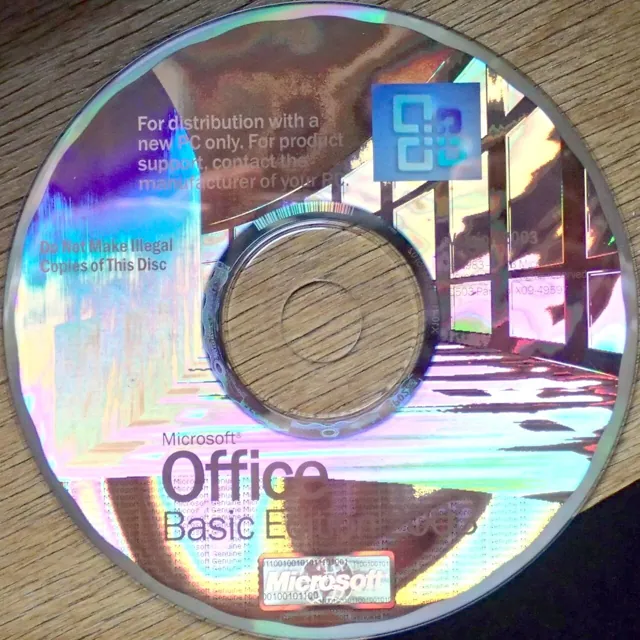

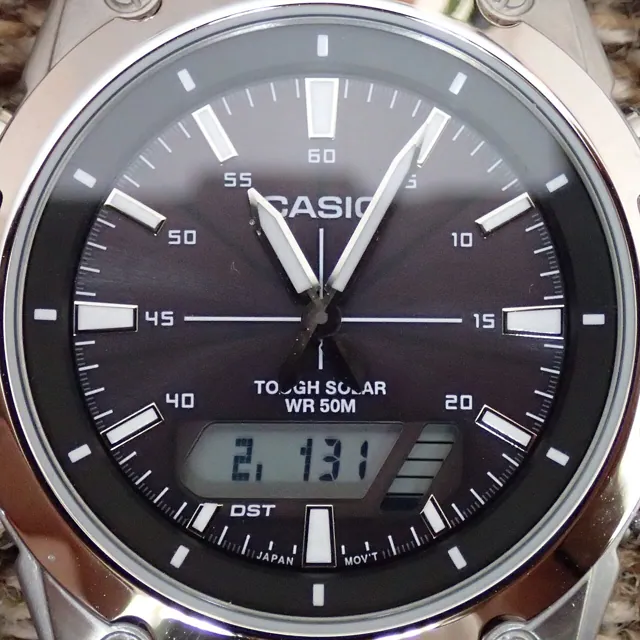

Real photographs taken with this camera. These are close-ups of objects rather than night scenes, because that is what the free Commons set contains; the sensitivity is recorded in each file's own EXIF data.
On eBay right now
Live listings for this camera, supplied by eBay and updated automatically. We earn a commission if you buy through them.
The little wins
Macro
Imaging Resource found standard macro very sharp, covering 33 by 25 millimetres at its closest; PhotographyBLOG lists focus down to 1 centimetre in super macro and, in regular macro, 10 centimetres at the long end of the zoom.43 TechRadar called the macro capabilities particularly noteworthy, saying Olympus continues to set the standard for close-up capture in its compacts.5
A water-repellent lens front
PhotographyBLOG noted a water-repellent coating on the front of the lens, and that conversion lenses (a fisheye and a teleconverter) need a separate adapter.3 The launch coverage gave the converters as £129.99 each in the UK and $119.99 and $109.99 in the US.12
How it drew the picture
PhotographyBLOG scored image quality 4 out of 5 and called results fairly good for the class, though with visible noise reduction even at base ISO, slight oversharpening and purple fringing at wide angle and in macro.3 Imaging Resource's lab tests were less kind on exposure: shots were usually underexposed, wide angle most of all, and its measured colour was muted, with strong reds and blues oversaturated and bright yellows and aqua desaturated.4 TechRadar disagreed on both counts: it wrote of accurately metered shots and great colours, and called image quality very good while saying it would not call it DSLR-like, as Olympus had promised.5




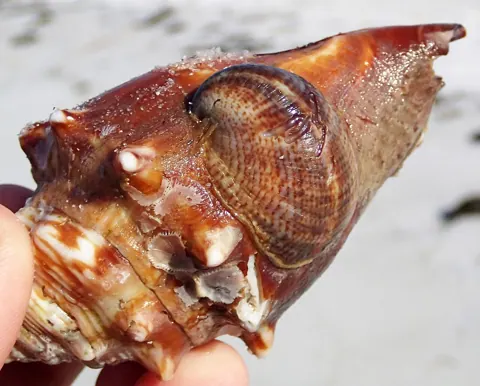

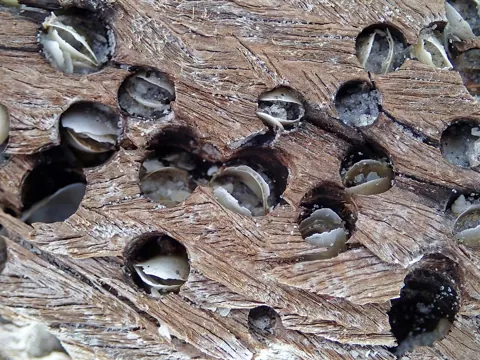



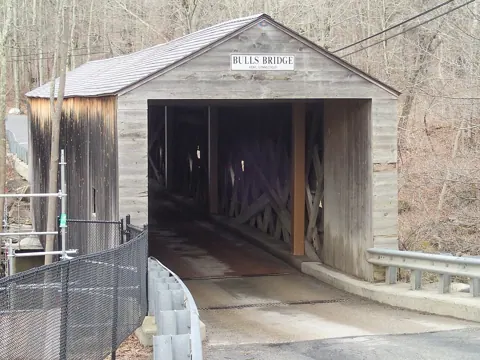

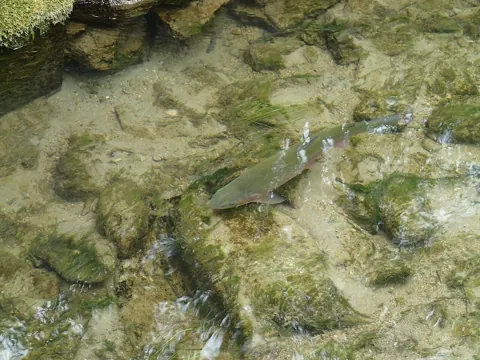


Photos taken with this camera, from Wikimedia Commons, credited under each picture. The free set is small and comes from a few uploaders, so it shows the camera's range only roughly; we found no clearly underwater photo.
Where it let you down
Imaging Resource called the OLED screen prone to clipping highlights and washing out midtones, and PhotographyBLOG found its colours did not always match a calibrated display.43 The flash was ineffective at its rated wide-angle distance in Imaging Resource's test, and red-eye reduction did not fully remove red-eye in PhotographyBLOG's.43 Imaging Resource found auto white balance too warm under incandescent light.4 In video, TechRadar said the stabiliser did not keep telephoto footage as smooth as it would like and that operating sounds are picked up in quiet places,5 while Imaging Resource rated its underwater video clear and in focus but underexposed.4 The sources also disagree on the recording format: PhotographyBLOG's spec table says QuickTime Motion JPEG, while Imaging Resource says H.264 in a .MOV container and DPReview lists H.264,346 and we could not settle it. PhotographyBLOG gives a maximum clip length of 29 minutes (a 4 GB file limit) and asks for a Class 6 or faster card.3
What the reviewers said
| Outlet | Date | Verdict |
|---|---|---|
| Imaging Resource | 8 Nov 2012 | 3.5 out of 5, no Dave's Pick. Fast lens, autofocus and timing, strong build; held back by frequent underexposure and muted colours.4 |
| PhotographyBLOG | 27 Mar 2013 | 4 out of 5 and Recommended (design 4, features 4.5, ease of use 4, image quality 4, value 4). Bright lens, strong build, GPS; no manual modes.3 |
| TechRadar | 20 Jul 2012 | No score on the pages we read; called it one of the best in its class for rugged compacts. Noise at high ISO, GPS battery drain and jerky telephoto video were the complaints.5 |
The timeline
- 8 May 2012Olympus announces the camera: $399.99 in the US, £359.99 in the UK.21
- Mid-June 2012Shipping begins, per the announcement.1
- 20 July 2012TechRadar publishes its review.5
- 8 November 2012Imaging Resource publishes its review.4
- 27 March 2013PhotographyBLOG publishes its review.3
Should you buy one now?
Buy one if you want a pocketable camera built for water and knocks, with a fast lens and real macro, and you can live with no manual modes and a mixed record on exposure. It launched at $399.99;2 what it sells for now is a question for the sold listings, not for us. Before you bid, check these:
- The name. Search Tough TG-1 and TG-1 iHS.12
- The seals. The 12-metre rating applied to a new camera; none of the sources we read says how it holds up after years, so do not trust the rating on a used one. We have not tested a unit.1
- The battery. It uses an LI-90B, charged in the camera;34 a fresh one is on Amazon ↗.
- The charger. Reviewers said it was optional; ask whether it is included.34
- The card. It takes SD, SDHC and SDXC;3 see our memory card guide.
- The lens. Check that the front glass is free of scratches and condensation.
If you are wondering why cameras like this are being hunted down again, we tell that story once, in Pictures that never left the card.
See recent sold prices on eBay ↗Shop on eBay ↗LI-90B battery ↗
Sources
- PhotographyBLOG, Olympus Tough TG-1 announcement (Olympus UK press release, 8 May 2012: £359.99, ratings, footnotes)
- Photography Bay, Olympus TG-1 iHS announced (8 May 2012: $399.99 estimated street price, accessories)
- PhotographyBLOG, Olympus Tough TG-1 review by Zoltan Arva-Toth (27 Mar 2013)
- Imaging Resource, Olympus TG-1 review by Daniel Grotta, Mike Tomkins and Shawn Barnett (8 Nov 2012)
- TechRadar, Olympus TG-1 review by Josie Reavely (20 July 2012, five pages)
- DPReview, Olympus Tough TG-1 iHS product page and specifications (MSRP $399, CIPA 350 shots, no aperture or shutter priority, H.264)
Photographs are credited under each one, all via Wikimedia Commons. Links to eBay and Amazon are affiliate links.